

Six decades on, the films of 1966 feel like the final year before the American New Wave would begin. The old guard was still present, John Ford released his final film (“7 Women”), but the rules were slowly being rewritten, which would culminate the following year with the release of “Bonnie and Clyde.”
Hollywood’s Production Code was crumbling. European art cinema was surging. Young audiences were beginning to demand ambiguity instead of comfort.
In Hollywood, Mike Nichols’ “Who’s Afraid of Virginia Woolf?” detonated into theaters. It lost the Best Picture Oscar to Fred Zinnemann’s “A Man for All Seasons,” a .. stately historical drama rooted in classical storytelling and moral safety. It’s not hard to notice which film has stood the test of time.
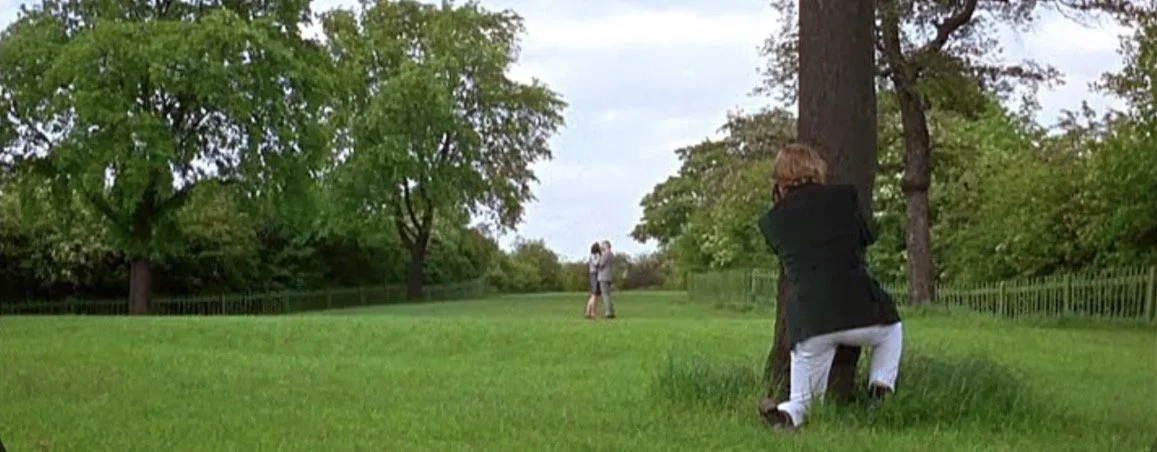
Michelangelo Antonioni’s “Blow-Up” both baffled and fascinated audiences — in my book, it’s a masterpiece for its hypnotic pacing, its radical ambiguity, and the way it made us see images — the world, in fact — in a new light. De Palma would go on to loosely remake it with 1980’s “Blow Out,” which, as it turns out, is still his greatest film.
At Cannes, “Blow-Up” was in competition, but lost the Palme d’Or to Pietro Germi’s “The Birds, the Bees and the Italians,” a satirical ensemble comedy that sounds modest compared to the formal revolutions that were in competition, including Frankenheimer’s “Seconds,” Claude Lelouch’s “A Man and a Woman,” Orson Welles’ “Chimes at Midnight,” and Miloš Forman’s “Loves of a Blonde.”
However, if there was one film in 1966 that rewrote the possibilities of cinema, it was Ingmar Bergman’s “Persona.” A surreal chamber piece, it dissolved the identities between two women. Faces merged, reality slipped. Few films have been more influential, and even fewer more mysterious.
Robert Bresson released “Au Hasard Balthazar,” a simple story about a donkey that becomes a profound meditation on suffering, human cruelty, and, finally, deliverance. Its quiet nature stands in stark contrast to the louder revolutions happening that year.
Speaking of revolution, how about Gillo Pontecorvo’s “The Battle of Algiers”? Shot in a documentary style so convincing it was mistaken for real footage. Hell, governments studied it. Militants studied it. Filmmakers studied it. Its vérité style reshaped the language of modern war cinema. Even Paul Thomas Anderson cited it as an influence for recent Best Picture winner “One Battle After Another.”
Meanwhile, the Czech New Wave exploded with Věra Chytilová’s “Daisies.” Sergio Leone’s “The Good, the Bad and the Ugly,” with its extreme close-ups, vast landscapes, and Ennio Morricone’s iconic score, had Italians reinventing the Western. Jean-Luc Godard’s “Masculin Féminin” confirmed the loosening of cinema — for better or worse, it marked Godard’s shift away from relatively more conventional narrative structures of his early Nouvelle Vague films toward a more fragmented, essayistic, and political cinema.
Notice the many international films I mentioned as highlights. Hollywood would soon implode and rebuild. Directors would seize unprecedented control. However, the seeds of that transformation were only beginning in 1966. The following year would see the release of “Bonnie and Clyde,” “The Graduate,” “Cool Hand Luke,” “Point Blank,” “In Cold Blood,” “The Producers,” “In the Heat of the Night,” “Wait Until Dark,” and “The Dirty Dozen.”
Best Films of 1966
Blow Up (Michelangelo Antonioni)
The Battle of Algiers (Gillo Pontecorvo)
Persona (Ingmar Bergman)
The Good, The Bad and The Ugly (Sergio Leone)
Au hasard Balthazar (Robert Bresson)
Seconds (John Frankenheimer)
Who’s Afraid of Virginia Woolf? (Mike Nichols)
Daisies (Věra Chytilová)
Andrei Rublev (Andrei Tarkovsky)
Loves of a Blonde (Miloš Forman)

At a Q&A this morning, Gray said "Two Lovers" was the first film he made with creative control. He was far less kind about the three before it, "Little Odessa," "The Yards" and "We Own the Night."