
We’ve gone through the decades. The ‘40s ‘50s, ‘60s, ‘70s, ‘80s, ‘90s, ‘2000s, and ‘2010s. — all revisited, argued over.
Now, here are the results for what might very well be the last decade polled — unless I go in to tackle the ‘20s, but since participation keeps lowering as we get to older movies, with a little over 100 participants this time around, maybe I should put a pause on it, for now. The silent era will have to wait until at least next year.
The rules were simple: participants were invited to submit an unranked list of five films released between 1930 and 1939 that they considered the best of the decade. A complete list of the participants will be added later today as this piece is updated.
So, the 1930s — we find ourselves on the brink of a fascinating pivot point in film history: the decade that began the era of sound and simultaneously buried silent cinema. What I find most interesting about the ‘30s is that, unlike the ‘40s with “Citizen Kane,” the ‘50s with “Vertigo,” the ‘60s with “2001,” or the ‘70s with “The Godfather,” there was no overwhelming consensus pick. The top four vote-getters were all separated by just a couple of votes.
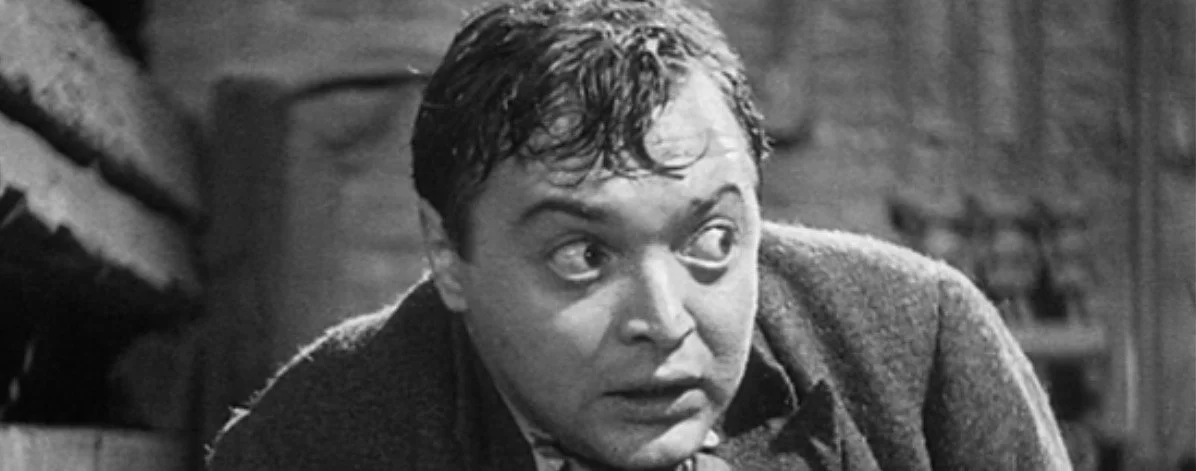
Fritz Lang’s “M” topped the list, besting Chaplin’s “Modern Times” by a single vote. This is a great film—a visual landmark. Lang retained silent-era techniques—shadows, offscreen action, and symbolic images—to build suspense through suggestion rather than violence. German Expressionism was applied to talkies, and it worked wonders. There are also deliberate stretches of silence showing how sound-era cinema didn’t require constant talking. More importantly, “M” helped shape the serial-killer procedural through its focus on investigations, profiling, and manhunts, influencing later films like “Psycho,” “Se7en,” and “Zodiac.”
Meanwhile, Charlie Chaplin’s “Modern Times,” the runner-up, tackles silent-era anxiety through industrial alienation, which feels newly relevant today with the advent of AI. It has also aged like fine wine and contains some of the most visually inventive scenes ever put on celluloid. In third place, Victor Fleming’s “The Wizard of Oz,” arriving at the end of the decade, would lay the blueprint for Hollywood spectacle for the next eight decades, and even provided David Lynch with a kind of imaginative framework for his own surreal work.
Just behind these three is Renoir’s “The Rules of the Game,” a critique of class and hypocrisy that, alongside Chaplin and Lang’s films, forms my personal triple peak of the decade.
The 1930s were a decade of reinvention in Hollywood. Filmmakers were suddenly forced to rethink the grammar of cinema — camera movement stalled, performances became stiffer, and visual experimentation took a back seat as the industry scrambled to master microphones and dialogue recording. Eventually, as sound technology stabilized, directors began pushing form again — experimenting more and more.
What the 1930s represent most to me, in terms of film innovation, are the immaculate screwball comedies, poetic realism emerging in France, German filmmakers breaking through, and silent masters like Chaplin and Lang finding ingenious ways to resist or reimagine sound. Meanwhile, Buster Keaton, a genius on the level of Chaplin, would soon disappear, unable to adapt to the modern times.
RESULTS
1. M (Fritz Lang) — 51 votes
2. Modern Times (Charlie Chaplin) — 50
3. The Wizard of Oz (Victor Fleming) — 49
4. The Rules of the Game (Jean Renoir) —45
5. City Lights (Charlie Chaplin) —32
6. La Grand Illusion (Jean Renoir) — 29
7. King Kong (Cooper/Schoedsack) —25
8. Gone with the Wind (Victor Fleming) —24
9. Trouble in Paradise (Ernst Lubitsch) — 22
10. Duck Soup (Leo McCarey) — 21
11. Bringing Up Baby (Howard Hawks) — 20
12. Bride of Frankenstein (James Whale) — 18
13. L’Atalante (Jean Vigo) — 16
14. It Happened One Night (Frank Capra) — 16
15. Mr. Smith Goes to Washington (Frank Capra) — 15
16. Freaks (Tod Browning) — 15
17. Only Angels Have Wings (Howard Hawks) — 14
18. Stagecoach (John Ford) — 14
19. All Quiet on the Western Front (Lewis Milestone) — 13
20. Dodsworth (William Wyler) — 12
21. The Adventures of Robin Hood (Curtis/Keighly) — 10
22. L’Age d’Or (Luis Bunuel) — 11
23. Vampyr (Carl Theodor Dreyer) — 10
24. Dracula (Tod Browning) — 8
25. Snow White and the Seven Dwarfs (David Hand) — 7
26. A Day in the Country (Jean Renoir) — 6
27. Make Way For Tomorrow (Leo McCary) — 6
28. Morocco (Josef von Sternberg) — 6
29. The 39 Steps (Alfred Hitchcock) — 5
30. Scarface (Howard Hawks) — 5

Peter Jackson is back. Twelve years after his last narrative feature, he's confirmed his next directing gig, and it's the ‘Tintin’ sequel that everyone had pretty much given up on.