



Interviews

Cannes jury prize winner, “Bacurau,” which was directed by Kleber Mendonça Filho and Juliano Dornelles, is a perplexing mix of magical surrealism and grindhouse, “Bacurau” caught me off-guard in its first 20 minutes, but then transported me into a cinematic adventure Iike no other. It’s a thriller, but one filled with indelible artistry and breathtaking cinematic luxury.

The socio-political and supernatural blend in Mati Diop’s Cannes-winning “Atlantics,” a bewitching film from the French-Senegalese writer-director whom, after a successful jaunt in acting and directing short films, returns to her native Senegal for her feature-length debut. It’s also the first film directed by a black woman to compete in Cannes' main competition, where it was awarded the Grand Prix prize.
We hadn't heard from Richard Linklater since 2017’s “Last Flag Flying.” I spoke to the writer-director of such incredible works as “Dazed and Confused, “Waking Life” “Boyhood” and the “Before” trilogy about his new film, this one is titled “Where’’d Ya Go, Bernadette.”


We spoke to Chandor about "Triple Frontier," its thematic similarities to his other movies and, of course, working with Netflix.
![Carey Mulligan Talks ‘Wildlife,’ Not F*cking Up, Playing A Frightening Character & More [Interview]](https://images.squarespace-cdn.com/content/v1/5bbcad0f2727be3646b9fee1/1542905874038-PZZTWFHCPC36VWJ0FEUL/wildlife-carey-mulligan-1200x520.jpg)
Carey Mulligan wholly deserves awards attention in Paul Dano’s exquisite directorial debut “Wildlife.” As Jeanette, the self-destructive Middle America housewife that tries to break free from that time’s conventions of what a married woman should and shouldn’t do, Mulligan quietly expresses disillusionment, frustration and then, unabashed self-interest of her needs over her marriage and family. But it’s done so with a grace that we empathize with her. She’s not selfish, she’s a human being whose unfulfilled. Dano’s movie rarely spells this out, but it’s all communicated through powerfully interior performances and rock solid, minimalist filmmaking.
![David Mackenzie Talks Re-Editing ‘Outlaw King,’ Shrugs Off ‘Braveheart’ Comparisons, & Thinks Theaters Are Overrated [Interview]](https://images.squarespace-cdn.com/content/v1/5bbcad0f2727be3646b9fee1/1541949423859-CGM49YPSLLW54TMJ05SM/outlaw-king-chris-pine-1200x520.jpg)
David Mackenzie‘s latest film, “Outlaw King,” is a life-long passion project for the Scottish director of “Hell or High Water” and “Starred Up.” The new Netflix film takes place during the medieval years of the early 14th century and recounts the story of Robert the Bruce (Chris Pine), brother of William Wallace (who was made famous by Mel Gibson in the film “Braveheart“), who went from being king to an outlaw after murdering the high-ranking son of a powerful monarch.
![Director Morgan Neville Talks His New Orson Welles Doc & Welles’ Final Film ‘The Other Side Of The Wind’ [Interview]](https://images.squarespace-cdn.com/content/v1/5bbcad0f2727be3646b9fee1/1541266182402-N1KI5602CL2827GR5E9G/Theyll-love-me-when-im-dead-orson-welles-1200x520.jpg)
Morgan Neville‘s “They’ll Love Me When I’m Dead” is more than just a documentary about the making of Orson Welles‘ “The Other Side of the Wind.” The legendary’s director’s final film, which has been touted for the better part of three decades as the ‘greatest film never released,’ finally is available for all to see on Netflix. Neville’s narrative in ‘Dead’ focuses not just on Welles’ unreleased production, but also his final two decades of life.
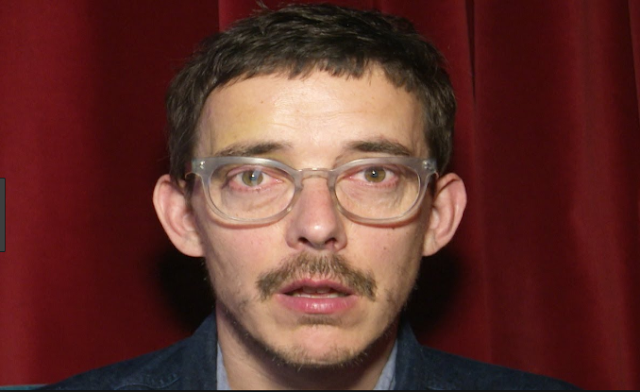
Writer-director Jim Hosking doesn't think like a regular filmmaker, or, at least, in the narratively conventional sense. What is most important to Hosking, who first gained attention for his film “The Greasy Strangler,” is to create a world only he can conceive. His films are filled with the kind of unique characters that you have never seen before in cinema. He no doubt has his fair share of detractors, but the fact that the filmmaker has managed to find a way to break out of the mold with such a unique brand of filmmaking is something to celebrate. In essence, nobody makes movies quite like Jim Hosking.

![Timothee Chalamet and Steve Carell on ‘Beautiful Boy' [Interview]](https://images.squarespace-cdn.com/content/v1/5bbcad0f2727be3646b9fee1/1539347798387-WYF5KN59R7N8EAZFJ94B/beautifulboy_0mustuse-h_2018.jpg)
Director Felix Van Groeningen (Broken Circle Breakdown) adapts two memoirs (from real-life father and son David and Nic Sheff) into his first American film "Beautiful Boy."
David (Steve Carell) lives with son Nic (an excellent Timothee Chalamet), and second wife Karen (Maura Tierney) in their comfortable San Francisco home. Major problems arise when Nic becomes addicted to Methamphetamine. The movie then, for the duration of its 112 or so minutes, goes back and forth between Nic's continuous cycle of relapse and recovery.
Any doubts that Chalamet's breakthrough performance in "Call Me By Your Name" would be a one-time deal are easily vanquished by his passionate take here of Nic. Chalamet is astonishing, finding a kind of dramatic depth and feeling for character that most actors could only dream of reaching. Carrel, a comedic actor that has proven over time to be a solid dramatic one as well, infuses wisdom and hard-earned tears to the movie in a performance that ranks among his very best.
![‘Private Life’: Tamara Jenkins, Kathryn Hahn & Kayli Carter Discuss Netflix’s Rich, Funny, Painful Infertility Dramedy [Interview]](https://images.squarespace-cdn.com/content/v1/5bbcad0f2727be3646b9fee1/1539184507425-AL3J04H3PL3V6QAI8QS1/private-life-interview.jpg)
Tamara Jenkins' "Private Life" is a film that gets the details right. Bowing as one of the 26 films chosen for the main slate of this year's 56th annual New York Film Festival, it zeroes in on a married couple (as played by Katherine Hahn and Paul Giamatti) coping with a neverending infertility struggle and the collapse of their marriage, as they navigate through the world of adoption and assisted reproduction. It features indelibly pertinent performances from Hahn, Giamatti, and newcomer Kayli Carter, the latter who plays the married couple's niece who agrees to be their egg donor. The New York City apartment all three share in the film, as they navigate in and out going to endless doctor's appointments, feels very much like a character of its own. It's in this closed claustrophobic atmosphere that the film tries to squeeze out the inner-kept emotional trauma of the characters.
![Director Jeremy Saulnier Talks ‘Hold The Dark,’ Netflix, & What He Gained From Leaving ‘True Detective’ [Interview]](https://images.squarespace-cdn.com/content/v1/5bbcad0f2727be3646b9fee1/1539195878606-CNCZJH4K9UB1FUH6V5AO/Jeremy-Saulnier-Green-Room-1000x520.jpg)
I spoke to the director about the grander canvas he has with this latest film, how it was collaborating with Netflix, and what he learned from his failed “True Detective” experience. Interview here.
Here's what I wrote at TIFF:
"If you haven’t seen any films by filmmaker Jeremy Saulnier, then you’re missing out. He’s one of the very best up-and-coming directors around. His 2014 film “Blue Ruin” is a crime-thriller masterpiece and 2016’s “Green Room” was such a dark and nasty neo-Nazi revenge thriller that it felt like an avant-garde horror movie."
![Keira Knightley Explains Why ‘Colette’ Is An 100-Year-Old Feminist Story That Is Just As Relevant Today [Interview]](https://images.squarespace-cdn.com/content/v1/5bbcad0f2727be3646b9fee1/1539203975269-3UPZC0MT60NWAU474UKB/colette.jpg)
Focusing on Sidonie-Gabrielle Colette, the Parisian author responsible for her husband’s literary success, Wash Westmoreland‘s “Colette” features a towering performance from Keira Knightley, who plays the legendary writer with such warmth and fiery feminism, with a story that easily draws parallels with today’s world.
Colette’s marriage to the well-off Willy (a slyly playful and equally up to the task Dominic West), is a challenge to both her feminist ideals and definition of what love truly means. He is an author of somewhat limited talent that takes his wife’s ideas to write about the fictional Claudine, a character filled with sexual freedom and uproarious adventures that spark a fury in the French literary world. Of course, after the initial success, Willy wants more books to be written, and endeavors to build not just an empire around this promiscuous and daring female character, but to solidify the literary reputation he’s been craving for years.
![Matthew McConaughey Talks the Blue-Collar Rage of ‘White Boy Rick' [TIFF Interview]](https://images.squarespace-cdn.com/content/v1/5bbcad0f2727be3646b9fee1/1539204440215-3NGZT4AJA84OF272KYEA/091718whiteboy1.jpg)
Set in a 1980s Detroit inflicted by the crack epidemic and Reagan’s ‘War on Drugs,’ Yann Demange’s “White Boy Rick” tells the true story of Rick Wershe, a working-class father, who also happened to be an arms dealer, (played by the always excellent Matthew McConaughey) and the bond he built with his troubled, drug-dealing, teenage son, Rick Wershe Jr. (Richie Merritt). Junior ended up working for the FBI as an informant before being abandoned by them and sentenced to life in prison.
Demange’s film White Boy Rick is anchored by yet another high-level performance from the 48-year-old McConaughey who has now built up a solid body of work ever since the famous McConaissance started in 2011 with “The Lincoln Lawyer.” His work here, as a man torn between family and the law, is another note-worthy addition to an impressive filmography that only grows in stature with every movie.

Filmmaker Panos Cosmatos’ “Mandy” is batshit crazy — and that is meant as the high compliment possible. This 120-minute hallucination into dreamy hell is visually stunning, and unlike anything, you’ve ever seen before. Yes, there are midnight movie tropes in the film; a chainsaw battle, an atmospheric soundtrack, and Nicolas Cage going completely bonkers by chugging a bottle of whiskey and snorting “cult coke,” but this revenge story, concocted from the deepest parts of Cosmatos’ subconscious, is a unique brand of trippy surrealism.
![‘Eighth Grade’: Bo Burnham On This Generation’s More Affectionate Version Of ‘Welcome To The Dollhouse’ [Interview]](https://images.squarespace-cdn.com/content/v1/5bbcad0f2727be3646b9fee1/1539211761593-28XJL1ELE2OQJZ15F6F1/Eighth-Grade-1200x520.jpg)
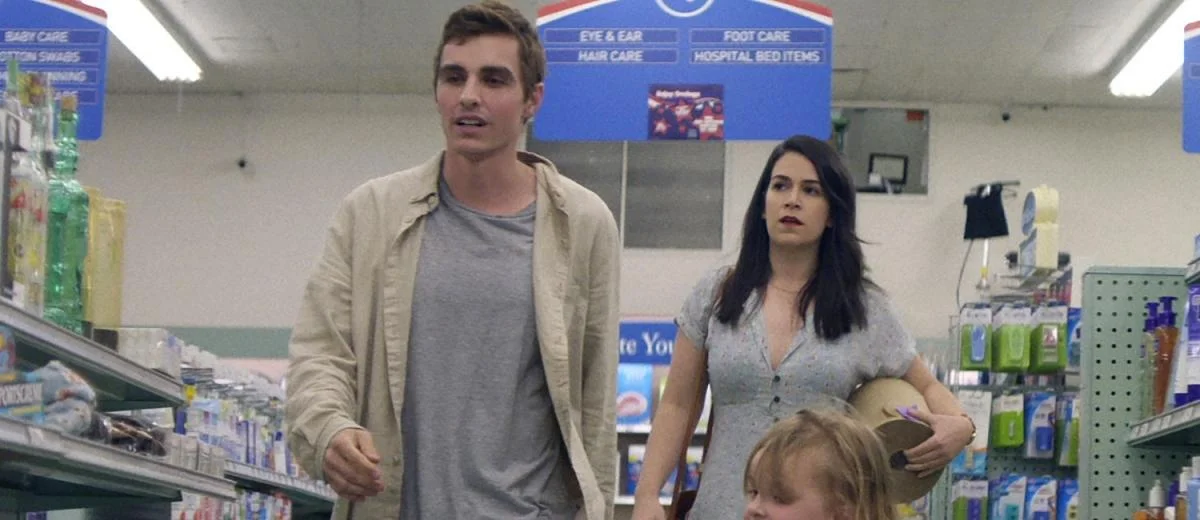
Heroin depictions in cinema can be very harrowing. The premise of Marja-Lewis Ryan’s SXSW feature-length directorial debut “6 Balloons,” a sobering, no-frills indie drama featuring two actors mostly known for their comedy work, is uncompromising and damn-near grim. Premiering today on Netflix “6 Balloons” features a sister (Abbi Jacobson of “Broad City”) desperate to try and help her self-destructive heroin-addicted brother (Dave Franco). She wants him to enter rehab and clean himself up for good.

I spoke to Lynne Ramsay for The Playlist. The full interview can be found here.
"Ramsay’s latest film, “You Were Never Really Here,” packs a whole can of worms in its thin 89-minute running time. In the film, Joaquin Phoenix plays a war veteran who now works as a hitman. His attempt to save a young girl from a sex trafficking ring becomes very complicated once he uncovers a political conspiracy lurking beneath it. The directing and editing (courtesy of Joe Bini) are the real selling points here, as Ramsay tries an experimental approach. Through quickly snipped flashbacks and ambiguous voiceover, the director finds ways to show as little as possible, but say as much as any big or small studio film out there. She builds up her main character in ways that feel like the story is being told through his disturbed, frenetic and PTSD-filled subconscious. Heady stuff, but masterfully done."

If 1989's "Heathers" was more artsy, minimalist and contemporary, you’d get director Cory Finley’s finely tuned "Thoroughbreds." A nasty little piece of business, this film coming to us from Finley, a theater veteran, brings out the best of his two leads, here played by Anya Taylor-Joy, Olivia Cooke and the late Anton Yelchin, as they get themselves involved in a murder plot that is as highly unpredictable as it is stark and pitch black, and I do emphasize the latter as ebonus as they come. It’s a sleek and stylish film that sneaks up under you and hits you like whiplash.

Swedish-born Noomi Rapace has been slowly but surely building up a career in American movies and making a real mark in the industry. Her facial gestures and looks can sometimes be filled up with an innumerable amount of emotions, and her physical prowess — she’s no slouch in the muscle department — builds considerable screen presence in itself. Lately, the 36-year-old actress has been working with genre fare, starring as Dr. Elizabeth Shaw in Ridley Scott’s “Alien” prequel “Prometheus,” leading the horror flick “Rupture,” and featured in the upcoming Netflix blockbuster “Bright.”
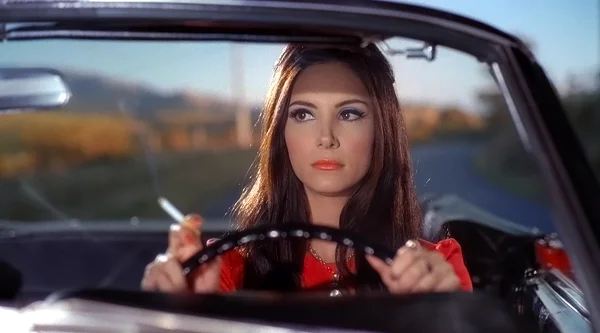
Note this was originally publised in The Playlist during my coverage of the 20th Fantasia Film Festival. Review can be found HERE.
"The first thing that you notice about Anna Biller's "The Love Witch" is how strikingly beautiful a movie it is. Shot on 35mm its look is inspired by 1960s sexploitation and Technicolor melodramas. It is sumptuous in its eye-popping photography filled with relentless color and incredibly impressive and precise costume design."


"Two Days, One Night" might be the best Dardennes movie yet. Marion Cotillard is mesmerizing in her role as Sandra, a young Belgian mother who discovers her co-workers were pressured to choose between getting a significant pay bonus and having her keep her job. The way Cotillard approaches each and every co-worker, pleading — sometimes even begging — for them to change their vote is heartbreaking. It’s a movie that once again places the talented directing duo on the short list of the very best filmmakers in the world today. I met up with them a few months back to discuss the process, Cotillard and the small details that make a Jean-Pierre and Luc Dardenne film so damn great.

Mukdeeprom is well known on the arthouse circuit for his work with Apichatpong Weerasethakul (“Memoria”), and he also shot three Guadagnino movies.