
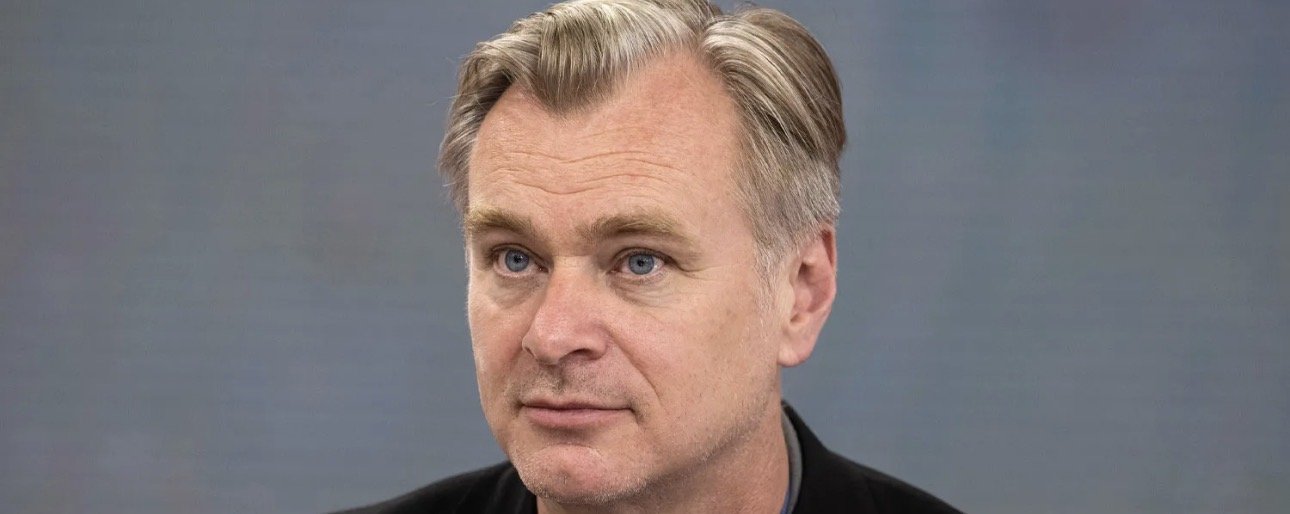
Christopher Nolan, whose latest film tackles an oft-told 8th-century story, tells The New York Times that studios should take more risks with their blockbusters because audiences are desperately “looking for something new.”
If you’re really interested in movies and the history of movies, the one thing you see absolutely is that you have to take risks to succeed. The biggest risk of all is to play it safe. That’s what, consistently in mainstream movies, doesn’t work. The audience is looking for something new.
Nolan then described pitching his 2000 classic “Memento” to his wife and producing partner, Emma Thomas, who appreciated the script but worried that its reverse-chronology structure was a significant risk. He argued that taking formal risks can actually strengthen a project by making it distinctive and giving filmmakers something new to offer.
While “Memento” was initially a hard sell to distributors, Nolan said it ultimately “found its audience.”
Now, there’s no doubt that Nolan has taken plenty of risks throughout his career, with films that consistently challenge audiences through unconventional timelines and complex narratives, including “Inception,” “Tenet,” “Interstellar,” and “Dunkirk.” However, “The Odyssey” is a well-known story spanning more than 2,700 years, yet Nolan believes it still represents a creative risk.
The risk is the intermediaries — the financiers, the studio. If you can get to the audience — I mean, I’m not making any predictions for [‘The Odyssey’], but in the past we’ve been well rewarded for having faith in the audience.
Nolan’s comments have divided some, with fans immediately pointing out the irony of him promoting originality while his next film adapts “The Odyssey.” These critics argue that there’s little innovation in adapting one of history’s oldest epics with stars like Tom Holland and Zendaya. Supporters, however, contend that the innovation lies not in the source material itself, but in how Nolan chooses to tell the story and whether the execution itself is original.
Now, Nolan himself has become a brand similar to Spielberg or Tarantino, allowing him to get risky projects made. Of course, not all of his films have succeeded in their ambitions; “Tenet” in particular remains divisive. Yet, in many ways, it’s exactly the kind of original blockbuster Hollywood should be greenlighting more of, not less. Since then, Nolan directed “Oppenheimer,” a biopic,” and “The Odyssey,” one of the most well known stories around

At a post-trailer Q&A for “Werwulf,” which opens Christmas Day, Eggers explained why his next movie is Shakespeare’s teen tragedy rather than another gloomy medieval tale.