
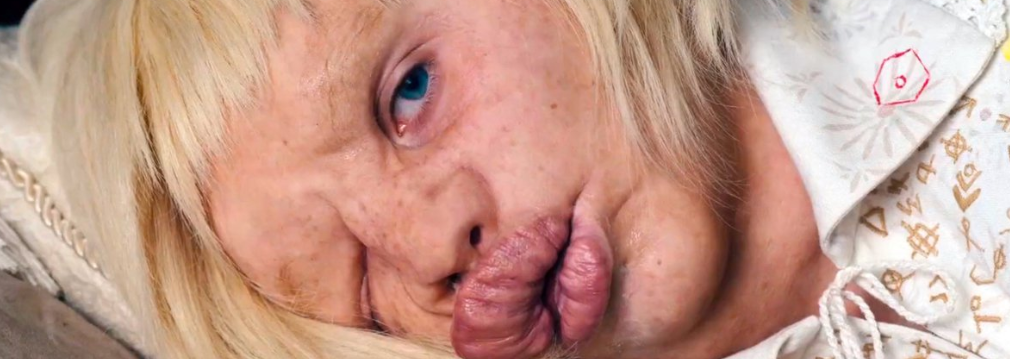
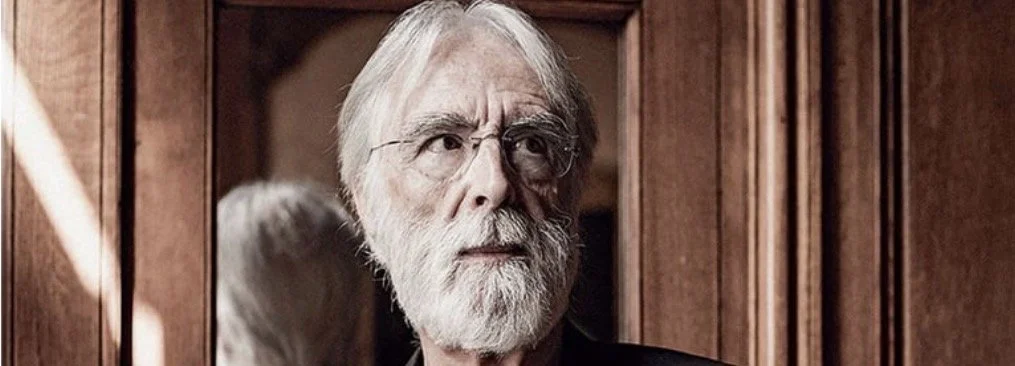
It’s an understatement to say that Michael Haneke has had an immense impact on cinema—“Caché,” “The Piano Teacher,” “Funny Games,” and “Amour” are cinematic landmarks. Sadly, we haven’t heard much from Haneke since his 2017 film “Happy End.”
Haneke, who turned 84 in March, has no projects in the works, and the last time we checked, Isabelle Huppert, who starred in four of his films, suggested that he might be done with cinema.
Today, we got an update from Markus Schleinzer, director of “Rose,” a former Haneke protégé and now close friend, who confirms that Haneke has retired.
He retired. He’s 85 years old now, and then he retired, but he’s still happy. We met two weeks ago, and he was cooking a very fine dish for myself. He has done his 10 movies like his all-time idol, Robert Bresson. He did what he could do, and he’s happy now.
Still, despite having called it quits on filmmaking, Haneke attended the Austrian premiere of Schleinzer’s “Rose,” praising it as a “masterpiece”—a particularly meaningful compliment because, according to Schleinzer, Haneke does not give praise lightly.
He was there at the premiere in Austria, and he’s such a very protective and very sweet friend. When I was in Cannes with the first movie … he was calling me every other minute, “Have you won a prize? Do you know something right now?” So it’s a really sweet friendship. And “Rose,” he said, “This is a masterpiece.” He does not say this easily, which doesn’t make it easier for me to handle a compliment like this from him
Haneke’s influence can still be felt everywhere in contemporary cinema. Every year, countless films are influenced by his stripped-down brand of austere filmmaking. Even at their most morbid, Haneke’s films carry a faint trace of irony beneath the darkness—a subtle wink and nod to the audience, reminding us that what we are watching is, after all, a carefully constructed cinematic experience.
Back in 2023, the Austrian Film Museum celebrated Haneke’s birthday with a career retrospective, and that’s when we learned that the English-language TV series Haneke was working on, titled “Kelvin’s Book,” had been shelved. It was supposed to be a nine-episode miniseries in English. The project had been fully developed and mostly funded with his own money, but pandemic-related delays ultimately crushed it.
Although notoriously press-shy, I had the immense pleasure of interviewing Haneke back in 2017 for “Happy End.” I vividly remember him describing social media as a “Machiavellian chain of horror”—a characterization that feels remarkably prescient today, if anything, more so than ever.
“Happy End,” Haneke’s last—and, quite sadly, final—film, proved to be very divisive among critics. It was filled with darkly comic moments, a rarity for the venerable Austrian filmmaker, whose reputation had been built on heavy, morosely driven dramas. And yet, “Happy End” turns out to be the perfect career capper for Haneke—his most meta-movie, a self-referential farce about all the themes he had tackled throughout his career. Almost ten years later, it feels like the perfect film for him to have gone out on.

M. Night Shyamalan tells TheWrap that "Lady in the Water" is the film he most wants reappraised, calling it the closest fusion of his family-film and thriller sides.