
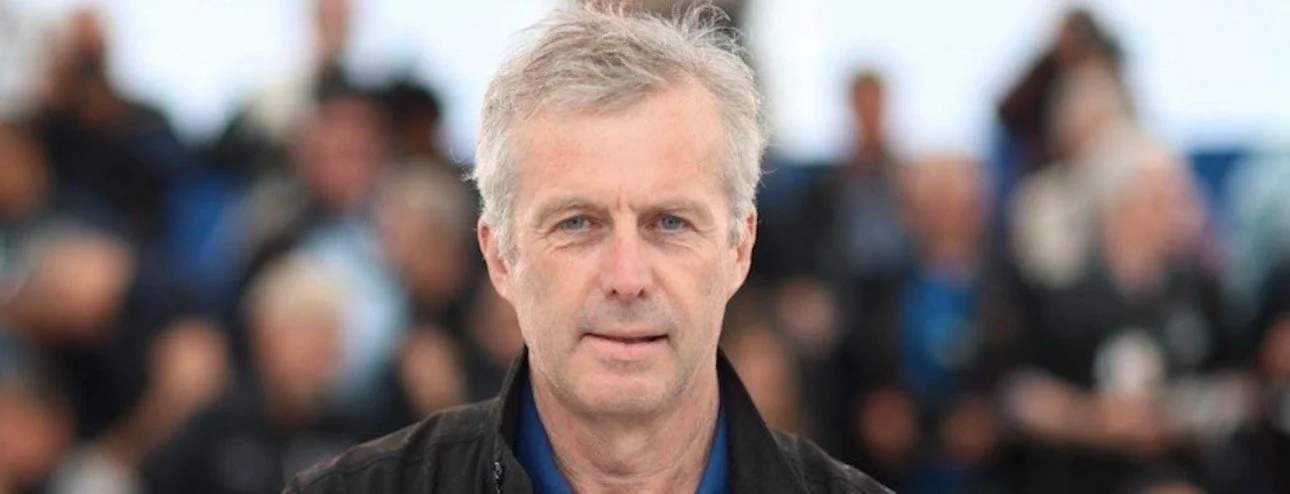



James Gray is taking aim at the instant gratification that's infected film discourse.
Speaking with Anne Thompson and Ryan Lattanzio on IndieWire's “Screen Talk” podcast, recorded live at the Virginia Film Festival, Gray went after the instant-reaction culture of Letterboxd and X, the site's five-star rating system, and, for good measure, the Tomatometer.
Gray's first target was the rush to judgment:
The instant reaction is a problem. You need some time to think about what you've just seen. A painting is one thing. The average time you look at a painting at a museum is somewhere around seven seconds. A movie is two hours. Take some time and think about it.
He then admitted that his own first reaction to Bernardo Bertolucci's “The Conformist,” a film he now reveres, was negative. If you had asked Gray for his Letterboxd rating walking out of that screening, he would have gotten it wrong.
I have nothing against Letterboxd, I just want the discourse to be elevated in some way […] but the most important thing you can do when you critique something is to do it with some form of humility because you don't really know when you haven't thought of the other side. That is missing.
Then Gray really let loose about star ratings:
There is one thing I can't stand [about Letterboxd]. They have a star rating. That is awful. That is absolutely awful. That is a shame. That is an overt disrespect for cinema. Would you do that for any other art form? ‘I give Guernica four and a half stars!’ This star system is insane.”
And he wasn't done:
“Letterboxd is fine, whatever, it's good because it engages children to cinema, but if you think about, what would ‘2001,’ if it had come out today, had gotten on the Tomatometer. I think it would fare pretty terribly. It would probably be assessed as rotten. It would probably get a splat. There's something a little demeaning about it, isn't there? Cinema isn't about that.”
On ‘2001,’ he's right. Kubrick's film opened to a famously split critical response in 1968, with some major critics dismissing it outright. Andrew Sarris panned it, then reversed himself after a second viewing. Sound familiar? Fifty-five years later, “2001” topped our 1960s critics poll.
I've seen this play out with the Tomatometer myself. When I put together a list of great movies with “rotten” scores back in 2020, the hardest part was finding classics that were still under 60%. Reconsideration over the years had pushed most of them into fresh territory.
Now, I don’t really hand out stars in my reviews. I haven’t logged movies on my Letterboxd in years — although I’ve thought about keeping a log of some sort for readers to scroll through. And let's not pretend star ratings were invented by an app. Ebert used them. Cahiers du Cinéma, the publication that has championed Gray, almost more than any other, still runs its “Conseil des dix” star grid. The French love James Gray, and they rate him with stars.
I highly recommend a speech Gray gave two years ago where he made the same argument, in a 12-minute speech to graduates of the USC School of Cinematic Arts, his alma mater:
So, I beg you, don't be nice. Don't be afraid to provoke and offend. Don't be afraid to be disliked. If you're getting 100% on Rotten Tomatoes, you're doing something so wrong, I can't even tell you.
The best art provokes, riles you up, and will never be universally loved. That's what Gray is saying here. When there's a universal consensus on any given film, then maybe that film has played it too safe and refused to think outside the box.
Gray went on to tackle the restrictions put upon the artist, not just by the studio system, but by society itself, one which is afraid of offensive and provocative art:
The artist in you will be under constant attack. In some places you'll be called a ‘content creator.’ You'll be told respect ‘boundaries’ and ‘safe spaces’ […] You'll be told to worry about Twitter, or I think it's called X now, or Tomatometers. These are all weapons aimed at you by the system. The system that believes in profit, not integrity, not excellence.
Gray nailed the zeitgeist in that speech, and he's doubly right about nobody taking the time to sit with a film anymore. I can't tell you how many times I've let a film linger in my head for a few days, only to realize my first reaction was somewhat off, or incomplete upon exiting the cinema. Some movies need time before they reveal themselves

James Gray is taking aim at the instant gratification that's infected film discourse, including social media first reactions, and Letterboxd. Oh, and he hates Rotten Tomatoes.