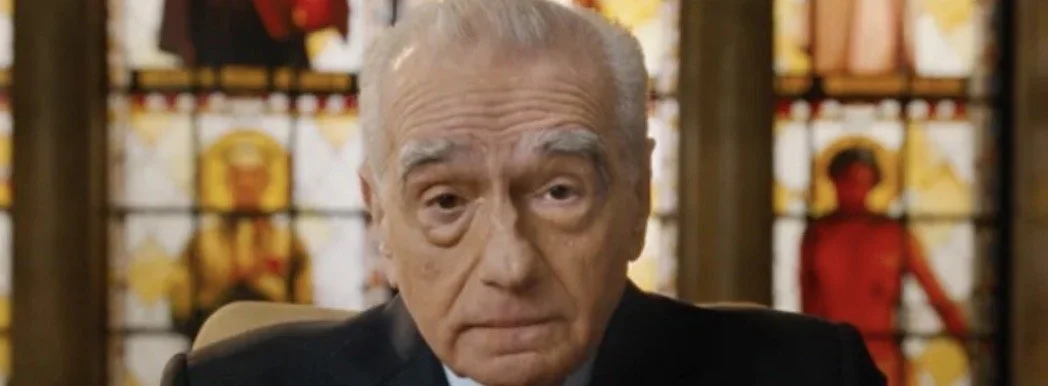
Martin Scorsese, widely adored by cinephiles, has recently found himself at the center of controversy over his engagement with artificial intelligence in filmmaking, particularly in the pre-production process of storyboarding.
Last week, Scorsese sparked debate on social media after appearing in an advertisement for the AI startup Black Forest Labs, where he serves as an adviser. In the campaign, he acknowledged using the company’s text-to-image AI tool for storyboarding, noting that the technology “conveys a cinematic—a cinematic intelligence.”
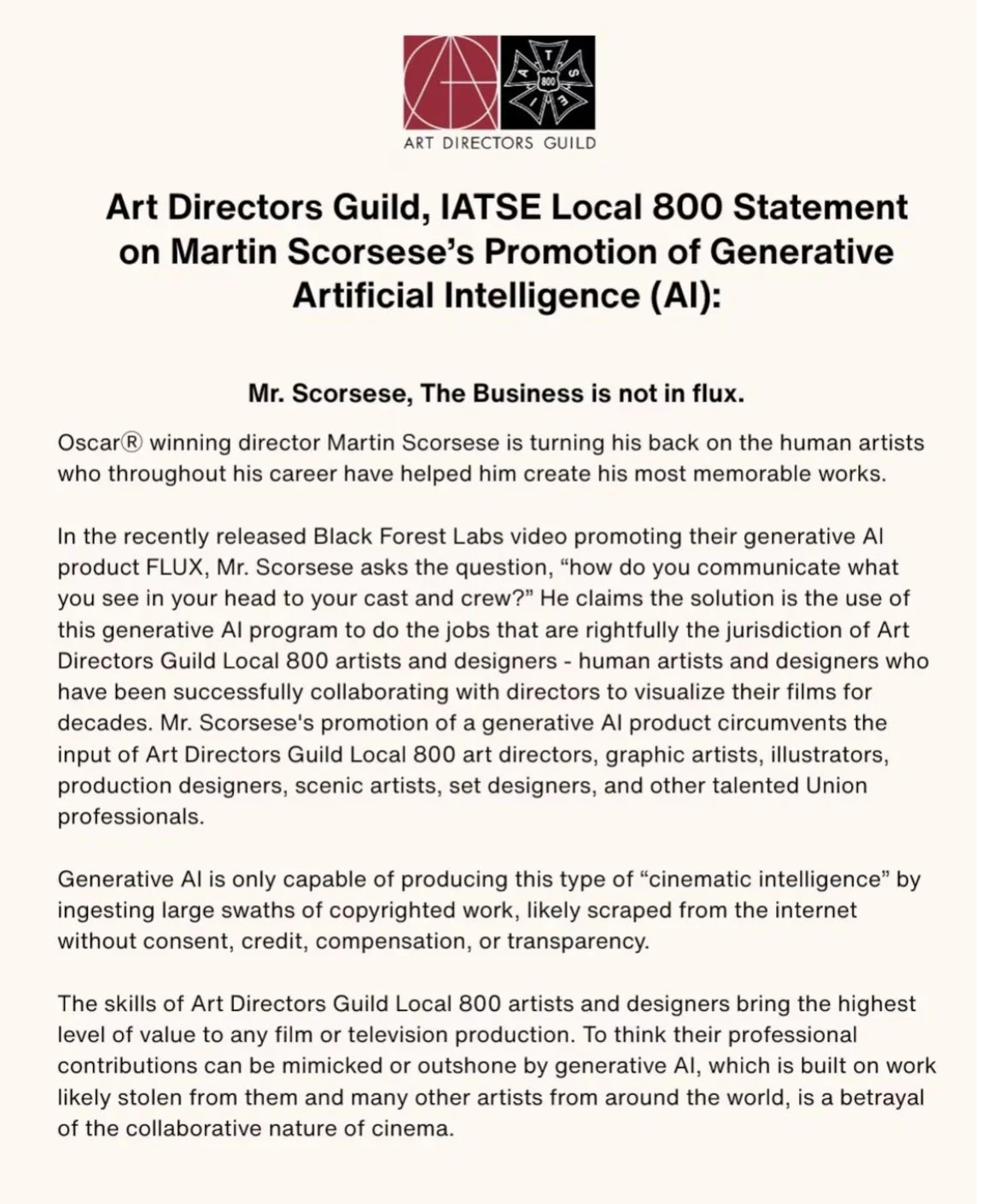
Now, in a strongly worded statement released on Tuesday, the Art Directors Guild—the union representing art directors, scenic artists, illustrators, production designers, and other craft professionals—criticized Scorsese’s involvement with generative AI.
Oscar winning director Martin Scorsese is turning his back on the human artists who throughout his career have helped him create his most memorable works. Generative AI is only capable of producing this type of “cinematic intelligence” by ingesting large swaths of copyrighted work, likely scraped from the internet without consent, credit, compensation, or transparency. To think their professional contributions can be mimicked or outshone by generative AI, which is built on work likely stolen from them and many other artists from around the world, is a betrayal of the collaborative nature of cinema.
At the same time, Scorsese is not necessarily endorsing the use of AI within his films themselves—at least not at this stage—but rather supporting a company developing tools aimed at streamlining parts of the creative process such as storyboarding. Still, the move has fueled broader debate about where AI fits within traditional film production, and how it may reshape creative labor.
In a statement regarding his partnership with Black Forest Labs, Scorsese described his “interest in the intersection of technology and storytelling,” which he says “aligns closely with a long-running idea in cinema: that new tools don’t replace the art, they expand its language.”
As Scorsese has often suggested, filmmaking is not a fixed form but one that continually evolves. From that perspective, cinema—only around 125 years old—can be seen as still developing, with new technologies potentially expanding its expressive possibilities rather than replacing its foundations.
You certainly won’t be getting Scorsese’s longtime friend Robert De Niro criticizing any of this. On Thursday, De Niro’s Tribeca Film Festival is screening the first-ever fully AI-generated feature to premiere at a major film festival.

Marvel's "Ghost Rider" just hired one of the best cinematographers working today. Linus Sandgren will serve as DP on Shawn Levy's MCU flick, and, most notably, the project will be shot on film.