Recently Fired From “Star Wars: Episode IX,” Director Collin Trevorrow Will Direct “Jurassic World III”

Colin Trevorrow Jurassic World 3

Colin Trevorrow was coming off his own worst nightmare: "The Book of Henry." A sentimental, misguided, confused and jumbled mess of a movie. A horrid mix of genres that never added up. I warned "Star Wars" fans to buckle their seat belts because there would be no end to the disruptors claiming that Trevorrow was not suited for Episode IX's director chair. 

Well, soon after, Disney fired the poor guy, when, In all honesty, the mouse house could have probably made any sub-par filmmaker look competent enough, although I'm not saying Trevorrow is incompetent by any stretch of the imagination. The "Star Wars" movies are, after all, creatively controlled by the studio so the creative scope is very limited in how Colin could have frankly fucked this up. We do know he was on a tight leash so the news wasn't unexpected. What was more interesting was whether or not the director would come back to helm "Jurassic World 3," since he turned down the second chapter to make the "Star Wars" movie. 

According to Entertainment Weekly, Steven Spielberg has confirmed Trevorrow will direct the third chapter, which resulted in Trevorrow releasing a statement:

”It’s important to this franchise that we welcome new creative voices to keep our storytelling fresh and alive,” Trevorrow said in a statement to EW. “I’m thrilled with the tension and beauty J.A. has brought to ‘Fallen Kingdom,’ and I know Emily will add another layer of emotion to the concluding chapter of our trilogy.”

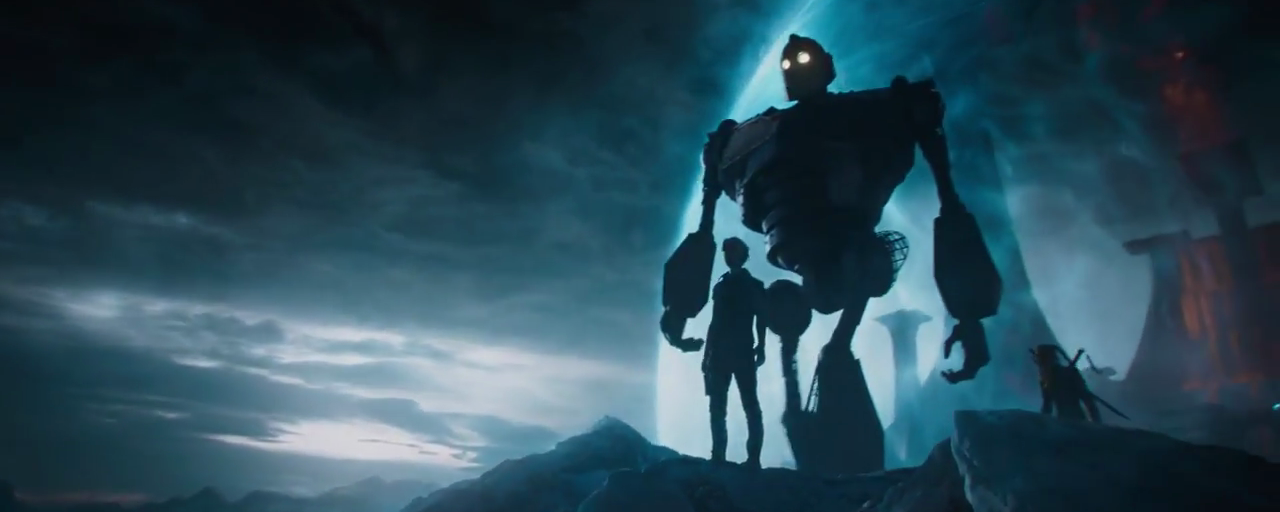
“Ready Player One” is a bit of a mess, but it works

Related image

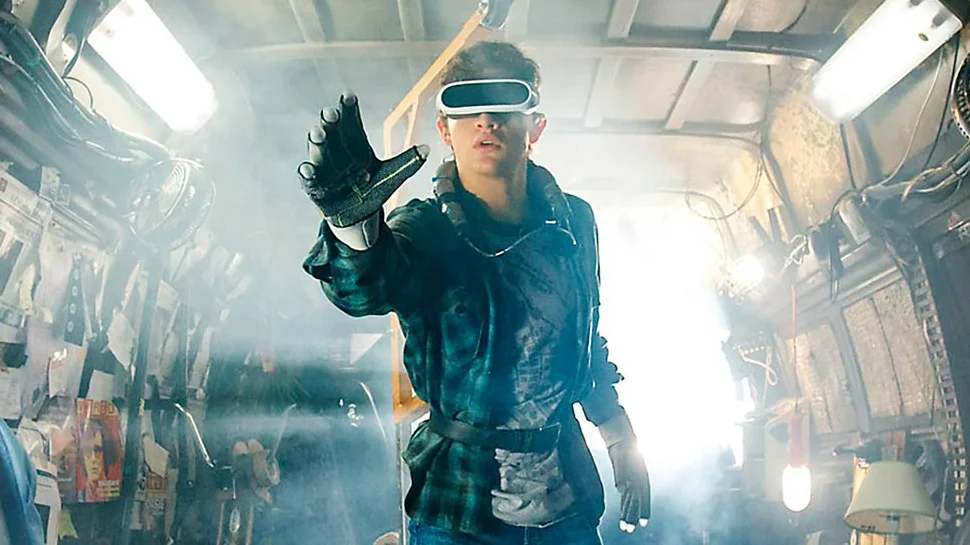
Here are excerpts of my "Ready Player One" SXSW review for The Playlist. The film, released nationwide today, is on pace to make close to $52 Million at the weekend box-office. 

“Ready Player One,” Steven Spielberg’s dizzying foray into ’80s pop culture fandom, is a return of sorts to the pure pop escapism that pervaded his filmography in the late ’70s and early ’80s, with such films as “Jaws,” “Close Encounters of the Third Kind,” “E.T.” and “Raiders of the Lost Ark.” The sheer playful joy in filmmaking displayed by Spielberg in this sci-fi riff has not been seen from the 71-year-old filmmaker since the cat and mouse hijinks of 2002’s “Catch Me If You Can.”

"Tackling Ernest Cline‘s nerdgastic 2011 novel of the same name, Spielberg sets his meta-y sights on a dystopian feature brimming with Easter Eggs, virtual reality, and an endless layer of discoveries which pay tribute to ’80s pop culture nostalgia, the latter of which Spielberg clearly left an indelible mark on. Dazzling in form and a chase film at its heart, “Ready Player One” is exhilarating, but it also can’t sit still. Fitting to the content perhaps, the movie still arguably suffers from troublesome A.D.D. with its hyper-fast cutting and its tendency to wander narratively.

“Ready Player One” is such an extravagantly conceived product that one feels pummeled by the end of its 140 minutes. Spielberg infuses every frame with countless details that will invite repeat viewings for those who want to catch every last drop of nostaglia. If that’s the sort of thing you place a premium on.  In this hyperkinetic world Spielberg has created, “Ready Player One” pays faithful tribute to Cline’s novel and for that, it will please its ardent fans. For the rest of us, there are enough breathlessly realized sequences that may help you forget that you don’t actually care about any of the characters." 

Michael Wolff’s Trump-bashing “Fire and Fury” Green-lit As TV movie, To Be Directed By Jay Roach

Image result for fire and fury

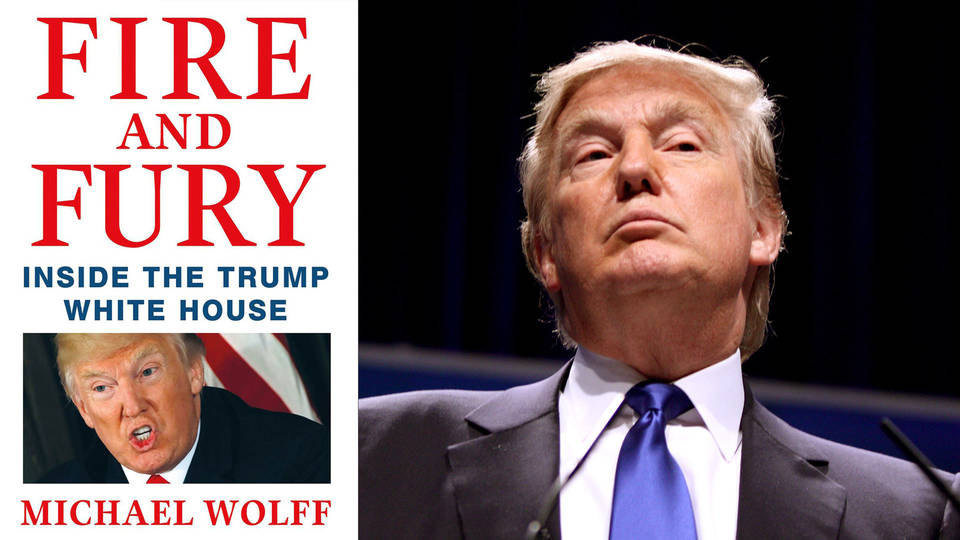
Earlier this year, author and journalist Michael Wolff released an incendiary, detailed account of the goings-on in Trump White House entitled "Fire and Fury: Inside the Trump White House." In the book, Wolff claimed that over an 18-month period, he found a way to gain access to the Trump White House by pitching a book to the administration with a fake, misleading working title — “The Great Transition: The First 100 Days of the Trump Administration” — this alone granted him unprecedented access to Trump and his senior staff's inner workings and the chaotic transition that ensued. You can call it a comedy of errors, or one of the scariest security breaches in government history, but it all lead to Wolff conducting more than 200 interviews with senior staff and even a 7-minute phone call with the President himself. Wolff went on to say that he was such a mainstay at 1600 Pennsylvania Avenue that he was able to take up "something like a semi-permanent seat on a couch in the West Wing."

"Fire and Fury" skyrocketed to the #1 New York Times best-seller list, despite some controversies arising about the legitimacy of some of the stories included in Wolff's book, nevertheless, it has taken its place in political history and, unsurprisingly, it seems like a movie adaptation has just been given the go-ahead. According to THR, Director Jay Roach ("Game Change," "Austin Powers: The Spy Who Shagged Me," and "Meet the Parents") has been tapped to direct and executive produce a TV adaptation of Wolff's book. No network is involved just yet in this project, but we think HBO would most likely be in the running to air this now hotly-anticipated adaptation.

Although Roach started off in comedy, he has quickly become the go-to-director for political re-dramatizations on television, which have earned him four Emmy Awards. His film "Recount," about 2000's Gore vs Bush voting debacle, and the Lyndon B. Johnson biopic, "All the Way." each earned him two Emmys. Roach also directed the John McCain and Sara Palin inspired "Game Change" a saga about their failed presidential run back in 2008. All of this experience in political dramas will serve Roach well but so will his background in comedy as one can quite easily see the "Fire and Fury" adaptation having a comedic side to its sharp edges, what with all the theatrics, confusing chaos and backstabbings that were happening during the Trump transition phase. We wouldn't be surprised if the whole thing is ready to be aired before the year is done.

Forbes: By 2028, Netflix Will Grow To 262M Subscriptions And 72% Of America, Analysts Say

Image result for netflix

The numbers this year for Netflix have the streaming company producing around 700+ new shows for every demographic, that would include "children's shows, teen shows, anime, documentaries, reality tv, talk shows, and even news shows." Forbes concludes that the numbers add up to Netflix only growing more significantly in the coming years, more precisely 72% of all American households. The Netflix revolution is here, folks. The only possible studio that could compete against this onslaught would be Disney and I'm actually not even sure it can survive this:

"Netflix will grow to 262 million subscriptions within a decade, including 72% of the United States, says Citi Research. That's a big jump from its current 118 million."

"At a high level, our $305 price target implies that in ten years Netflix has 262 million total subs (representing 72% U.S. penetration, 37% penetration of other developed markets, and 21% penetration of emerging markets ex-China)," say analysts Mark May and Hao Yan.

[Forbes]

Orson Welles’ “The Other Side of the Wind” will be at Cannes

Image result for the other side of the wind

No, it is not confirmed yet. April 12th will be the day that Cannes announces it lineup and we are 99.9% sure Orson Welles' long-lost, unfinished film "The Other Side of the Wind" will screen. Belgian conductor Jean-Pierre Haeck, whom along with the Mosan Orchestral Ensemble, were given the task record Michel Legrand's orchestral score for the film.

Asked by Wellesnet about a major festival appearance, Haeck more or less confirmed Cannes is a done deal:

Reporter
: Are you hoping to see it presented at a major festival?

Haeck: I hope that I will be invited to the premiere, we’ll see! I don’t want to reveal a secret, but it’s already intended for a great position at a certain place where you climb steps on a red carpet.

Last May, an Indiegogo campaign was launched to help complete Orson Welles' final film, "The Other Side of the Wind." The six-year shoot was plagued by budget cuts, troubles in production, casting and other legal issues.  It remained unfinished at the time of Welles’ death in 1985. 

Netflix took on the task and nabbed the global rights to the film, the deal implied that they were to finance the completion and restoration of "The Other Side of the Wind," this would all lead to a full-throttled release this year.

The synopsis of the film is as follows:

"The film covers the 70th birthday party of movie director Jake Hannaford, who is struggling to make a commercial comeback. It opens with Hannaford's death just after the party, and mostly focuses on the night before his death. We also see extracts of Hannaford's daring new film-within-a-film, The Other Side of the Wind. As we learn more about Hannaford at his party, the audience realises that he is a far more complex character than he seems, and harbors several big secrets."

"The film presents a cynical portrait of Hollywood in the 1970s, parodying the passing of the studio system, and the experimental new film-makers of the new Hollywood, as well as mocking successful European directors such as Antonioni. It was shot in a variety of different styles—color, black-and-white, still photography, 8mm, 16mm and 35mm film, all rapidly intercut together, and was planned as a collage of these different styles."

Academy President John Bailey Cleared of Harassment Charges

In a stunning turn of events, for this day and age at least, The Academy of Motion Picture Arts and Sciences announced yesterday evening that the accusation of "inappropriate touching" against Academy president John Bailey was unfounded.  Bailey will not be charged further and will keep his position.
The fact that Bailey's accuser hasn’t been identified and most likely never will be, is maddening in itself as it shows the flaws that come with the #MeToo movement. For the Academy to side with Bailey, there must have been serious doubt of character on this lady. This must be the highest profiled discredit of the #MeToo movement, that I can think of at least. 
On March 23rd, Bailey said that a woman had complained about an incident that happened a decade ago. The alleged incident was supposed to have happened when both Bailey and the "victim" were riding in a transport van on a movie set.
“The Academy’s Membership and Administration Committee and its sub-committee thoroughly reviewed and considered the claim,” the statement said, and “unanimously determined that no further action was merited on this matter. The Academy respects the confidentiality of both the claimant and John Bailey, and will refrain from discussing the specifics regarding the claim."

In Martin Scorsese’s upcoming “The Irishman” a 77 year-old Al Pacino will play 39-year-old Jimmy Hoffa, all this done through Industrial Light & Magic “de-aging”

Image result for pacino young and old

The most mounting concern for me about Martin Scorsese's "The Irishman" an upcoming Netflix epic with a $140 million, is the de-aging process that will be taking place post-production. On The Ringer‘s Bill Simmons Podcast, Al Pacino — who plays Jimmy Hoffa in the upcoming film — spoke about having to play a 39-year-old while actually being 77 in real life.

“I was playing Jimmy Hoffa at the age of 39, they’re doing that on a computer,” said Pacino. Industrial Light & Magic will be taking care of the de-aging and Pacino explained that "computers mounted on the sides of cameras were programmed to capture the actors at various ages, making them appear physically transformed in every frame."We went through all these tests and things,” he continued that before every scene “Someone would come up to me and say, ‘You’re 39.’ [You’d recall] some sort of memory of 39, and your body tries to acclimate to that and think that way. They remind you of it.”

This is the same company that worked on “The Curious Case of Benjamin Button,” and Lola VFX were responsible for Michael Douglas appearing much younger in “Ant-Man.” Ang Lee will also be using them for “Gemini Man,” which has Will Smith fighting himself. 

I recently re-watched "Benjamin Button" just to see what the potential is for this kind of ordeal and, I must say, despite the mixed feelings I have for the film, the VFX that was achieved in that film was ASTOUNDING. Then again, I'm not sure what to make of Michael Douglas' de-aging in "Ant-Man," which felt rather chilly and distant to my eyes. I would assume the technology has gotten better 4 years since that release, and that Scorsese wouldn't just hop onboard this train if he didn't see some kind of potential in it without the results looking ridiculous.

Image result for brad pitt every age button

"The Irishman" is supposed to be released next year but I have the feeling that we might just have it  before the year is done. Filming ended on March 5th, which gives Scorsese, his editor Thelma Schoonmaker and the VFX team close to 9 months to complete the damn thing.

Ex Berlin And Venice Film Festival Boss Defends Harvey Weinstein Says His Victims Are “Hypocrites”

The former director of the Berlin and Venice Film Festivals, Moritz de Hadeln, has written an op-ed for Swiss media, and voiced his support for Harvey Weinstein and how much of a witch hunt #MeToo has become. 

This is actually ballsy stuff, with de Hadeln defending Weinstein's actions by saying:

“He’s one of the few Hollywood producers that truly love film,” Moritz de Hadeln wrote. “The lynch justice he’s now experiencing is just disgusting.”

De Hadln goes after his film festival counterparts who have thrown Weinstein under the bus by saying: “More than anyone else, they should understand the important role that the Weinstein brothers, Harvey in particular, have had in supporting European cinema. Banning Harvey means European cinema loses an important trump card, a person…whose expertise has made it possible for many important works to succeed.”

He says leave Weinstein alone because he “has not even been convicted of the crimes these numerous women have accused him of, but the voice of the people has denied him the right to presumption of innocence… We should let the legal system decide if Weinstein has committed any crimes.”

On the #MeToo movement being problematic because inherently: “the relationship between men and women, the attraction and repulsion that is anchored in human nature.”

However this quote takes the cake:

“When an actress is touched by Harvey Weinstein in an indecorous manner, goes alone the next day to his hotel room and then screams ‘Me too!’ you can only agree with [French actress] Brigitte Bardot in calling them a hypocrite.”

2010s is worst decade for AMERICAN cinema since the 1980s? Hell, maybe ever?

Yesterday on Facebook I had to vent about how the 2010's just stink for American cinema: “As the end of the decade approaches, I fear we’ve basically gone through the worst decade for American movies since the ’80s. It’s a good thing TV is going through an incredible golden age that far surpasses most of the stuff being released in theaters.”

Jeffrey Wells pointed me to a corresponding Hadley Freeman piece in the Guardian today: “From Top Gun to Stand By Me: Why the 1980s Is My Favorite Film Decade,” and reminded me of a Paul Schrader quote from a 2016 Little White Lies interview: “In the ’70s it wasn’t that the films were better, it was the audiences.”

He also pointed on his site to a comment by Tony Joe Stemme: “It’s easy to blame Hollywood for the lack of substantive, reality-based movies that get made, but the blame is squarely on audiences. They’re the ones that have made adult-themed dramas and comedies practically extinct. Folks see only superhero, sci-fi, fantasy and animated features? That’s what Hollywood is going to make. Kramer vs. Kramer made $400M in adjusted gross to today’s dollars. FOUR HUNDRED MILLION. For a divorce drama. Would a movie like that make even a quarter of that today?? Doubtful. Look in the mirror.”

My response: "You're not wrong but television also found a way to make "cinema" novelistic. It's the closest we've ever come to duplicating reading a book. The luxury TV has, that movies don't, is that there's more time to build up characters, storylines, atmosphere through a 10-12 hour season. We care more about the characters and are more involved because of that. A movie has to cram everything it has to say in just 2 hours."

I will close with this, if anything, American movies this decade have proven to us that fanboys drive the narrative of whatever is made, for better or for worse: I think genre movies were really great this decade, especially sci-fi and horror. Maybe the best decade ever for those types of films. It's a golden age for those kinds of films.

Paramount exec says company sold “Cloverfield Paradox” to Netflix because it had no “commercial playbility”

Originally posted on The Playlist.

During the Super Bowl, Netflix surprised everyone and announced that not only was the streaming company going to release a new ‘Cloverfield‘ movie but that the film was going to be streamed right after the game. The announcement came in the form of a 30-second spot for “The Cloverfield Paradox,” using the first two movies as reference points (“Cloverfield,” “10 Cloverfield Lane.”). The idea was historic. A $40 million blockbuster was about to be released into our living rooms without a single trailer, teaser or photo to its name.

As far as marketing goes, this was a game-changer and a brilliant move from Netflix. However, as far as the movie went, those adjectives could not be used to describe the mess that was unfolding onscreen. “The Cloverfield Paradox” was bad. Really bad. In fact, the film is far and away the worst movie of the “Cloververse.” After watching ‘Paradox,’ the pieces of the puzzle started to fit, everything aligned in a much clearer way. Good God, Netflix had just Punk’d us. 

The new conversation surrounding the film wasn’t about the amazing marketing strategy. No, it became about why Netflix bought a sub-par film from Paramount, and why Paramount spent all this money on a film that they just sold to a streaming service. According to a report from Variety, we are starting to get a clearer picture of what went on behind the scenes that led to this, clearly fumbled, release strategy.

Not much has been known about the wheeling and dealing that went on between Paramount and Netflix, until now. Paramount’s Chief Operating Officer, Andrew Gumpert, has finally given us some kind of insight about his company’s decision to liquidate ‘Paradox.’

“The movie was finished, we all reviewed it together with J.J. [Abrams] and his team,” said Gumpert. “We all decided there were things about it that made us have a pause about its commercial playability in the traditional matter.”

In the end, despite releasing a mediocre movie, Paramount and Netflix both emerged as winners. Why? Because it seems like Paramount knew they had a hard sell at their disposal and found the best way to rid of it and still make a profit. Whereas Netflix knew what they were buying was a not a great film, but also knew that “Cloverfield” was a well-established brand name that would intrigue millions of viewers into watching the film. 

“There was an ability for us to be fiscally prudent and monetize,” Gumpert said. “For fans of ‘Cloverfield,’ the fact is many, many more millions of people saw the movie. It’s a positive on every level.”

While it seems that everyone emerged from the deal happy, Netflix’s reputation took a hit in the process. They only had one shot to do this sort of marketing stunt, and the streaming company did it with a bad film. Of course, Netflix would tell you that ‘Paradox’ was viewed by millions of people, and that’s good business. However, combined with “Bright” and a variety of other recent bad original films, Netflix doesn’t have the same reputation in the film space that they do with TV series. It’ll be interesting to see how willing the company is to buy these blockbuster film scraps from studios moving forward. 

Mark Hamill reveals how George Lucas Wanted Episode 9 to end and seems none too pleased about how Disney didn't pre-plan an overall arc for the new trilogy beforehand

Even though for many, there was much to dislike about the George Lucas‘ “Star Wars” prequels, you have to respect the guy for seeing it through because, in the end, what we were watching was, in fact, his full cinematic vision splattered on screen. Lucas created worlds unlike any others with the prequels, and while they were heavily flawed, but one must admire the way he built up these stories from scratch. This feat is even more remarkable when you look at how every successful movie today is based on some kind of source material. What Lucas did with “Star Wars” would probably not be able to happen with today’s blockbusters, or at the very least the lack of financing would stop short any kind of project of this magnitude.

It’s safe to say that it must have been heartbreaking for Lucas to sell the rights of “Star Wars” to Disney, a deal which he stated to Business Insider was akin to selling off one of his “kids.” He’s also been vocal about Disney’s insistence to take over complete creative control of the films.

“They looked at the stories and they said, ‘We want to make something for the fans,’ ” Lucas said in 2015. “I said, ‘All I want to do is tell a story’… They decided they didn’t want to use those [my] stories, they decided they were going to do their own thing. They weren’t that keen to have me involved anyway — if I get in there, I’m just going to cause trouble because they’re not going to do what I want them to do. And I don’t have the control to do that anymore. All I would do is muck everything up. And so I said, ‘OK, I will go my way, and I’ll let them go their way.'”

However, we barely knew anything about those "stories," that is until today. 

Mark Hamill, has revealed fascinating details about Lucas’ planned sequel trilogy. Speaking to IGN, Hamill spoke of Skywalker's untimely fate happening in Episode 9: 

“I happen to know that George didn’t kill Luke until the end of ‘[Episode] 9’, after he trained Leia. Which is another thread that was never played upon [in ‘The Last Jedi’].”

Clearly, Lucas was looking at having Leia and Luke at the forefront of his planned trilogy, would it have worked? We'll never know but having an older Leia and Luke training as Jedis would have been rather unrealistic, to say the least. Hamill wasn’t done either saying “George had an overall arc – if he didn’t have all the details, he had sort of an overall feel for where the [sequel trilogy was] going – but this one’s more like a relay race. You run and hand the torch off to the next guy, he picks it up and goes,” says the actor. Yikes. “Rian didn’t write what happens in ‘9’ – he was going to hand it off to, originally, ColinTrevorrow and now J.J. [Abrams]… an ever-evolving, living, breathing thing. Whoever’s onboard gets to play with the life-size action figures that we all are.” 

And that, my friends, is what irks a lot of Star Wars fans these days, the fact none of it was pre-planned, they just went with the flow after every movie. Hamill, if you want to read between the lines, is none too please about what Disney did either.Kathleen Kennedy has mentoned that Lucas does give advice every once in a while, albeit in the quietest of whispers:“He’ll whisper in my ear every now and then. Usually, it’s something specific or important to him about Jedi training. Things like that,” she told EW.There have barely been any examples of Lucas interfering in the creative process of these new “Star Wars” films, with “Rogue One” director Gareth Edwards stating last year that Lucas’ input was limited to “jokes and encouragement to not screw up.”You have to think that despite reaping an incomprehensibly large sum of money in selling the rights to Disney, Lucas must still be heartbroken at the prospect of others messing around with a creative endeavor he’s worked on for more than four decades. He lived and breathed “Star Wars” since the ’70s, putting everything else on hold.  People forget that he showed tremendous cinematic promise when he did 1973’s “American Graffiti,” a film which is still considered one of the milestones of 1970s cinema, and that he sacrificed that potential to fully delve into the “Star Wars” universe for the rest of his career. Here’s hoping Lucas can rest easy with someone else at the wheel.

Judd Apatow wants to scream #MeToo at Terry Gilliam, Quentin Tarantino, and company but still refuses to address his pal James Franco

Image result for JUDD APATOW

Oh, shut up Judd Apatow. I always count down the seconds before this wannabe SJW goes to Twitter to join in on the next witch hunt. The talented writer-director has been very  vocally supportive of the #MeToo and #TimesUp movements despite, hypocritically, not condemning his buddy James Franco.

Apatow has been blatantly quiet about the Franco accusations. but in a new interview, when finally  asked about this double standard, he quickly dodged it with a hypocritical response:

 “Well, I’m not going to go into all my conversations with everybody. Oddly enough, I know an enormous amount of accusers and people who are being accused. I feel like in brief articles you can’t really get into the depth that you need to in order to be thoughtful and honest about it. Everybody wants that because it’s all click bait, but these situations are very complicated and they raise an enormous amount of questions. That doesn’t mean I let anybody off the hook for anything, but they’re not simple. We have a long way to go to figure out how we want to handle all of it.”

Yeah, doesn't that say everything you need to know about the man? It's easy to condemn people that you don't necessarily have any affiliation to, but friends? God forbid touch that, let alone even say a few words about what they did might be wrong. Hypocrisy at its finest folks. Do I think James Franco deserves the hate he got after it was revealed that he had women on a movie set strip down for him? Well, he still denies it, so do most of the actors being accused, so what do I know.

To make matters worse, during the interview, Apatow still threw darts at director Terry Gilliam, who came under fire recently for comments he made about Harvey Weinstein and his accusers. Apatow said, “What is troubling about that is that [Gilliam] is basically saying that people were getting things out of their interactions with Harvey Weinstein, like it was some financial transaction for some of these people. When in fact, he doesn’t know anything about any of these situations. It’s a big leap to ‘this is how the business works and sometimes people get hurt but sometimes it works out for them.’ 

Judd Apatow’s documentary, “The Zen Diaries of Garry Shandling,” premieres March 26 on HBO.

“Solo: A Star Wars” Actor Talks About The Troubled Production: From Lord and Miller Not Knowing What They Were Doing, to Alden Ehrenreich Needing An Acting Coach

“Solo: A Star Wars Story,” is only a few weeks away from release. It's been quite the journey, to say the least. Controversies and rumours were abound during production, but that seems to have stalled a bit in recent months and Disney was, more or less, back in cruise control, especially after the success of the Super Bowl teaser and trailer release. Hell, it was even revealed this weekend that fired directors Phil Lord and Chris Miller were going to receive executive producer credit on the film. Aw, shucks.

However, a new bombshell has emerged today with the publication of a new report courtesy of Vulture. This from an anonymous actor. If you are like myself and live for the gossip that happens on movie productions then you should read on

This new report from Vulture says the actor “declined to be identified because he is not authorized to publicly discuss the movie at this time.”

The question we all want to know is why Lord and Miller were fired, this is what the anonymous source had to say about that: 

“Phil and Chris are good directors, but they weren’t prepared for ‘Star Wars.’ After the 25th take, the actors are looking at each other like, ‘This is getting weird.’ [Lord and Miller] seemed a bit out of control. They definitely felt the pressure; with one of these movies, there are so many people on top of you all the time. The first assistant director was really experienced and had to step in to help them direct a lot of scenes.”

A spokesperson for Lord and Miller quickly released a statement saying this information was “completely inaccurate.”

How did the cast react when Lord and Miller were fired?

“It was crazy,” the anonymous actor said. “They fired our bosses. Everyone was texting each other: ‘Did you see the news? Do you think they’re doing reshoots?’ It was messy. And it was crazy how everything got leaked to the press.”

The source goes on to say that Ron Howard quickly steered the ship in the right direction:

“When he came on, he took control and you could feel it. He got respect immediately. He’s really confident. A really easy guy to work with.”

So what's the difference between Howard's version of Solo and Lord/Miller's?

“It’s exactly the same script. They’re filming exactly the same things. There’s nothing new,” says the actor. “[Lord and Miller] used whole sets. But Ron is just using parts from those sets. I guess they’re not shooting wide angle. Maybe to save money.”

You didn't think Alden Ehrenreich's performance wasn't necessary going to be talked about? After all, rumours suggested that Lucasfilm was so distraught with his performance as Han Solo that they hired an acting coach:

“Trying to mimic Harrison Ford is really tough,” the source says. “Lucasfilm wanted something very specific: copying someone else. Alden’s not a bad actor — just not good enough.”

“You could see his acting became more relaxed. He became more Harrison-like,” the source says. “The coach helped!” 

Finally, with "The Last Jedi" having made $300M less than "the Force Awakens" at the domestic box-office, pressure is on Disney to deliver with ‘Solo’ which is currently having unpredictable box-office projections: 

“They have to make [‘Solo’] good after ‘The Last Jedi’ didn’t make as much money as expected,” he says. “If they want to keep making ‘Star Wars’ movies, it has to be good.”

And if 'Solo' doesn't deiver the goods at the box-office? Episode IX will have to, as it would basically be a make it or break it for Disney at that point.

Peter Jackson Will Direct Tintin Sequel “Prisoners of the Sun”

Image result for peter jackson tintin

I am an unabashed fan of Steven Spielberg but his 2011 adaptation of Herge's Tintin "The Adventures of Tintin: The Secret of the Unicorn" didn't fully deliver the goods for me. There were brilliant flashes in the film's close to 110 minute running time, especially a breathless chase scene at its climax which was just astonishing to behold, yet Spielberg, with producer Peter Jackson, tried to fit so much into the film that it ultimately felt too overstuffed an effort. The film, which had Jamie Bell playing the beloved teenage detective, had beautiful motion capture technology and the always brilliant Andy Serkis playing Tintin's sidekick drunkard captain."The Secret of the Unicorn" was supposed to be the first part of a trilogy of films featuring the young Belgian detective, but it wasn't the hit it was expected to be in the U.S. whereas overseas, especially in France, IT did very well. Nevertheless, it whet our appetites with its potential for Indian Jones-style action and, 7 years after its release, a sequel would surely be more than welcome.

Spielberg was in London this week promoting his excellent "Ready Player One," a blockbuster which pays homage to more than 40 years of pop culture, and he took the time to confirm [via Premiere France] that a Tintin sequel is indeed happening. The 71-year-old director has confirmed that Peter Jackson will take the reigns of directing the sequel: 

“Peter Jackson has to do the second part. Normally, if all goes well, he will soon start working on the script. As it takes two years of animation work on the film, I wouldn’t expect to see it be released for at least another three years. But Peter will stick with it. Tintin is not dead!”

The sequel would be based on two source materials, “The Adventures of Tintin: Prisoners of the Sun” and “The Seven Crystal Ballsand The Temple of the Sun.” The 2011 movie did the same thing by adapting three books: “The Secret of the Unicorn,” “The Crab with the Golden Claws” and “Red Rackham’s Treasure.” 

We haven’t heard from Peter Jackson since he released “The Hobbit: The Battle of the Five Armies” back in 2014, it must have been an exhausting journey to make that trilogy and I’m sure he needed the time to rest, but it seems like this Tintin sequel will be his next blockbuster movie. In the meantime, Jackson is working on an ambitious project, an epic documentary of the First World War, set to premiere this October at the BFI London Film Festival, which will use never before seen archival footage of the “great war,” all of which will be colorized and restored in 3D format. The next few years will be very busy for the venerable writer-director and we’re sure glad he’s back at it.

Director Aki Kaurismäki: “I will die with my boots on. I won’t make a digital film in this life. Cinema is made from light. I am a filmmaker, not a pixel-maker.”

Image result for AKI KAURISMAKI

"I will die with my boots on. I won't make a digital film in this life," he told one interviewer. "Cinema is made from light. I am a filmmaker, not a pixel-maker."

"And yet he ploughs on, with his stirring Finnish mix of optimism and pessimism, humor and melancholia. What else can he do? "Cinema can't change much," he says. "But it can certainly reach some people and change some opinions. You can only hope."

Image result for old man yells at cloud

[SMH]