


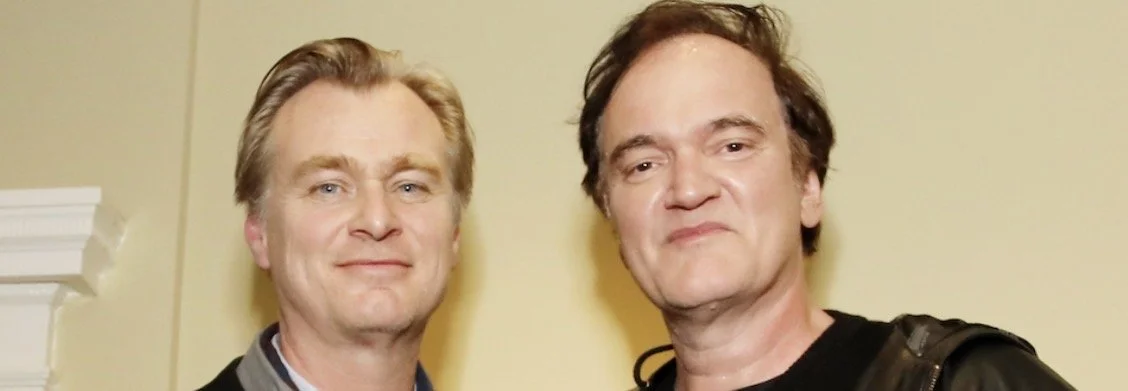
We already know about Quentin Tarantino’s self-imposed 10-films-and-retire rule, but having other A-list directors give their opinions on it is quite fascinating. The general consensus: Tarantino is nuts.
I’ll get to the others soon, but Christopher Nolan, speaking to The Telegraph, just doesn’t understand why Tarantino would self-inflict such a “dangerous” restriction on himself.
“I think it’s dangerous to look at it that specifically,” Nolan says. “I mean, Quentin has his reasons, and I respect those enormously. But I’m hoping that he won’t stay true to them.” For Nolan, he views “every film that I do as the last I’ll ever make – and one day I will be right. So every time I want to put everything into the project at hand. I’m never thinking, ‘Well, I’ll save this for the next one.’ I don’t ever want to think like that. I want each movie to be everything.”
Several prominent directors have weighed in on Tarantino’s “10 films and then retire” rule. The reactions tend to fall into the belief that a filmmaker should keep creating as long as they have the desire and ability.
Martin Scorsese, for example, doesn’t share the philosophy. Countering Tarantino’s fears of late-career decline, Scorsese said he couldn’t really relate to the idea of stopping because he remains driven by curiosity and a desire to explore new stories. He pointed to the fact that cinema keeps offering new possibilities and said he is “built differently” from Tarantino in that regard.
Scorsese’s perspective is essentially: if the creative impulse is still there, why stop? His own career — continuing into his 80s with films like “The Irishman” and “Killers of the Flower Moon” — is almost the opposite model.
Paul Thomas Anderson couldn’t imagine doing it either — he was more openly skeptical. He doesn’t understand how Tarantino could commit to a fixed number of films: “I could never do that. I don’t know how he could say that, or how he could take himself seriously when he says that.”
Tarantino wants his filmography to be perfect or, as he puts it, “without a misfire.” Yet he’s only 63. Forget the fact that some filmmakers have released their best films in their 60s. What about Akira Kurosawa, who directed “Ran” at 75? Robert Bresson directed “L’Argent” at 82. Scorsese helmed “The Wolf of Wall Street” at 71. Tarantino’s argument makes no sense.

This, I did not expect. Sure, I figured Ben Affleck's "Animals" wasn't going to contend for Oscars in any way (it completely skipped the fall festivals), but for it to be getting such toxic reviews? That's unexpected.