

Over the years, cinema has seen its share of filmmakers who created a single extraordinary work and then never returned to the director’s chair. We’re not talking about industry figures like Harvey Weinstein directing “Playing for Keeps” or Arnold Schwarzenegger helming “Christmas in Connecticut” — yes, both those movies exist. No, this is about filmmakers whose singular contributions are seminal, visionary, and enduring.
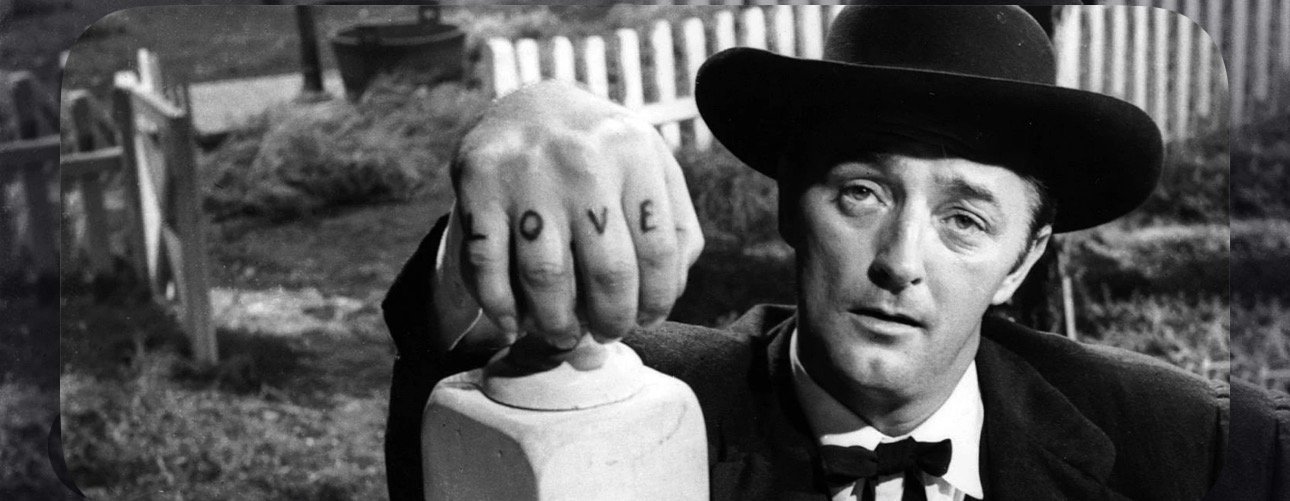
Among these, and maybe most legendary of all, is Charles Laughton’s “Night of the Hunter.” The film was a critical and commercial bomb upon release—so much so that he never directed again. Yet ironically, it has since become one of the most influential American films of its era. Its genre-bending mixture of suspense, horror, and surrealist imagery was ahead of its time, too unusual for audiences of the 1950s. Today, it is heralded as a masterpiece: Cahiers du Cinéma named it the second greatest film ever made, while the British Film Institute’s “Sight & Sound” poll ranked it 63rd in their list of the greatest films of all time.
Jean Vigo’s “L’Atlante” is the other major example, a film that similarly stands as a singular, visionary achievement. Its poetic realism and delicate, intimate storytelling have inspired generations of filmmakers, despite Vigo’s tragically short career. He died in 1934 at the age of 29 from tuberculosis.
A few examples immediately come to mind:
Charles Laughton (“Night of the Hunter”)
Jean Vigo (“L’Atlante”)
Marlon Brando (“One-Eyed Jacks”)
Barbara Loden (“Wanda”)
Claudia Weill (“Girlfriends”)
Herk Harvey (“Carnival of Souls”)
Dalton Trumbo (“Johnny Got His Gun”)
James William Guercio (“Electra Glide in Blue”)
These are rare directors who crafted a singularly brilliant debut, and sadly, due to either personal choice, sheer industry inertia, or worse, tragedy would never return to the director’s chair again. These one-off masterpieces stand as both a testament to their creators’ vision and a reminder that sometimes brilliance is fleeting, leaving us with a single, unforgettable work that resonates across decades.
In modern times, I couldn’t find any directors who helmed one great film, and then just disappeared — the closest one might be the late great Bill Paxton, whose brilliant debut, 2002’s “Frailty,” was followed by “The Greatest Game Ever Played.” Just those two.
If anything, we do have modern filmmakers who have directed only a handful of films over decades yet maintain a distinct voice. Terrence Malick, for instance, famously took a 20-year hiatus between “Days of Heaven” and “The Thin Red Line”, making each film feel like a rare, precious event. Similarly, Evan Glodell’s “Bellflower” remains a singularly inventive work from a director we haven’t heard from since, while Benh Zeitlin—after the extraordinary “Beasts of the Southern Wild”—released “Wendy” to more muted acclaim.
Sometimes the scarcity of a director’s output is due to the slow, painstaking nature of their craft or the challenges of securing funding. Consider the following filmmakers, for which I’ve cut the eligibility rate to just four films (or less) released in their careers, which all span at least 20 years:
Bennett Miller: “Capote”, “Moneyball”, “Foxcatcher”
Todd Field: “In the Bedroom,” “Little Children,” “TAR”
Paul Brickman: “Risky Business,” “Men Don’t Leave”
Terry Zwigoff: “Crumb”, “Ghost World”, “Bad Santa”, “Art School Confidential”
Spike Jonze: “Being John Malkovich,” “Adaptation”, “Where the Wild Things Are,” “Her”
Victor Erice: “”Spirit of the Beehive,” “El Sur,” “Close Your Eyes”
Charlie Kaufman: “Synechdoche NY,” “Anomalisa,” “i’m thinking of ending things”
Mark Romanek: “One Hour Photo”, “Never Let Me Go”
Frank Darabont: “The Shawshank Redemption”, “The Green Mile”, “The Majestic”, “The Mist”
Kenneth Lonergan: “You Can Count on Me”, “Margaret”, “Manchester by the Sea”
Shane Carruth: “Primer,” “Upstream Color”
Jonathan Glazer: “Sexy Beast”, “Birth”, “Under the Skin,” “The Zone of Interest”
Richard Kelly: “Donnie Darko,” “Southland Tales,” “The Box”
These filmmakers remind us that greatness is not always measured by quantity. Some go at a pace of one film per decade, but each one carries a distinctive mark of their vision. Scarcity can heighten impact; deliberate pacing or long silences between works can make each new film feel like an event.

Duffield's "Whalefall," the survival thriller about a diver swallowed by a sperm whale, is heading toward a roughly $7M-ish opening weekend, according to the most recent Saturday update.