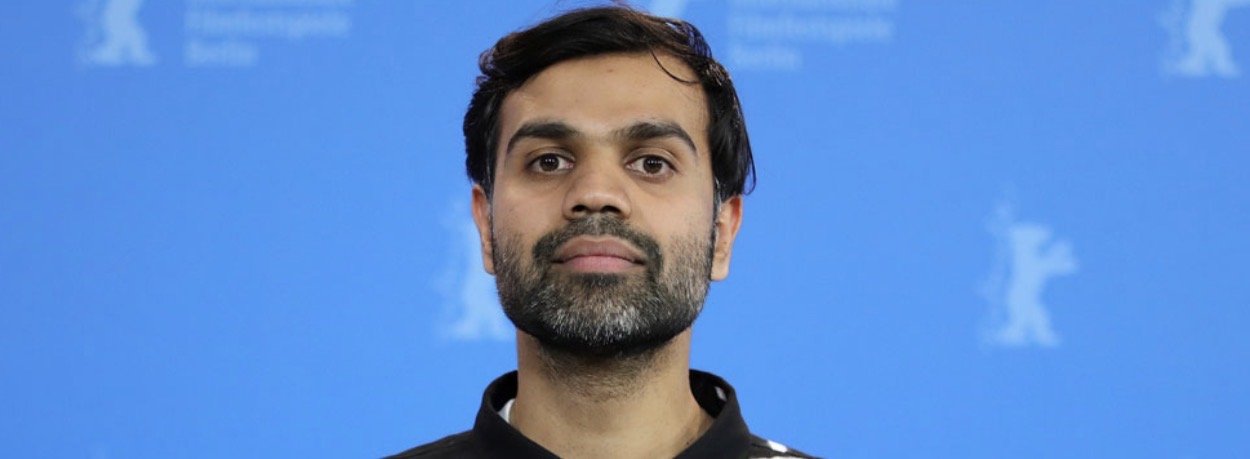
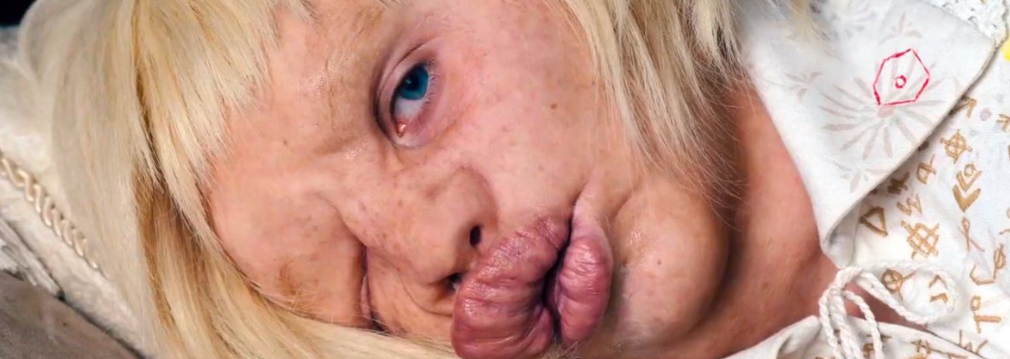
CANNES – Lars von Trier‘s "The House That Jack Built" came to Cannes with a lot of heavy baggage, but, after having seen it at this morning's press screening, the end result is actually von Trier indicting himself and his sins more than anything else, even as he repulses us. This is exactly the film you'd expect when delving into a serial killer drama directed by von Trier and yet, perverse fetishes aside, there are moments that give us a kind of satisfaction, as if the filmmaker is telling us that he deserves to be damned into the deepest pits of hell.
Read moreCannes: Spike Lee's “BlackKklansman" delivers rousing political entertainment
CANNES – Spike Lee‘s “BlacKkKlansman" is his best film since 2006's "Inside Man" and, maybe even, 2002's "The 25th Hour," although it doesn't come close to equaling the aforementioned latter which is a indisputably great movie. No, this latest joint from Lee shares more similarities to "Inside Man," in its unequivocally joyous attempt to entertain in every which way possible.
Read more“The VVitch" Director Robert Eggers’ ‘The Lighthouse’ Will Be Shot In Black and White

Robert Eggers is prepping for his next project and I'm glad to report that he'll be staying in the horror genre with "The Lighthouse." Little is known about this follow-up to "The Witch," but its editor has said that it's being shot in black and white.
Louise Ford (“Don’t Breathe” and “Thoroughbreds”) stated in an interview:
“It’s set in 1890, and we’re shooting on 35mm black and white stock, virtually unheard of nowadays,” she says. “Most black and white movies are shot in colour, and then converted to black and white in post. The dailies look beautiful; it’s very exciting.” Ford’s most recent film, Paul Dano’s “Wildlife,” premiered at Sundance earlier this year and is currently at Cannes.
Robert Pattinson and Willem Dafoe will star in the film which has been described as “a fantasy horror story set in the world of old sea-faring myths.”
First poster for “Bohemian Rhapsody" with Rami Malek as Freddie Mercury

‘Girl’: A Breakout Director & Performer Create A Tender, Artful Tale Of Trans Struggle [Cannes Review]

Full review at The Playlist.
Cannes program warns that Lars Von Trier's latest might “upset" some viewers

‘The Image Book’: Jean-Luc Godard’s Offers Another Radicalist, Experimental Assault [Cannes]

Read the whole review over at The Playlist.
Lucasfilm was reportedly unhappy with Collin Trevorrow's Episode 9 Screenplay

Yesterday we reported about The Wall Street Journal's scathing report on the behind-the-scenes drama of "Solo: A Star Wars Story." I don't know how I missed this, but there's a tidbit on Collin Trevorrow and his episode 9 screenplay which was all but shunned by Lucasfilm head Kathleen Kennedy:
According to the outlet, Trevorrow was tapped following the success he achieved with Jurassic World and wrote a script with Jack Thorpe. Lucasfilm president Kathleen Kennedy was reportedly unhappy with the first draft, with Trevorrow also feeling frustrated with the story he turned in. The filmmaker reportedly asked for another chance at writing the script, though Kennedy didn't allow him this chance, leading to the departure.
[Comic Book]
Pawel Pawlikowski’s ‘Cold War’ Is Admirable & Beautiful To Look At [Cannes Review]

Wall Street Journal: Ron Howard re-shot 70% of “Solo: A Star Wars Story." Writer Lawrence Kasdan fought with Chris Miller/Phil Lord, and is to blame for their firing.

The Wall Street Journal has some juicy tidbits in regards to the problems "Solo: A Star Wars Story" had in pre, during and post-production.
Lucasfilm president Kathleen Kennedy is described as person that “too frequently second-guessed her own choices and hasn’t effectively resolved disagreements with directors,” which explains her problems with directors, most notably fired filmmakers Phil Lord and Chris Miller on "Solo" and Collin Trevorrow on "Episode 9" but also kept but "technically fired" Gareth Edwards on "Rogue One."
WSJ also states that Miller and Lord most notably fought with "Star Wars" veteran writer Lawrence Kasdan over the script even before production, with Lord and Miller deciding to rewrite tons of pages from his screenplay. "Retakes and on-set improvisation are commonplace while shooting comedies. However, crew members, who have been around “Star Wars” sets previously started to become “frustrated” and “exhausted” by the directors’ shooting style." Yikes.
Kasdan even “undermined” the filmmakers and even criticized them behind their backs to the cast and crew. Despite all the brouhaha, Lord and Miller did finish the film, but were ultimately fired and replaced by Ron Howard.
“Ron wanted to go back to the spirit of the original trilogy, while Phil and Chris were looking forward to something new, more like ‘Guardians of the Galaxy.’” The source continues saying that Howard re-shot about 70% of the movie.
On a side note, the WSJ report states that Lucasfilm did approach Rian Johnson to direct the final film in the new trilogy, but “serious discussions” were never developed.
Is Martin Scorsese's “The Irishman" Actually A Netflix Mini-Series?

Martin Scorsese sat down for a q & a today following a Director’s Fortnight screening of his classic Mean Streets. The 75 year-old was wearing mauve socks, a nod to De Niro in "Casino?" Regardless, the most fascinating part of this rather slowly-elaborated conversation happened when Scorsese mentioned that his upcoming "The Irishman," contains about “300 scenes.” What? That's enough for an 8 hour mini-series, not a 3 hour flick. A typical movie would have, what, around 60-70 sequences?
There's a New York Times story that confirms the reported “300 scenes” quote. So, is "The Irishman" gonna be a Netlix miniseries and also have, ala Assayas' "Carlos," a shorter theatrical version for Oscar consideration? Who knows.
"The Irishman," is the real-life saga of Jimmy Hoffa’s supposed assassin, and stars Robert De Niro, Al Pacino, Joe Pesci, Anna Paquin, Bobby Cannavale, Harvey Keitel and Ray Romano.
Roman Polanski exclaims #MeToo Movement is “Collective Hysteria” and “Total Hypocrisy”

The Polish edition of Newsweek (via AP) recently interviewed Roman Polanski. In that rare sit-down, Polanski bashed the #MeToo movement saying it was “collective hysteria of the kind that sometimes happens in the society." h went on to say "Everyone is trying to sign up, chiefly out of fear,” and compared the movement to North Korea’s public mourning for its leaders when everyone cries so much that “you can’t help laughing.” Yikes.
“To me this is total hypocrisy,” he concluded.
Believe it or not, was conducted before the May 3rd to oust him from the Academy.
Ah, the times we live in.
60 years ago today, Alfred Hitchcock's “Vertigo" premiered in theaters

"Vertigo" received poor reviews upon its release, but since then it has routinely been cited as one of the greatest movies ever made. It topped Sight & Sound's list of the 50 greatest films and is currently ranked 9th on the American Film Institute's 100 greatest American films of all time. I consider myself lucky to have seen "Vertigo" twice now in theaters. I was looking around my archives, but couldn't find any essay i had written on Hitchcock's movie, which I consider to be the greatest movie of all-time. I will write something when I return from Cannes.
“Deadpool" demands your silence.

With a score of 8,9/10 and over 250K ratings, AVENGERS: INFINITY WAR is one of the highest rated movies of all time on IMDb


Poster Revealed for Jordan Peele's New Movie, ‘Us'

Linda Blair with her animatronic double used for the spinning head scene in The Exorcist, 1973

Report: Terry Gilliam Reportedly Hospitalized With Possible Stroke
My colleagues over at The Playlist are reporting that Terry Gilliam has been hospitalized. From what, we are not sure of, but, regardless, the last few months have no doubt been very taxing on the 77 year old director, what with his creative and judicial struggles to finally bring "The Man Who Killed Don Quixote" to the big screen being threatened yet again by a greedy producer. The film has been plagued by close to 20 years of bad luck from actors dying, to weather demolishing sets, to the aforementioned ex-producer attempting to not have the film premiere at Cannes on May 20th.
The Playlist are sourcing French publication Nice-Matin"
"Gilliam was supposed to appear in court but was unable to attend. They also report that, even if ‘Don Quixote’ gets the go-ahead to premiere at the prestigious film festival, Gilliam may not be able to make it to France to introduce the film."
Nice-Matin reports that Gilliam had a “stroke,” Le Point says it was some kind of “discomfort” alas we'll keep you posted on the health of this legendary cinematic giant.
Cannes Jury Press Conference Was All About #MeToo
CANNES –The #MeToo movement took center stage at the Cannes Jury press conference.
This year's jury is composed of five women (President Cate Blanchett, Ava Duvernay, Kristen Stewart, Léa Seydoux, and Khadja Nin) and four men (Denis Villeneuve, Chang Chen, and Andrey Zvyagintsev.)
Of course, the most recurrent questions were related to what was happening right now in the industry, movements such as #TimesUp and #MeToo, which had me starting to grow impatient, especially considering nothing new was said and barely any movie-related questions were asked. This is a film festival I am attending, right?
At some point Blanchett answered a question by saying “Being attractive doesn’t preclude being intelligent.” Someone shoot me now.
She went on to add: “This is by its very nature a glamorous, fantastic, spectacular festival. Full of joie de vivre. Full of great good humor. Full of discord and disharmony. Making art, making work is not always going to be harmonious. We are not always going to be in concord and agreement. The world would be terribly boring if it was. I think those aspects of the festival are things to be enjoyed but in an equal fair and equitable way.”
As for the festival being politicized, at least the actress more or less, agreed with my own sentiments about the weapon of politicization and art:
“I think it’s not a political film festival and I think making the work is often inherently political and how it is going to be digested and disseminated post the festival may well have political implications for people and open their minds and hearts to situations going on around the world.”
“As Ava was saying, forming bridges and family situations or love relationships or the trials and tribulations of people you can relate to whether you lived in Compton or grew up in East Ivanhoe in Australia as I did. But this is not the Nobel peace prize, it’s the Palme d’or. It’s a slightly different function. But, yes, it’s a terrible situation that two of the filmmakers will more than likely not be here when their films screen. It’s a very, very terrible situation.”
The two directors she refers to are Jafar Panahi, director of “Three Flowers,” who has been making movies the last 8 or so years, despite a twenty-year media and travel ban imposed on him in 2010. Kirill Serebrennikov, director of “Summer,”is under house arrest until October for bogus fraud charges which stink of Putin dictating.
An interesting thought from DuVernay:
“I feel like cinema is this voice and it’s the way that where I’m from, Compton, California, was able to understand the humanity of a family in Iran or in Shanghai,” DuVernay says. “There was nothing outside of my window to orient me to my place in the world. It’s film that brought me that. It’s film that allows me to assert my voice. I feel Cannes is so important because it brings us together from all points of the world from wherever we are to assert our voices to assert ourselves so our voice actually speak to each other in cinema. It’s so important I feel that we are inclusive in the ways we participate in film, whether that’s in a theater or not. It’s still film. I think this is a question that the industry and artists and executives alike are grappling with. What is a film? A film is a story told by a filmmaker and the way in which that film is presented to the audience I don’t think has a bearing of whether or not it’s a film. I look forward to having those debates with my fellow jury members, like the ones sitting next to me and others.”
The 71st Cannes Film Festival is on until May 19th.
We will know if Terry Gilliam's “The Man Who Killed Don Quixote" can legally premiere at Cannes on Wednesday

A decision over whether Terry Gilliam's "The Man Who Killed Don Quixote" can premiere at Cannes will be rendered on Wednesday, April 9 by a court judge.
"We will have to wait and so will Terry Gilliam," said Fremaux.
Gilliam and ex-producer Paulo Branco have been butting heads on the film. A few years back they had both reached an agreement on the production of “The Man Who Killed Don Quixote.” The deal was simple, Branco would fund "Quixote," give Gilliam creative freedom and reap the benefits.
Those aforementioned benefits never came to Branco, Gilliam found another producer to finance the film, and then film the started production. Branco has now re-entered the picture and claims the film cannot be released, let alone premiere anywhere, until he gives permission, pointing to the 2016 contract between he and Gilliam. Gilliam says the contract was nullified due to Branco not giving him any funding.
I won't go into great detail about the bad luck and mishaps that have hampered-down Terry Gilliam's passion project "The Man who Killed Don Quixote" for the better part of three decades now. At some point, it seemed like the cursed project, which finished production on June 4th and is now practically completed in the editing room, was on course to be released this year with even a Cannes premiere booked in advance. They most definitely resolved the last setback, John Hurt's death, which was settled with Gilliam regular Jonathan Pryce taking over the role.

If you can believe it, this is actually Peter Farrelly's second A+ CinemaScore, after “Green Book” in 2018, and we all remember how that one ended. Buckle up, folks — word of mouth is starting to spread.