

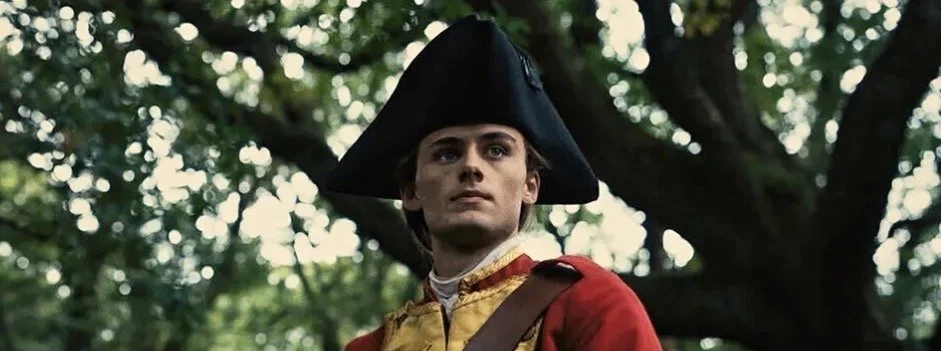
So there’s this film, “Young Washington,” distributed by Angel Studios, directed by Jon Erwin, that’s hitting theaters tomorrow in celebration of July 4. And you know what? Ticket sales have been fairly robust for a film that’s barely being covered by any of the trades.
Based on impressive presales, “Young Washington” might have an opening weekend in the $20M range. Impressive for a film that doesn’t really have any bankable stars—unless Mary-Louise Parker, Kelsey Grammer, Andy Serkis, and Ben Kingsley count as box office in your world.
Angel Studios, whose core audience has largely been conservative, Christian, and family-oriented viewers, did great business on titles like “Sound of Freedom,” “Homestead,” and “The Chosen.” “Young Washington,” a unabashed patriotic take on George Washington, is being marketed primarily to a conservative and faith-adjacent audience.
Now comes word that “Young Washington” significantly used AI. Across the film, Erwin says roughly 100 shots were augmented with generative systems, and five hired AI artists, to make the budget “affordable.” Some of the touch-ups involved widening environments, extending horizons, and turning contained set pieces into period-authentic geography that never physically existed.
The clearest example is the icy river sequence. Instead of risking real exposure, Jon Erwin staged the scene in a controlled 50-foot water tank in Ireland and then used AI to expand it into a vast, dangerous landscape. “The actors were there, the raft was there, the water was there, but the water wasn’t cold,” he tells Variety.
One of the more explicit AI interventions involved post-transforming live-action footage of two crew members into British soldiers on horseback—effectively rewriting costume, setting, and historical context after principal photography. It’s a textbook example of Erwin’s approach: shoot first, reconstruct later.
As far as I can tell, this is the most AI that’s been used on any film that’s about to receive a wide theatrical rollout on more than 2500 screens. If this were a release from one of the four major studios, there would almost certainly be significant blowback over the extent of its AI use. Instead, it took an independently financed film from Angel Studios to make this happen.

The film will star Hugh Jackman, while Hugh Grant and Owen Cooper are circling roles. Jack Thorne, who is red-hot, thanks to his acclaimed Netflix series’ "Adolescence” and “Lord of the Flies,” wrote the script.