

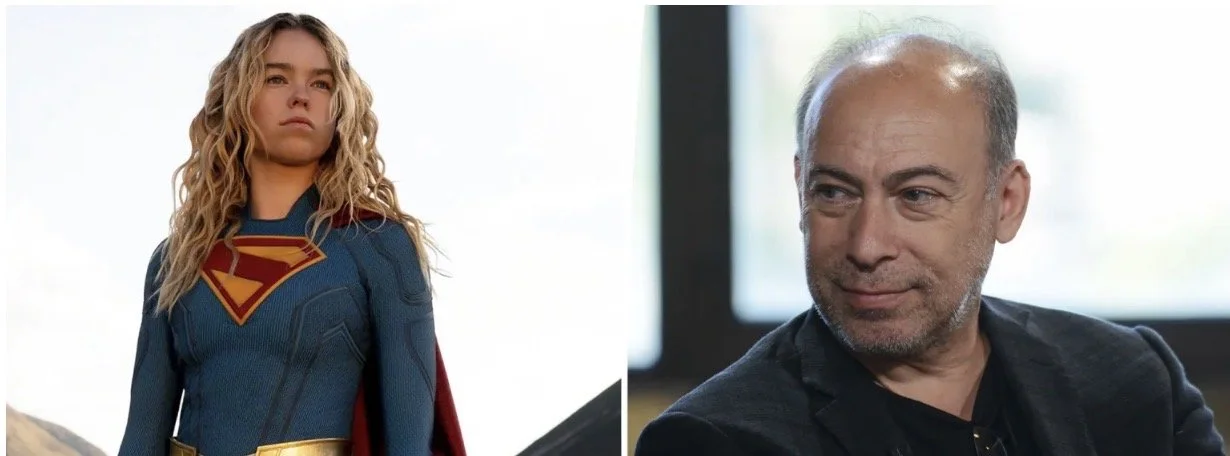
“Supergirl” opened to a disappointing $65M worldwide in its first four days despite a reported $170 million–$186M budget, putting the film on track to become a major box-office flop.
According to Page Six Hollywood’s sources, the bigger story emerging from the opening weekend wasn’t the financial performance, but the backlash surrounding veteran film critic Owen Gleiberman’s negative review for Variety.
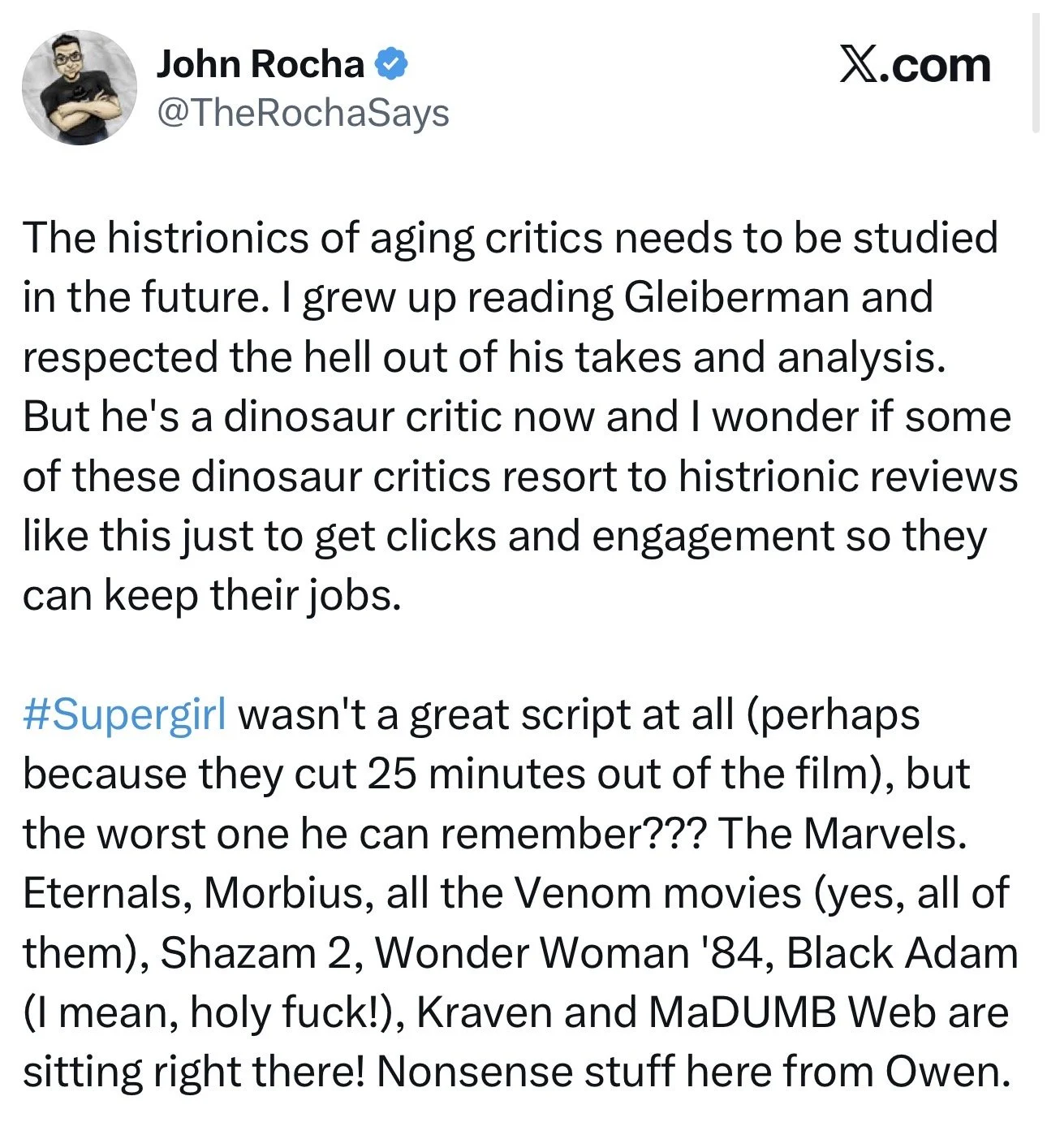
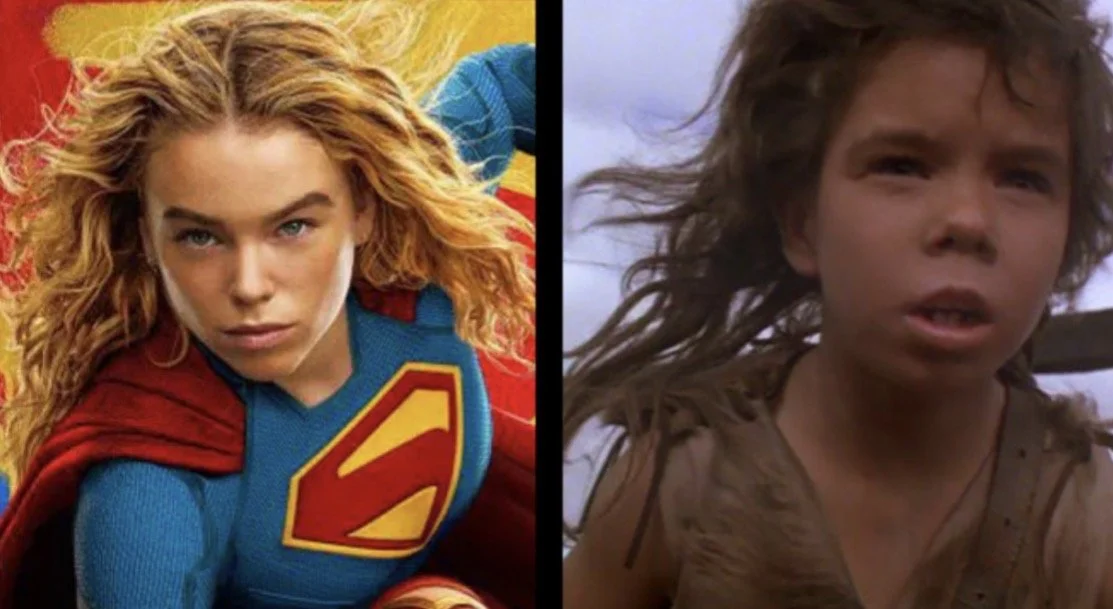
Gleiberman drew criticism for describing the screenplay as “a comic-book movie with the worst script I can remember” and comparing Milly Alcock to “Kristy McNichol crossed with the Feral Kid from ‘The Road Warrior’ in oversize Penny Lane sunglasses.” Variety responded by standing firmly behind its critic, stating that it “has a long history of supporting our critics and encouraging them to express their honest and independent points of view,” adding that it fully stands by Gleiberman and his review.
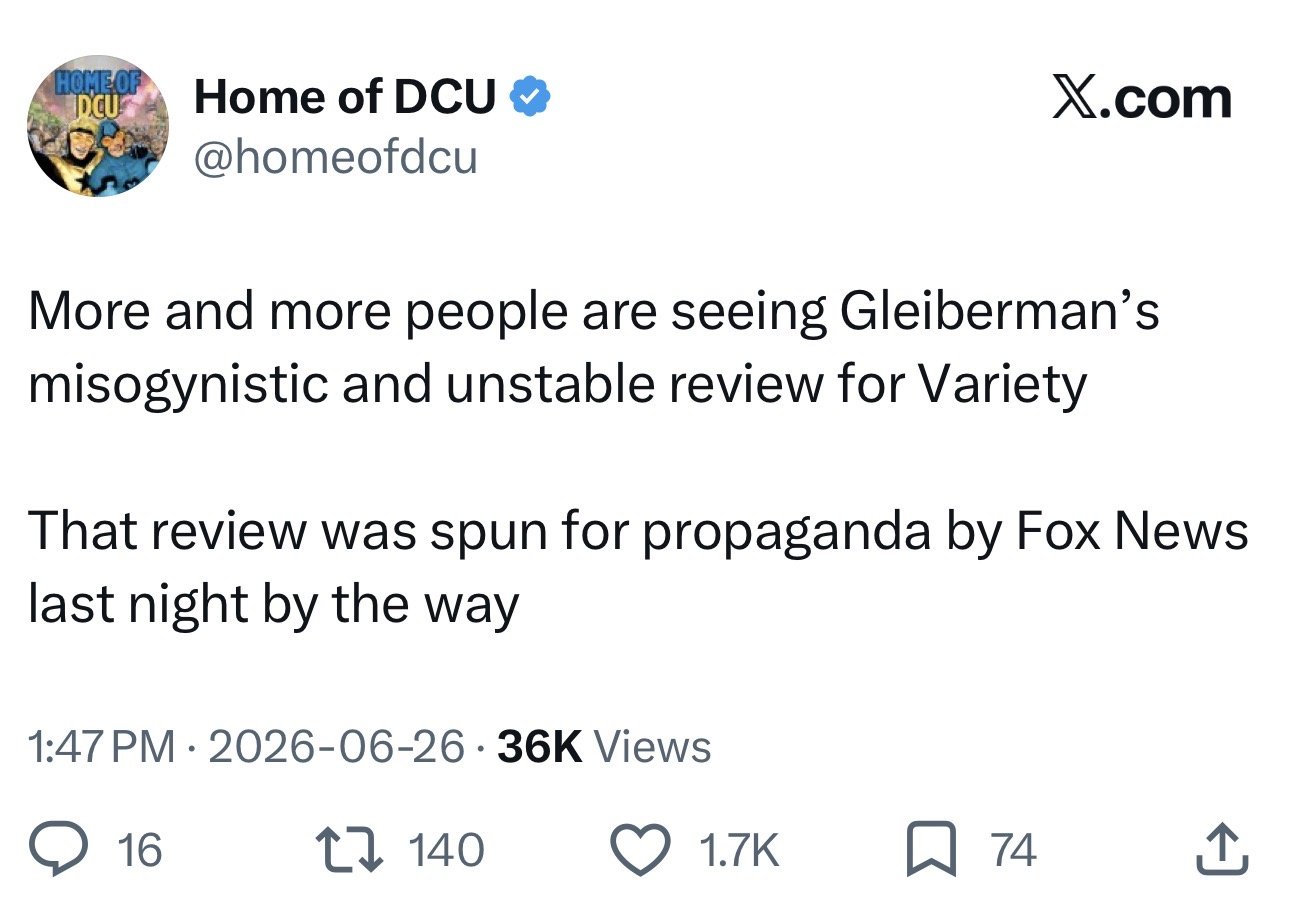
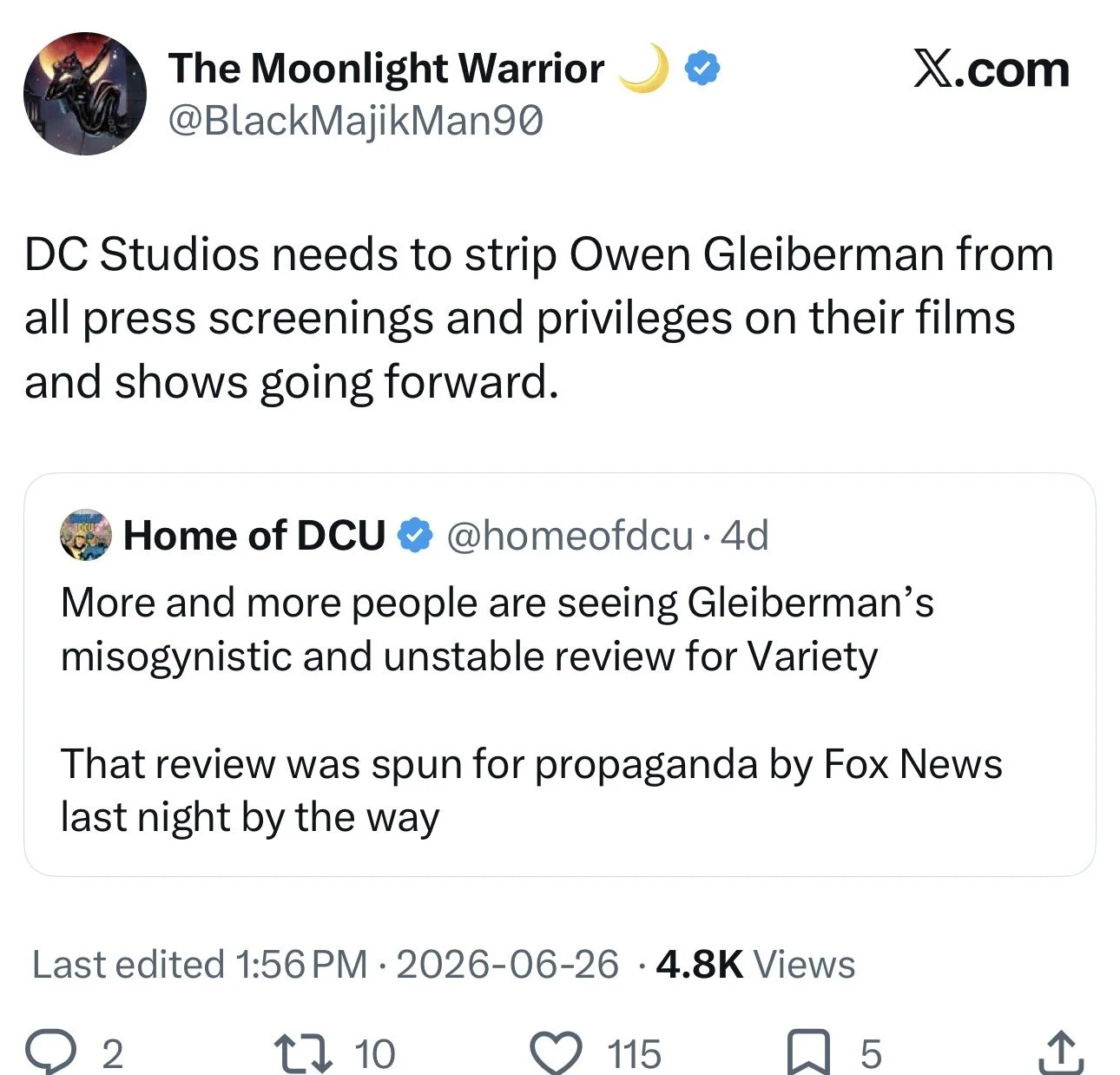
The review quickly triggered a wave of criticism online, with commentators accusing Gleiberman of “sexism” and objecting to his description of Alcock. Headlines circulating in response included claims such as “You Don’t Have to Like ‘Supergirl’ But Writing a Sexist Review Just Makes You Gross” and “Supergirl Deserves Better Than the Current Media Feeding Frenzy.”
Page Six calls this a “sinister smear campaign,” with rumors circulating that someone from Milly Alcock’s camp may have helped amplify at least one of the critical articles, including claims that characterized Gleiberman as being in his “late 60s” with a reputation for “being out of touch.” A representative for Alcock, speaking to Page Six, denied any involvement in spreading those claims.
The controversy escalated further after reports emerged that at least one writer involved in criticizing Gleiberman had previously accepted an all-expenses-paid set visit to “Supergirl” in London, fueling accusations of conflicts of interest.
Several film critics speaking to Page Six Hollywood defended Gleiberman and pushed back on the backlash. One argued that the Kristy McNichol comparison was harmless and said, “Kristy McNichol is awesome… I don’t think they’re unfair analogies,” while another dismissed the outrage as “embarrassing,” adding that organized pressure campaigns against critics have been building for years.
The latest episode follows a growing pattern in which critics face increasing pushback from talent and fan communities.
Page Six points to recent examples involving Paget Brewster telling a critic “You suck” before later apologizing, Taylor Sheridan responding to critics with “F–k ’em,” and Seth Rogen suggesting critics should consider the emotional impact of their reviews.
Meanwhile, at least one author behind the anti-Gleiberman coverage has continued the campaign, publishing another article asking, When Will Trade Publications Learn From Their Mistakes and Stop Doubling Down?

The film will star Hugh Jackman, while Hugh Grant and Owen Cooper are circling roles. Jack Thorne, who is red-hot, thanks to his acclaimed Netflix series’ "Adolescence” and “Lord of the Flies,” wrote the script.