Chris Aronson, former distribution chief at Paramount and 20th Century Fox, speaking to The Wrap, is expressing excitement at the success of “Backrooms” and “Obsession.” He sees the emergence of Kane Parsons and Curry Barker as a “moment analogous to the launch of the American New Wave” which kicked off in 1967 with the releases of Arthur Penn’s “Bonnie and Clyde” and Mike Nichols’ “The Graduate.”
He’s not the only one making such comparisons. Producers Jason Blum and James Wan opened the Produced By conference last Saturday with an optimistic assessment of the film industry’s future. Both argued that the horror genre, and now these new creative voices online are helping to revitalize Hollywood.
Wan and Blum pointed to the breakout success of recent horror hits—“Obsession” and “Backrooms”—as evidence that audiences are returning to theaters for original, low-budget genre films. Blum framed the moment in cultural terms, arguing that there is “almost this feeling of the ’70s” emerging again. Wan added that horror is “saving our industry.”
Warner Bros. Pictures chief Mike De Luca reinforced the comparison, drawing a direct parallel between today’s horror and YouTube-bred filmmakers and the auteur movement of the 1970s.
“A little bit like the 70s, I would say the writer-director is the star again, which I think is fantastic,” he said.
No, I’m not ready to declare that we’re witnessing another 1974. “Backrooms” and “Obsession” may have had groundbreaking rollouts, but they are nowhere near as great as “The Graduate” or “Bonnie and Clyde.” That said, they may still stand as defining examples of a shift that has been building for over a decade: Gen Z, and the slightly older generation before them, will go to movie theaters when a film feels like it was made for them—particularly in the horror genre—rather than simply marketed at them.
So how did we get here?
When looking at some of the most important film movements in American cinema, one has to start with the “New Hollywood” movement of the late 1960s and 1970s. Influenced by European art cinema and the social upheavals of the era, it ushered in a period of director-driven storytelling, moral ambiguity, and a challenge to established studio conventions.
Other key movements followed. Most notably, the independent film boom of the 1980s and 1990s, powered by companies like Miramax and Sundance breakthroughs, expanded opportunities for lower-budget, character-driven films. This wave helped launch the careers of filmmakers such as Quentin Tarantino, Paul Thomas Anderson, Todd Haynes, Alexander Payne, Richard Linklater, Darren Aronofsky, Spike Jonze, and Steven Soderbergh, among many others.
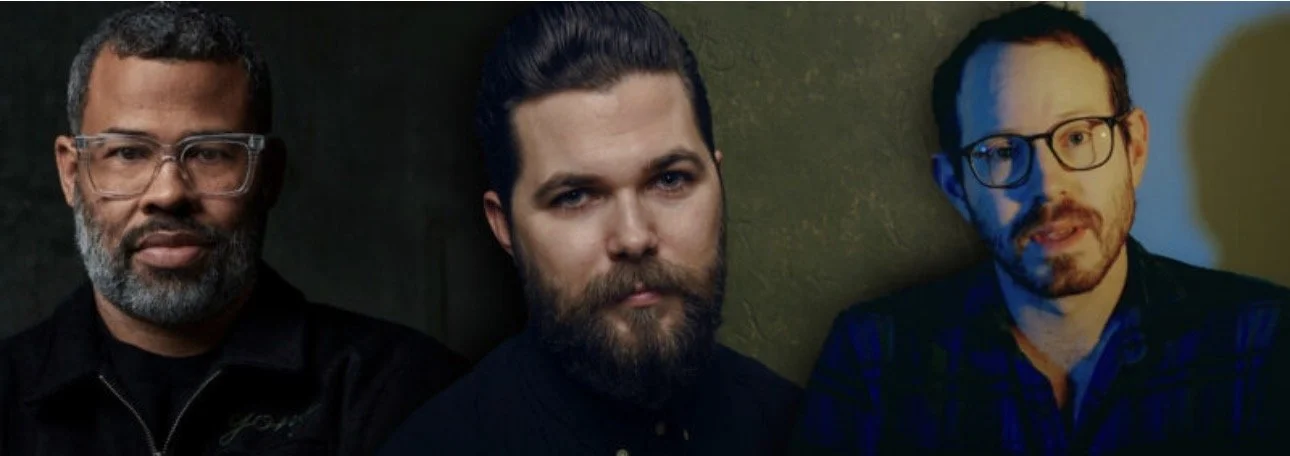
More recently, the most significant American movement of the last few decades has arguably been the neo-horror wave, or what some like to call “elevated horror.” Directors including Ari Aster, Robert Eggers, Jordan Peele, David Robert Mitchell, and Zach Cregger have helped shape its language. These filmmakers injected new creative energy into the genre while being influenced by the work of John Carpenter, David Lynch, Stanley Kubrick, and David Cronenberg.
In many ways, the emergence of the horror genre, and online-bred filmmakers, can be viewed as a hybrid of New Hollywood, the spirit of 1990s independent cinema, and the creative freedom of the neo-horror movement.
Seen in that context, the breakout success of films like “Backrooms” and “Obsession” feels not just like a YouTube phenomenon but also, and arguably more importantly, the continuation of an evolving modern horror wave.
If New Hollywood defined the 1970s, independent cinema defined the 1990s, and neo-horror defined the 2010s, the emerging generation of horror films, which has bled into internet-native filmmaking, is helping shape the next major chapter in horror.
Many cite Jordan Peele’s “Get Out” as the spark that accelerated neo-horror, while Robert Eggers’ “The Witch” two years earlier signaled a different kind of arthouse genre film—more patient, more atmospheric, more interested in dread than spectacle.
However, a strong case can be made for Jennifer Kent’s “The Babadook,” from Australia. My pick would actually be David Robert Mitchell’s minimalist “It Follows,” which premiered at Cannes in 2014, as the true catalyst: a film that stripped the genre back to its essentials, rejected contemporary horror conventions, and reassembled them through a modern lens shaped by Carpenter-esque minimalism and analog unease. It felt like a turning point—a reminder that horror still had room to move, mutate, and surprise.
Parsons and Barker began uploading their popular short films online around the time of the boom of “It Follows,” “Get Out,” “Hereditary,” and “The Witch.” Coincidence? Maybe. I haven’t heard them explicitly cite any of these films or filmmakers as primary influences, but there’s no denying that they likely would not have films currently playing in theaters, to large audiences, without the path carved by Peele, Eggers, Mitchell, and Aster.
This is obviously a movement still in motion, rather than a finished chapter, the American New Wave last 12 years (‘67-79). If earlier turning points include films like “It Follows,” “The Babadook,” and “Get Out,” then the question is whether today’s breakout titles are continuation, culmination, or something entirely new. The answer may depend more on how audiences ultimately remember the films that defined their own era of discovery.
So what do you think—is there a single film that truly defines the neo-horror wave, or is it the accumulation of many that gives it shape?