




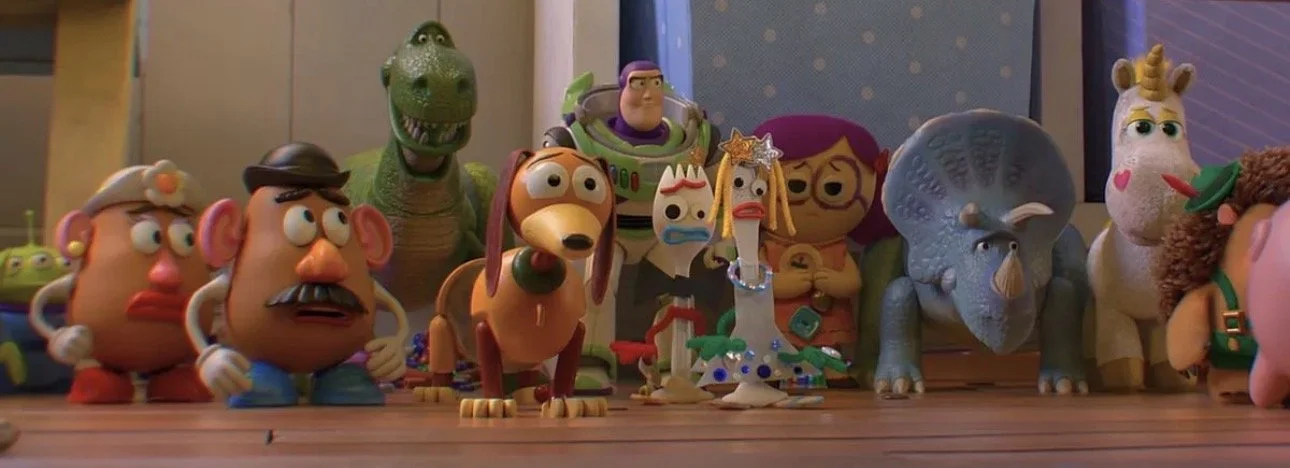
Hate to break it to our readers, but “Toy Story 5” is another symptom of Disney’s dependence on IP. Sure, they occasionally release strong original films, like “Soul,” but those projects are becoming increasingly rare. In that context, “Toy Story 5” is wholly unnecessary. It doesn’t feel like a story that needed to be told, but rather a product that was inevitably going to happen.
Yes, the review embargo has lifted, and sure, there are plenty of critics who dig this latest Toy Story for what it is. That 91% on Rotten Tomatoes on Rotten Tomatoes means it’s well-liked. Meanwhile, its 73 on Metacritic is still a good score, but it’s the weakest in the franchise. If you can believe it, even “Toy Story 4” managed an 84. The other three were in the 90s.
Technically, the franchise has already had two endings: “Toy Story 3,” which was widely seen as the perfect conclusion to Andy’s journey, and “Toy Story 4,” which was meant to be a farewell to Woody. Yet Woody is back again in the fifth installment, and that sense of closure is once again undermined in the pursuit of profit.
Speaking of money, “Toy Story 5” could open to around $175M domestically this weekend. As a business decision, making the damn thing is hardly a mistake for Disney. Artistically speaking, though? It’s a glitch.
Woody and Buzz are still here, but this time they’ve been pushed into the background. The story follows Bonnie, who is struggling to make friends. Her parents buy her a tablet-like device called Lilypad that connects her with other kids through games and group chats. This sets up the movie’s central theme: toys competing with technology for children’s attention. Jessie becomes determined to help Bonnie build real-world friendships, particularly with a girl named Blaze, but to do that, the characters have to go through the usual action-adventure hijinks that have defined the series from the beginning.
Pixar once treated these movies as meaningful chapters in a larger story, but “Toy Story 5” is simply continuing the franchise because it remains profitable.
Now, the film does have some worthwhile ideas. Jessie takes over as the main character, and that’s a welcome change. The story also explores how children’s relationship with toys has changed in the digital age through Bonnie’s attachment to her tablet. The “toys versus technology” theme feels like a natural direction for the series, even if the movie approaches it from a somewhat simplistic perspective.
Yet I can’t help but agree with Quentin Tarantino — if this wasn’t a business driven by box office prospects, there would be no reason to make a fourth or fifth ‘Toy Story’ movie. The third one was sheer perfection, and what Disney and Pixar are currently doing is destroying that film’s long-term reputation.

Still no distributor for "Bucking Fastard," "Alpha Gang," "The Last Photograph," "Closing Night," and "The Life and Deaths of Wilson Shedd." The issue seems to be quality more than a lack of willingness to buy.