



There’s something instantly recognizable about Ryusuke Hamaguchi in “All of a Sudden”: the long conversations that start casually and drift into existential territory, the way strangers slowly become mirrors for each other, the immaculate long takes.
The reviews have been mostly positive — The Wrap (mixed), Variety (positive), IndieWire (B+), THR (positive), Screen, The Guardian (3/5) — but this looks like it’ll be Hamaguchi’s least well-reviewed film since 2018’s “Asako.”
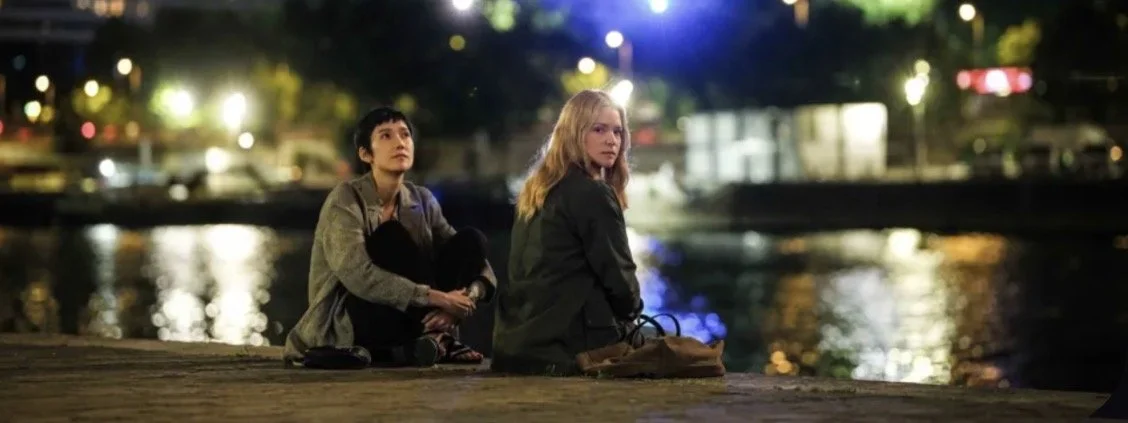
This time he centers the story on Marie-Lou, a French nursing-home director devoted to humane elder care, whose life becomes intertwined with Mari, a terminally ill Japanese theater artist she meets through an autistic teenager named Tomoki. Their bond anchors the movie from beginning to end.
The film moves between Paris and Kyoto, but unlike Hanaguchi’s last film, the mimimalist and effective “Evil Does Not Exist,” this one feels sprawling and messy — more like people thinking out loud rather than characters moving through a tightly controlled narrative. It helps that Virginie Efira is one of the leads — a wonderful actress with strong screen presence. Tao Okamoto is also incredibly touching as her co-star.
What’s interesting is how much this film feels like a culmination — and also a possible breaking point — for the ideas Hamaguchi has been circling since “Wheel of Fortune and Fantasy.” In that film, conversation created tension; every dialogue scene had hidden motives and emotional reversals. In “Drive My Car,” dialogue became therapeutic, a way to express grief without directly naming it. Then “Evil Does Not Exist” stripped things down even further into atmosphere and social friction.
“All of a Sudden” pushes in the opposite direction of those previous films: it’s dense, literary, openly philosophical. Characters don’t just confess feelings anymore; they discuss ethics, mortality, capitalism, and aging in long uninterrupted stretches. Sometimes that’s hypnotic. Other times, it feels mundane.
It should be mentioned this is a very long film, with a 3 hour 16 minute runtime, and there are a few false endings that feel unnecessary — as if Hamaguchi just can’t help himself, too in love with the characters he’s created. You can imagine some viewers being deeply moved and others rolling their eyes.
Still, at its best, “All of a Sudden,” has some moments of transcendance, and ends up more fascinating than frustrating. Hamaguchi has become one of the few contemporary directors whose films genuinely trust audiences to sit with ambiguity and duration, and “All of a Sudden” is yet another attempt to test how far that trust can go.

Hill, coming off the miserable reviews for this year's “Outcome,” now has yet another film destined for a long delay. This time, it's “Cut Off,” his third directorial effort, which was set to hit theaters this July