

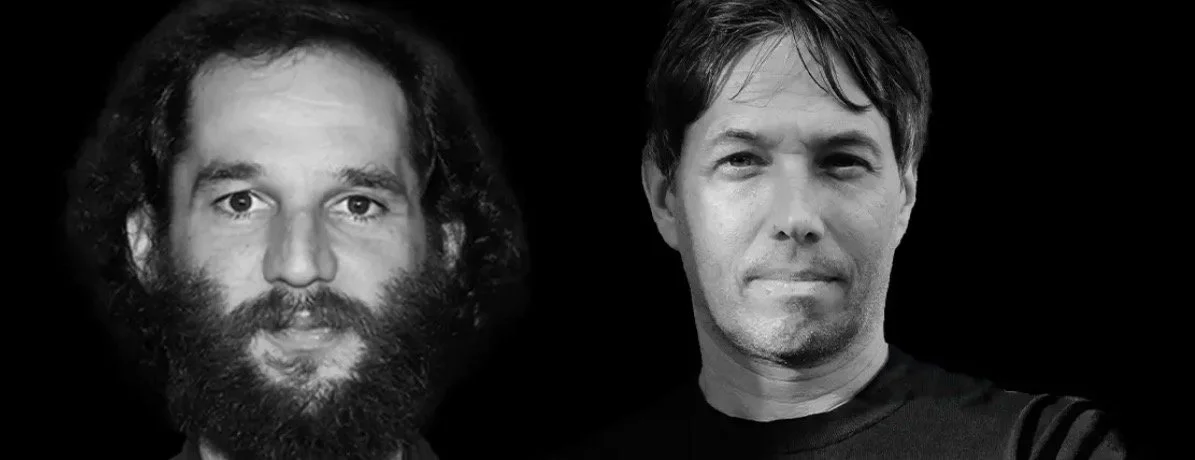
A THR piece, written by Paul Fischer, and titled “Coppola, Lucas and Spielberg Rewrote Hollywood’s Rules in the Chaotic 70s. Who’s Doing That Now?,” wonders which current filmmaker represents the future of cinema?
Fischer compares the 1970s—an era he claims “birthed the last golden age of cinema”—to the 2020s, which he characterizes as a period marked by “bloody conflict abroad” and “corruption in politics,” conditions he argues could give rise to a new generation of iconoclastic filmmakers.
The 1970s were a golden age of American cinema. Most movie buffs are familiar with an agreed narrative of how the decade happened: a new young generation of filmmakers, whose names became the stuff of legend — Steven Spielberg, Francis Coppola, William Friedkin, Martin Scorsese, Mike Nichols, Brian De Palma, Terrence Malick — arrive on the scene, overtaking the old, crusty studio system. They invent the blockbuster, make movies more violent and sexy than any mainstream films had been before, and generally run wild, their egos out of control, until a string of self-indulgent productions, most infamously Michael Cimino’s Heaven’s Gate and Francis Coppola’s Apocalypse Now, lead studio executives to reassert control.
Fischer points to Sean Baker and Ryan Coogler as potential names to lead us into the next “golden age” of cinema …
However, I take issue with his implication that the 1970s were the “last golden age” of American cinema. That simply isn’t true. The 1990s indie boom, for example, produced a remarkable wave of young filmmakers—Quentin Tarantino, Paul Thomas Anderson, David Fincher, Todd Haynes, Richard Linklater, Darren Aronofsky, Spike Jonze, Steven Soderbergh, Alexander Payne, Kelly Reichardt, David O. Russell, to name just a few.
They emerged from a vibrant U.S. indie ecosystem that fueled a decade of creative risk-taking and seemed to promise a bold future for the medium. That momentum has slowed considerably this century.
Two years ago, Linklater spoke of the ‘90s last good era for filmmaking “the last great era of filmmaking.”
It feels like it’s gone with the wind — or gone with the algorithm. Sometimes I’ll talk to some of my contemporaries who I came up with during the 1990s, and we’ll go, “Oh my God, we could never get that done today” […] I was able to participate in what always feels like the last great era for filmmaking
The major flaw in Fischer’s arguing that we might be entering another “golden age” is that far less talent is being cultivated within Hollywood today, due in no small part to studios’ reluctance to gamble on original storytelling and their growing dependence on established IP.
Which raises an interesting question: name a U.S. filmmaker who debuted in the last 20-ish years (since 2006) and has the potential to exert a major influence on cinema in the years ahead.
Several filmmakers born outside the United States have clearly risen above the noise. Steve McQueen, Yorgos Lanthimos, Céline Sciamma, Albert Serra, and Alice Rohrwacher all come to mind. But what about American filmmakers?
A few obvious standouts are Sean Baker, Damien Chazelle, Bennett Miller, and Josh Safdie—each an exceptional talent. Cases will also be made for Robert Eggers, Brady Corbet, Zach Cregger, Jeff Nichols, Jordan Peele, Barry Jenkins, Sean Durkin, Ari Aster, Jeremy Saulnier, David Lowery, S. Craig Zahler, Trey Edward Shults, Greta Gerwig, and David Robert Mitchell.
One filmmaker I once had especially high hopes for was Shane Carruth. He directed only two films, but both were remarkable: “Primer” (2004) and “Upstream Color “(2013). Following personal controversies, his career effectively stalled, and it has now been more than a decade since his last film.
The relative lack of homegrown talent emerging from the U.S. studio system over the past decade is troubling—particularly when compared to the abundance of creative voices that defined the ’70s, and ’90s. Promising filmmakers are often absorbed almost immediately into the IP machine. Directors like Ryan Coogler, Destin Daniel Cretton, Jon Watts, and many others have been pulled into corporate franchises, a trend reinforced by studios that scour Sundance each year for the next director to seduce with layers of cash.
So what does the future of American cinema look like? Bleak, perhaps—but not entirely hopeless. Several of the filmmakers mentioned above are quietly building impressive filmographies, fighting constant battles for creative freedom and financing in order to get their true visions onto the screen. Whether that struggle can ultimately sustain a new golden era remains an open question.

Hill, coming off the miserable reviews for this year's “Outcome,” now has yet another film destined for a long delay. This time, it's “Cut Off,” his third directorial effort, which was set to hit theaters this July