


“The Smashing Machine” is, at its heart and core, Dwayne Johnson’s movie—not the film itself, which is semi-decent, but the performance of Johnson, who finally steps into serious acting with fearless bravado.
No surprise, then, that Johnson’s performance is getting an overwhelmingly positive response from critics. He might very well get an Oscar nomination for this film. Here’s the round-up of the reviews so far—all of them singling out the performance as the film’s clear standout:
IndieWire (B+), Next Best Picture (7/10), The Independent (4/5), Variety (positive), The Telegraph (4/5), Vulture (negative), ICS (negative), THR (positive), The Playlist (B+), Screen (mixed), The Film Stage (mixed), Radio Times (3/5), The Guardian (3/5), The Times (2/5).
This film is such a weird and curious hybrid: part docudrama, part farce, part sports movie, part Oscar-bait showcase for Johnson, who finally looks like he’s trying to act instead of simply posing. Watching him strain toward seriousness—awkward, lumbering, oddly touching—is the real spectacle here.
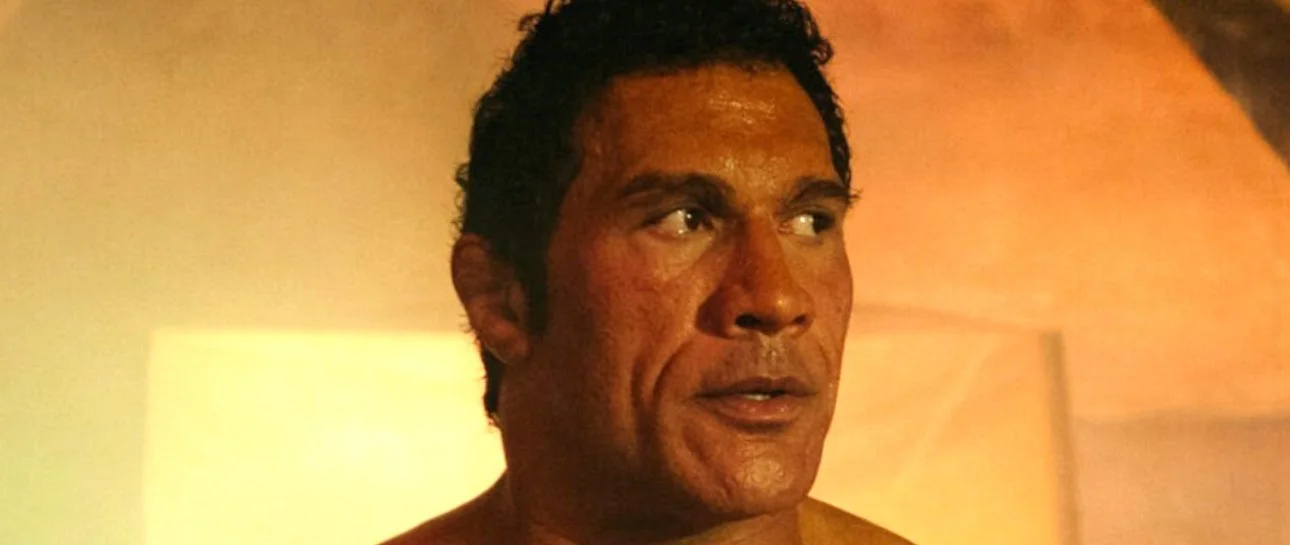
Johnson inhabiting Mark Kerr, a UFC fighter addicted to winning and opioids, is fascinating in itself. He’s awkward, crass, stubborn. You can almost see Johnson discovering the nuances of acting as he goes, flailing through the handheld camera, and it’s thrilling to watch. It’s a high-wire, risky performance.
Benny Safdie has made a tough, sweaty melodrama dressed up as vérité cinema, though it sometimes stumbles toward something bigger. Safdie’s deadpan, documentary-style direction—with its erratic cameras and the percussive score—creates a chaotic environment for Johnson to inhabit, and he rises to it, carrying a film that structurally can’t always quite carry itself.
The makeup gives Johnson a puffed, weary look; he resembles a sculpted giant just beginning to disintegrate. He’s clumsy and volcanic, a beast brushing off emotions he doesn’t quite know how to handle.
Emily Blunt, as Kerr’s girlfriend, tries to pull the movie into something resembling a relationship drama. Big mistake. Safdie gives her moments—she has to dodge Kerr’s rages, including his punching through doors, and, believe it or not, his complaints about their cactus plant. Blunt plays her role with sympathy, but the film insists on circling back to the fights, which deflates momentum.
However, it’s Johnson who proves himself most worthy of praise; he insists on being seen, flaws and all. And for that alone, the movie is absolutely worth watching.

Two weeks ago, I reported that James Wan's remake of the Korean film "The Gangster, The Cop, The Devil" for Paramount was scheduled to start production in April 2027. We now have a lead.