

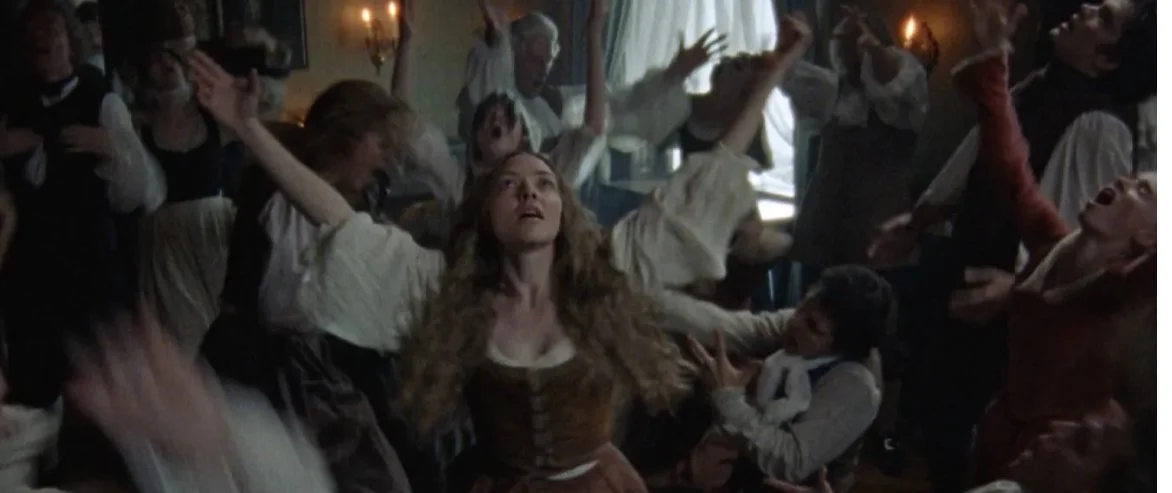
The opening of Mona Fastvold’s “The Testament of Ann Lee” teases greatness. Amanda Seyfried appears as Ann Lee, the 18th-century religious visionary, and for about some of the film’s overlong runtime, it does indeed feel alive.
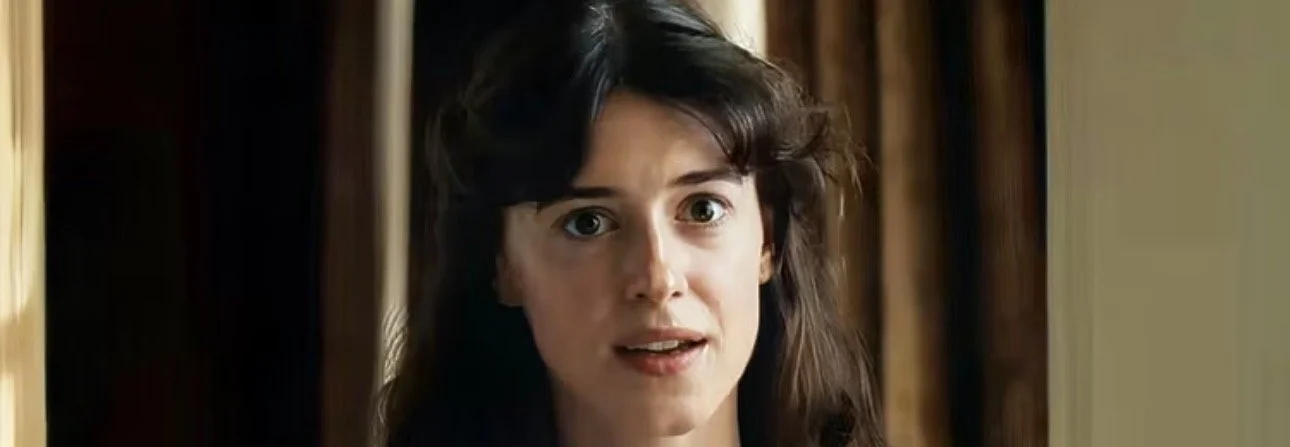
Set in 18th-century England and only “inspired” by real events, the film presents itself as an “epic fable” about Ann Lee—the woman who founded the Shakers and was proclaimed by her followers as the “female Christ.” She’s luminous, carrying both the grief of a mother who lost four children and the command of a prophet. Her sermons about celibacy and her insistence that God is both “she and he” strike a chord with her followers.
And then the film stalls. Once Ann’s community is established, and they move to New England and then New York, the energy drains away, leaving us with endless rituals and conversations. Seyfried keeps the movie breathing, but the rest of the ensemble—Thomasin McKenzie, Lewis Pullman, Stacy Martin, and especially Christopher Abbott—are utterly wasted. Abbott drifts in and out so aimlessly you wonder why they bothered to cast him at all. His best scene is when he spanks a naked Seyfried with a brush stick.
“The Testament of Ann Lee” is borderline self-absorbed, and messily constructed. Fastvold and co-writer Brady Corbet take themselves way too seriously to deliver on such a weird, unstable concept. They’re skilled, but they drain all the life out of their material by treating solemnity as if it were transcendence. The film barely functions as a character study, and once you start expecting it to soar, it spirals out of control. Yet when it erupts into a full-blown song-and-dance spectacle—the most improbable and audacious direction Lee’s story could have gone—the film becomes utterly compelling.
At Venice, it was easily the festival’s biggest what-the-hell movie—the one everyone stumbled out of either dazed, laughing, or furious. There were numerous people walking out as if fleeing a bad sermon. You could feel the collective bewilderment in the air: was this high art, or just high-minded nonsense?
The score by Daniel Blumberg (“The Brutalist”) is a major highlight, with lush strings and catchy chants to summon the spiritual transcendence of the movement. The “songs” are one-phrase chants, with extras twitching like they’re convulsing. Seyfried herself sings, and she has a beautiful voice. The song and dance numbers, and there’s many of them, are rapturous and the clear highlights.
You almost want to hand Fastvold and Corbet a medal just for nerve. Who else would even try something this brazen? It isn’t just that the film is an original statement, it’s that someone, somewhere, actually wrote the check. The miracle isn’t the movie so much as the fact that it exists at all.

The prime catalyst for Netflix's risk-free shift may have been new content chief Dan Lin, who said two years ago that the company would greenlight films "more about audience, and less about auteurs."