

With barely any good movies out there, I’m looking for some good recommendations for a limited series I might have missed over the years.
Fassbinder’s "Berlin Alexanderplatz" is one of the greatest feats of “cinematic television” ever. Ditto Krystof Kieslowski’s “Decalogue” and Ingmar Bergman’s “Fanny and Alexander.”
In a way, these films paved the way for David Lynch to create his 18-episode “Twin Peaks: The Return,” which also belongs in the same league as the above three mentioned.
These are known as the gold standards for cinema masquerading as TV. Because, who are we kidding here, they are basically lengthy movies that just couldn’t be properly released in theaters. That’s all they are.
There are plenty of other examples as well, but let me first point you to Vincent Canby’s 1981 New York Times review of "Berlin Alexanderplatz”:
In all superficial ways, "Berlin Alexanderplatz" is not much different from the sort of mini-series that have occasionally fascinated American television audiences. When it was shown in Germany, "Berlin Alexanderplatz" was divided into 13 segments, totaling 13 1/2 hours, plus a two-hour epilogue. This compares with our "Winds of War" (seven segments, 18-hour total), "Roots -- the Second Generation" (seven segments, 14 hours), "Roots" (eight segments, 12 hours) and "Shogun" (five segments, 12 hours).
In "Berlin Alexanderplatz" Fassbinder has created a huge, magnificent melodrama that has the effective shape of a film of conventional length. There's never before been anything quite like it, possible because no filmmaker of comparable stature has ever tried to work on such a grand scale, with the exception of Erich von Stroheim when he attempted to realize his vision of "greed."
Fassbinder was way ahead of everyone in finding the vision to use the TV medium to make a different kind of cinema. Nowadays, we’re inundated with fiction and non-fiction limited series, with these operatic works being tackled via long-form on streaming and television.
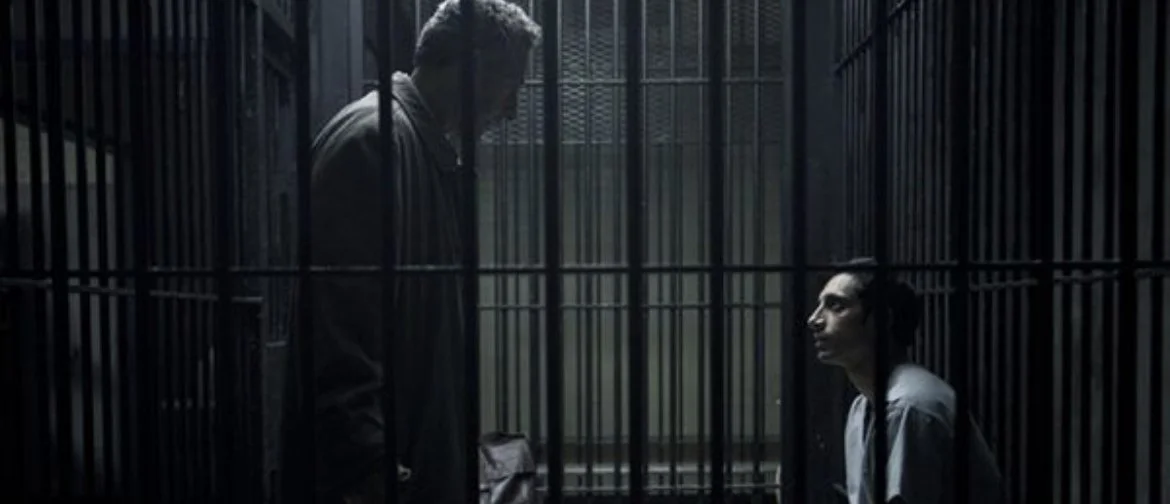
Steve Zaillian’s “The Night of” sticks out as something that could receive a well-deserved re-evaluation in the years to come. That was as masterful an HBO limited series as any out there. There was nothing TV-ish about the way it was made, it was pure cinema.
Some of the more recent examples of exceptional works that felt like cinema, but were relegated to the small screen:
The Night of
Mare of Easttown
Chernobyl
Angels in America
Unbelievable
True Detective (Season 1)
Fargo (Season 1 and 2)
OJ: Made in America
The Jinx
Making A Murderer
Twin Peaks: The Return
Olive Kitteridge
What am I missing? This was an off-the-cuff list that could be missing a few titles.
My point being, where do you separate what is cinema and what is TV? “Twin Peaks: The Return” and “Berlin Alexanderplatz” appeared on sight and sound’s greatest films of all-time list. Maybe, over time, some of the other titles I mentioned will eventually get re-evaluated as “cinema” and appear on such lists. Does theatrical distribution even matter anymore?
A limited series tends to have every episode built to its own crescendo and at its own rhythm, with its own individual emotional space. So, the momentum might be completely different to that of a movie. Compare that to the 4+ hour “Once Upon a Time in Americ, where all four hours work within a single momentum, as opposed to four separately paced "movements", each with their own mini climax.
That's why something like “Twin Peaks: The Return” could be considered as more of a movie. Each episode on its own is weird and jaggedly paced and left up in the air, but when watched in close proximity to each other, it flows brilliantly.

Hill, coming off the miserable reviews for this year's “Outcome,” now has yet another film destined for a long delay. This time, it's “Cut Off,” his third directorial effort, which was set to hit theaters this July