



NOTE: “Possible Love” starts at 96 on Metacritic (based on 8 reviews)
It’s been a long, silent stretch since Lee Chang-dong’s “Burning” lit up Cannes back in 2018—almost eight years, to be exact. But the revered South Korean filmmaker of melancholic realism has made his triumphant return.
Lee is one of those filmmakers who can disappear for years, seemingly doing nothing, before coming back with something enormous. He takes his time, watches people, lets ideas sit. And when he finally makes a film, it usually feels like there’s a whole life behind it.
“Possible Love” is very much in that tradition. It takes a while to get going. At first, it can even feel a little slow — my advice is stick with it since Lee keeps adding layers, until the movie starts to take on a strange emotional force. By the end, it has become something much bigger than the quiet social drama it initially appears to be.
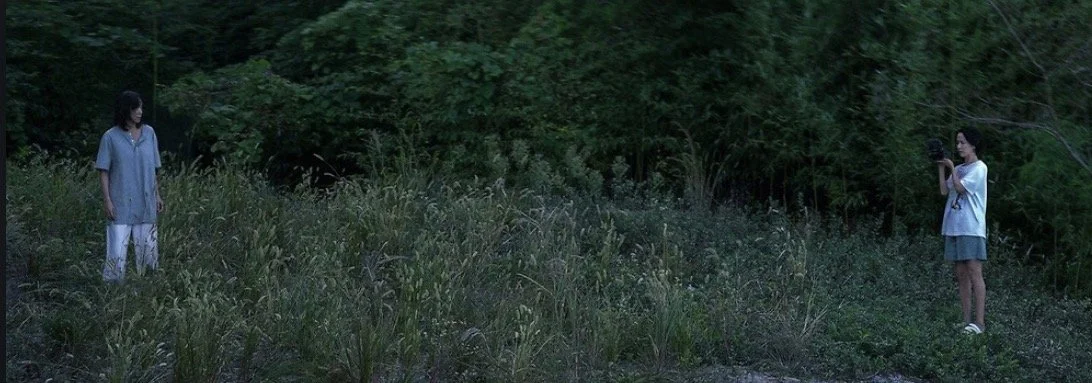
The film brings together two couples from very different worlds. Ye-ji, a wealthy aspiring filmmaker, wants to make a documentary about the Korean working class and the fallout from a violent factory strike. Mi-ok, on the other hand, sees the documentary as a possible way of bringing her damaged husband Ho-seok back into the world.
Of course, Lee is far more interested in the uncomfortable space between good intentions and selfishness.
Ye-ji claims to be interested in Mi-ok and Ho-seok’s lives, but there’s something unsettling about the way she observes them. Their suffering becomes material. Their private moments become part of her project. She thinks she’s helping, but she’s also exploiting them, whether she wants to admit it or not.
Things really start to change once the couples end up at Sang-woo’s luxurious house by the sea. The setting seems idyllic, but the isolation starts to do strange things to everyone. Money, class and social expectations become harder to hide. People drink, talk, wander around, swim, sit in silence. Nothing much seems to happen, yet practically every scene feels loaded.
There’s a little of “Burning” in the way he builds the film. The drama doesn’t really come from plot twists or big confrontations. It comes from accumulation. A look here, a strange conversation there, a gesture that doesn’t quite make sense until much later.
Everyone is terrific here. Zo In-sung gives Sang-woo an almost unnerving ease — wealthy detachment that never needs to announce itself. Sul Kyung-gu is terrific as Ho-seok, playing a man who has retreated so far into himself that even his silences feel angry. Cho Yeo-jeong is equally good as Ye-ji, particularly in the way she captures the contradictions of someone who genuinely wants to understand other people while remaining almost completely insulated from their reality.
And then there’s Jeon Do-yeon. She is extraordinary. Her performance as Mi-ok starts quietly enough, almost deceptively so, but gradually reaches an almost primal intensity. There’s so much buried inside her. She never overplays it. She doesn’t need to. There’s a point where she seems to take over the entire film. By the final stretch, you’re watching her more than anyone else.
The film runs 164 minutes. What a stunner this turns out to be. “Possible Love” keeps getting stranger and deeper the longer it goes. And by the end, the film has moved somewhere almost transcendent. We might have our Golden Lion winner right here.

The real test comes this weekend, when A24 expands "You Can See Everything" to 2,500+ screens. Wouldn't it be something if it ended up at #1? “Clayface” stands in its way.