
I recently came back after two weeks on the road, first on the Lido and then in Toronto, and roughly 50 movies later I can say I caught most of the titles that mattered. There are two notable gaps: I missed "NAZA," which screened just after I left Venice, and I didn't see "You Can See Everything," which played Telluride.
I’ll be honest, this has not been a great fall for quality movies. Part of that is on the calendar itself, since many of the most anticipated titles, "The Further Mis-Adventures of Cliff Booth" and "Dune: Part Three" among them, skipped the festival circuit altogether. The bigger reason is that the best films at TIFF, the ones that had people buzzing, were ones I'd already seen in May at Cannes. That includes "All of a Sudden," "The Unknown," "Club Kid," "Fjord," "The Dreamed Adventure," "Minotaur," "La Gradiva," "Everytime," "The Man I Love" and "Coward." Take those away and what's left is thinner than usual.
Then you had world premieres that bummed out: “A Talent for Murder,” “Alpha Gang,” “Bad Lieutenant: Tokyo,” “The Basics of Philosophy,” “Bucking Fastard,” “Bunker,” “Closing Night,” “Company,” “Love of Your Life,” “Prima Facie.”
In fact, the Oscar race hasn’t moved much post-Venice/Telluride/TIFF. Coming out of Cannes and the summer, the consensus already had "The Odyssey" and "La Bola Negra" as the Best Picture top two, and TIFF's People's Choice voters basically locked that in by handing Los Javis' film the top prize. Yes, "Wild Horse Nine" and "The Debut" looked like real threats for a hot minute, with John Malkovich instantly anointed the Best Actor favorite at Venice and Julianne Moore getting the same treatment for Best Actress, but neither film cracked the top three in Toronto. Both will still maybe nominated, and those lead acting races are theirs to lose, but as Best Picture winners? No chance.
Then there’s “I Play Rocky,” the festival's best-placed premiere, which should land a best picture nomination, and that’s despite critics being split on it. It’s a highly entertaining retelling of Sylvester Stallone’s rags to riches story, and on its own merits, based on what it set out to do, works wonderfully well.
The power has shifted to Cannes, or just not premiering your film at a festival. There were still some gems, though. Here are my ten favorites among the films I hadn't already seen.
1. Possible Love (Lee Chang-dong)
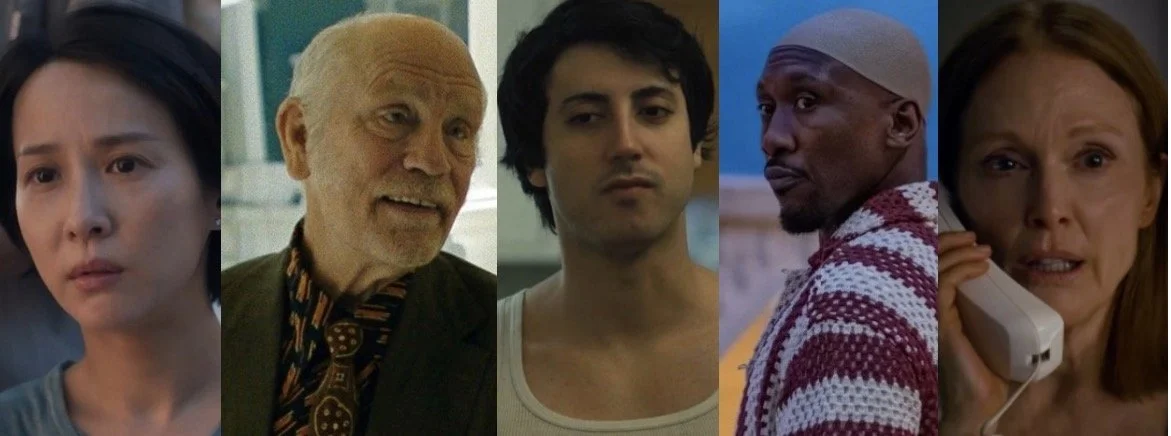
It's been almost eight years since "Burning," and Lee has come back with something enormous. A wealthy aspiring filmmaker sets out to document a working-class couple scarred by a violent factory strike, and her "help" slowly turns into something closer to exploitation. The opening stretch can feel slow, so stick with it. Lee keeps stacking up layers, and once the couples land at a secluded house by the sea, every scene becomes charged. Jeon Do-yeon is extraordinary here, starting quietly and building to an almost primal intensity until she more or less takes over the film. Over 164 minutes it keeps getting stranger and deeper, and by the end it reaches something close to transcendent.
2. Wild Horse Nine (Martin McDonagh)
‘Banshees’ is still McDonagh's best for me, but this one sits at #2 or #3 in my ranking, alongside “In Bruges.” It's set in Chile in 1973 as the Pinochet takeover approaches. John Malkovich plays Chris, a CIA coup specialist whose memory is slipping and who threatens to write his memoirs, and Sam Rockwell plays his more grounded partner. The film is a spiky buddy comedy tucked inside a political thriller, and Steve Buscemi steals a handful of scenes as their smack-addicted boss. Malkovich gives it real emotional weight, he’s incredible here, with what might be the performance of his career, and it's hard to see him missing an Oscar nomination.
3. I Play Rocky (Peter Farrelly)
The crowdpleaser of the fall. TIFF's best-placed world premiere, only at #14 on the Gold Derby charts, and I think they're underrating it. It's the crowdpleaser of the fall, and the reason it works is Anthony Ippolito. The 27-year-old from Long Island spent about two years preparing to play Sylverster Stallone, and he nails it. It's an endearing, soulful performance that sidesteps impersonation so completely you forget he's playing Stallone. Some critics clearly haven't forgotten "Green Book" and had their knives sharpened for Farrelly, but audiences are going to love this
4. Tender Loving Care (Mike Leigh)
If this really is Leigh's swan song, it's a fitting one as it plays like a greatest hits compilation from one of the great living filmmakers we have. It starts out almost plotless, running on banter and conversation, working-class plight, the highs and mistly lows, and then arrives at a shattering final stretch. I still can't understand why Venice only offered it an out-of-competition slot, an offer Leigh turned down. Kate O'Flynn is wonderful here.
5. Your Mother Your Mother Your Mother (Bassam Tariq)
The opening tells you everything: a cramped, ugly fight in a bathroom, and then Mahershala Ali's Latif cleans his blade with a baby wipe from his daughter's diaper bag and walks out. Latif is a devout, recently widowed Muslim in working-class Houston who is raising three kids, and nobody at his mosque knows he pays the bills by killing people for money. Ali is extraordinary. It's a strong film that has one ending too many.
6. The Debut (Jesse Eisenberg)
Julianne Moore is great, and the movie is good. She plays a New Jersey housewife who stumbles into a community theater production run by a tyrannical director, played by Paul Giamatti. It begins as a backstage comedy and gradually spirals into something closer to a psychological freakout. It's a lot of fun and Moore basically carries it, but it's a silly affair without much depth and not as impressive as the Telluride crowd led us to believe. It is, however, a step up in polish from "A Real Pain,” and Eisenberg does take real risks here.
7. A Long Winter (Andrew Haigh)
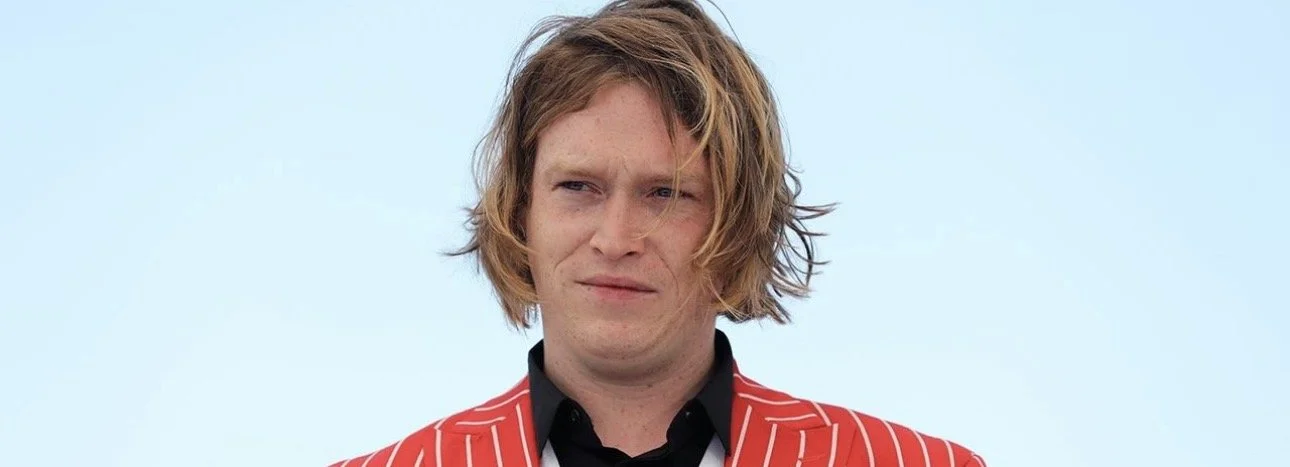
This film has been accused of causing utter boredom in the viewer. Nonsense. Haigh adapts a Colm Tóibín story about a sheltered young man in the 1950s Rocky Mountains whose family starts to come apart when his mother disappears in a blizzard. It's austere and patient, it looks gorgeous, and it carries the quiet ache you'd expect from Haigh. Fred Hechinger, Caitríona Balfe and Ebon Moss-Bachrach are all excellent.
8. The Life and Deaths of Wilson Shedd (Tim Blake Nelson)
This is Nelson's best film since "The Grey Zone," and it's nearly as bleak and unrelenting as that one. Amanda Seyfried plays an Oklahoma teacher trapped in an abusive marriage who takes a creative-writing job inside a maximum-security prison, falls for Scoot McNairy's inmate, and ends up smuggling him the tools to escape. Nelson moves between three timelines, and even though you learn Wilson's fate early, you stay gripped by how it all happened. It's still looking for a buyer.
9. Woman Unknown (May el-Toukhy)
This was the only film in the Venice competition directed by a woman, a bleak and tightly controlled postwar Danish drama-thriller with a paranoid "Rebecca" atmosphere. Mathilde Arcel is excellent as a woman whose wartime past threatens the life she has carefully rebuilt. It runs a little long and the symbolism gets too obvious near the end, but it's still better than much of what competed for the Golden Lion.
10. The Spiral (Paolo Strippoli)
Italy's official Oscar submission played both Venice competition and TIFF's Midnight Madness, and it's easy to see why it fits in both rooms. Strippoli (“The Holy Boy”) frames his tale of a mother's Faustian bargain across four chapters and an epilogue, each one twisting what came before. He builds dread with real style, and Jasmine Trinca and a delicious Valeria Bruni Tedeschi play off each other beautifully, raw guilt against serene menace. So why isn't it higher on this list? The climax, which goes so gleefully over the top that the film's elegant control nearly collapses, tipping from devilish into silly. Still very much worth seeing.

It's rated R for "language" and, strangest of all, "graphic nudity." Who gets naked in this doc? It's left some puzzled, and for good reason.