

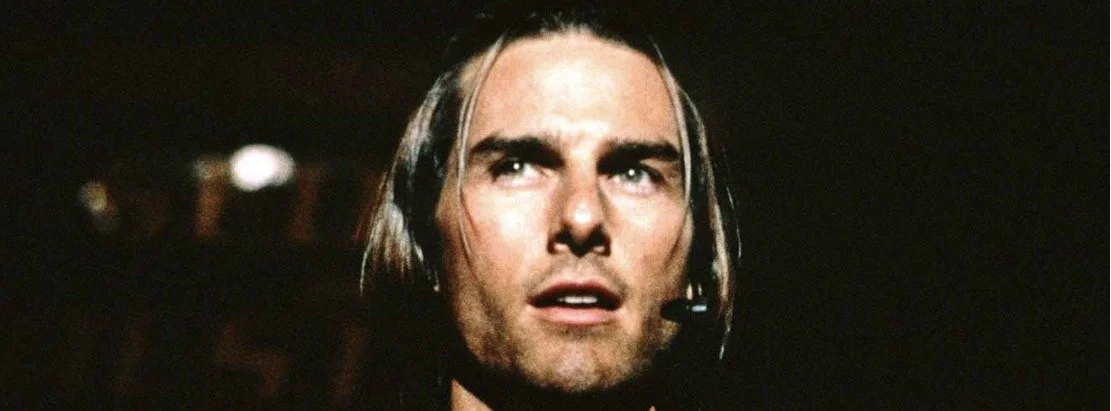




Casey Affleck’s new film “Company” is headed to the Venice Film Festival in competition, but the film’s festival trajectory is looking markedly elsewhere.
The gothic mystery, Affleck’s third feature as a director, will have its world premiere in Venice, where it is competing for the Golden Lion alongside films from Danny Boyle, Martin McDonagh, Lee Chang-dong and Werner Herzog. The Venice selection is a significant vote of confidence in the film: the festival has scheduled “Company” for multiple screenings beginning September 8.
Yet despite that prestigious launch, “Company” has so far failed to land a berth at any of the major North American fall festivals — let alone a US distributor. It was not announced by Toronto, Telluride or the New York Film Festival, and, at this stage, there is no announced regional U.S. festival destination for the film either.
That absence is particularly striking given the film’s profile. “Company” stars Nick Nolte, Ben Mendelsohn, Adelaide Clemens and Scoot McNairy, and is being sold internationally by AGC. Its story — a mysterious traveler recounting interlocking tales of grief, vengeance, forgiveness and human connection — has the sort of prestige-festival positioning that would ordinarily make it a natural candidate for the fall circuit. Apparently, not in the US.
Instead, Europe is opening its doors.
Only days after Venice, “Company” will travel to the Deauville American Film Festival, where it has been placed directly in competition. The film has also been selected for the Zurich Film Festival, where it will screen in the Gala Premieres section.
A source close to a European festival tells me, “It’s a strong film. The reasons are clear why it hasn’t been selected.” Another festival contact likewise praised it as a “singular vision” that deserves serious attention.
Hopefully, U.S. critics attending Venice, myself included, will be equally wowed by the film. But the question remains: why hasn’t it yet surfaced stateside? An American filmmaker in Venice Competition is significant—and could be another indication that my sources are onto something: this is a great film.
Affleck’s last directorial effort, 2019’s “Light of My Life,” which premiered at the Berlin Film Festival, faced scrutiny. The Independent suggested that the film’s placement in the Panorama sidebar, rather than the main competition, reflected the baggage surrounding Affleck. At the Berlin press conference, a Variety journalist directly confronted Affleck about the allegations, while The Playlist similarly described the film as being undermined by Affleck’s real-life circumstances.
For now, “Company” is entering the fall through Venice, Deauville and Zurich, while its home continent remains conspicuously absent from the itinerary. The film’s reception in Venice may ultimately determine whether that changes. But as the festival season begins, the pattern is difficult to miss.

This, I did not expect. Sure, I figured Ben Affleck's "Animals" wasn't going to contend for Oscars in any way (it completely skipped the fall festivals), but for it to be getting such toxic reviews? That's unexpected.