
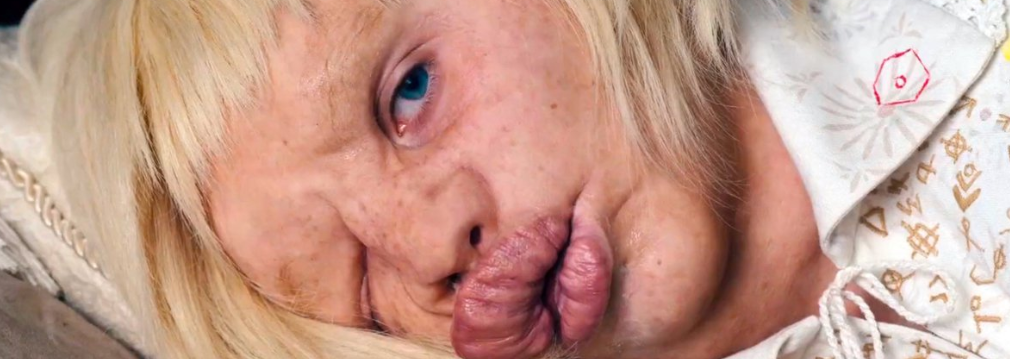

Darren Aronofsky is asking people to help fund his latest venture, and it’s not another movie. According to THR, the filmmaker is raising capital for Primordial Soup, an AI-focused studio he co-founded to develop films and storytelling projects built around generative AI. He needs $15M to make his wish come true.
Aronofsky is apparently experimenting with AI-driven production workflows and short-form projects. The pitch is that AI can dramatically lower production costs while opening the door for “new kinds of filmmakers.”
Aronofsky is arguing that the technology should be treated as another creative tool rather than a replacement for artists, with Primordial Soup aiming to combine human filmmakers and AI systems instead of automating the entire process.
AI has become one of the industry’s most polarizing topics, with studios quietly, almost secretly, embracing the technology while many filmmakers remain publicly skeptical. Not Aronofsky who has never shied from his excitement of the technology.
There have been some notable directors—mostly older veterans—who have come out in support of AI’s use in cinema. Aronofsky is certainly not the only prominent figure championing the technology. Other supporters include George Lucas, Roger Deakins, Brady Corbet, Steven Soderbergh, Michael Mann, James Cameron, Paul Schrader, Werner Herzog, George Miller, Doug Liman, Andy Serkis, Alex Proyas, Martin Scorsese, and Roger Avary.
There seems to be a wide disconnect between the younger and older generations of filmmakers when it comes to AI. Curry Barker and Kane Parsons have publicly rejected it, as have many other young-ish directors. However, here’s the reality: Hollywood studios will use AI if it meaningfully lowers costs.
If a film with a $200M budget can be made for $100M without sacrificing enough quality to hurt the box office, the financial incentive is simply too strong. In Hollywood, the bottom line almost always wins. There isn’t really a way around that.
AI will make expensive VFX, previs, rotoscoping, cleanup, dubbing, and countless other parts of the filmmaking pipeline faster and cheaper. That doesn’t necessarily mean directors, cinematographers, production designers, or actors become obsolete, but it does mean the economics of filmmaking are going to change. The debate is no longer about whether AI will be used—it’s about where the industry decides to draw the line, and how creatives adapt to a world where many labor-intensive tasks can be automated.

Olivia Wilde, coming off great reviews for "The Invite," is shooting her next film, a holiday comedy titled "Naughty," which already had Jennifer Aniston and Peter Dinklage attached as the two main leads.