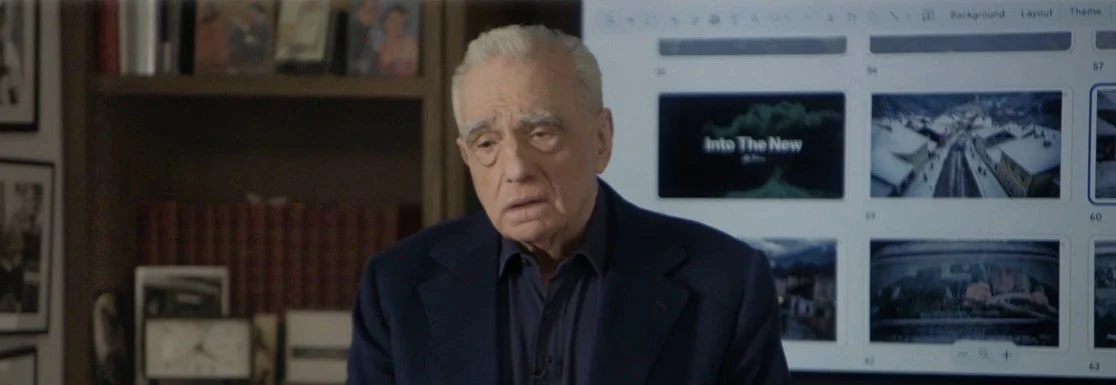
A few weeks ago, Martin Scorsese’s endorsement of AI sparked a sharp response from the Art Directors Guild (ADG), which represents nearly 3,000 storyboard artists, illustrators, production designers, and other below-the-line workers.
Scorsese promoted the use of Black Forest Labs’ FLUX generative AI model to quickly create storyboard images from verbal descriptions. In the promotional video, Scorsese argued that the technology gives filmmakers greater creative control by making it easier to communicate visual ideas.
The guild then accused the director of “turning his back on the human artists,” while a source close to the organization told Page Six Hollywood that part of the ADG’s ire stemmed from the fact that Scorsese “specifically mentioned storyboard artists,” adding that illustrators are “on the front line of folks who will be replaced first” by AI.
According to the outlet, Scorsese’s team sought to calm tensions and recently arranged a private phone call with ADG president Dina Lipton. During the conversation, his representatives reportedly emphasized that the filmmaker “has always had a great relationship with below-the-line workers” and attempted to reassure the guild.
That phone call must not have gone well, as Scorsese’s efforts to organize a follow-up discussion have since stalled.
The disagreement comes amid a broader trend of prominent filmmakers, including Darren Aronofsky, Ben Affleck, James Cameron, and Steven Soderbergh, exploring AI technologies despite ongoing concerns from creative professionals. While Scorsese was specifically discussing AI-assisted storyboarding, the other directors mentioned have explicitly discussed using AI for broader production purposes.
Scorsese’s defense, something he has often suggested, is that filmmaking is not a fixed art form but one that continually evolves. From that perspective, cinema—only around 125 years old—can be seen as still developing, with new technologies potentially expanding its expressive possibilities rather than replacing its foundations.
There is little reason to believe AI will not become widely used in filmmaking in the future. The real question is whether audiences will reject AI-assisted films or ultimately buy tickets to see them.

After this weekend, when “Artificial” and “Behemoth!” screen at NYFF, there won’t be many Oscar contenders left unseen. In fact, by my count, there are just two: ‘Cliff Booth,’ and “Dune: Part Three.”