

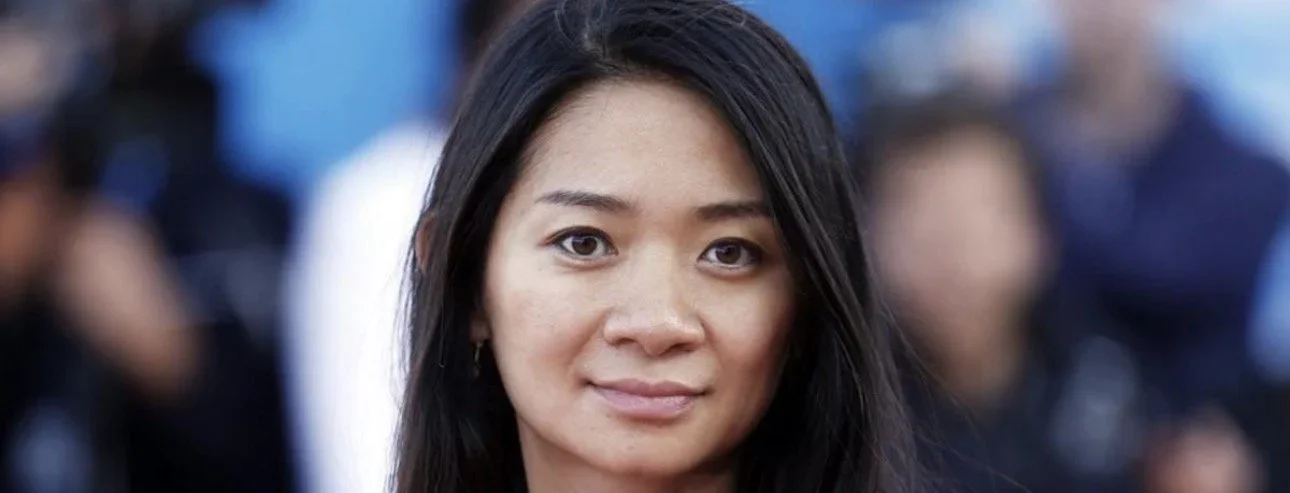
The latest Substack from Hollywood Gadfly has gone viral — some are questioning the author’s motives in criticizing a woman of color, while others see value in the central argument. So, let’s tackle it, shall we?
This is basically a dissection of Chloé Zhao’s “sketchy” rise in Hollywood, which has been accompanied by a carefully cultivated narrative that she was an “outsider” who struggled to finance her earlier films, which — according to the piece — does not align with the financial realities of her background.
There are repeated challenges to Zhao’s public statements that she did not grow up wealthy, pointing instead to her father, Zhao Yuji, a successful steel and real-estate executive, tied to the Chinese State, and her stepmother, actress Song Dandan, one of China’s most recognizable television stars.
According to the piece, Zhao’s attendance at elite schools—including Brighton College in England, Mount Holyoke College, and NYU’s Tisch School of the Arts—suggests access to resources that few aspiring filmmakers possess. The author argues that Zhao has been consistently downplaying this privilege in interviews, often describing herself as someone who had to build a career out of scratch, without industry support. However, her early career was heavily aided by influential industry connections. They estimate that more than $1M in resources and support were involved with her first two indie films before Zhao achieved mainstream success with “Nomadland.”
A major focus of the piece is the discrepancy between the reported budgets of Zhao’s early films and what the author believes were their actual costs. For her debut “Songs My Brothers Taught Me,” Zhao often cited a budget of roughly $100k, but receipts are provided that identify numerous grants, institutional programs, and executive producers that allegedly pushed the total much higher than that.
There is also skepticism directed towards Zhao’s account of financing for her sophomore effort,” The Rider” — she claimed, “credit cards” and “personal sacrifice” put her in massive debt. The author notes that Zhao’s wealthy father was actually an executive producer on that film, and that she purposely built up a narrative of hardship making that film, while minimizing the family wealth and connection-filled backing that helped her make it.
Ultimately, Zhao is portrayed as a filmmaker who comes from a wealthy background and constructed her own narrative, that of a struggling immigrant artist. The author calls this “poorface”—the performance of financial hardship by people who benefited from significant privilege. In his view, the problem is not that Zhao came from money, but that aspiring filmmakers from ordinary backgrounds may be misled into believing her path was attainable without the family wealth.
Of course, Hollywood’s modern-day talent pipeline is increasingly shaped by elite connections, and expensive film schools that favor filmmakers from privileged socioeconomic backgrounds. That’s nothing new. Using Zhao as its central case study detracts from the fact that there have been plenty of celebrated “outsider” success stories that obscure the truth of their background.
There is ultimately a light at the end of this tunnel, and it comes from a fairly recent phenomenon. The recent success stories of Kane Parsons and Curry Barker, who built an audience directly online, with no financial backing, rather than via festival gatekeepers, means the jig might be up, and the true democratization of filmmaking might finally be upon us.

Olivia Wilde, coming off great reviews for "The Invite," is shooting her next film, a holiday comedy titled "Naughty," which already had Jennifer Aniston and Peter Dinklage attached as the two main leads.