

It feels like the right moment to return to film recommendations—from both me and readers. We’ve already covered the most underrated films of the 2000s, and 2010s, so now we turn our attention to the overlooked gems of the 1980s.
I didn’t always have much affection for the decade. For a long time, the flood of sequels and over-the-top action left me cold. But with some distance—and, frankly, after seeing how the industry has evolved in recent years—the ’80s now carry more appeal. It was still a time when mid-budget, adult-oriented filmmaking had a real presence. That said, it was also the era that firmly established the business model of sequels, franchises, and an abundance of testosterone-driven spectacle.
From a critical standpoint, a useful reference is the critics poll I ran a few years back, where Spike Lee’s “Do the Right Thing” emerged as the best film of the decade. But those titles are hardly “underrated”—they’ve already earned their place in the canon. What I’m interested in here are the quieter standouts, the films that haven’t received the same level of recognition. With that in mind, here are 30 excellent, underappreciated films from the 1980s that deserve a closer look:
Michael Mann’s Thief, Sidney Lumet’s Prince of the City, Costa Gavras’ Missing, Ivan Passer’s Cutter’s Way, The Richard Rush’s The Stunt Man, Bob Fosse’s Star 80, Rick Rosenthal’s Bad Boys, Jonathan Demme’s Melvin and Howard, Jerzy Skolimowski’s Moonlighting, Alan Parker’s Shoot the Moon, Tony Bill’s My Bodyguard, Loader/Rafferty’s Atomic Cafe, Paul Verhoeven’s The Fourth Man, Eric Rohmer’s The Green Ray, Hector Babenko’s Pixote, Richard Tuggle’s Tightrope, Robert Altman’s Secret Honor, Andrei Konchalovsky’s Runaway Train, Stephen Frears’ The Hit, John Schlesinger’s The Falcon and the Snowman, Jonathan Demme’s Something Wild, Kathryn Bigelow’s Near Dark, David Mamet’s House of Games, John Sayles’ Eight Men Out, Peter Greenway’s The Cook, The Thief, The Wife and Her Lover, Brian DePalma’s Casualties of War, David Cronenberg’s The Dead Zone, Zucker and Abrahams’ Ruthless People, Sam Fuller’s White Dog, Paul Mazurksy’s Down and Out in Beverly Hills
Now, what binds many of these films together isn’t a single style or movement so much as a shared resistance to the dominant forms of their time.
Take “Thief,” which filters genre conventions through a cool, almost existential style, or “Prince of the City,” a dense, morally ambiguous procedural that refuses easy answers. Films like “The Cook, the Thief, His Wife & Her Lover” push into extremes of tone and imagery. “Cutter’s Way,” for instance, begins like a gritty detective story but gradually reveals itself as something far more disillusioned. Similarly, “The Stunt Man” plays games with illusion and performance, blurring the line between reality. “Something Wild” turns into a totally different film halfway through, transforming from comedy into something far more disturbing, refusing to settle into a single tone.
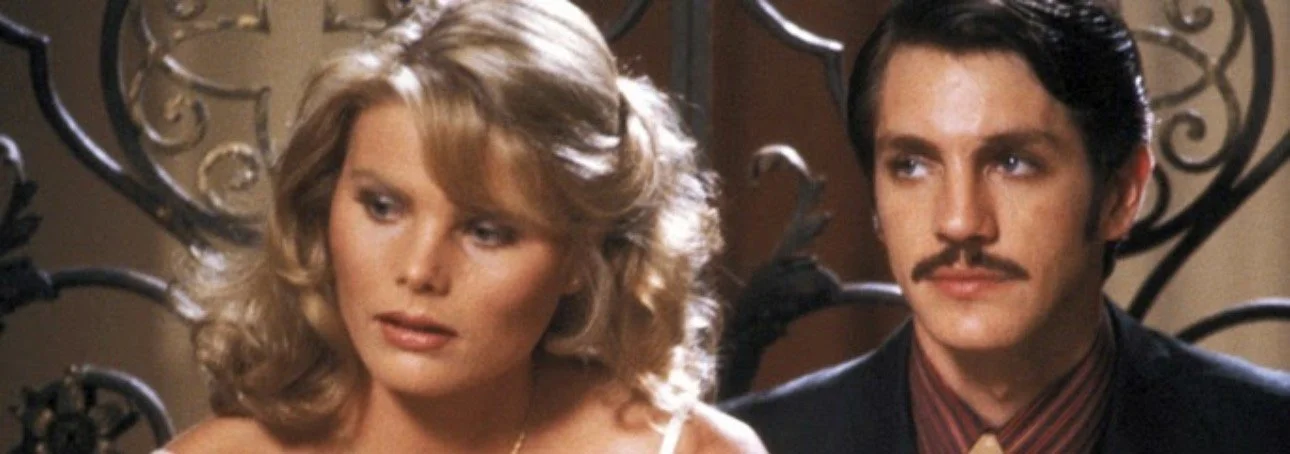
In a very different register, more straight-shooting, playing almost like a remnant of whatever was left from ‘70s New Hollywood, “Shoot the Moon” offers a painfully grounded look at divorce, refusing melodrama in favor of something quieter and more devastating. And then there’s “Star 80,” which strips away the glamour of its subject to expose a deeply uncomfortable story about obsession and control. Similarly, “Secret Honor” reduces cinema to a single room, focusing on monologue and psychological collapse. The central subject happens to be Philip Baker Hall’s Richard Nixon spiraling into paranoia and self-performance. Meanwhile, “White Dog” resists form through its stark premise—a dog trained to attack Black people—and Samuel Fuller’s abrupt tonal shifts and jarring staging, which reject classical Hollywood molding.
These films offer a glimpse into a parallel history. If some of these titles are new to you, I hope they bring a sense of discovery.

DC's "Clayface" has earned an A- CinemaScore from opening night audiences. That's a very good grade for any movie, and an especially rare one for horror, a genre audiences tend to grade harshly.