



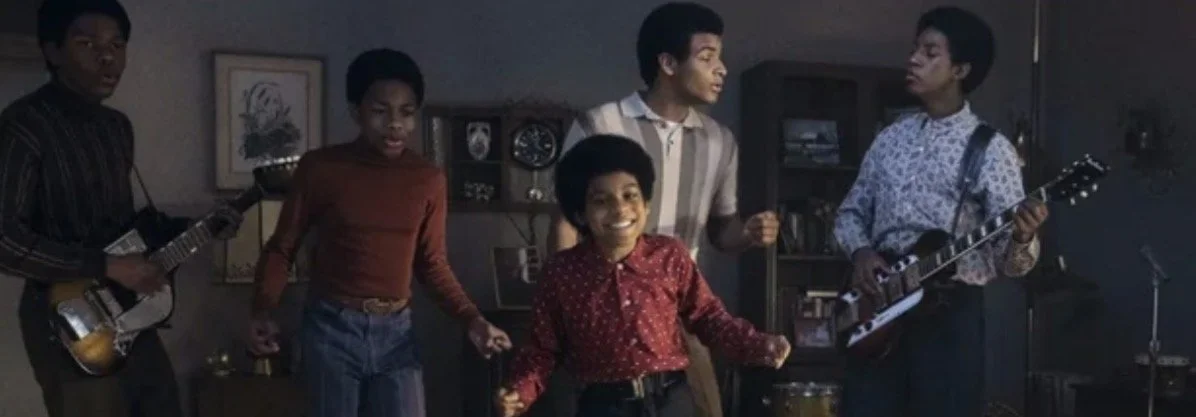
Despite overreaction from critics, which framed the film as evasive, sanitized, and Razzie-worthy, “Michael” has finally opened to $97M in North America and $120M internationally— $217M worldwide.
That’s the best opening ever for a biopic, destroying the record set by 2015’s “Straight Outta Compton” ($60M). Furthermore, it’s the second-best opening of 2026, only behind “The Super Mario Bros. Galaxy Movie” ($131M).
The most reliable reported PostTrak exit polling data for “Michael” indicates that the audience was approximately 38% Black, 26% Hispanic/Latino, 24% White, 6% Asian, and about 6% from other or unspecified groups.
Word of mouth traveled fast this weekend on “Michael”—it’s been wholly embraced by audiences: 7.7 IMDb, 97% RT, A- CinemaScore, and 81% PostTrak “definite recommend.” This has reopened the age-old debate about the critics–audience divide.
Of course, the film is too safe, but that is partly inherent to the genre—especially for music-driven biopics aiming at wide audiences. Expecting a formally daring, psychologically confrontational film in this context is unrealistic. The reason it’s such a crowd-pleaser lies in its prioritization of entertainment over interrogation. It’s not a great film—far from it—and it hits speed bumps whenever the jukebox isn’t turned on full blast, but the nasty reviews it’s received don’t at all suggest a 6/10 or C+ film; instead, they make it sound like a worst-of-the-year contender.
Hate to say it, as someone who fully supports the role of film criticism—good and bad—but the harsh critical bashing of “Michael,” which has been incredibly disproportionate to the point of parody, seems driven by preconceived ideas about what a Michael Jackson film should be, rather than being judged purely for what it set out to do. Judging a film based on what it does not include, rather than what it is actually trying to portray, is a slippery slope.
Roger Ebert returned to this idea often in his reviews; he believed films should be judged on their own intentions, not on what viewers wish they had been.
A movie should not be criticized for what it is not, but for what it is.
If a film aims to be a light comedy, it shouldn’t be faulted for lacking deep philosophical commentary. If it’s a stylized fantasy, criticizing it for not being realistic misses the point. Criticism should focus on execution—tone, style, and storytelling—rather than penalizing a film for not addressing themes or elements it never set out to include. It’s unfair to criticize a movie for failing to be a different kind of movie.
The key question that should be asked is whether it succeeds on its own terms. “Michael,” for better or worse, is a conventional biopic, largely carried by great music and strong performances. Much like “Bohemian Rhapsody,” it purely sets out to entertain, and given audience response this weekend, it seems to have done its job in spades.

According to THR, Aaron Guzikowski, who wrote Denis Villeneuve’s “Prisoners,” has been hired to write a new “Alien” movie for 20th Century Studios, unrelated to ‘Romulus,’ but connected to Ridley Scott.