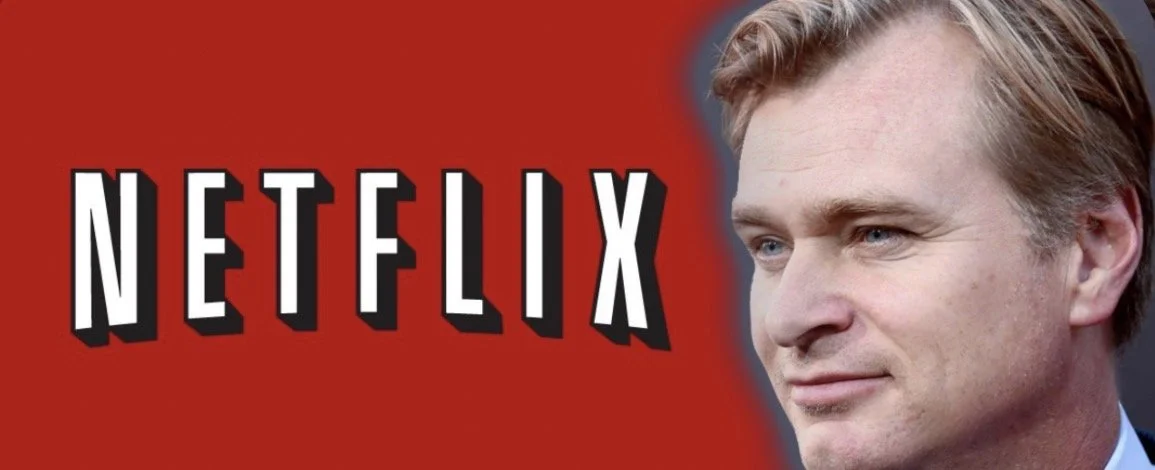
Since September, Christopher Nolan has been serving as president of the Directors Guild of America, placing him squarely at the center of Hollywood’s most important existential threats.
Those shifts have only intensified following the news that Netflix is moving to acquire Warner Bros. a development that has sent panic throughout the industry. The looming Netflix takeover has raised serious concerns about the future of one of Hollywood’s last major legacy studios—particularly its commitment to theatrical releases.
Of course, Netflix CEO Ted Sarandos has attempted to calm those fears, publicly insisting the company intends to preserve a 45-day theatrical window for feature films. Many don’t believe him.
Speaking from DGA headquarters (via Variety), Nolan addressed those assurances—and made it clear he’s not fully convinced by the Netflix promise.
We have very, very significant concerns about how this is all going to happen […] I think it’s a very worrying time for the industry. The loss of a major studio is a huge blow[…] We’re interested to hear more about the specifics of how they’re going to run these things […] There are encouraging noises, but that’s not the same as commitments. The theatrical window becomes a sort of easily graspable symbol of whether Warner Bros. will be run as a theatrical distributor or whether it be folded in as a streamer.
For Nolan, theatrical is everything — his relationship with Warner Bros. famously imploded during the pandemic after the studio made the controversial decision to release “Tenet” under a day-and-date model. The fallout pushed Nolan to shop his next project elsewhere, ultimately landing “Oppenheimer” with Universal—on the condition it receive a traditional, robust theatrical rollout.
Whether Sarandos’ promise amounts to anything more than temporary damage control remains to be seen. Once a deal of this magnitude is finalized, priorities can shift quickly—and the fear that Warner Bros. could be reduced to a content pipeline for Netflix is not exactly far-fetched. Nolan’s skepticism, given his history, feels earned.
I’m sure Nolan has read Sarandos’ past comments, which include calling theatrical bows “an outmoded idea.” The same man who claimed that watching Nolan’s beloved “Lawrence of Arabia” on your phone was “just as good” as seeing it on the big screen. The same man who insisted that “Barbenheimer” would “have had the same cultural impact” if it had gone straight to Netflix.
For Nolan, this is personal. He even slammed Netflix, back in 2017, calling them out for “having a bizarre aversion to supporting theatrical films.”

For months, people close to CEO David Ellison had hinted that he would leave if state AGs didn't drop their antitrust suit against the $111 billion Warner Bros. Discovery merger.