

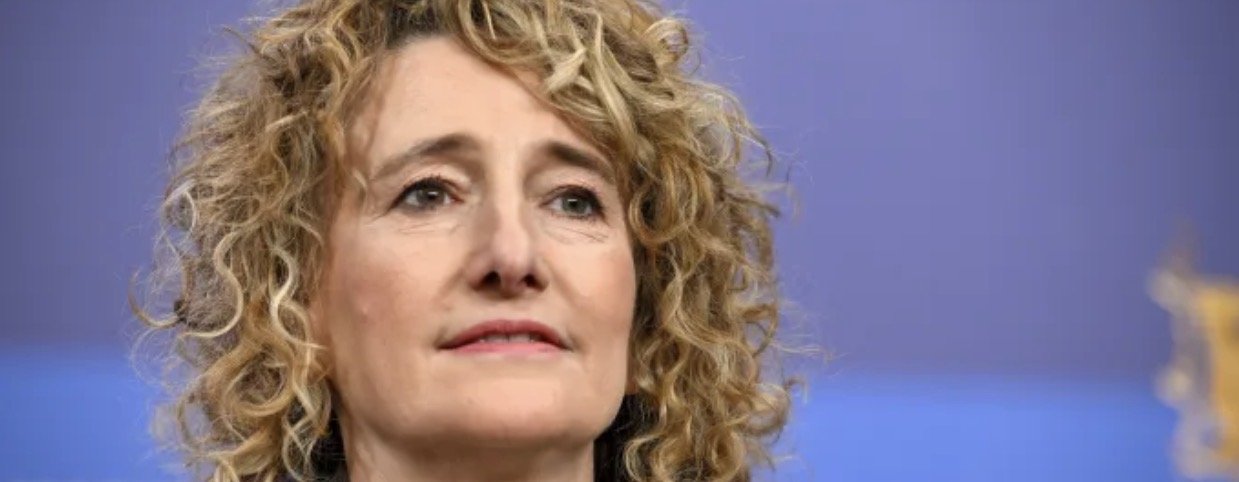
UPDATE: Variety is confirming Bilde’s report that the German government is set to hold an “extraordinary meeting” over the “future direction” of the Berlinale.
EARLIER: Germany’s Culture Ministry is scrambling. In the aftermath of a political firestorm over pro-Palestinian remarks made during Saturday night’s closing ceremony, not to mention the political firestorm that occurred during the festival, which had artists hounded by press to comment on politics, the German government has called an emergency meeting to reassess the future of the Berlin Film Festival.
According to German outlet Bild, Culture Minister Wolfram Weimer has summoned officials for a Thursday sit-down to discuss where the festival goes from here — and, more curiously, whether festival director Tricia Tuttle still has a job.
Bild claims the ministry confirmed the extraordinary meeting and hints that Tuttle’s position is very much on the line, despite the fact that she’s only two years into a five-year mandate. The paper goes even further, openly speculating that she could be dismissed outright.
If that happens, it would mark quite the escalation — and another reminder that the Berlinale remains one of the most politically combustible festivals in the world, especially as it takes place in a country that has one of the strictest antisemitism laws in the world.
This year’s festival drew heavy scrutiny, fueled by complaints that high-profile guests avoided political engagement and by claims that the event itself was attempting to police or silence political expression.
Somehow, the backlash flipped course on Saturday night. During the closing ceremony, multiple award recipients used their moments onstage to openly express solidarity with Palestine and Gaza. The situation escalated to the point where Carsten Schneider, Germany’s Federal Environment Minister, reportedly exited the venue mid-ceremony.
In his acceptance speech, Palestinian filmmaker Abdallah Al-Khatib, who won the top prize in the Perspectives section for “Chronicles From the Siege,” accused the German government of “being partners in the genocide in Gaza by Israel,” igniting one of the most politically charged moments in the festival’s recent history.

We're about seven weeks out, and there's been barely any buzz. The rollout has been weak, especially for a movie built around Tarantino, Fincher, and Pitt.