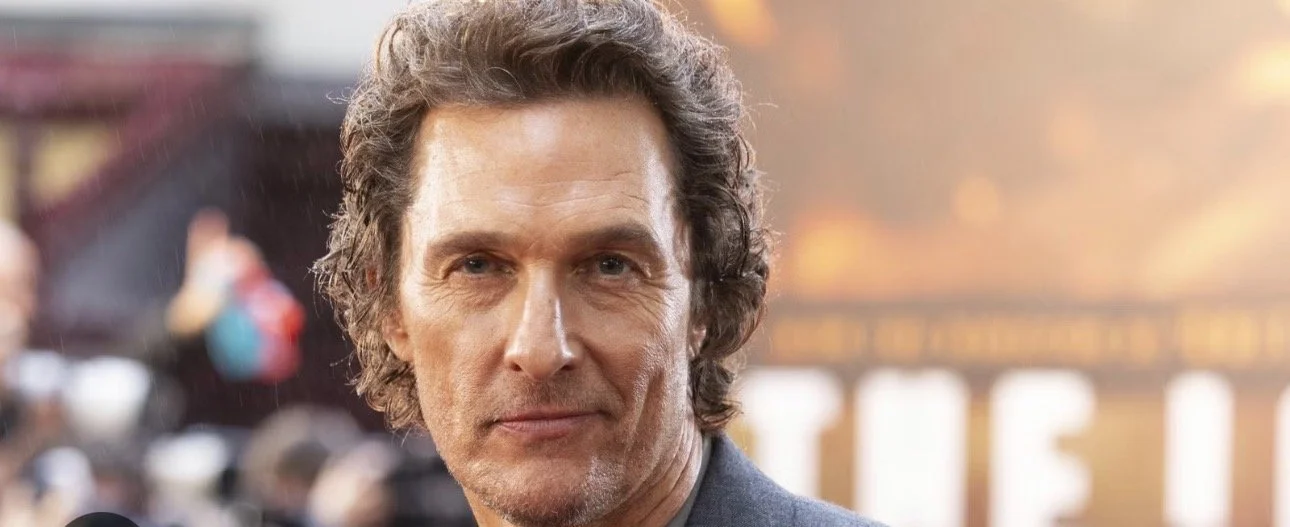
This right here, my friends, is today’s quote of the day. Matthew McConaughey, who recently legally protected his voice, likeness, and catchphrase (“alright, alright, alright”) to control AI use of his image, is predicting something I just can’t see happening in the next few years—but he believes it will. Alright, alright, alright?
It’s damn sure going to infiltrate our category. Does it become another category? Will we be, in five years, having ‘the best AI film’? ‘The best AI actor?' I think that might be the thing; it becomes another category. It’s gonna be in front of us in ways that we don’t even see. It’s going to get so good we’re not going to know the difference.
These comments come from a CNN/Variety interview McConaughey gave, set to air February 21st. Predicting AI actors and films will infiltrate the Oscars in “five years” is wild—maybe one of the visions he saw on his last Ayahuasca retreat.
The actor goes on to warn us all to “own” our lanes because reality is blurring now more than ever. It’s like virtual reality, man.
That’s one of the big questions right now: the question of reality. It’s more hazy than ever — in a very exciting way ... but also a scary way. Prep for it. Own your own lane, so you at least have agency when it starts to trespass
Seriously though, I get why he’s freaking out—Hollywood has already set the doomsday clock for an AI takeover; the end is nigh. The topic has become more taboo in the industry than openly admitting you voted for Trump.
Anyone who goes pro-AI might earn the wrath of an entire industry fearing for their jobs—and it’s this vehement pushback that makes it highly unlikely the Oscars will embrace AI anytime soon. If anything, the most likely scenario is the creation of a new awards show specifically for AI films.
Should we believe this doom and gloom? These rampant warnings about AI coming from Hollywood? There’s something unsettling about feeding an untested machine centuries of human creativity just to produce an imitation of the soul. Art has always thrived on imperfection—the mess, the emotion, the human error—and I’m not convinced any AI, no matter how advanced, can capture that. If anything, it risks cheapening the art itself.

When one amigo gets hit, the other two show up. That's been the deal for three decades between Alejandro G. Iñárritu, Guillermo del Toro and Alfonso Cuarón, and it's playing out in real time this weekend