

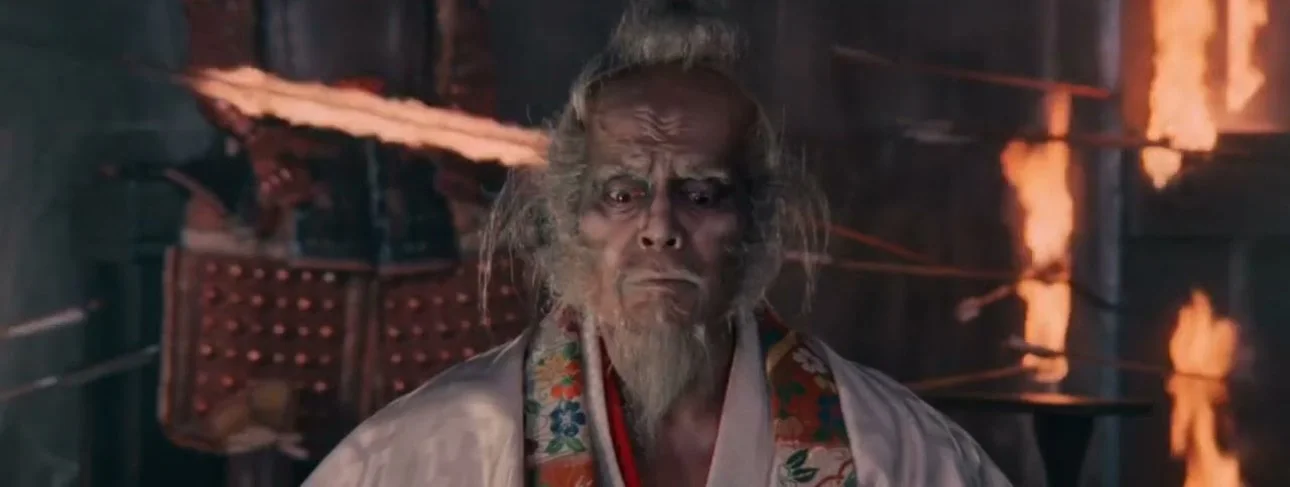
I confess — I lost track of him. When I saw the news of Tatsuya Nakadai’s passing, I felt the kind of ache that comes when losing someone who meant so much to world cinema. He was 92.
As far as the Mount Rushmore of Japanese actors goes, it’s Mifune, Ryu, Shimura, Chiaki, and Nakadai. You can debate the order, but that’s the lineup. Nakadai belongs there — his face half-shadowed, magnetic eyes, the fury and moral weight that came with his best performances.
His filmography reads like a list of Japanese cinema’s greatest auteurs: Akira Kurosawa, Masaki Kobayashi, Kihachi Okamoto, Hiroshi Teshigahara, Kon Ichikawa. He worked with all of them, each time reshaping what a Japanese leading man could be.
Tatsuya Nakadai’s film career began in the early 1950s with two brief, uncredited appearances — one in Kobayashi’s “The Thick-Walled Room” and another in Kurosawa’s “Seven Samurai.” Those fleeting moments on screen would turn out to be quietly pivotal: they marked the start of relationships that would define his career. Nakadai would go on to make eleven films with Kobayashi.
With Kurosawa, he made six films: “Seven Samurai,” “Yojimbo,” “Sanjuro,” “High and Low,” “Kagemusha,” and “Ran.” That’s a body of work that would be enough to define most actors’ careers by itself. Yet Nakadai also carried Kobayashi’s Human Condition trilogy — nine and a half hours of moral and physical endurance — and then delivered one of Japanese cinema’s greatest performances in “Harakiri” (1962), a film of staggering power.
And then came “Ran” (1985) — maybe his greatest work. Kurosawa’s grand, apocalyptic, masterful vision of King Lear, with Nakadai at its center: an aging warlord descending into madness as his empire crumbles around him. The performance haunts; that face is etched into memory. The heavy white makeup Kurosawa used turns his features into something between a mask and a corpse.
I admit, I’d lost track of him. I didn’t know he was still alive. But that feels almost poetic, in a way — Nakadai was never about fame, never about noise. He was all about presence.”

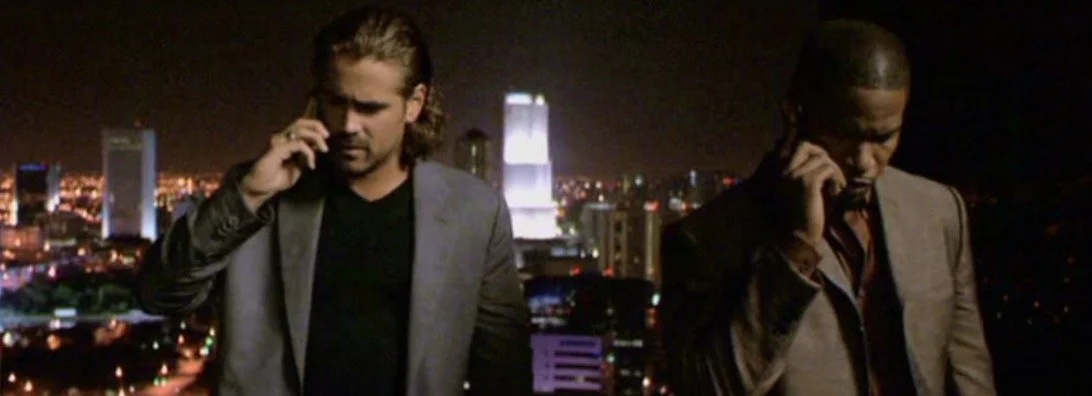
The “Miami Vice '85” cast keeps growing. Andrew Schulz has boarded Joseph Kosinski's big-screen reboot for Universal, per Deadline, joining leads Michael B. Jordan and Austin Butler.