
Rebecca Miller is premiering “Mr. Scorsese” at the New York Film Festival, a five-hour documentary on Martin Scorsese. I won’t get into every detail of the series, which I’ve seen, but there is a fascinating section where Scorsese finally talks about the tumultuous clash he had with Harvey Weinstein on “Gangs of New York.” There’s an embargo on the film, but I will say that Scorsese is far more open about Weinstein’s interference than he ever has been before.
The general consensus, for decades now, is that Scorsese’s cut of the film was far better than the one released in theaters. It reportedly featured no voiceover narration, and most disappointingly, included an epic 12-minute Tammany Hall sequence that was ultimately chopped up and scattered in pieces throughout the film.
On “Gangs of New York,” Scorsese admits to a creative struggle that still haunts him to this day, particularly when it comes to Weinstein, with whom he had a legendary battle.
“I realized that I couldn’t work if I had to make films that way ever again,” Scorsese told GQ. “If that was the only way that I was able to be allowed to make films, then I’d have to stop. Because the results weren’t satisfying. It was at times extremely difficult, and I wouldn’t survive it. I’d be dead. And so I decided it was over, really.”
“I just said, ‘I’m no longer making films,’” Scorsese added. Yet it was “The Departed” in 2006 that reinforced his frustration, after Warner Bros. tried to turn the film into a “franchise.”
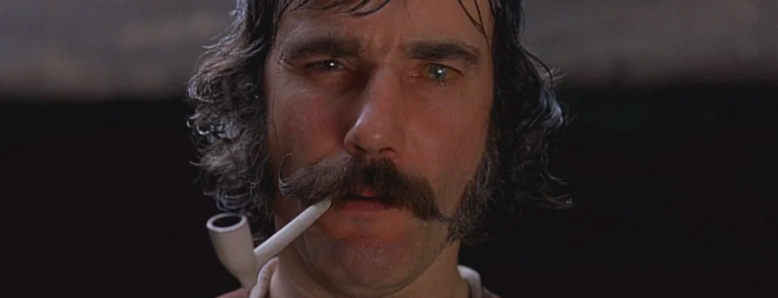
I’ve always admired “Gangs of New York,” but I’ll admit that when I watched it in the fall of 2002, there was a sense that something grander and greater was missing. Daniel Day-Lewis’ towering performance as Bill the Butcher disguised many of the flaws — perhaps his greatest role, aside from Daniel Plainview in “There Will Be Blood” (and maybe “My Left Foot”).
The original cut of “Gangs of New York,” which was screened for a few journalists in late 2001, is said to have run more than three-and-a-half hours. Jeffrey Wells of Hollywood Elsewhere saw it and later recalled:
The work-print version [I saw] is longer by roughly 30 minutes, and more filled out and expressive as a result, but that’s not the thing. The main distinction for me is that it’s plainer and therefore more cinematic, as it doesn’t use the narration track that, in my view, pollutes the official version. It also lacks a musical score, with only some drums and temp music.
Wells was skeptical of Scorsese’s public comments at the time:
I don’t believe Scorsese for a second when he says the theatrical version coming out this Friday is the one that bears his personal stamp of preference. My guess is that Harvey’s mitts are all over this puppy. Scorsese may have his weaknesses or indulgences as a filmmaker, but he’s always let his films play at their own pace and allow them to be true to themselves — their own tempo, themes, moods. He’s used narration before, but never in such a way that the narration wound up feeling like an encumbrance. And he’s never been one to speed his films up when they weren’t working.
It’s been an open secret, for well over 20 years, that Weinstein’s shadow loomed large all over “Gangs of New York,” and true to form, he even bragged about meddling with Scorsese’s vision. Speaking to Vulture, he said:
So Marty presents the final cut of the movie to me as a final-cut director, and it’s three hours and thirty-six minutes. If you thought there was action in ‘Gangs of New York’, the movie, you should have seen that editing room! But we got the movie down to two hours and 36.
Nearly an hour was stripped away. Imagine just how much better the film could have been without the creative interference.
Scorsese has said he has no intention of releasing his original 216-minute cut. I think that would be a mistake. Sure, Scorsese has never been a fan of extended cuts, insisting that the version released is always the final one, but if there were ever an exception to that rule, it should be “Gangs of New York” — a film that will otherwise always have a dark cloud looming over it.u

“Hope,” Na’s first film in ten years — his last one being the exemplary “The Wailing” —is a gloriously messy, blood-soaked sci-fi epic that may become a cult classic despite—or because of—its polarizing nature.