


Roger Ebert’s Matt Zoller Seitz tackled what he called the “lost movies” of 2020: the films from early on in the pandemic that deserved a better fate, but were nixed from theatrical release and relegated to being streamed at home.
From the context of a movie year that had most of its post-March theatrical releases canceled, the number of good movies that actually came out in 2020 was lower than usual. Cannes was canceled. Venice went on, but with barely any great films. Not even the streaming platforms could save this doomed year.
With most theaters shuttered, we had to settle for watching movies in the comfort of our own homes. Release dates for potential blockbusters such as “Dune” and “West Side Story” were pushed back to 2021, and Cannes was canceled, but that didn’t leave us with no movies.
Seitz mentions a few of his under-the-radar favorites, including Pixar’s “Luca,” Max Barbakow’s “Palm Springs,” and Spike Lee’s “Da 5 Bloods,” but that’s a very short list.
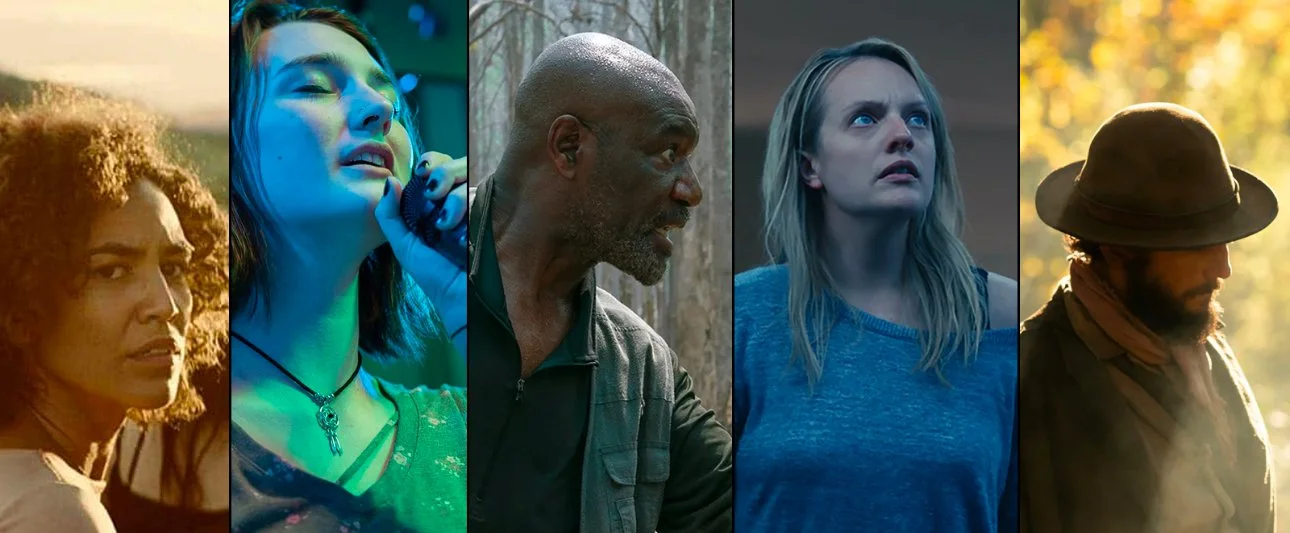
My own personal “best of” list would include 17 films:
“Never Rarely Sometimes Always”
“Lovers Rock”
“Mangrove”
“Bloody Nose, Empty Pockets”
“First Cow”
“The Invisible Man”
“Beginning”
“Bad Education”
“Sound of Metal”
“The Assistant”
“Bacurau”
“Pieces of a Woman”
“American Utopia”
“Possessor”
“Young Ahmed”
“Quo Vadis, Aida?”
“The Nest”
Notice, I have two Steve McQueen films on there. They were both part of his “Small Axe” anthology for Amazon. This was actually confirmed: if Cannes had happened in 2020, McQueen would have had two films playing in competition, “Lovers Rock” and “Mangrove.”
“Lovers Rock” might have been the formally bold film, but in “Mangrove,” McQueen ran circles around Aaron Sorkin’s “other” 2020 courtroom drama, “The Trial of the Chicago 7.” The film, based on the true story of the “Mangrove 9,” focused on a group of Black protestors who clashed with police during a march in London in 1970; they were subsequently arrested and put on trial.
“Mangrove,” depicting that trial, is proof that you can make high art out of such a tiresome genre. Vital, powerful, and resonant, McQueen is a total master of the form, and if it had been properly released, in the right year, “Mangrove” could have been in contention for numerous Oscars, including Best Picture.
Eliza Hittman’s “Never Rarely Sometimes, Always” is one of the best films I saw in 2020—a small-scale indie gem that quietly packs an emotional punch. Following 18-year-old Autumn (an astonishing Sidney Flanigan) as she travels to New York for a secret abortion with her cousin Skylar (Talia Rider). The heart of the film lies in their unspoken, steadfast friendship—a quietly devastating portrayal of vulnerability, resilience, and the struggles of teenage girlhood today.
Yet no film was more acclaimed in 2020 than Chloé Zhao’s “Nomadland,” winning the Golden Lion at Venice and the People’s Choice Award at TIFF before taking home Best Picture at the surreal 2021 Oscars. Five years later, and while still a visually striking film, I stand by my initial assessment that the film’s immersive poetry comes at the expense of fully developed characters, leaving Frances McDormand’s Fern’s inner life frustratingly elusive despite the film’s undeniable social resonance.
In all, I watched 120-ish new films in 2020, an astounding number all things considered. And although, compared to the prior year, there was no “Uncut Gems,” “Once Upon a Time in Hollywood,” “Parasite” or “The Irishman,” the good stuff came in smaller packages, dished out via independent studios who, in the midst of endless lockdowns, managed to find a lifeline between audience and cinema.
And yet, in the 20+ years I’ve been covering movies, I don’t think I endured a worse year in terms of quality. I tend to rely on quality films coming from Cannes, Venice, Toronto, and Telluride. Two of those fests were outright canceled, and the other two had mediocre lineups from filmmakers who didn’t mind having their films screened digitally as well as “in-person” (with 50% capacity attendance).
Now that it’s been five years since the pandemic-destroyed 2020 movie year, which films have managed to hold up for you?

I should warn you: based on everything I’ve heard, this teaser is a total misdirection. The movie is not at all what it’s being portrayed as here. In fact, most of the footage in the teaser comes from the first few minutes of the film.