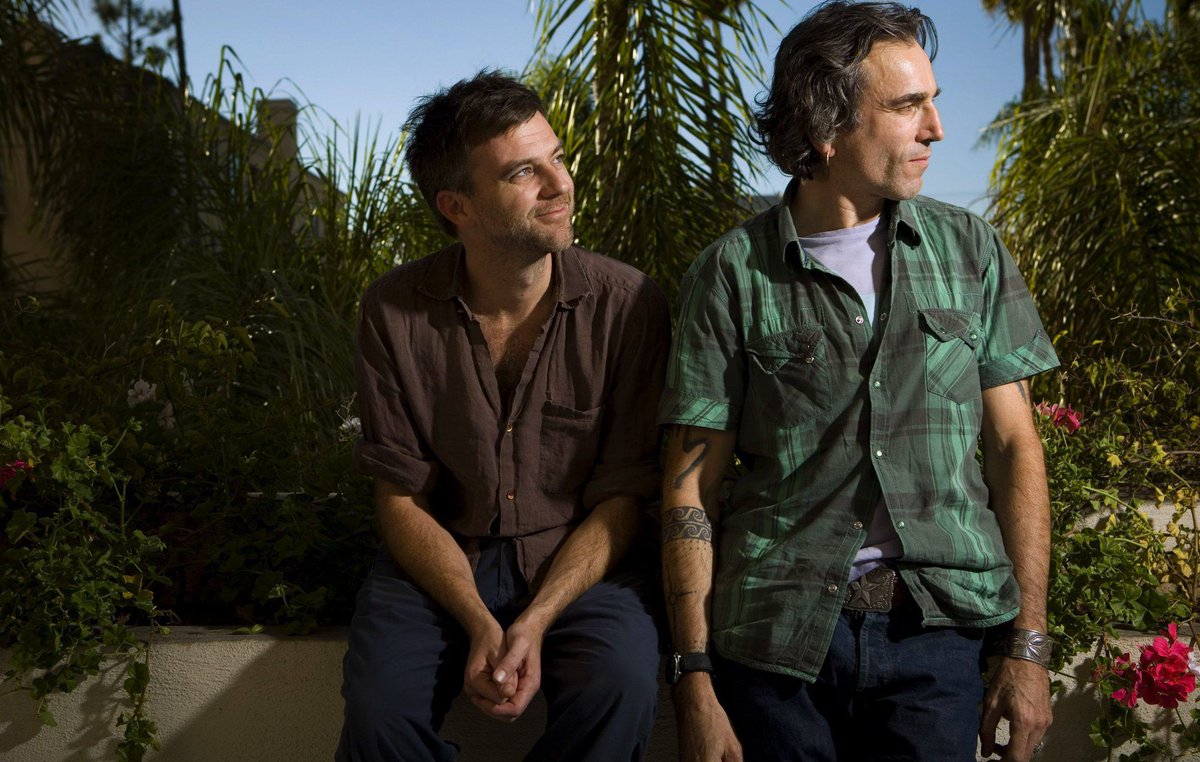
Director Brett Morgen talks about his incredible documentary "Jane"

Image result for jane morgen 600x200

I spoke to director Brett Morgen for The Playlist. He's doing the rounds promoting his triumph of a documentary "Jane." It was quite an incisive talk I had with him. If you happen to not know, the film is about Jane Goodall whose 55 years of work studying chimpanzees has been groundbreaking and made her legend in the sciences. Morgen took more than 140 hours of available footage, courtesy of National Geographic, to make this movie. The footage of a goldmine. Goodall was filmed by cameras in his fist excursion to Gombi in Africa. Nearly everything she did on a day to day basis was captured, which helped Morgen put together in the editing room a touching narrative structure that fully details Goodall's important journey in those very important few years of her life. This is a journey of self-discovery set in the 60s and it's all been filmed for us to finally see it more than 5 decades later.

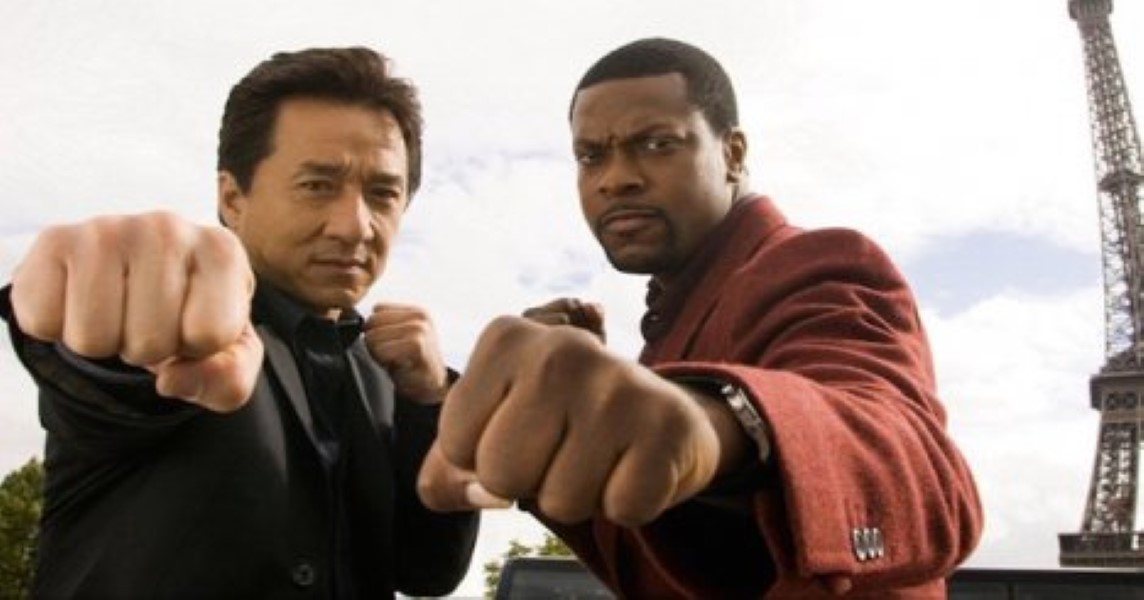
Jackie Chan thought 'Rush Hour' was terrible when he first saw it

Image result for chan tucker
I thought the first "Rush Hour" was a decent entertainment. There was nothing special within its screenplay, what made it work was the chemistry between Tucker and Chan. Same thing with Chan's other notewoorthy American film "Shanghai Noon," he and Owen Wilson were great together in that film. Not enough people talk about it either or its underrated sequel. Back to "Rush Hour," the sequels were horrendous.

After Chan wrapped Rush Hour, he told his manager he would never do another film like it again. “That’s a terrible movie,” Chan recounted saying. “They don’t allow me to do my own style [of action]. The English, I’m not good. Chris Tucker’s English, I don’t understand. Terrible movie!” He sat there dumbfounded as moviegoers laughed through the premiere. “Why are they laughing, I just don’t understand,” he thought.

Full Synopsis Revealed for Paul Thomas Anderson’s ‘Phantom Thread’


I wrote a little somethin' for The Playlist about this [Read HERE]

The synopsis reads as follows:

"Set in the glamour of 1950s post-war London, renowned dressmaker Reynolds Woodcock (Daniel Day-Lewis) and his sister Cyril (Lesley Manville) are at the center of British fashion, dressing royalty, movie stars, heiresses, socialites, debutants and dames with the distinct style of The House of Woodcock. Women come and go through Woodcock’s life, providing the confirmed bachelor with inspiration and companionship, until he comes across a young, strong-willed woman, Alma (Vicky Krieps), who soon becomes a fixture in his life as his muse and lover. Once controlled and planned, he finds his carefully tailored life disrupted by love. With his latest film, Paul Thomas Anderson paints an illuminating portrait both of an artist on a creative journey, and the women who keep his world running. Phantom Thread is Paul Thomas Anderson’s eighth movie, and his second collaboration with Daniel Day-Lewis."

Mr. Woodcock, eh? The House of Woodcock? 

Darren Aronofsky says his favorite review of ‘mother!’ is Rex Reed proclaiming it "the worst movie of the century,”

Filmmaker Darren Aronofsky has most definitely become the most hunted man in movie culture this last week. His controversial “mother!” has caused a volcanic stir in the mainstream by bewildering, provoking and flat-out infuriating movie audiences nationwide (and some media to boot) with its non-conventional narrative, shocking images and a frustrating loop of a story. That’s fine, adventurous moviegoers have, at the very least, mostly appreciated what Aronofsky went for with this film; it’s hard for any of us to really complain about a studio movie taking the kind of risks “mother!” does even if you think it subjectively fails. 
Best of all the reviews, however, was Rex Reed's scathing pan of the movie, in which he proclaimed in his review for The Observer:  “I hesitate to label it the ‘Worst movie of the year’ when ‘Worst movie of the century’ fits it even better." Yikes. Sadly, that's a sentiment that many mainstream audiences I've spoken to, more or less, agree with Rex on. 

Darren Aronofsky has however proclaimed that Reed's review was his favorite to read, which tells you so much about the man and how open-minded he really is. He clearly wanted this kind of reaction to his film and it worked. He wanted to polarize the masses and have them screaming at the screen from their comfy seats, here he is talking about Rex:


“I mean, my favorite on ‘mother!’ is Rex Reed called it the worst movie of the century,” Aronofsky said. “For me, [that] is a victory. I mean, finally I got to the top of the list. You know, he hated ‘Black Swan‘ [which] was an ugly duckling for him. I remember somebody telling me that. I don’t really read reviews. I try to avoid them. It’s very hard to avoid everything in this world. You hear the conversation because of all the different types of ways we get media in this world. But, I’m not that concerned about that stuff. The job of the filmmaker is to make the film, and put it out into the world the best way that is possible with the resources you have, and then whatever happens, happens. I don’t think you can ever predict, you know, for a long time, ‘The Fountain‘ was really, really hated and made fun of and stuff, and I think the fans of that one have been the biggest fans of any film that I have had. The passion that people feel for that film has been deeper than any feedback I ever get from just people I meet. So, you don’t know how things are going to work, and it definitely, you know, the story of films takes a long time, especially if the filmmaker has worked hard on them."

"Suburbicon"

Image result for suburbicon

Suburbicon is George Clooney's latest attempt at directing and, at some point in the aughts, it seemed like he could really be a great director. His first two fillms ("Confessions of a Dangerous mind," and  "Good Night and Good Luck") seemed to indicate that he could be a natural-born director, but somewhere along the way he lost himself with a series of misfires ("Leatherheads," "The Monuments Men," "The Ides of March"). You can now add "Suburbicon" to that list of fails. It's not like Clooney has lost his knack for presenting us a vivid setup of  tone, story, and time, but the the film's promising start is then followed by a a problematic execution of comedy and drama.

"Suburbicon has Matt Damon playing Gardner Lodge, whose family is tested when a group of men invade his home, they kill his wife, but do leave his son and sister-in-law (Julianne Moore) alive. Doubts start to persist as Gardener falls for his wife's sister and you start to realize that maybe he set the home invasion up himself. The events that soon follow are very Coen-esque, as Gardener needs to cover up and resist not just the authorities questioning him, but also gangsters hounding him for what is owed and an Insurance agent smeeling something fishy in all this. 

Suffice to say, the film quickly spirals out of control into a farce of random occurrences, again the Coens seem to really be a major influence here and I can understand why. Clooney has starred in four of their movies ("O Brother Where Art Thou?" "Burn After Reading," "Intolerable Cruelty," and "Hail, Caesar!") all of which bare striking similarities to "Suburbicon" in terms of  tone, wit and the use of dark comedy. Coincidentally these are all movies that have  had the Coens in more playful moods rather than the dark starkness of their other better efforts. However, Clooney seems to dig that style, which is why "Suburbicon" has been made, based on a script, you guessed it, Joel and Ethan Coen.

The satirical aspect of Suburban life hinted in the fiilm's first half is quickly let go for a more Fargo-esque dilemma in coincidental absurdities. The shifting of tone can sometimes be very intrusive and brings upon a lac of tonal cohesiveness to the story, that I'm sure Clooney didn't mean for it to happen. It doesn't help that most, if not all, of the main characters are unlikeable and despicable. They do horrible things throughout and you are asked to accept their behavior for the betterment of the story. Although the middle section of the film is all over the place, the final third does tend to involve the viewer a little more by adding a redeemable character to the forefront, that would be Gardener's younger boy, and that somewhat reestablishes our emotional involvement in the surroundings. Clooney spikes those final few minutes with a devious mix of mirth and malice that will have you cringing in dread.

If there's a performance that catches the eye though, that would be Oscar Isaac's insurance man, who investigates Gardener's wife's murder and knows something is very rotten in the suburbs. He appears in, I believe, two very important and crucial scenes in the film, delivering a moral compass that has been otherwise lacking in this loony-bin of a film. Isaac, slowly but surely becoming the actor of our generation ("Inside Llewyn Davis," A Most Violent Year," "Drive," "Ex-Machina," "Star Wars") should have been given more screen time, it could have helped in not isolating the audience by sticking them with, what are mostly, murderous losers as lead characters.

Joel and Ethan Coen's screenplay feels like something they were contemplating on making but decided to pass along to Clooney. The addition of  a black family next door to the Gardener's and the flack they receive from the community for wanting to live in in the neighborhood feels forced and, quite frankly, another subplot that could have been left on the cutting room floor.  Matt Damon and Julianne Moore give us the best possible incarnation that these characters could have on-screen, they are both fantastic and rich in their deliveries but the problem never lied with them.  Alexandre Desplat's score is definitely another highlight, I was reminded of "Burn After Reading" and "Hail, Caesar" in the way Desplat mixes cocktail-Jazz and Bernard Hermann to capture the film's darker comedy. [C]

Dan Gilroy & Denzel Washington trimmed and re-edited ‘Roman J. Israel, Esq.’ after TIFF

Image result for roman israel cutting reddit

I dug Roman Israel, ESQ. I didn't expect it to have the mixed reviews it received at TIFF this past September. Yes, the movie is a mess, but I thought that was part of its charm [Full REVIEW] It's a messy ambitious account of a messy, ambitious man. Some, make that many, movies go back to the cutting room floor after a festival showing. I mean, it's common sense to feed off of the reactions from critics and audiences alike and better your movie, but what Gilroy and Washington seemed to have done here is a complete overhaul of the narrative structure and tone of the film. The fact that they "reordered" scenes says everything you need to know about what is going on here. They also cut off a subplot, there are a few so I'm not sure which specifically, and that's something that can also impact the film differently. Music cues were changed, but, here's the gimmer for me, 12 minutes were cut from the film. You hear some directors say they cut 2 or 3 minutes, such as what Ruben Ostlund told me he did with his Palme D'or winning "The Square" after having won the prize, but 12 minutes, that can really change a movie. I wasn't going to rewatch "Roman Israel, ESQ," I thought I was satsfied enough by what I saw last month, but now it's back on my must-see list. If it is indeed a better film than that which I saw at Toronto then I'll be very ecstatic about it.

Here's Gilroy talking about the changes to Deadline:

"The first time we actually showed the film to a real audience was in Toronto. We went right from the cutting room to the Ryerson Theatre. We wanted to make that festival but realized, watching with that crowd, that Denzel so inhabits and embodies his character that we could lean much more into the plot than we had. We re-conceived the balance of the movie, in crucial sections. The day after Toronto, Denzel and I went back into the cutting room and spent weeks making changes. Not just to the pacing. We reordered scenes, we changed elements, particularly with Colin’s character."

"That Staples Center scene is crucial not just for Colin’s character but in establishing the tone of the movie, and at Toronto it came near the end, at a point where the suspense part of the story is in such high gear that you can’t even register what Colin is saying and what it means to Roman. We put it much earlier where it becomes more of a pillar for the film. And by doing that, we also then cut out one of the subplots which established the same kind of internal conflict in Roman."

"We weren’t worried. We looked at it as a very high end test screening. We had the time, the resources, and Denzel and I had been collaborating so closely that we said, let’s go do this. Movies are forever, that’s the way Denzel and I look at it. And a screening for 1200 people in Toronto is not going to define for us what the final version of the movie is. What we did here was strengthen and refocus a film we were already really proud of. We also cut a lot, over 12 minutes of the movie. You’re looking at a film where we’ve cut any fat, right down to the muscle. We realized that Denzel’s character was so strong that we could lean more into the plot around him. You’ve never seen him vulnerable like this; it’s a major transformation, physically and emotionally. Watching it with an audience, we realized that beyond his character, there’s a story here that was going to operate better if it was tightened and refocused. That was really the beginning of us getting to change things, including the music cues."

"Denzel brought so much to the editing room. He has directed three and starred in what, over 40 films? He has incredible instincts for pacing, for story, for finding false notes and knowing when a scene is sagging. He is very objective in taking outside opinions like the ones we got in Toronto, and listening to them. He’s unique that way; a lot of actors can only focus on their own character. I would not usually be inclined toward having an actor come in to the cutting room, but every day, I looked forward to Denzel coming in. The two of us worked so closely with my editor brother John to get to this place. Denzel was an invaluable resource on every level."

"We love our film and we’re showing to certain people who hadn’t seen it before and we’re getting incredible response. Denzel loves it, and his character, evidenced by his coming in and working all these weeks with us to get the film exactly where we wanted it to be."

Does "The Breakfast Club" Deserve Its Criterion Treatment?


“A movie about a bunch of stereotypes who complain that other people see them as stereotypes ... But all that this encounter-session movie actually does is strip a group of high-school kids down to their most banal longings to be accepted and liked. Its real emblem is that dreary, retro ribbon" - Pauline Kael [8 Apr 1985, p.123] 


Cinephiles were taken aback last week when John Hughes' much loved "The Breakfast Club" was chosen to be part of the Criterion collection.  There’s no question that Hughes’ 1985 high school comedy-drama is considered a classic by mainstream film fanatics of its generation, it also somewhat represents the white-branch teenage demographic's angst at that time. Personally, I saw it way after high school, so a lot of the themes and dissections of that part of life we're not as resonating. Here's the thing about the movie, and most of Hughes' other "classics," if you grew up with them, then you most likely have an affinity for them. Those films also include "Sixteen Candles," "St. Elmo's Fire," Pretty in Pink," and "Some Kind of Wonderful."

The release is a 4K digital restoration but the real gimme is a whopping fifty minutes of never-before-seen deleted and extended scenes. Hughes' much-rumored two-and-a-half hour original director’s cut of the film will, more or less, be felt through watching these much-sought deleted scenes. Nevertheless, the debate is on, "The Breakfast Club" criterion has caused heated conversation on social media and in forums about Criterion tackling such a mainstream and safe release. The critics were divisive on the film back in 1985, they were negative on most of Hughes' other films as well. I won't criticize Criterion's decision to release what is, by all accounts, a nostalgic film that has its legions, and there are MANY, of fans.

The film is pure nostalgia. Some movies just become classics due to people having grown up and countlessly rewatched them as teenagers. That’s "The Breakfast Club" and John Hughes movies in general. I could go on and on about countless other 80s movies that have become nostalgic classics.  One of the reasons Criterion has decided on this release is that last year the film was “selected for preservation in the United States National Film Registry by the Library of Congress as being ‘culturally, historically, or aesthetically significant’.” No doubt, the film fits these demands and has been a cornerstone of millions of lives, but is it essential cinema? Is it Criterion-worthy? Of course not.

David Fincher on the pressures of directing "Star Wars" movies

Image result for fincher 600x200

"….I talked to [producer Kathleen Kennedy] about that and look, it’s a plum assignment. I don’t know what’s worse: being George Lucas on the set of the first one where everyone’s going, “Alderaan? What the hell is this?” Where everyone’s making fun, but I can’t imagine the kind of intestinal fortitude one has to have following up the success of these last two. That’s a whole other level. One is that you have to endure the withering abuse of Harrison Ford and Carrie Fisher, and the other is you have to live up to a billion or a billion-five, and that becomes its own kind of pressure. I think [The Empire Strikes Back director Irvin Kershner] had the best job. He had a pretty great script and he had the middle story. He didn’t have to worry about where it started and he didn’t have to worry about where it ended. And he had the great reveal. You’d have to really clear your head, I think. You’d have to really be sure this is what you wanted to do because either way it’s two years of your life, 14 hours a day, seven days a week."

 [Collider]

"I, Tonya" has a trailer


Given the incredible word of mouth from TIFF, it’s a no-brainer decision to have Craig Gillespie’s I, Tonya released this year for potential awards, especially when it comes to Margot Robbie and Allison Janney's performances. I wasn't sure what to make of the film initially but then I re-watched it and then it grabbed me. This is not a film that will break new ground, it is an entertaining take on a wild true story and, in some twisted way, I see it as a sure-fire crowd-pleasure, despite the lack of any characters with redeemable traits. Hell, I think the most likable character in this film is probably Tonya.

Here's what I wrote about the film at TIFF:

“I, Tonya” is a play-by-play account of what happened during the 1994 U.S. figure skating championship when Tonya Harding and her dead-beat loser of a husband hired a white-trash goon to break the leg of her arch nemesis Nancy Kerrigan. Margot Robbie plays Harding in all her blue-collar, low-rent glory. Harding was the outsider, a figure skater that lacked the class needed in a sport whose judges look for competitors to be elegantly poised. And yet, she was the first female American figure skater to attempt and successfully complete a triple axle in competition."

"The stunningly beautiful Robbie, who admitted at the film’s press conference that before signing on to the role that she didn’t realize the Harding/Kerrigan scandal was real, delivers the best performance of her young career. De-glamming to play a person that most of America found easy to hate in the winter of 1994, it’s not at all far fetched to wonder if Robbie could be rewarded with a nomination come next January. The 27-year-old actress is a superstar-in-the-making and this performance could just bust it wide open for her."


"Allison Janney, playing LaVona Golden, her parakeet bearing, alcohol swigging, chain-smoking and cuss-per-second-swearing mother and she's even better than Robbie here. Every time she's on-screen there's a cringe-inducing pertinence to this character and yt you can't look away. She's the mother from hell. A lot of the abuse that Tonya received at the hand of her mother seems to be the driving force at what director Craig Gillespie seems to be hinting is at the heart of Tonya's drive for success. She wants to prove her mother wrong at any cost."


"The story does stick to the looney, incomprehensibly real facts, but refuses to assign any of the blame on Harding. The writer-director seems to be hinting that yes, Harding was typical white trash surrounded by more white trash, but that didn't necessarily make her an accomplice as much as a naive girl completely aloof of the plot to crush Kerrigan's knees. The implication that it was Sean Eckhardt, played with spot-on schlubbiness by Paul Walter Hauser, that concocted the whole scheme with her dead-beat abusive husband Jeff Gillooly, played by Sebastian Stan, can raise questions about the actual stories credibility, but there also is no proof to think that Tonya actually wanted it to go down that way."


"Gillespie directs the hell out of this movie, using a 1980's soundtrack to launch his narrative forward. In fact, there barely is a scene were a song isn't frenetically playing in the background. The writer-director clearly took a page out of the Scorsese rulebook as the DNA of "Goodfellas" is imprinted all over his film. There are worse movies to blatantly copy this day and age and, quite honestly, Gillespie pulls it off and makes a highly entertaining film out of the most disturbing of American sports stories."


Neon has set a release date for December 8th, 2017

What are some other examples of movies that have weird alternative titles in foreign markets?

Image result for rasta rocket

Here are a few nifty titles I uncovered courtesy of a Reddit thread that was started on this topic [HERE] I'm sure there are thousands of other examples but these seem to be the clear winners for me, from what I've found at least:

The Blair Witch Project = Night In The Cramped Forest (China)
Dodgeball = Full Of The Nuts (Germany)
Eternal Sunshine Of The Spotless Mind = If You Leave Me, I Delete You (Italy)
Knocked Up = Slightly Pregnant (Peru)
Home Alone = Mom, I Missed The Plane (France)
Die Hard with a Vengeance = Die Hard: Mega Hard (Denmark)
Leaving Las Vegas = I’m Drunk And You’re a Prostitute (Japan)
Nixon = Big Liar (China)
Pretty Woman = I Will Marry a Prostitute to Save Money (China)
Twister = Run! Run! Cloudzilla! (China)
Cool Runnings = 'Rasta Rocket' (France)
The Shawshank Redemption = "Rita Hayworth-The Key to Escape" (Finland)

China
The Matrix = Hacker Empire
Leon The Professional = This Killer Is Not Too Cold
21 Jumpstreet = Outstanding Teenage Team
50/50 = I'm Anti-Cancer
Army of Darkness = People Trifle With Ghosts
Dredd = New Special Police Judge in Hades
Guardians of the Galaxy is "Interplanetary Unusual Attacking Team" in Taiwan

"Professor Marston & the Wonder Woman"

Image result for PROFESSOR MARSTON 600X200

Yes, "Wonder Woman" was the surprise of the summer, no make that the year, but what might even be more surprising is the story of the heroine's original creator. Harvard-educated William Moulton Marston (Luke Evans), taught Psych at Radcliffe with his wife Elizabeth Holloway (Rebecca Hall), a no-nonsense kind of gal that was ahead of her time in terms of feminism and sexuality. Dominance and submission are what this eccentric couple were after and given that this was all happening in the 1920's, many timid minds were offended, to say the least.  Enter Olive Byrne (Bella Heathcote), Marston's student and eventual muse in his educational endeavors. As an unadorned fan of Marston's Olive is ready to volunteer at any cost, and volunteer she does, participating in the professor's many tantalizing experiments. Holloway agrees but warns the young protegee to not sleep with her husband or else, "don't fuck my husband" she says in a dryly persuasive delivery. However, it's not with the professor that this young bright mind's main desires lie, it's actually Holloway herself and, as we learn, the feeling is mutual. Marston, Holloway, and Byrne eventually embark on a three-way relationship that doesn't just confuse their neighbors next door but the main perpetrators themselves, who have enough confused emotional investment in each other to blow the roof off of their beautiful suburban house. 

Of course, this isn't really about Wonder Woman and more about the sexual discovery that led to the heroine. DC fans need not worry as the creation of the Amazonian princess does come about in the final third where her spirit starts to develop in Marston's creative psyche. What helps offset it is his deep dive in s&m, he and his wife are turned on when they hide at Olive's sorority house and see her get spanked by the sisterhood. However,  the AHA! moment happens when our threesome visits a Greenwich village sex shop and try on some kinky wear.  Wonder Woman's tiara, bracelet, corset, boots and famous rope? All inspired by that visit to the sex shop on that fateful day.  In fact, the Lasso of Truth, which is the aforementioned rope Wonder Woman uses on people to force them not to lie was actually inspired by a bondage rope at that shop.

Writer-director Angela Robinson is best known for her risky TV work (The L Word, True Blood) and the translation from the tube to the big show feels somewhat bumpy as the visual style and narrative safeness she employs feel all too conventional for a story this pertinently unconventional. The film is intellectually engaging, it begs for us to ask questions that even today might seem mightily sensitive, but emotionally there's something missing with these characters. It just doesn't feel like these gloriously beautiful people can be the same outsiders of the actual events. We know their adventures fascinate but Robinson smoothes the rough edges a little too much for any artfulness to seep through her frames. Instead of letting these characters breathe a little, Robinson seems more interested in the obvious which has to come with the explanatory dialogue that all-too-often comes in biopics having to go through many years in a two-hour runtime. 

Professor Marston and the Wonder Woman" reminded me of 2004's "Kinsey," which had Liam Neeson playing the controversial sex doctor and the risky sex experiments he conducted in the 1950s. However, if Bill Condon's film made the eccentric sexologist's adventures snappily witty and spirited, Robinson seems to have sucked out any of the interesting traits in her characters. They might be interesting people on-page but in "Professor Marston and the Wonder Woman," they fell all too vanilla [B-]

"Marshall"

Image result for MARSHALL 600X200

Marshall Thurgood was the first attorney for the NAACP. He won 29 of the 32 cases he argued in front of the U.S. Supreme Court, including one Brown v. Board of Education. In fact, in 1967 Thurgood became the first African-American to serve on the Supreme court. A feat that didn't go unnoticed given that 50 years later we finally have a Hollywood movie about the man.


Albeit a tiny glimpse of a key moment in his life. Chadwick Boseman ("Get On Up," "42") plays Thurgood with all the confidence and panache needed to do justice to the legend in director Reginald Hudlin's "Marshall." Hudlin brings the Hollywood gloss and conventional narrative structure to a film that feels all too familiar and which doesn't bring anything new to the courtroom genre. Too bad, because the story's a gimme.

It's 1941 and a 33 years old Marshall is about to embark on a case that will change his life.  He's sent to Connecticut where a black man, Joseph Spell ("The People VS OJ" MVP Sterling K Brown), is being accused of raping a white woman (a surprisingly effective Kate Hudson). The always reliable Josh Gad is Marshall's co-counsel Sam Friedman, whose forced onto the job by his superior.

The film focuses on the dynamic that Boseman and Gad had as they tried to solve the case, both have the kind of chemistry that is needed to make a good movie. It's interesting to see Gad's Friedman experience bigotry himself as a Jew and how his community fears reprisal for his defense of a black man accused of rape. Too bad then that some of the other characters veer on being caricatures more than fully-fleshed roles. Worst of all is prosecutor Loren Willis, whose racist tendencies have no subtleties whatsoever and give-out a cartoonish demeanor. Brown is underutilized, we know he's a talented actor, but he's barely in any scenes and is left mostly sitting in the courtroom and observing the lawyers speaking, when he does have his chance to shine it becomes the film's best scene as his character takes the stand trying to explain what really happened and why he might have lied about certain things. It's the kind of scene that brings invigorating fervor to a film otherwise lacking in it and even more than just a bit of social relevance to today's world.

Sure, there are moments where I was easily invested in the goings-on, but cliches are too many to overlook. It doesn't help that the visual style Hudlin decides to implement is dull and pedantic. Known mostly for his TV work, the 55-year-old director had a promising start to his career when he made 1990's "House Party." but then a series of duds were awaiting, most notably "The Ladies Man," "Serving Sara," "The Great White Hype," and, lord almighty, the Eddie Murphy bomb "Boomerang." It's bewildering to think just how a studio would choose him to tell such an important and inspiringly relevant story. "Marshall," could have been a contender, but it just sits there awash in familiarity. [C+]

David Fincher: "Now, movies are about saving the world from destruction."

Image result for david fincher 600x200

I have difficulty trying to see David Fincher as a good fit for "World War Z 2," but Fincher has surprised us more than once in his career. This film, to me, harkens me back to his directing debut: Alien 3. It's a similar genre which relies on a lot of jump scares. I sure hope Fincher gives us something fresh and inventive, but what's the potential for that to happen here? Fincher has stated in the past that he wants to make movies that a big audience will go to see, he wants his movies seen NOT forgotten. With that in mind, I completely understand why he would choose such a project, the original Z, directed by Marc Foster, was plagued with reshoots and controversy, but it was a mega-blockbuster.

Let's just make sure Fincher gets total creative control here. This would be Fincher's first all-out blockbuster, although, I guess, you could make a case for "Alien 3" as well. Fincher hasn't directed a film since 2014's "Gone Girl." At some point he was supposed to direct Ben Affleck in a remake of Alfred Hitchcock's "Strangers on A Train," but IMDB doesn't have that project listed anymore. Scrapped? Who knows. Fincher will be collaborating with Brad Pitt for the fourth time with this "World War Z" sequel.

In the meantime, as his next movie is a sequel to a lucrative disaster film, Fincher tells Financial Times that Hollywood movies these days are all about "saving the world from destruction," ha the irony:

“There’s no time for character in movies.” “No, now. Look at ‘All The President’s Men‘ — everything is character. Now, movies are about saving the world from destruction. There aren’t a lot of scenes in movies, even the ones I get to make, where anyone gets to muse about the why. It’s mostly the ticking clock. And in this show it’s hard to find the ticking clock. But the thing is: I don’t care if the whole scene is five pages of two people in a car sipping coffee from paper cups as long as there’s a fascinating power dynamic and I learn something about them. And I do not care if the car is doing somewhere between 25 and 35 miles per hour.”
“Look, many people at studios are still fighting the good fight. There are executives there who are friends of mine. But if you want to make studio movies, you stay in their lanes, which are romantic comedy, affliction Oscar bait, Spandex summer, superhero tentpole, moderately budgeted sequel,” Fincher stated candidly."
“The cinema isn’t dead. It just does something different. The place is still filled with kids, it’s just they’re all on their phones. It’s a social event like a bonfire, and the movie is the bonfire. It’s why people gather but it’s not actually there to be looked at,” Fincher said. “Because the bonfire is always the same.”

Kevin Feige: ‘Guardians of the Galaxy Vol. 3’ Will Kickstart Marvel’s Phase 4

Guardians of the Galaxy - Matt Taylor

We all really want to know what's Marvel's plan, Post-Phase 3. I mean, REALLY want to know. There is so much demand that Marvel head Kevin Feige had to address the swirling rumors earlier this week by stating that there is no plan, at the moment, to unveil a new phase. However, I'm betting that, once we catch "Infinity War," next year stuff will become a little clearer and we'll be able to decipher what's next for the Marvel Cinematic Universe.

According to Comic Book:

"Following Phase 3 of the Marvel Studios films, the studio will keep titles of upcoming films a little closer to the vest. The studio's President Kevin Feige spoke with members of the press during a rare Open House event at Marvel Studios HQ earlier this week, teasing the new plan."


Well now, at least, we have a movie that will definitely be part of Phase 4, in fact it's going to kickstart it. According to Marvel head honcho Kevin Feige, that would be none other than Guardians of the Galaxy Vol. 3:


“Well, all I’ll say is the films we are working on now – which take us through to the Avengers Untitled in May of 19 – that’s really all we are focusing on. And we are focusing on bringing, by that point, an unprecedented, 22-movie, continuous shared fictional narrative to a conclusion in a satisfying way.”
Now that plans for "Inhumans" have turned into a television series there are lingering questions as to what's next ...

Right now Phase 4 might look a little something like this if you pay attention to any of the rumors circulating the last few years:


"Guardians of the Galaxy Vol. 3"

"Black Widow"
"Doctor Strange 2"
"Nova"
"Spider-Man: Homecoming 2"
"Secret Avengers"
"Black Panther 2"
"She-Hulk"
"Captain Marvel 2"

"Fantastic Four"

[Uproxx]

Netflix Expects to Release Around 80 Original Films in 2018


And Netflix also plans to advertise about five of them ...Here's my beef with Netflix. Chances are that these movies will not go for any awards because Netflix refuses to market their original films, or, if they do, it's very minimal and you wouldn't even notice it, but they’ll be watched by their intended audience eventually as people will “discover” them just like they discovered the now classic mumblecore drama "Drinking Buddies," which had a whole new shelf life on the streaming service.

All this to say ... And YET, they’re still $20 billion in debt, intentionally they say, which begs us to ask the question: When are you going to start making money Netflix?

Here's Variety quoting Netflix president Ted Sarandos on the 2018 lineup:

"Netflix expects to release around 80 original films next year, as it looks to hit the kind of scale in movies that it’s achieved on the TV side, They range anywhere from the million-dollar Sundance hit, all the way up to something on a much larger scale,” like Will Smith-starrer “Bright,” Sarandos said in an investors’ interview Monday about Netflix’s third-quarter 2017 results."

Obviously many of the 80 films will be bought at various film festivals next year but, of the titles already acquired, these are the most exciting prospects:

The Irishman (Martin Scorsese)
The Land of Steady Habits (Nicole Holofcener)
The Ballad of Buster Scruggs (Joel Coen)
The Other Side of the Wind (Orson Welles)
Hold the Dark (Jeremy Saulnier)
Mute (Duncan Jones)
Apostle (Gareth Evans)

Box Office Week: Happy Death Day surprises at #1 with an excellent $26.5M, The Foreigner comes in at #3 with a solid $12.8M, and Professor Marston & The Wonder Women has a disasterous opening at #14 with $737K.

1."Happy Death Day," $26.5 million 
2."Blade Runner 2049," $15.1 million
3."The Foreigner," $12.8 million 
4."It," $6.1 million 
5."The Mountain Between Us," $5.7 million
6."American Made," $5.4 million 
7."Kingsman: The Golden Circle," $5.3 million
8."The Lego Ninjago Movie," $4.3 million 
9."My Little Pony: The Movie," $4 million 
10."Victoria and Abdul," $3.1 million 

David Fincher attacks Marvel movies

Image result for david fincher marvel

“Look, there’s a very large talent pool of people who are- don’t feel there’s much for them in terms of sustenance working for Marvel,” said Fincher, prompting the listeners to laugh. “And I think that if we can make a playground for them that is thoughtful, adult, interesting, complex, challenging stories and figure out ways to pull them into it, there’s a chance at something that isn’t lassoed and hogtied by three acts. And there’s something else that doesn’t have to be 22-minute half hour or have a cliffhanger. I think it is an exciting time.”

[Comic Book]

"The Meyerowitz Stories (New and Selected)"

Image result for meyerowitz stories dustin hoffman

I initially saw Noah Baumbach's "The Meyerowitz Stories" this past May at the Cannes Film Festival. It was an underwhelming experience watching it with a mostly European crowd that, most likely, didn't understand half the New York jokes that were coming at you in a breathlessly effortles pace. I tweeted: "The Meyerowitz Stories isn't top-notch Baumbach. No edge to some of the scenes felt Woody Allen-lite." Suffice to say I was most probably going to watch it again closer to its release date.

"The Meyerowitz Stories" is first and foremost a story about family. It reminds you of "The Royal Tenenbaums" but done in a less controlled manner, with a more freewheelin' spirit. The reunion of three estranged siblings, played by Adam Sandler, Ben Stiller and Elizabeth Marvel, when their father Harvey (Dustin Hoffman) is victim of a stroke. Familial dysfunction runs rampid with this family. The father is a New York City sculptor whose art, while not totally unnoticed, never got its due, that's at least according to him.

The character of Harvey is the most fascinating of the film, he is as unpredictable in his verbal fireworks as he is in his cold, distant emotions towards any of his loved ones, which includes his third wife (Emma Thompson), a hippie that loves to cook such "delicacies" as raw shark and is clearly has a drinking problem. The film, which was written and directed by Baumbach doesn't have much of a plot as much as it gives you a scene by scene account, slowly detailing who these characters are and how the past, mostly having to do with their dad, has affected their ability to cope with their own lives.


The acting is riveting. Sandler, way out of his comfort zone here, is a real find, giving possibly his best performance since 2002's "Punch-Drunk Love." His Danny is a complexly written role, a man that was promised an artistic career but finds himself unemployed, no doubt living off family money and freshly divorced. Stiller's Matthew, Danny's brother from Harvey's other marriage, so good in Baumbach's "Greenberg," plays a successful real estate man that distances himself from the family by moving to Los Angeles at an early age, but the irks of a failed marriage have left him unsatisfied with life. The subtleties in his performance bring layers and complexities.Grace Van Patten's Eliza 

Sadly, the sense of déjà-vu is also present in Baumbach's movie.You know, the tackling of the eccentric, intellectual, Jewish, artistic upper class of New York, but the film distances itself just enough to be its own unique vision, no thanks to Baumbach's exciting ear for dialogue. 

The film, split into three sections, for each sibling, is actually edited like a series of little portraits and, but if there's a theme to the movie, except for familial dysfunction, it's that of death looming all around us and triggering emotions of regret if anything does happen.When Harvey is hospitalized, the ties that bind come to fruition, so do the pent-up secrets that have never left this trio of siblings off the hook.

Dustin Hoffman. You can count his performance as some of the best work of his career. This could be his eight Oscar nomination and first in 20 years, "Wag the Dog" being the last time he was honored. How good is he in this film? Well, let's put it this way, whenever he's not onscreen the film does tend to suffer. He ignites every frame he's in of "The Meyerowitz Stories" with a pleasurable mix of stinging comedy and dramatic bravado. It's the best work he's done in close to two decades.

As you can tell, a second viewing did tend to make me appreciate Baumch's film a little more, but some flaws still remained. Although there are genuinely truthful moments scattered all around this film, watch and listen carefully to Sandler interacting with a woman he used to like, the body language and dialogue so convincing.It's little moments like these that make the film a "gem" of neuroses. The film's abrupt cuts tend to catch the audience off guard and feel a little too on the nose. The last act is also kind of a drag, if the first 2/3 of "The Meyerowitz Stories" feels like LIFE, the way things wrap up is a little too neatly tied together and contrary to how life really works.


Nevertheless, if "The Meyerowitz Stories" doesn't reach the heights of Baumbach hallmarks "The Squid and the Whale," and "France Ha," it is still a noteworthy addition to his consistently fascinating canon of films. Oh, and all hail Dustin Hoffman. [B/B+]