
Akira Kurosawa Receives an Honorary Award: 1990 Oscars


"George Lucas and Steven Spielberg presenting an Honorary Oscar to Akira Kurosawa for accomplishments that have inspired, delighted, enriched and entertained audiences and influenced filmmakers throughout the world, at the 62nd Academy Awards. Introduced by Jack Valenti."

It was more than 27 years ago today, on the 26th of March 1990, that Akira Kurosawa was given the honorary Academy Award “for cinematic accomplishments that have inspired, delighted, enriched and entertained worldwide audiences and influenced filmmakers throughout the world”.

In his brief acceptance speech, Kurosawa famously wondered if the award was deserved and looked forward to continuing with his career: “I’m a little worried because I don’t feel that I understand cinema yet. I really don’t feel that I have yet grasped the essence of cinema. Cinema is a marvellous thing, but to grasp its true essence is very, very difficult. But what I promise you is that from now on I will work as hard as I can at making movies, and maybe by following this path I will achieve an understanding of the true essence of cinema and earn this award.”

You can watch a seven-minute clip above, including a happy birthday song to the director who had only three days earlier turned 80 years old.

"Three Billboards Outside Ebbing, Missouri"

After months have passed, and a suspect still not in custody in her daughter’s murder case, lonely and isolated Mildred Hayes (Frances McDormand) decides, in a risky endeavor, to buy three signs leading into her town with a blatant message firmly directed at the town's police chief William Willoughby (Woody Harrelson). Enter second-in-command and ticking time-bomb Officer Dixon (Sam Rockwell) who decides to get involved. 

Martin McDonagh’s harrowingly comic film, which won the coveted People’s Choice Award at the Toronto International Film Festival, has narrative and tonal jumps that make for a challenging and engaging experience. Its reception bodes well for an interesting Oscar trajectory. It’s been more than 20 years since Frances McDormand won Best Actress for Fargo, and she’s back again in fine form as a serious contender. Playing Mildred, a woman who draws battle lines with a small town’s local police department by buying the aforementioned three billboards, she's desperately asking that the case to her raped and murdered daughter’s be reopened. McDormand is fiercely hilarious. Forget about Marvel’s heroes; she’s a legitimate Avenger. 

While British writer-director McDonagh, a theater-seasoned director, showed incredible promise with In Bruges and especially 2012’s underseen Seven Psychopaths, it’s safe to say that Three Billboards is his best movie yet. Going back and forth between comedy and drama, this is an unpredictable ride accompanied by some of the most complex characters you’ll see on-screen this movie year. Aside from the formidable McDormand, Sam Rockwell should be another Oscar contender, as the devious deputy sheriff of the town, ditto Woody Harrelson as the well-meaning but filled-with-secrets Police chief. This is quite possibly the best ensemble of the year. Oh, and be prepared for one of the best endings of any movie this decade [B+]


Capsule Review: Novitiate

Image result for novitiate

Maggie Betts’ feature film debut, for the most part, does not feel like the work of an amateur. The shot selection, framing, and tone are all top-notch. Set in the early 1960s and during the era of the reform that would be known as Vatican II, a young lady, perfectly played by Diana Agron, decides to join the nunhood due to her unadorned love for God, but things get complicated. A changing, more progressive church, and sexual desire for her peers starts to interfere, leading her to question herself. Novitiate is a messy, sprawling 123 minute film that leaves you truly shaken by its final frame. "Novitiate" needs a heavy editing job but Melissa Leo, stunning as the conflicted nun from hell, is a particular standout and surely receive an Oscar nomination come next January.

What is going on with Paul Thomas Anderson's "Phantom Thread"?

Image result for phantom thread pta

Is there a film that I am more looking forward to this season than Paul Thomas Anderson's "Phantom Thread"? The answer is, obviously, no. PTA is the current master of cinema, despite the mixed reaction his last movie, "Inherent Vice," received back in October of 2014. I dug it, for the most part, but "Phantom Thread" reteams him with, newly retired, "There Will Be Blood" star Daniel Day-Lewis. We can expect the usual Johnny Greenwood score, best in the biz alongside Trent Reznor as far as I'm concerned, but what we didn't see coming was that PTA was also going to serve as the film's principal cinematographer.

According to Indiewire Paul Thomas Anderson has decided to be his own cinematographer for his upcoming movie "Phantom Thread." PTA has been itching on being a DP for years, something he did regularly in hs music video days. The venerable director has always been creatively involved with his DP's in past films, even sometimes taking over photography duties for specific shots or scenes.


At the moment, there are are no stills and no trailers to the film. There are rumors the film is currently cut at a running time of 195 minutes and that the goal is to trim it down to 165 or so minutes. I recently spoke to someone close to production that said that this is the better, more mature and artful version of "Fifty Shades of Grey," to which I politely responded "WTF!?"


Some are speculating that the film won't even be released this year. Say it ain't so Joe. I'm fairly confident we will see the film before year's end, but all the secretive maneouevring on PTA and the studio's part is frustrating to say the least. 


The official synopsis is also scant and minimal -


"Continuing their creative collaboration following 2007’s There Will Be Blood, three-time Academy Award winner Daniel Day-Lewis stars in Phantom Thread from Paul Thomas Anderson. The writer/director will once again explore a distinctive milieu of the 20th century. The new movie is a drama set in the couture world of 1950s London. The story illuminates the life behind the curtain of an uncompromising dressmaker commissioned by royalty and high society."
“Phantom Thread” opens on December 25th.

Will Ferrell and Amy Poehler's "The House" is another critically panned comedy this decade ("MacGruber" anybody?) that is actually very funny

Image result for the house 600x200 ferrell

I really liked The House. I never understood why the reviews were so scathing. I saw it again recently and it still made me laugh. I know A.O. Scott gave it a very positive review, and called it “a dark, startlingly bloody journey into the bitter, empty, broken heart of the American middle class.” But for the most part, critics HATED it. The Metacritic score it garnered was a 31. Its Rotten Tomatoes rating is 17%. Ouch.

At the time of its release, Warner Bros. refused to screen the film to critics. That's usually a terrible sign for a movie's quality. The critics that did review it bought a ticket, such as myself, although I ended up not writing a review or blurb until now because, well, the movie deserves all the backing it can receive on DVD/Blu-Ray.

Also, it pushed me even more to write something when Chance the Rapper recently tweeted about how surprisingly funny the film was and was left wondering why the critics were so hard on it.
He's right. Comedy has been a dirty word for critics. And yes, The House is indeed, in the words of the rapper, "Funny as fuck."Comedy is obviously a very subjective genre, but the more "normal people" I talk to about comedies the more I start to realize the dividing gap happening in terms of critic vs audience perception of the genre.

ScreenCrush's Matt Singer wrote about the unfair treatment of "The House" vis-a-vis film critics, saying: "I’m with Chance. I want to read more film journalists who know a comedic delicacy when they see one, and who are willing to admit that they laugh when Amy Poehler pees outside. (I sure did!) Even if Warners didn’t show it to the press, The House deserved better. Don’t take the critics’ word for it. Take this critic’s word for it." The whole article can be found HERE. It's worth a read.

Of course, it's not a recent phenomenon, comedies being unfairly reviewed by critics been happening for years. It all probably started in the 80s, is Reagan to blame, when what we consider classics today were DESTROYED by film critics: "Vacation," "Caddyshack," "Meatballs," "Spaceballs," "Ghostbusters," "The Naked Gun," "Trading Places," "Coming to America," "Ferris Bueller's Day Off," "Weekend at Bernie's,""Stripes," "Porky's." They all received mostly negative reviews, if Rotten Tomatoes existed back then, their RT scores wouldn't be no more than 40%.

Want more? The 1990's saw future comedy classics panned by critics as well: "Dumb and Dumber," "Happy Gilmore," "Ace Ventura," "Tommy Boy," "Half Baked," "Home Alone," "Kingpin," "Friday" "Billy Madison," The Waterboy." All have less than 50% RT scores. Yikes. Have critics no sense of humor?

While we're at it, the 2000s had its fair share of mixed reviews for comedy classics such as "Anchorman," "Step Brothers," "Old School," "Pineapple Express," "Zoolander," "Harold and Kumar," "Grandma's Boy," "Super Troopers," and "Jackass: The Movie."

Which leaves us with this decade. We've already had a bunch of very funny movies panned by critics. Future classics? Who knows. But for my money "MacGruber," "That's My Boy," "Hot Tub Time Machine" and, yes, "The House," will most likely become comedy classics in years to come. 

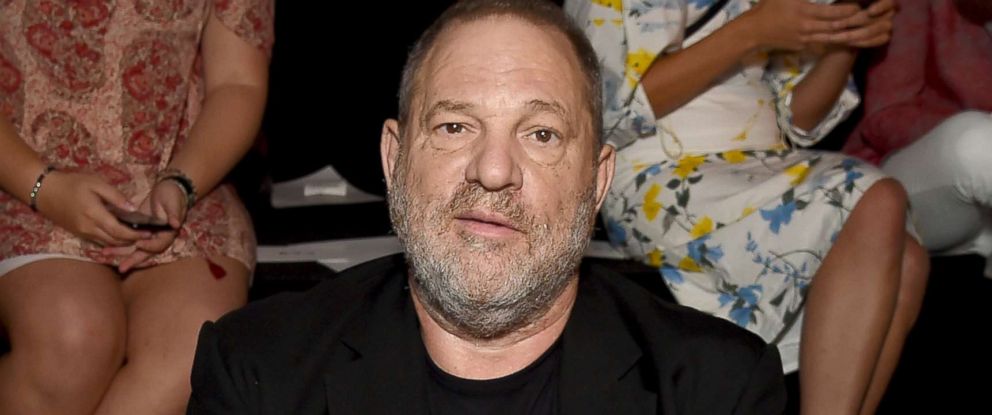
The Harvey Weinstein Saga: "Everybody Knew"


I've waited a bit to tackle this topic, but I decided now's an ideal time given that this story won't really be slowing down anytime soon. Just yesterday another victim released a statement regarding Weinstein's aggression towards her and it was none other than Kate Beckinsale. The total is now 28 women.

What are my two cents on this whole Weinstein "saga"? Everyone in Hollywood knew about this. They may not have known the scope of Weinstein’s perversion, could anybody safe for maybe his aides grasp the systemic nature of this, but those fuckers KNEW A LOT. 
They all just felt it was the price of entrance to the ball, to Harvey’s party. Harvey was the biggest aand the meanest SOB around, and he could make or break you. So people capitulated, and rationalized, and dealt with the devil they knew. There’s a lot of dirty hands in Hollywood because this scam took many people to perpetuate.

The only reason why it's now a big deal is that a) his power has severely diminished over the last few years and b) because as was mentioned by Jeffrey Welles the other day, "there is a general journalistic hunger for revenge afoot right now."

Harvey’s day of reckoning is speeding toward him like a bullet train. He’s fixin’ to be a little-squashed penny. What's more interesting still is wondering who's going to win or lose the ongoing scramble of "Hollywood elite musical chairs" to see who will come out a "hero" (Rose McGowan, Ashley Judd?) and who will come out an "enabler" (Matt Damon, Ben Affleck, Meryl Streep?).
It's tricky because every day, the rules change - can you still claim that you never knew about it? (Since every day, that excuse sounds more absurd.) When was the cutoff time for making a tweet of support that absolves you from your years of knowing about it but not saying anything? How many awards won under Harvey's mentoring make it impossible for you to be a "hero"? 
And then you have Ben Affleck that plays the "I'm shocked, shocked! to hear that such a thing would occur - this is unacceptable, we need to do better!" card - and only a few hours later he's accused of groping two women on two separate occasions. The sheer hypocrisy of this industry is in full display here folks and it will take a lot of months, maybe years, for Hollywood to recover from this.

We know that Matt Damon and Russell Crowe tried to bury the NYT story in 2004, I mean, essentially, they should be counted as accomplices, no? 

The fact that Asia Argento got the ball rolling and started the whole domino effect is an especially intriguing story. She is, after all, an outsider who left the studio system and all but went back to Italy. Her's is an especially complex and harrowing tale given that he orally raped her and then years later she was in a position where she had to take money from him and give him more sexual favors. This isn't the last we hear from this type of story, and I've decided to fully invest this site's time on the goings on because of how important and morally right it is to do so. Just know one thing, this is only the beginning of a domino effect that will be happening, a lot more is to come ....

    "Wonder Wheel"


    A new Woody Allen movie is always a hit or miss proposition. Especially, oh, I'd say the last 20 or so odd years. At least ever since 1998's misbegotten "Celebrity" he's kind of been all over the map and gone on his movie-per-year phase which should have been a gift to cinephiles worldwide but has had many nadirs in the process. From 2000-present he released some of the worst movies he's ever made ("Scoop," "Anything Else," "The Curse of the Jade Scorpion," "Cassandra's Dream," "Hollywood Ending," "Whatever Works," "Melinda and Melinda," "You Will Meet A Tall Dark Stranger," "To Rome With Love")

    And, yet, we have been accustomed to a golden nugget every so often. It happened in 2005 with the above average "Match Point," it happened again in 2011 with "Midnight in Paris," 2013 saw the emergence of the brilliant "Blue Jasmine" with an Oscar-winning performance from Cate Blanchett. All indications were that "Wonder Wheel" led by a performance from Kate Winslet would be the fourth worthy Woody of the last 17 or so years. The buzz was deafening for not only the movie but Kate's performance. 

    The good news is this: Winslet is very solid, in fact it might be the performance of her career. Possibly an Oscar nomintion awaits? Who knows, but I've never seen her be this heart-wrenching and devasting before. Sure she's been great in "Eternal Sunshine of the Spotless Mind," "Heavenly Creatures," "Sense and Sensibility," "Titanic," "Little Children" and "The Reader," but never has her range been stretched  this far as the way it has here. There are scenes where Winslet really has to fully command a whirlwind of emotions and the fact that she doesn't embarrass herself  with the amount of baggage she has to convey is damn near miraculous

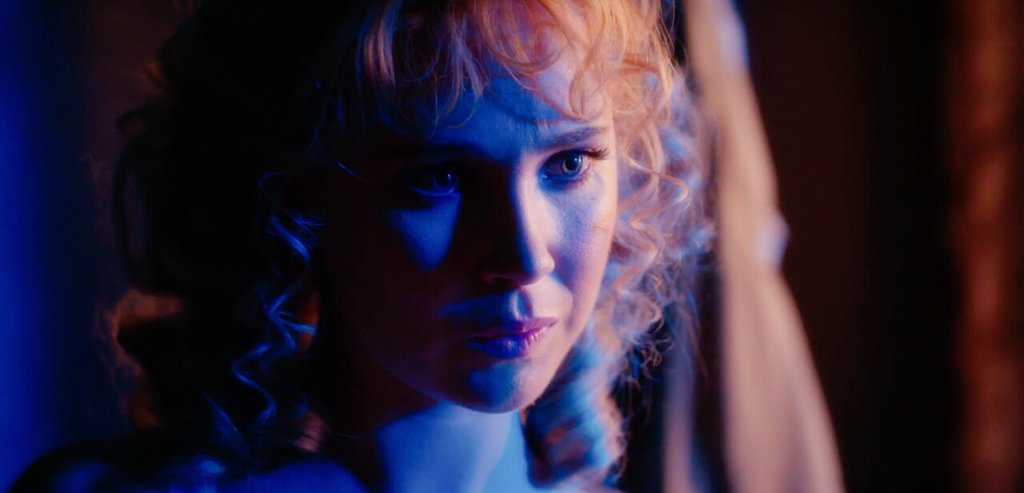
    Set in Coney Island in the 1950s, Justin Timerblake plays a lifeguard narrating the story of a carousel operator (Jim Belushi) and his unhappy, unfulfilled wife (Kate Winslet). The plot thickens when his unstable daughter (Juno Temple) shows up with gangsters on her trail. Timberlake feels very miscast here, there isn't a moment in the film where you don't remind yourself to the fact that "That's Justin Timberlake!" I do find that is a major problem for the film as his role is central to the film's dilemma. Temple and Winslet's characters are supposed to fall for him, but you just don't really see why or how they could fall for this guy. There's no draw to him. 

    "Wonder Wheel" is essentially Allen's version of "A Streetcar Named Desire," a theatrical-feeling joint that nevertheless creates sparks, no thanks to its fine cast and crew, especially Winslet, but even more so Temple. I hope this is a breakthrough role for the 28-year-old actress, so good in William Friedkin's "Killer Joe," whose been mostly waiting for that career-making break. We need more Juno at the movies and I hope "Wonder Wheel" sparks that domino effect I've been waiting for ever since catching her in the Friedkin film.

    Here's what I wrote to a friend a few days after seeing it, when the embargo was still on:
    “Yes, there’s a Kate Winslet meltdown scene that people seem to be talking about, It’s shot, if I remember correctly, in a single take and is just heart-wrenching. It proved to me that Woody still has a fair amount of cinematic juice left in him. It also upped the entire movie’s quality for me as well.
    “Jim Belushi is fine. Not much of a well-sketched character if you ask me, but you do care for him. Juno Temple is better!
    The scenes involving the mob felt like a mix of comedy and violence. Reminded me of Bullets over Broadway. They feel a little bit distracting, mess up the tone, especially when the soul of the film is Winslet. 

    Now that we have that out of the way here's the primary reason why you should watch this film: Vitorio Storaro.
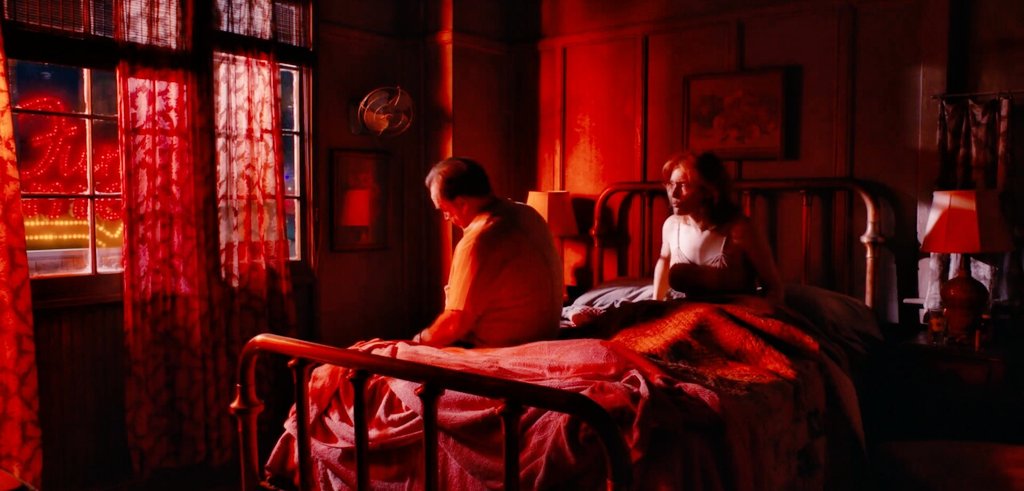
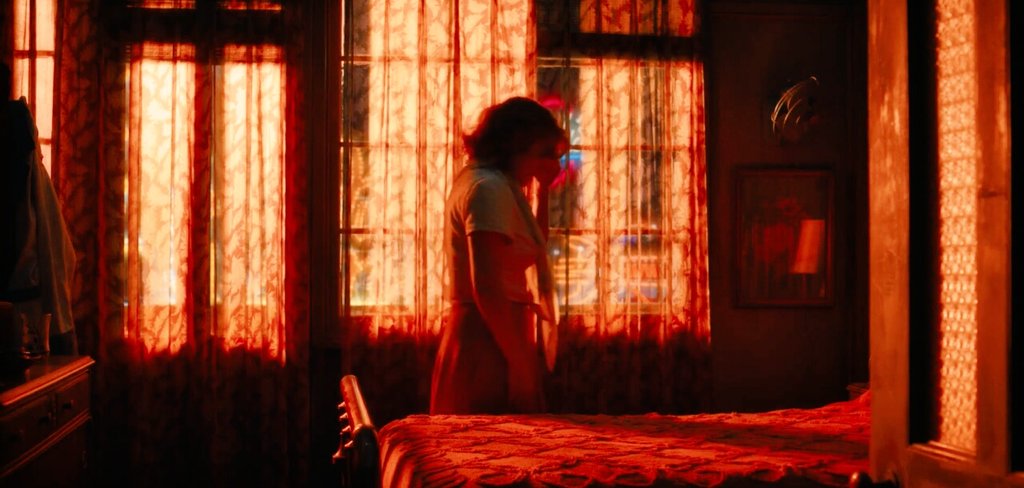
    Vittorio Storaro‘s cinematography is incredible.  There are some scenes where he uses the light in a given room so well, and in a way that’s very similar to the way he brought out colors to rooms in The Conformist. This is exceptional work from a true master of the form. As much as I hope Deakins wins that Oscar, Storaro deserves it way more. [B]
    And so, the embargo for reactions has lifted and reviews are far worse than I thought they would be. Too bad, this isn't a failed movie, it's just not a great one. We expected something very special but what we received instead was a familiar Justin Timberlake-narrated melodrama gorgeously shot and indelibly acted 

    Roger Deakins: Don't see 'Blade Runner 2049' in 3D

    Harrison Ford, Blade Runner 2049

    "I think I said previously that I oversaw the timing of all the versions of 'BR2049' including the HDR version," he wrote. My preferred version is the standard 2D widescreen version. A problem I have with some viewing systems is their use of silvered screens. The image projected on a silvered screen lacks saturation as well as density as it falls off from a hot spot in the center of vision. This may not be so apparent for someone sitting in the optimum viewing seat but it is a compromise in terms of image quality wherever you are seated, though it maybe a compromise worth accepting if you are a fan of 3D."---- Roger Deakins

    Here's what I wrote last week about Deakins' work as Cinematographer for "Blade Runner 2049":

    "Denis Villeneuve's "Blade Runner 2049" is a transportive visual feast for the eyes which has no less than a dozen, or so, of the best shots of the entire movie year. Legendary cinematographer and 13-time Oscar nominee Roger Deakins shoots the hell out of this visionary sequel. Why wouldn't he win that elusive Oscar?"

    I also had a feature of the best shots of his career which can be clicked on HERE

    First image of Al Pacino as Jimmy Hoffa in Martin Scorsese's 'The Irishman.'


    Image may contain: 2 people, people standing and shoes

    Here's what we wrote just last week:


    "Oldfellas." If you read "I Heard You Paint Houses", you know this movie is right up Scorcese's alley. Pesci is going to be an incredible Ray Bufalino. 

    "Last month it was confirmed that Martin Scorsese's much-anticipated "The Irishman" would start shooting this year and that Netflix has officially greenlit the project for a tentative 2019 release. Well, it seems like it's already begun, just look at these glorious photos snapped up on the streets of NYC.

    It'll be a reunion of sorts for Martin Scorsese and Robert De Niro, one of the great actor/director partnerships in cinematic history, who haven't made a film together since 1995's "Casino." If that isn't enough, Joe Pesci, Harvey Keitel and Al Pacino are all taking part as well.

    Scribe-extraordinaire Steve Zaillian (Gangs Of New York,” “Schindler’s List,” “Moneyball,“ “The Night Of“), is helming the screenplay for this one, which is based on the book “I Heard You Paint Houses” by Charles Brandt. Zaillian is a hot commodity these days after writing and directing the best TV series of 2016, HBO's brilliant dissection of the justice system "The Night Of."


    Official Synopsis:

    "The Irishman"  tells the story of Frank “The Irishman” Sheeran — a hitman tied to the Bufalino crime family that was a high ranking officer in the international brotherhood of teamsters, was tied to a possible plot in the JFK assassination and who claimed, on his deathbed, to have murdered Teamster leader and iconic cold case Jimmy Hoffa."

    Director Dee Rees Talks 'Mudbound,' Shared History & Future Projects [Interview]


    I spoke with Dee Rees about her excellent new film "Mudbound." I was a big fan of her earlier film "Pariah," and, suffice to say, "Mudbound" did not disappoint in the least bit. It unique narrative structure is also something to behold. Rees is one of the few African-American female directors currently working in Hollywood. I can't think of many, that's for sure. Isn't that something to cheer for?

    You can read the whole interview HERE.

    Here are notes I wrote about the film at Sundance:

    "Dee Rees’ “Mudbound” is a complex and invigorating account of post-WWII racial tensions in 1940s Mississippi. The film addresses, with astute sensitivity, the timeless racial struggles still at play in America. Rees, whose “Pariah” remains one of the most underrated films of this decade, tells the story of two soldiers, one white and one black (Garrett Hedlund and Jason Mitchell), returning home to rural Mississippi, having seen the horrors of war and struggling to deal with racial injustices they must confront. They form a friendship that gets the townspeople talking. Neither man cares about the other’s skin color, they just need comfort in each other’s bruised souls, and Rees nails the touching friendship they build. “Mudbound” isn’t just one of the best movies of the year, it’s one of the most vitally important. It encompasses, with many brilliant brush strokes, the problems that lie in the American landscape, problems that still pertain to the political conversation today."

    "The Foreigner"

    Image result for the foreigner 600x200

    It's great to have Jackie Chan back in action. If there was a director that could give him the comeback he deserved it'd be Martin Campbell. Campbell, after all, reinvented Bond for the 21st century with "Casino Royale." Despite some inspiring action sequences, "The Foreigner" is not "Casino Royale." The plot is overly complicated but Chan's Quan, a London businessman, whose daughter is killed in an IRA terrorist attack, is a nifty character for a comeback. This is the third daughter Quan has lost, the other two killed by Thai pirates as they were crossing the country a decade ago.  Suffice to say,  he snaps. Cue in the Taken-esque, revenge-fueled rampage. It helps that Chan, just like Neeson's character in "Taken" has acquired a "special set of skills" from his past in the Chinese Military Intelligence. His main target is Liam Hennessy, the sly believable Pierce Brosnan, a British government official whose own past was connected to the IRA. Quan believes Hennessy has the goods of info to find his daughter's killers. 

    No fair revealing more, especially since this is a film that keeps the twists at bay in its trailer. Smart move, "The Foreigner" is elaborately absurd, but I wasn't bored. The action sequences are well-choreographed and represent possibly the best stunts Chan has done since 2000's underrated "Shanghai Noon." Hell, this is his best movie since that Owen Wilson buddy comedy set in the wild wild west.  The climactic action scene in "The Foreigner," which takes place in an apartment, has the actor using household appliances, among many other things, as weapons. It hs the 63-year-old Hong-Kong born actor in peak form, ditto the other action sequences in the film which are all beautifully handled.

    There's something almost wholly satisfying in seeing aging Hollywood actors being vengeful, man-killing machines. Neeson and "Taken"  started a chain reaction of older, more mature-looking, Hollywood A-listers taking a crack at being action stars. It worked for Neeson and did as well with Keanu Reeves in both "John Wick" flicks, Chan's film has more mixed results. The problem with "The Foreigner" is that, quite surprisingly, there isn't enough Chan. At some point Quan disappears and Irish/British politics take over, more specifically Brosnan and his complicated relationship with the IRA, before he comes back again for a final showdown. It's a misstep on the part of Campbell because, well, this is supposed to be Chan's comeback vehicle, and it could have been with a few additional scenes. [C+]

    French poster for Lynne Ramsay's "You Were Never Really Here"


    I wrote this on 10/03/17:

    Amazon studios has given the critically acclaimed "You Were Never Really Here" a pitiful release date, set for next February 24th. Are you kidding me? You should have heard the critics after the Cannes screening I attended back in May, they were doing backflips for this Joaquin Phoenix-starring movie in which he plays a veangeful hitman. Many were even thinking it might win the Palme D'or. It currently has an 88 Metacritic score, which is pretty impressive considering none of the competition at this year's Cannes received a higher score. 


    EDIT: Andrei Zvyagintsev's "Loveless" also received a score of 88.

    What does this all mean for director Lynne Ramsay's film? Well, that it has an uphill climb to be noticed in February considering many critics are off that time of the year or have come back from Sundance and are taking a break from watching movies. There's also the fact that if Ramsay's film wants to be noticed come awards time, people will have to remember the film 9+ months hence after its initial release date. Terrible decision from Amazon, hopefully the film won't be ignored because it's an original vision Ramsay has given us and well worth a look. 

    Here's what I wrote about the film this past Cannes:

    "I saw Lynne Ramsay’s latest film twice at Cannes. A rarity for me, but a case could be made for Ramsay’s film to be dissected as it packs a whole can of worms in its 83 minute running time. Joaquin Phoenix plays a war veteran who now works as a hitman. His attempt to save a young girl from a sex trafficking ring becomes very complicated once he uncovers a political conspiracy lurking beneath it. The editing is the real sell here as Ramsay tries an experimental approach through quickly snipped flashbacks and voiceover. She finds ways to show as little as possible, but say as much as is needed, building up her main character in ways that feel like the story is being told through his subconscious. Heady stuff, but masterfully done and a groundbreaker if there ever was one at Cannes."

    Official Synopsis:

    "A missing teenage girl. A brutal and tormented enforcer on a rescue mission. Corrupt power and vengeance unleash a storm of violence that may lead to his awakening."

    "Thoroughbreds" - One of 2018's Best Movies - Has a Trailer and a Poster


    You better be ready for this movie. It will knock your for a loop. It is purposely theatrical and conveys a legitimate sense of dreaded claustrophobia on the viewer. A slow-burn if you will, this is the introduction to a major new talent in director Cory Finley.

    My thoughts on the film from this past January:

    "If Heathers was more artsy and minimalist, you’d get Cory Finley’s finely attuned Thoroughbred. A theater veteran, Finley brings out the best of his two leads, here played by Anya Taylor-Joy and Olivia Cooke, as they get themselves involved in a murder plot that is as highly unpredictable as it is stark and pitch black. It’s a sleek and stylish film that sneaks up under you and never lets go."

    Focus Features will release THOROUGHBREDS in select theaters on March 9, 2018

    Martin Scorsese on Rotten Tomatoes ruining moviegoing, our Box Office obsessions and his love for 'Mother!'


    I agree with his comments. Reducing movies down to a binary good/bad is definitely helpful for the general audience but it also stops people from actually reading reviews. Instead of finding a critic they trust, a lot of people see a 40 and think the movie isn't worth their time

    "And then, once the movie is made, there are the reviews. Like everyone else, I’ve received my share of positive and negative reviews. The negative ones obviously aren’t much fun, but they come with the territory. However, I will say that in the past, when some critics had problems with one of my pictures, they would generally respond in a thoughtful manner, with actual positions that they felt obliged to argue."


    They still could, but I know what you mean Marty. Just look at the way the "fanboys" shunned "Silence" into oblivion. That movie is a masterpiece that will age like a fine wine over time. The dismissal it received was unfair and a lot of that had to do with snap-judgment criticism from many RT critics whose case of ADD was way too frenetic to sit down and ponder a slow-burning meditative film very much influenced by 1950's Japanese cinema.

    "The brutal judgmentalism that has made opening weekend grosses into a bloodthirsty spectator sport seems to have encouraged an even more brutal approach to film reviewing. I’m talking about market research firms like Cinemascore, which started in the late ‘70s, and online “aggregators” like Rotten Tomatoes, which have absolutely nothing to do with real film criticism. They rate a picture the way you’d rate a horse at the racetrack, a restaurant in a Zagat’s guide, or a household appliance in Consumer Reports. They have everything to do with the movie business and absolutely nothing to do with either the creation or the intelligent viewing of film. The filmmaker is reduced to a content manufacturer and the viewer to an unadventurous consumer."


    I started film "critiquing" in 1999 and I've seen the rise of the internet ruin the art of film criticism. As I mentioned to a colleague the other day, there is no way Pauline Kael would survive today's zeitgeist. She'd be touted as a "troll." Admit it, I'm right. Film criticism to me has always been an art form. It more than just "this movie sucks" or "What the hell was that?" More importantly, a movie, hell art, should not be given a conensus-driven score. Imagine having a Rotten Tomatoes for paintings? Edward Hopper's "Nighthawks" receiving a 95% Fresh score. I have cringe-inducing goosebumps just thinking about it. Movies and music seem to be the only art forms that are seriously rated by score ratings. If they want to be taken more seriously in the next generation they will have to delve away from this format and into more thought-driven criticism. I say, stop giving ratings to film and force the reader to actually, you know, read the review. It should always be a hands-on approach of attentive dissection. No matter the movie. Now with Rotten Tomatoes all but accepting 500 or so critics for their aggregator system, the difference between a good film critic and a bad film critic is being blurred into oblivion. My advice? Seek the ones worth reading, the Nick Pinkerton's of this world, the Manhola Dargis' and etc.


    "These firms and aggregators have set a tone that is hostile to serious filmmakers—even the actual name Rotten Tomatoes is insulting. And as film criticism written by passionately engaged people with actual knowledge of film history has gradually faded from the scene, it seems like there are more and more voices out there engaged in pure judgmentalism, people who seem to take pleasure in seeing films and filmmakers rejected, dismissed and in some cases ripped to shreds. Not unlike the increasingly desperate and bloodthirsty crowd near the end of Darren Aronofsky’s mother!"


    Ah, yes. Aronofsky's "mother!" Before we embark on that endeavor, Scorsese makes an interesting point here. A lot of the folks reviewing movies these days don't have a background in film or Journalism at all. I went to film school at Dawson college in Montreal and took a ton of elective journalism classes as well at Concordia University. I'm not saying that that is the only way to be qualified to write about movies, some of the best film critics today have had no official education in those departments and, hell, can write better than I do. However, if you are willing to make it an actual trade of yours to review and critique cinema then you sure as hell need to know about the form and its history. I do think that this is where the problem really begins. A lot of the younger critics I've met in recent years, at various festivals, have barely scraped the history of film, hell, some have never even seen a silent movie and their lack of knowledge of cinema, even from the 50s, 60s and 70s, is an empty wasteland. I've always been disturbed by that. If you decide to concentrate your life on writing about movies, why dishonor its history and the founding fathers that built its language. Blasphemous as far as I'm concerned.


    "Before I actually saw mother!, I was extremely disturbed by all of the severe judgments of it. Many people seemed to want to define the film, box it in, find it wanting and condemn it. And many seemed to take joy in the fact that it received an F grade from Cinemascore. This actually became a news story—mother! had been “slapped” with the “dreaded” Cinemascore F rating, a terrible distinction that it shares with pictures directed by Robert Altman, Jane Campion, William Friedkin and Steven Soderbergh."


    We've already tackled this. CinemaScore is a completely useless way to know if a film is of quality or not [HERE]


    Scorsese goes on to praise Darren Aronofsky's film in such a way that it makes you want to rewatch it this instant. Maybe Scorsese should have been a film critic as well.

    "Is it a picture that has to be explained? What about the experience of watching mother!? It was so tactile, so beautifully staged and acted—the subjective camera and the POV reverse angles, always in motion…the sound design, which comes at the viewer from around corners and leads you deeper and deeper into the nightmare…the unfolding of the story, which very gradually becomes more and more upsetting as the film goes forward. The horror, the dark comedy, the biblical elements, the cautionary fable—they’re all there, but they’re elements in the total experience, which engulfs the characters and the viewers along with them. Only a true, passionate filmmaker could have made this picture, which I’m still experiencing weeks after I saw it."


    "Good films by real filmmakers aren’t made to be decoded, consumed or instantly comprehended. They’re not even made to be instantly liked. They’re just made, because the person behind the camera had to make them. And as anyone familiar with the history of movies knows all too well, there a very long list of titles—The Wizard of Oz, It’s a Wonderful Life, Vertigo and Point Blank, to name just a few—that were rejected on first release and went on to become classics. Tomatometer ratings and Cinemascoregrades will be gone soon enough. Maybe they’ll be muscled out by something even worse."


    [THR]

    Robert Rodriguez scored ‘Kill Bill Vol. 2’ for only a dollar as a favor for Tarantino. In return, Tarantino directed a scene from Rodriguez’s ‘Sin City’ for the same price.

    Image result for robert rodriguez quentin tarantino kill bill;

    Robert Rodriguez was hired by Tarantino to score the film. Rodriguez did it as a favor for his friend, Tarantino, asking to be paid one dollar for his work. Tarantino repaid this favor by directing a scene of Rodriguez's Sin City for the same fee. RZA said of the soundtrack:

    "With Kill Bill I did score and songs, meaning that we put a lot of songs in [the movie] from old collections of records and I composed music for some scenes, natural music. When we did Kill Bill 2, you know, we brought Robert Rodriguez in. Check this out, he took my music and he kept the foundation there, though. With Robert he didn't want to remove any of the electronic [sounds]. He said 'No.' I was like 'Take out all the electronic stuff, you know, so it can be [more like a traditional score].' He said 'No, man. I like the electronic stuff. This is the reason I wanted to do this.' So he took the electronic stuff and kept it there, then built the orchestrations on top of it, you know what I mean?" 

    [IGN]
    [Wikipedia]