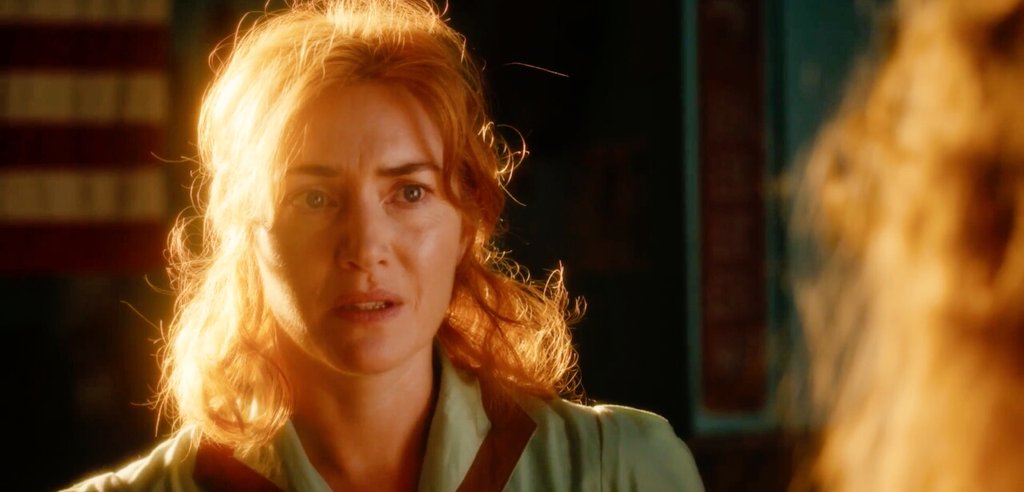

French poster for Lynne Ramsay's "You Were Never Really Here"


I wrote this on 10/03/17:

Amazon studios has given the critically acclaimed "You Were Never Really Here" a pitiful release date, set for next February 24th. Are you kidding me? You should have heard the critics after the Cannes screening I attended back in May, they were doing backflips for this Joaquin Phoenix-starring movie in which he plays a veangeful hitman. Many were even thinking it might win the Palme D'or. It currently has an 88 Metacritic score, which is pretty impressive considering none of the competition at this year's Cannes received a higher score. 


EDIT: Andrei Zvyagintsev's "Loveless" also received a score of 88.

What does this all mean for director Lynne Ramsay's film? Well, that it has an uphill climb to be noticed in February considering many critics are off that time of the year or have come back from Sundance and are taking a break from watching movies. There's also the fact that if Ramsay's film wants to be noticed come awards time, people will have to remember the film 9+ months hence after its initial release date. Terrible decision from Amazon, hopefully the film won't be ignored because it's an original vision Ramsay has given us and well worth a look. 

Here's what I wrote about the film this past Cannes:

"I saw Lynne Ramsay’s latest film twice at Cannes. A rarity for me, but a case could be made for Ramsay’s film to be dissected as it packs a whole can of worms in its 83 minute running time. Joaquin Phoenix plays a war veteran who now works as a hitman. His attempt to save a young girl from a sex trafficking ring becomes very complicated once he uncovers a political conspiracy lurking beneath it. The editing is the real sell here as Ramsay tries an experimental approach through quickly snipped flashbacks and voiceover. She finds ways to show as little as possible, but say as much as is needed, building up her main character in ways that feel like the story is being told through his subconscious. Heady stuff, but masterfully done and a groundbreaker if there ever was one at Cannes."

Official Synopsis:

"A missing teenage girl. A brutal and tormented enforcer on a rescue mission. Corrupt power and vengeance unleash a storm of violence that may lead to his awakening."

"Thoroughbreds" - One of 2018's Best Movies - Has a Trailer and a Poster


You better be ready for this movie. It will knock your for a loop. It is purposely theatrical and conveys a legitimate sense of dreaded claustrophobia on the viewer. A slow-burn if you will, this is the introduction to a major new talent in director Cory Finley.

My thoughts on the film from this past January:

"If Heathers was more artsy and minimalist, you’d get Cory Finley’s finely attuned Thoroughbred. A theater veteran, Finley brings out the best of his two leads, here played by Anya Taylor-Joy and Olivia Cooke, as they get themselves involved in a murder plot that is as highly unpredictable as it is stark and pitch black. It’s a sleek and stylish film that sneaks up under you and never lets go."

Focus Features will release THOROUGHBREDS in select theaters on March 9, 2018

Martin Scorsese on Rotten Tomatoes ruining moviegoing, our Box Office obsessions and his love for 'Mother!'


I agree with his comments. Reducing movies down to a binary good/bad is definitely helpful for the general audience but it also stops people from actually reading reviews. Instead of finding a critic they trust, a lot of people see a 40 and think the movie isn't worth their time

"And then, once the movie is made, there are the reviews. Like everyone else, I’ve received my share of positive and negative reviews. The negative ones obviously aren’t much fun, but they come with the territory. However, I will say that in the past, when some critics had problems with one of my pictures, they would generally respond in a thoughtful manner, with actual positions that they felt obliged to argue."


They still could, but I know what you mean Marty. Just look at the way the "fanboys" shunned "Silence" into oblivion. That movie is a masterpiece that will age like a fine wine over time. The dismissal it received was unfair and a lot of that had to do with snap-judgment criticism from many RT critics whose case of ADD was way too frenetic to sit down and ponder a slow-burning meditative film very much influenced by 1950's Japanese cinema.

"The brutal judgmentalism that has made opening weekend grosses into a bloodthirsty spectator sport seems to have encouraged an even more brutal approach to film reviewing. I’m talking about market research firms like Cinemascore, which started in the late ‘70s, and online “aggregators” like Rotten Tomatoes, which have absolutely nothing to do with real film criticism. They rate a picture the way you’d rate a horse at the racetrack, a restaurant in a Zagat’s guide, or a household appliance in Consumer Reports. They have everything to do with the movie business and absolutely nothing to do with either the creation or the intelligent viewing of film. The filmmaker is reduced to a content manufacturer and the viewer to an unadventurous consumer."


I started film "critiquing" in 1999 and I've seen the rise of the internet ruin the art of film criticism. As I mentioned to a colleague the other day, there is no way Pauline Kael would survive today's zeitgeist. She'd be touted as a "troll." Admit it, I'm right. Film criticism to me has always been an art form. It more than just "this movie sucks" or "What the hell was that?" More importantly, a movie, hell art, should not be given a conensus-driven score. Imagine having a Rotten Tomatoes for paintings? Edward Hopper's "Nighthawks" receiving a 95% Fresh score. I have cringe-inducing goosebumps just thinking about it. Movies and music seem to be the only art forms that are seriously rated by score ratings. If they want to be taken more seriously in the next generation they will have to delve away from this format and into more thought-driven criticism. I say, stop giving ratings to film and force the reader to actually, you know, read the review. It should always be a hands-on approach of attentive dissection. No matter the movie. Now with Rotten Tomatoes all but accepting 500 or so critics for their aggregator system, the difference between a good film critic and a bad film critic is being blurred into oblivion. My advice? Seek the ones worth reading, the Nick Pinkerton's of this world, the Manhola Dargis' and etc.


"These firms and aggregators have set a tone that is hostile to serious filmmakers—even the actual name Rotten Tomatoes is insulting. And as film criticism written by passionately engaged people with actual knowledge of film history has gradually faded from the scene, it seems like there are more and more voices out there engaged in pure judgmentalism, people who seem to take pleasure in seeing films and filmmakers rejected, dismissed and in some cases ripped to shreds. Not unlike the increasingly desperate and bloodthirsty crowd near the end of Darren Aronofsky’s mother!"


Ah, yes. Aronofsky's "mother!" Before we embark on that endeavor, Scorsese makes an interesting point here. A lot of the folks reviewing movies these days don't have a background in film or Journalism at all. I went to film school at Dawson college in Montreal and took a ton of elective journalism classes as well at Concordia University. I'm not saying that that is the only way to be qualified to write about movies, some of the best film critics today have had no official education in those departments and, hell, can write better than I do. However, if you are willing to make it an actual trade of yours to review and critique cinema then you sure as hell need to know about the form and its history. I do think that this is where the problem really begins. A lot of the younger critics I've met in recent years, at various festivals, have barely scraped the history of film, hell, some have never even seen a silent movie and their lack of knowledge of cinema, even from the 50s, 60s and 70s, is an empty wasteland. I've always been disturbed by that. If you decide to concentrate your life on writing about movies, why dishonor its history and the founding fathers that built its language. Blasphemous as far as I'm concerned.


"Before I actually saw mother!, I was extremely disturbed by all of the severe judgments of it. Many people seemed to want to define the film, box it in, find it wanting and condemn it. And many seemed to take joy in the fact that it received an F grade from Cinemascore. This actually became a news story—mother! had been “slapped” with the “dreaded” Cinemascore F rating, a terrible distinction that it shares with pictures directed by Robert Altman, Jane Campion, William Friedkin and Steven Soderbergh."


We've already tackled this. CinemaScore is a completely useless way to know if a film is of quality or not [HERE]


Scorsese goes on to praise Darren Aronofsky's film in such a way that it makes you want to rewatch it this instant. Maybe Scorsese should have been a film critic as well.

"Is it a picture that has to be explained? What about the experience of watching mother!? It was so tactile, so beautifully staged and acted—the subjective camera and the POV reverse angles, always in motion…the sound design, which comes at the viewer from around corners and leads you deeper and deeper into the nightmare…the unfolding of the story, which very gradually becomes more and more upsetting as the film goes forward. The horror, the dark comedy, the biblical elements, the cautionary fable—they’re all there, but they’re elements in the total experience, which engulfs the characters and the viewers along with them. Only a true, passionate filmmaker could have made this picture, which I’m still experiencing weeks after I saw it."


"Good films by real filmmakers aren’t made to be decoded, consumed or instantly comprehended. They’re not even made to be instantly liked. They’re just made, because the person behind the camera had to make them. And as anyone familiar with the history of movies knows all too well, there a very long list of titles—The Wizard of Oz, It’s a Wonderful Life, Vertigo and Point Blank, to name just a few—that were rejected on first release and went on to become classics. Tomatometer ratings and Cinemascoregrades will be gone soon enough. Maybe they’ll be muscled out by something even worse."


[THR]

Robert Rodriguez scored ‘Kill Bill Vol. 2’ for only a dollar as a favor for Tarantino. In return, Tarantino directed a scene from Rodriguez’s ‘Sin City’ for the same price.

Image result for robert rodriguez quentin tarantino kill bill;

Robert Rodriguez was hired by Tarantino to score the film. Rodriguez did it as a favor for his friend, Tarantino, asking to be paid one dollar for his work. Tarantino repaid this favor by directing a scene of Rodriguez's Sin City for the same fee. RZA said of the soundtrack:

"With Kill Bill I did score and songs, meaning that we put a lot of songs in [the movie] from old collections of records and I composed music for some scenes, natural music. When we did Kill Bill 2, you know, we brought Robert Rodriguez in. Check this out, he took my music and he kept the foundation there, though. With Robert he didn't want to remove any of the electronic [sounds]. He said 'No.' I was like 'Take out all the electronic stuff, you know, so it can be [more like a traditional score].' He said 'No, man. I like the electronic stuff. This is the reason I wanted to do this.' So he took the electronic stuff and kept it there, then built the orchestrations on top of it, you know what I mean?" 

[IGN]
[Wikipedia]

Mark Hamill: Star Wars 9 Will 'Find a Way' to Close Leia's Story

“You’re going to really love her in [The Last Jedi]. I know they’re going to try and find a way to close her story in [Episode IX] that gives her the respect she deserves, because [Han Solo] was more prominent in [The Force Awakens], Luke’s a little more prominent in [The Last Jedi], and certainly Leia was meant to be more prominent in [Episode IX]. Worldwide, everyone feels that gap she left, but we all have to hang in there.”

[USA Today]

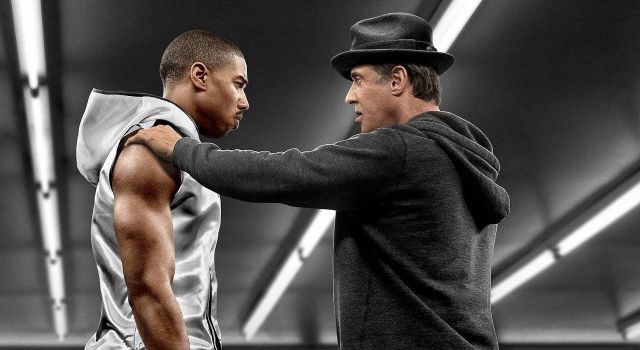
Sadly, Ryan Coogler return to direct "Creed 2," Sylvester Stallone will take over as director.

Image result for creed 2 600x200

A sequel was inevitable and we all know Sylvester Stallone loves his sequels, just look at what he did with Rambo, Rocky and The Expendables. So it comes as no surprise that Stallone will indeed be back for the upcoming, and much anticipated, Creed Sequel. Dolph Lundgren, who plays Ivan Drago, will also star in the film. Stallone stated that the current draft he is working on, in a spiral scrapbook no less, is 439 pages and will translate to “a 120 page typed screenplay”.

Stallone, whom many believe deserved the Academy Award for his performance in "Creed," took to Instagram yet again and announced the news that he, not Ryan Coogler, would be directing "Creed 2," he wrote: “Looking forward to directing and Producing The incredibly talented Michael B Jordan in CREED 2 next year … One more Round ! 

Good news? I would say bittersweet, more than anything. Stallone can direct, decently, but Coogler changed the game with "Creed." He revitalized the boxing genre for the new millennium. There is no way Stallone can achieve what Coogler did. "Creed 2" might be a good movie, but it won't be a great one like "Creed." For all the gravitas and passion Sly has brought to his Rocky franchise over the years, his talents as a director are decent, old-school but conventional. I like what he did with "Rocky Balboa" a few years back, but what made "Creed" so good was the fresh new blood Coogler injected into the veins of this tired old franchise.

Here's what I wrote about it back in 2015:
"As an incredibly cinematic sport, boxing films are often rife with clichés. So then, what a welcome surprise it was to have a "Rocky" movie that actually delivered the thrills and goosebumps that made the original 1976 film such a great film. Although the story might be familiar, Ryan Coogler's "Creed" had a freshness and vitality that only a young, talented filmmaker and actor could bring to the table. Coogler and his actor Michael B Jordan, fresh off their Sundance triumph just two years ago with "Fruitvale Station," infused Rocky with 21st century modernism and style that Sylvester Stallone would have never been able to pull off if he were the writer-director, although I will say  that 2006's "Rocky Balboa" wasn't half-bad either. The way Coogler shot "Creed" brought some much-needed new blood to the tired boxing genre, a perfect example would the way he reinvented how a boxing match could be shot."

"There's an audacious sequence mid-way through the film that seamlessly flows as a single unbroken shot, the scene follows Jordan's Adonis Creed as he squares off against Leo Sporino (Gabe Rosado) in the boxing ring. The way Coogler’s camera circles its way through the ring is nothing more than ground-breaking; never had a boxing match felt this intimate, visceral or gut-wrenching than at that very moment. You felt every punch in the fights featured in "Creed" and it all but cemented Coogler an incredible talent to watch."

BREAKING: "Star Wars: The Last Jedi" Official Trailer & Poster


I believe we might have a Best Picture nominee here. No, really, why not? This just looks far and away better, in every aspect, to "The Force Awakens." I've been a fan of Rian Johnson's since his debut and I stand by my assertion that he is the most talented director to ever helm a "Star Wars" movie. You will not have the by-the-books narrative tropes that were in JJ Abrams trilogy kick-starter, no, this film looks like it will delve into far darker places imaginable. It's really no surprise that comparisons to "The Empire Strikes Back" are already being made. All this to say, I'm actually that huge of a "Star Wars" fan, so doesn't say everything you need to know about how effective this trailer is?

Box Office Week: Blade Runner 2049 opens at #1 to a very disappointing $31.5M on a budget of $150M.

blade-runner-2049-harrison-ford-slice

Folks, sometimes the stars don't align for a smartly crafted blockbuster. "Blade Runner 2049," despite incredible reviews, crashed and burned at the weekend movie Box-Office. A $31.5M opening was not enough given the budget of the film, depending on who you speak to, was anywhere between $150-$170 Million. The film is on pace to not even make half that amount back domestically. It might break even We will see what will happen next weekend, maybe solid word of mouth and repeat viewings will give it some kind of staying power, it did garner an A- CinemaScore grade, but what we're looking at right now is a risk that didn't pay off for Warner Brothers. A $150M arthouse sequel to a cult film with a running time stretching close to the three-hour mark. How did we not expect this?"

1. “Blade Runner 2049” — $31.5 million
2. “The Mountain Between Us” — $10.1 million
3. “It” — $9.6 million ($304 mil.)
4. “My Little Pony: The Movie” — $8.8 million
5. “Kingsman: The Golden Circle” — $8.1 million ($79.9 mil.)
6. “American Made” — $8 million ($30.4 mil.)
7. “The Lego Ninjago Movie” — $6.7 million ($43.8 mil.)
8. “Victoria and Abdul” — $4.1 million ($5.9 mil)
9. “Flatliners” — $3.8 million ($12.3 mil.)
10. “Battle Of The Sexes” — $2.4 million ($7.6 mil.)


Here's what I wrote about the movie last week:

"Blade Runner" is a peculiar film. It doesn't necessarily have much of a thick, narratively-driven story as much as it has themes, characters, resonant-filled subtleties which cannot necessarily be summoned in a single viewing. It's all about atmosphere, but within that atmosphere is meaty substance. That's why it was greeted with indifference back in 1982 and only became a classic in the ensuing years. The main question the movie asks, about humanity and our worth, deserves the warranted, heated discussions it has attained over the last 30 years. It all revolves around if Harrison Ford's character Deckard, the blade runner of the title, is a droid or a human? Does it even matter? The latter is something its director Ridley Scott seemed to be hinting at, as droids, much like humans, wanted the same freedoms we take for granted: To feel, ache, rejoice, hurt, love etc.

And so, the mighty Scott has passed the torch for the followup to ever esteemable Denis Villeneuve, a filmmaker that has no doubt proven his big-studio worth these last 5 years with flawed but technically, and professionally, impressive work such as "Prisoners," "Sicario" and "Arrival." Films that have garnered immense fanbases and have catapulted the Quebecois director to the ranks of Hollywood directing heaven with the likes of Nolan, Spielberg, Scorsese, or at least now he has with "Blade Runner 2049" which feels like icing on the cake, further proof that he is the real deal that I've been touting about since his 2011 French Canadian masterpiece "Incendies" make the film festival rounds.

None of his American films have managed to capture the bloody, brutal brilliance of "Incendies," but, by golly, is this man on his way to that peak again, slowly learning the tricks of the trade to fully master his own auteur voice in a studio system lacking in, well, distinct and unique voices.

"Blade Runner 2049" is Villeneuve gaining confidence in his ability to let a narrative breathe and have the confidence of the audience member to follow him along a deeply steeped, tip-toeing and risky narrative. It's 153-minute length, not counting the 11-minute credits, will surely be an endurance test for many because, well, just like the 1982 predecessor, nothing really happens, but everything does as well. It's a film front-loaded with cinematographer Roger Deakins' beautifully lit frames, but beneath those frames lie secrets that will no doubt become more visible with repeat viewings, or at least that's what I hope because after a single viewing of "Blade Runner 2049" I can honestly say a lot of questions are still left unanswered.

The film, set thirty years after the original, has a quiet brooding lead character in Ryan Gosling's Officer K, who is a blade runner himself, seeking defacto droids that pose as humans. Just like Ford's Deckard, he's the best at what he does. Trouble comes in the form of an uncovered secret that could open a whole can of worms for the totalitarian government of the new world, which leads K on a quest to find Deckard, who's been missing for more than thirty years. It implicates K and a childhood memory that was implanted in his subconscious when he was created or did it actually happen?

That plot description is only a thin guide to a vast and ambitious effort from Villeneuve, who had a publicist read a note he wrote before the screening of the film began asking critics to not divulge crucial plot points of the film in their reviews. I will not do that. This imperfect, messy, but energetic film deserves to be seen without any knowledge of the plot. The less you know, the better.

Pacing issues notwithstanding, the main flaw I have with the film is in its final third. Here's the thing about "Blade Runner 2049" the more you discover its secrets, the less intriguing it becomes, for 2 hours and change you are completely surrounded in mystery as to what will be coming next. You do know it all leads to a meeting with Ford's Deckard, thank the trailer for that, but there's a vibe that Villeneuve and Deakins create that's damn near mystical. Villeneuve should have taken a cue from his predecessor and not given us any concrete answers. Nevertheless, the final 15 or so minutes are astounding.

Denzel Deserves an Oscar Nom for 'Roman J Israel, Esq.'


The biggest premiere of the day was Dan Gilroy’s “Roman J Israel ESQ” which had all the critics and Oscar bloggers attending the 9:15pm premiere at the Ryerson.
Gilroy made a major splash in 2014 when he debuted “Nightcrawler” in Toronto, a “Taxi Driver” for the millennial generation that has aged like fine wine over the ensuing years. And so, it was a no-brainer decision for Gilroy to premiere his follow-up effort at this year’s fest, skipping Telluride and Venice.
“Roman J Israel ESQ” is cleary influenced by the golden era of American cinema produced in the 1970s. It’s a character-driven study that doesn’t necessarily rely on plot as much as it does on a single character’s mental anguish, as his ethical and philosophical morals are threatened by the lures of capitalism.
Denzel Washington, in one of the finest performances of his career, plays the titular character in such an assured, but vulnerable way. Israel is a brilliant mind who’s been working in the same small-scale law office for three decades. He’s said to be a “savant” of the legal profession, functioning invaluably as the eyes and ears of his boss William Jackson.
In more ways than one, Gilroy’s film reminded me of Paul Thomas Anderson’s equally ambitious and fascinating take on the ’70s movies, “Inherent Vice.” No surprise then that both films share the same director of photography the brilliant Robert Elswitt.
Things take a major turn for Israel when Jackson suffers a catastrophic heart attack and goes into a vegetative state. He will likely not ever awaken. The law firm is shut down and a high-end attorney, played by Collin Farrell, hires Israel for his downtown firm. Problem is Israel, just like Phoenix’ stoned hipster in “Inherent Vice,” is a man of integrity possessing some major eccentricities. He clearly has OCD, ritualistically watching his every step as he enters his apartment, but he’s also stuck in an activist mindset for civil rights in his practice that has prevented him from ever earning a top salary. He is a man of morals who will never sell out for a quick buck.
The film has a unique narrative structure, as Gilroy continuously loops us around a never-ending search for the soul of this fascinating character. There’s a psychedelic vibe in the way the writer-director pits the outright eccentric behavior of his protagonist without ever making simplistic excuses or judging it. “Roman J Israel ESQ” is the kind of film that will likely win considerable respect upon repeat viewings. Washington, wearing an out of fashion double-breasted suit, large glasses, and an Afro, seems to have time-traveled from the ’70s to the present day. His performance is fully fledged and highly memorable, testing a character who is utterly fascinating in his endless contradictions. The 62-year-old actor should not be ignored for his towering performance come Oscar time.
“Roman J. Israel, Esq.” hits theaters on November 3rd.

Tomas Alfredson's "The Snowman" Might Be In A Little Bit of Trouble


Just received my press screening invite to Tomas Alfredson's "The Snowman," and, folks, whatever expectations you might have had for this film, well, I'd lower them a bit if I were you. The film will screen for press on the 18th, but, here's the gimme, there's a review embargo until the 19th at 9pm. The film has its release on the 20th. YIKES! This shows the lack of confidence Universal has with this movie. The funny part about this whole American embargo is that "The Snowman" is actually being released on the 13th, a whole week earlier, in Europe. Yeah, that’s a red flag.

"Blade Runner 2049" Opening Weekend is Crashing


"With an estimated $12.7 million on Friday (including $4 million from Thursday night previews), Blade Runner 2049 is looking to come in well below expectations, targeting an opening anywhere from $31-36 million." [Box Office Mojo]

Folks, sometimes the stars don't align for a smartly crafted blockbuster. "Blade Runner 2049," despite incredible reviews, is about to crash and burn at the Box-Office. You say "but $30+ million opening weekend, that's pretty solid" I say, the budget of the film, depending on who you speak to, was anywhere between $150-$170 Million. The film is on pace to not even make half that amount back. We will see what will happen, maybe solid word of mouth and repeat viewings will give it some staying power, it did garner an A- CinemaScore grade, but what we're looking at right now is a risk that didn't pay off. A $150M arthouse sequel to a cult film with a running time stretching close to the three-hour mark. How did we not expect this? 

Review: "The Florida Project"

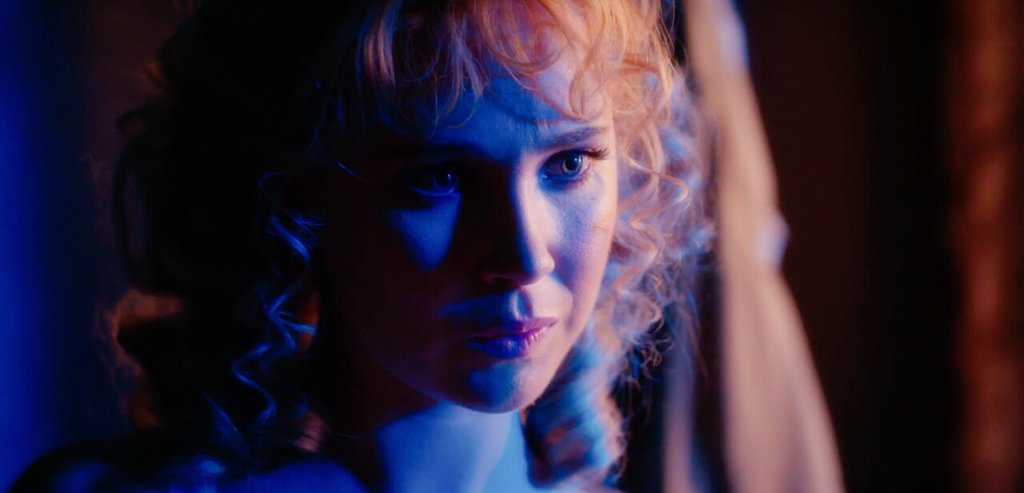
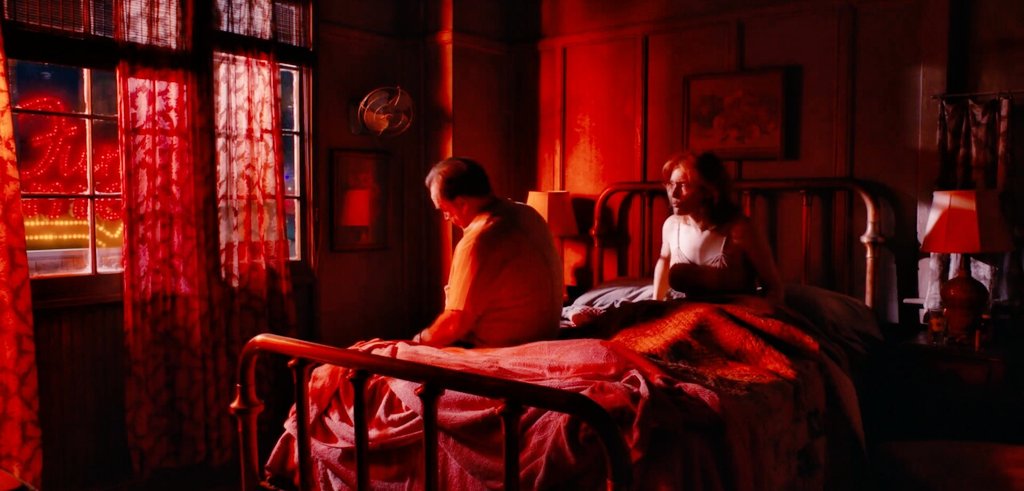
After “Tangerine,” Sean Baker sets up his camera again with an eye towards uncharted America with “The Florida Project.” This time his eye goes towards the makeshift motels that litter the main avenues towards Disneyland, distilling a moist, colorful, and shimmering atmosphere, thanks to Alexis Zabe‘s beautiful photography.
Moonee (Brooklynn Prince) is 6 years old and lives in a motel with her mother Halley (Bria Vinaite). On summer break, Mooney and her ragtag group of friends look for adventure as they roam through the outskirts of the motel while the adults around them struggle to make ends meet. Baker shoots his own “400 Blows” with his little band of insolent misfits. The atmosphere, paradoxically decadent and disenchanted, mixes what filmmaker himself calls “pop verité” cinema, to create a hybrid of hope and misery that feels both transcendent and groundbreaking.
The hijinks of the children rubs shoulders with the problems of the parents in a purple motel guarded by its concierge. A touching and funny Willem Dafoe is the hotel’s concierge and an Oscar nomination for the 62-year-old actor is not out of the question, hell a win would be very justified. 

Despite the flirtations with squalor, Baker never succumbs to the sirens of miserabilism. Instead, he prefers the fanciful fantasy of the children who, in their flight forward, can glean moments of happiness for themselves from the simple light of a blue sky. Seen through the eyes of these amazing kids, the world seems intriguingly beautiful, melancholic in fact, where every small detail counts and feels fresh again. Meanwhile on the upper floors, parents, unfortunately, are in utter indifference, as they struggle with adult problems way beyond any kid’s comprehension.
Like “Tangerine,” it is this sense of freedom, freshness, and energy that, in Baker’s mise-en-scene, from the camera to the non-professional actors, the film maps contemporary America. Baker doesn’t succumb to the sirens of miserabilism, even though the final, sad frame might hint at this. Instead, he prefers the fanciful fantasy of the children who, in their flight forward, give themselves moments of happiness by the simple light of a blue sky.
Baker is the architect and painter, who knows how to find these eminently human emotions.

Wonder Wheel (Woody Allen, 2017) • Cinematography by Vittorio Storaro.


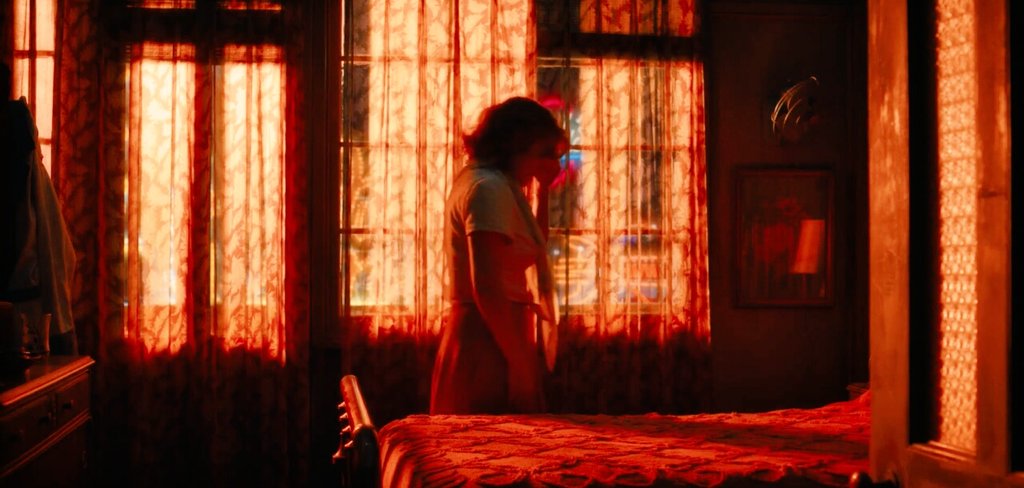
The thing that struck me most about Woody Allen's slight but affecting "Wonder Wheel" wasn't just the luminous and heartbreaking performance from Kate Winslet, but, even more so, Vittorio Storaro's breathtaking cinematography. This is the most surreal and dreamy-looking film Allen has ever made. I really hope they can continue to collaborate together because they have something going on here that can potentially lead to some remarkable movies in the near future, they're already shooting a third collaboration due for release next year.

Storaro hadn't really been in the spotlight or done American cinema since 1998's "Bulworth" unless you count the misguided 2005 Paul Schrader/Renny Harlin "Exorcist" prequel, which barely had a release and was in production limbo for what seemed like forever. I sure am glad that Storaro is back and seems to have found a "partner in crime" that has the same old-school mentality to filmmaking as he does. Something remarkable is happening here and, even though they might both be in the twilight of their remarkable careers, they somehow found each other, and, for all cinephiles, that's a major cause for celebration.

"Brawl in Cell Block 99" is an instant cult classic


This incredibly visceral but note-worthy movie is being released today, seek it by all measures. Here's what I wrote back at the Toronto International Film Festival:

"In “Brawl in Cell Bock 99” Vince Vaughn plays Bradley Thomas. With a cross tattooed on the back of his skull, and impressively added muscle tissue to his physique, Vaughn’s transformation is a harrowing but impressive feat for the 47-year-old actor best known for his comedic roles in “Old School” and “Wedding Crashers.”

"Bradley, the violent, but honorable man he plays in the film is sentenced to seven years for selling drugs, and is then blackmailed by none other than 72-year-old Udo Kier, and is forced to cause as much damage as possible to get transferred to the incarceration hell that is “Red Leaf.” The warden of that prison is played by none other than Don Johnson who runs the place like a psycho bent on behavioral punishment. Once there, Bradley has to put himself in cell block 99 where he will have to kill a gangster in order to protect his kidnapped wife (Jennifer Carpenter) and unborn daughter."

"It’s all from the twisted mind of writer-director S. Craig Zahler whose “Bone Tomahawk” came and went in cinemas but gained cult classic status on home video and is now considered a western classic. His “Brawl in Cell Block 99” is destined for cult fame too. It’s a 132-minute gut punch which wears its ’70s grindhouse-inspired heart on its sleeve. The movie takes its time building up the character and letting us learn about what’s at stake for Bradley, and it’s not until the 75-minute mark that things start to shift into midnight-madness mayhem. Zahler is a step ahead at every twisted turn and when the first bone breaks, and he makes sure you hear it loud and clear. The action has a relentless feel that never stops, and it’s all anchored by Vaughn’s ruthless but endearing performance."

"Jaws" was seen as a guaranteed flop, so Martin Scorsese took Steven Spielberg for a drive the day it came out, to cheer him up and show him just how long the theater lines stretched

spielberg scorsese
I will be watching HBO's documentary "Spielberg" in the coming week but this tidbit from /Film is a fun fact of the phenomenon that was "Jaws."
"In one of the doc’s most delightful moments, Spielberg and Martin Scorsese both recount how when Jaws first swam into theaters, Scorsese suggested they take a little drive. The rumor around Hollywood was that Jaws might sink rather than swim. “The word around town was that Jaws was a folly, and that it was going to be a disaster,” Scorsese says. But Spielberg and Scorsese hopped in a car and drove from theater to theater in Los Angeles and saw massive, blockbusting lines that stretched for miles, all waiting to see Jaws. It was proof that Jaws was going to be a monster-sized hit, and that Spielberg was about to become a huge director."
[/Film]

Teaser Poster for the excellent "Thoroughbreds"


If Heathers was more artsy and minimalist, you’d get Cory Finley’s finely attuned Thoroughbred. A theater veteran, Finley brings out the best of his two leads, here played by Anya Taylor-Joy and Olivia Cooke, as they get themselves involved in a murder plot that is as highly unpredictable as it is stark and pitch black. It’s a sleek and stylish film that sneaks up under you and never lets go.

Focus Features will release THOROUGHBREDS in select theaters on March 9, 2018

"American Made"

Image result for american made 600x200

Tom Cruise's career has been filled with blockbuster hits, but the guy never really got his due as a discernably talented actor, just look at his incendiary work in Paul Thomas Anderson's "Magnolia" or Michael Mann's "Collateral" for further proof of the talent and potential artistry the guy has. Lately, he's negatively crusaded for his connection with the Church of Scientology and that has consequentially made him a less bankable star at the Box-Office, although those "Mission: Impossible" movies are still killing it, that hasn't necessarily deterred him from making good movies. Want proof? Just watch him do his own stunts in thrilling entertainment such as 2014's "Edge of Tomorrow," 2011's "Ghost Protocol," and 2016's "Rogue Nation" and, hell, I'll even add "Jack Reacher" into the mix. Cruise is still the man.

His latest film, reteaming him with "Edge of Tomorrow" director Doug Liman, is "American Made," an action biopic film based on the true story of Barry Seal, a pilot turned CIA recruit, turned drug hustler for Pablo Escobar. Suffice to say, despite the enormous highs that came with his "jobs" this all led to one of the biggest covert operations in U.S. history during the late 70s early 80s. 

The initial setup is perpetrated by a CIA agent Monty Schafer (Domhnall Gleeson), who knows Seal is in over his head and even starting to smuggle drugs behind his back but, despite that, he lets the operation go on as is because with Seal opening up a whole can of worms with the Colombian cartel, maybe an eventual bust could happen.

Of course, Seals' loving, and very attractive wife, Lucy (the excellent Sarah Wright) has no clue what's happening and thinks her husband is just hard at work. However, once Monty alerts Seal of an arrest warrant issued against him and a raid happening at his household by 6am, Seal scrambles to wake up his family, drives them away to a small-town in butt-fuck-nowhere America, where a house, and private airport no less, has been set up by the CIA for them carry on with their lives. Suffice to say, now Lucy knows her husband's dirty little secret.

Doug Liman directs the action with same energy he's brought to some his very best films ("The Bourne Identity", "Edge of Tomorrow"). Yes, this is a character-driven film, but the action is the sell and Liman stages it like the pro that he is, be on the lookout for a plane crash in a suburban neighborhood like no other, which ends with Seal coughing and covered in cocaine. He manages to escape the scene by paying a kid for her kiddie bike. It's just that kind of movie.

The screenplay written by Gary Spinelli hits a few bumps on the road by taking liberties with the facts. There are scenes here that are clearly fiction and only included because, well, this is Hollywood and if it wants to it will damn well take liberties with a true story, even one as outrageous as Seal's. There's gloss, even if Seal's story is darkly tragic, and the film tends to make this criminal drug dealer seem ... heroic. This strips the film bare of any hefty undertones or the socio-political dilemmas at play. The film is like an empty bon-bon spiked without mirth or malice. Proclaim it pop entertainment but not art.

The joy in watching "American Made" is considerably driven by Cruise's wide-eyed astonishment with every twist and turn happening to Seal. This is a role that was tailor-made for the 55-year-old-actor and possibly his best performance since he cameo'ed as Les Grossman, The profanity-laced, ill-tempered, beer-belly carrying studio exec of 2008's "Tropic Thunder."