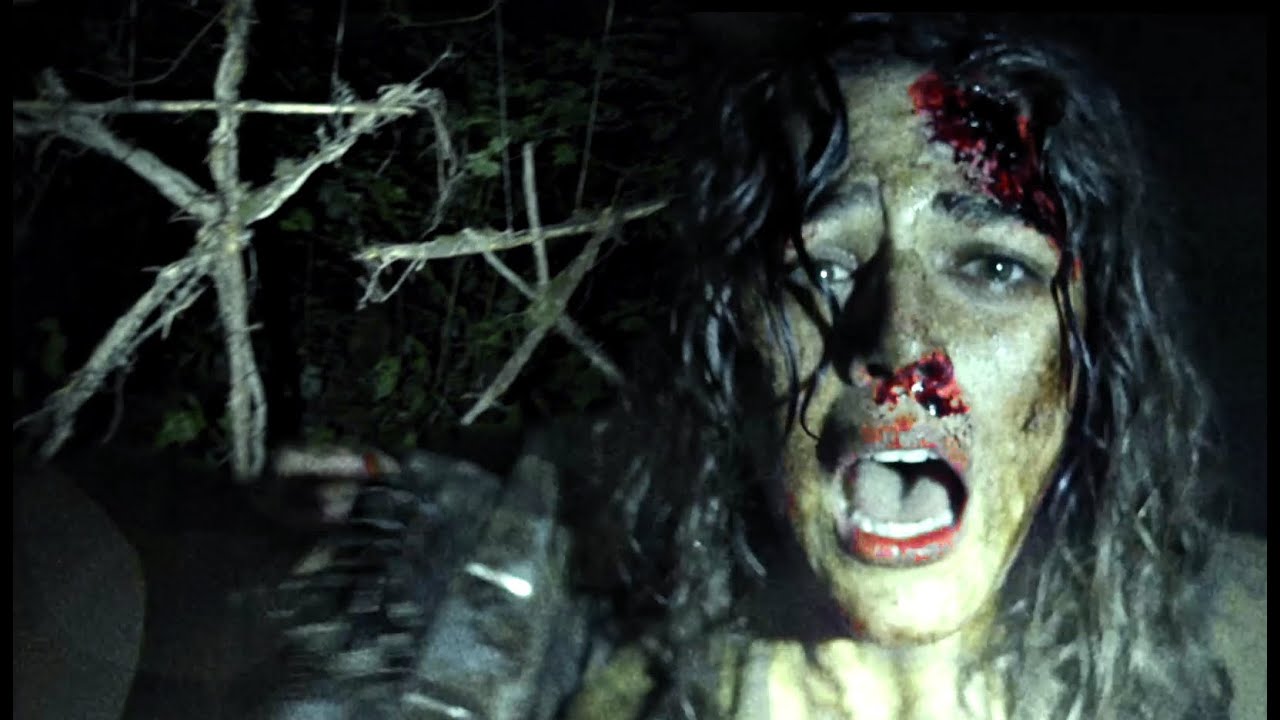
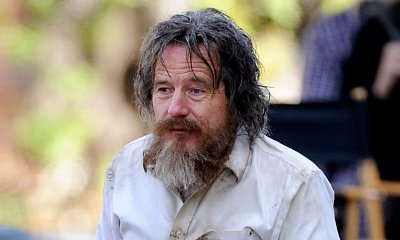
Ava DuVernay tackles black incarceration in first footage of "The 13th"

Oh Ava, you can do no wrong. Here's a smart, articulate black woman that really cares about her own people.

I sadly won't be making the New York Film Festival this year. I've been to Cannes, Toronto and Sundance  so I have seen about 95% of the NYFF programming already, but there are 4 film premieres there that had me contemplating a trip to the "Big Apple": Ang Lee's "Billy Lynn's Long Half-Time Walk," James Gray's "The Lost City of Z," Mike Mill's "20th Century Women" and DuVernay's "The 13th" an in-depth look aat the country's incarceration system and specifically its target of African-Americans. Fascinating stuff, but also relevant stuff. So much so that I added it to my "What's Left" column for 2017. It's one of only 10 unscreened movies left in the year that I truly believe can leave a notably important artistic mark.

It will premiere on Netflix October 7th and get a limited release that same day. The trailer is now available and it does look like something that could really open up minds and cause change. DuVernay is a very important artist in the black community and outside it as well, so this is an important movie as well.

Terrence Malick will be making a rare public appearance in October

Malick is such a mysterious man, I've heard stories about him showing up at Cannes during the premiere of "Tree of Life" and just sitting in the back incognito. He is supposedly shy, socially awkward, not really a public kind of man. That's fine, I understand that, but what made him decide to finally appear next month, at Jersey's Princeton Garden Theater, to discuss Roberto Rossellini's seminal 1954 classic "Journey to Italy?" I still don't believe it's going to happen. He will cancel or just not show up. The man can't possibly be doing this? or is he really going through with it?

Courtesy of the A.V. Club:

"Tree Of Life" and "Badlands" director Terrence Malick is a notoriously hard man to catch in the wild: he doesn’t appear in making-of features for his own films, grant many interviews, or even allow photographs of himself to surface in the public realm. (To say nothing of his 20-year hiatus from film-making, between 1978’s Days Of Heaven and 1998’s The Thin Red Line.) Fans of the celebrated director (and Italian cinema) might want to make their way to New Jersey next month, though: Malick has apparently been scheduled to speak at the Princteon Garden Theater, as part of a discussion on Roberto Rossellini’s 1954 masterpiece Journey To Italy. According to the theater’s web site, the October 21 showing of the film will be followed by “a live conversation with acclaimed director Terrence Malick.” Tickets don’t appear to be on sale for the event at the moment, although it’s not clear if they’re not available yet, or if fanatical Malick fans—hoping to get a glimpse of their hero beyond the occasional on-set photo—have already scooped them up."

Full article can be found HERE

I know he has a small, almost invisible cameo in "Badlands." I don't think I've ever heard him speak to tell you the truth. His whereabouts unknown in the "making of" docs of his feature films. There's also this strange moment that happened  when he and Benicio Del Toro were walking out of a restaurant in L.A. - Check out the Malick's reaction when he sees the camera.


I have already written a review of "Voyage of Time" his latest film, this one about the beginning, middle and end of time. I dug it for the most part. Review should get posted in the coming week. I'll be comparing the differences between the 45 minute Brad Pitt narrated IMAX version and the 90 minute Cate Blanchett narrated feature-length version.

"The Magnificent Seven" opening #1 at the Box Office spells a forthcoming deluge of reboots/remakes

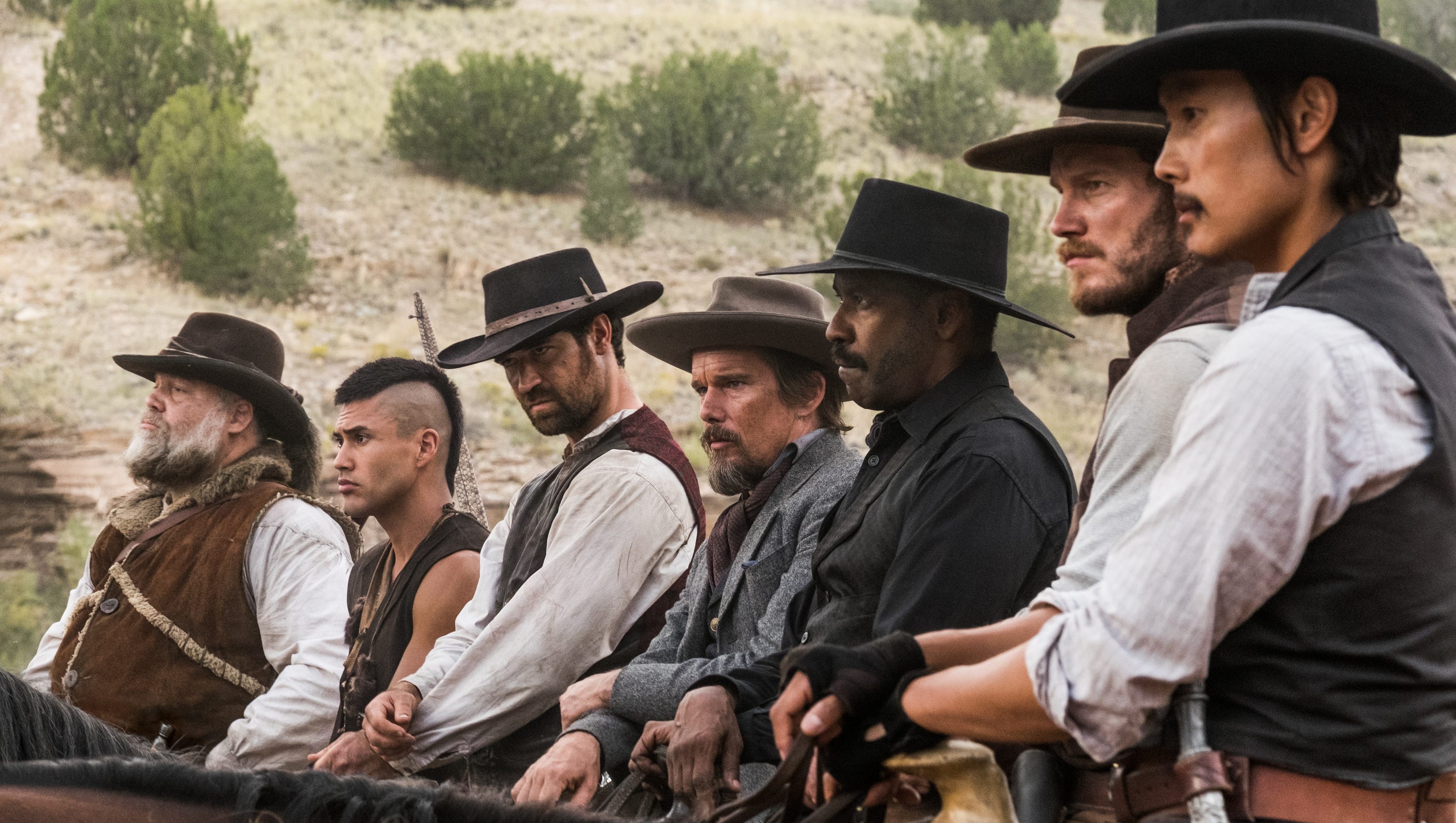
As predicted "The Magnificent Seven" has opened with a 35 million dollar weekend intake at the Box Office, overtaking "Sully" for the top spot. The latter movie starring Tom Hanks is close to the 100 million dollar mark and that's something to celebrate. It constitutes one of the few times in 2016 a smartly written, adult-oriented story has been this successful at the box office.

As for "The Magnificent Seven," I was not a fan of the film, my review can be found HERE. As for "The Magnificent Seven," I was not a fan of the film, my review can be found HERE. Also, what's the deal with a black cowboy riding around in the, primarily white, old west and no racial slurs or remarks ever being uttered towards him? That just wouldn't happen. Tarantino got it right in "Django Unchained" when Jamie Foxx's titular character rides into town with a horse and the whole town's jaws just drop ... of course there's that famous LINE.


This again proves the mainstream popularity Denzel has, I'm not complaining although him picking better movies would make things much easier to swallow. The success of "Magnificent" does also spell possible greenlight for many more remakes of classic films to come. To me, that's almost as bad as any terrible superhero movie. As reported last week Will Smith is already working on a "High Noon" remake. Also being remade "The Orphanage," "Rosemary`s Baby" "Starship Troopers"  "Scarface," "The Naked Gun," "Videodrome" and "The Harder They Come." YIKES. That's from not much research, I'm sure there are plenty more titles that I missed, but it's almost too pain-inducing to look for them.

EDIT: I gave in. Here are others that are about to begin shooting. Some personal favorites of mine which are about to get butchered include: "Akira," "A Prophet," "The Birds," "Cabin Fever," "Cube," "Das Boot," "Don't Look Now," "The Seven Samurai," and "The Fugitive."

"Bruuuuuuuce" The Boss calls Trump a "moron"

I saw Springsteen and the E Street Band's last show at Foxboro this month. He played for 4 hours and 3 minutes. Crazy, right? But not just that, he was all over the stage, this isn't like Sir Paul McCartney who just stands there and walks around from. The Boss was working it that night. Most of us were exhausted by the end of it. I did notice that he got a little political before singing an acoustic version of "Long Walk Home." 

 "So along with all of you, I've had to live through the election campaign, and I gotta say, it's gotta be one of the ugliest I've ever seen. And there was just a lot of speaking to our worst angels. You let those things out of the bottle, all that ugliness — the genie doesn't go back in the bottle so simple. Anyway, I'm going to do this with that in mind. This is 'Long Walk Home'


That's all fine and dandy, but still vague, which is unlike him. For years he has been very political even going out on the road supporting candidates like Barack Obama and John Kerry. This year nada. He's been very quiet, but he finally unleashed during a Rolling Stone INTERVIEW:
“The republic is under siege by a moron. Without overstating it, it’s a tragedy for our democracy. “When you start talking about elections being rigged, you’re pushing people beyond democratic governance. And it’s a very, very dangerous thing to do.Once you let those genies out of the bottle, they don’t go back in so easy, if they go back in at all."

"The ideas he’s moving to the mainstream are all very dangerous ideas — white nationalism and the alt-right movement. The outrageous things that he’s done — not immediately disavowing David Duke? These are things that are obviously beyond the pale for any previous political candidate. [In another era] it would sink your candidacy immediately.”

OFFICIAL: Martin Scorsese's "Silence" getting a December release date!

A few good sources have hinted today at a December release date for Scorsese's latest opus. Will it crash the Oscars? Gold Derby's Chris Beachum stated today: "While that date is still not in stone, we have now had enough of a confirmation that it will indeed be released in December that the film is now available for you to predict for Oscars, Golden Globes, and SAG Awards nominations." The whole article can be found HERE.

Image result for SILENCE SCORSESE

This automatically becomes the most anticipated movie of the year. The official running time clocks in at an astounding 3 hours and 15 minutes in length, which would make it the lengthiest Scorsese ever. That is if you don't cont his Bob Dylan and George Harrison documentaries.

Does that mean he's done dilly-dallying in the editing room with Thelma Schoonmaker his editor of almost 3 decades. Maybe it also means it might be the "surprise" screening at the New York Film Festival this coming October, which I will sadly not be attending.

IMDB describes the plot as: "In the seventeenth century, two jesuit priests face violence and persecution when they travel to Japan to locate their mentor and propagate Christinaity."

The crusades. This is Scorsese attempting to depict a subject matter that not many people have dared tackle at the movies before. Are we pumped or what for this movie? Let's just hope it isn't another "Kundun" ... to this day the only Scorsese, and I've seen them all, that I deem to be almost unwatchable.

"The Magnificent Seven" lands into theaters

Antoine Fuqua's "The Magnificent Seven" comes out in theaters today and the overall consensus at the Toronto International Film Festival, where it premiered, was that it was an underwhelming romp that should have never been greenlit. Fine, I get that, the movie is in fact not very good. I gave it a C+ in my review, but what if it makes a ton of money this weekend? Which is what I'm predicting. Then the idea of remaking it won't be such a bad one and there will be a lot more to come. Imagine a remake of another classic western, "The Wild Bunch"? That was a film, just like "The Magnificent Seven," for and of its time. Oh wait a sec ... YIKES it is already happening. Check THIS out.

The following are excerpts from my 9.8.16 review of "The Magnificent Seven" :

"The question that must first be asked when discussing Antoine Fuqua's misbegotten "The Magnificent Seven is simple: why? Why remake the much celebrated original with its pristine Elmer Bernstein score and John Sturges' crisp direction. Sure Denzel Washington and Chris Pratt have charisma to burn and a loyal fanbase that will churn out hard earned dollars for anything new they release, but why even attempt to recreate the majesty of the 1960 original, no masterpiece by the way, and why hire Fuqua, a hack as far as I'm concerned, to direct? Has he done anything of value since "Training Day"? The answer is no,  but with that 2001 movie he scored two acting nominations for Ethan Hawke and Denzel Washington, who would end up winning and making history in front of Sidney Poitier as the first leading black man to win a coveted Oscar statuette."

"Those days are gone. Now Washington has some kind of genuine affection for Fuqua. "The Magnificent Seven" is their third partnership together, but it's also their worst one. The cast is starry: Denzel, Pratt, Ethan Hawke, Vincent D'Onofrio, Peter Sarsgaard and the action is relentlessly assaultive, but in some fashion satisfying and yet, the rest is abysmal and showcases Fuqua's lack of coherence in his pacing, shot selection and overall artfulness."

Image result for magnificent seven

"And what about Washington all scruff-ed up and badass. We first see his Chisolm entering an old west town full of white folks with a horse, it almost makes you think about "Django Unchained" and that famous line I will not utter.  There is not one mention in the movie about his skin color, which in fact should be an issue. Racial injustice in America at that time was brutal, yet when Chisolm struts into town he only gets stares, nothing else. Saving his wholesome public image? The film has no balls to tackle race."

"The classic story goes that seven gunmen come together to save a town from thieves that have invaded and taken ownership of it. You know where this is going. The opening hour has Washington's Chisolm rounding about the troops one by one. The setup is recognizable because it has been done many times at the movies. This is not new territory by any stretch of the imagination. It could work, but it doesn`t because Fuqua lacks the talent and the cinematic chops to pull it off. What he does lack in narrative he can almost make up in action sequences. There are two grandiose action set-pieces that work wonders. Just like he did in "Shooter," "Training Day" and "Southpaw" Fuqua gives us a visceral reminder of his knack for great shoot 'em up style cinema, but the substance is non-existent."

UPDATED Oscar Predix 9.23.16

I have decided to take out "Silence." All signs point to it not even coming out this year and if it did wouldn't you think Paramount would push the film a bit more for Awards season? We don`t have a trailer, no promotional events and barely a still. Do they even have fate in it?


"Lion" has been added after my TIFF screening. I am not a fan of the film, but its crowd-pleasing roots are irresistible for the mainstream.

Best Picture
(1) Billy Lynn's Long Half-Time Walk
(2) La La Land
(3) Manchester by The Sea
(4) Loving
(5) Sully
(6) Lion
(7) Arrival
(8) Patriot's Day
(9) Moonlight
(10) Hell or High Water

Best Actor
Casey Affleck, Manchester by the Sea
Tom Hanks, Sully
Michael Keaton, The Founder
Joel Edgerton, Loving
Denzel Washington, Fences

Best Actress
Viola Davis, Fences
Ruth Negga, Loving
Meryl Streep, Florence Foster Jenkins
Natalie Portman, Jackie
Emma Stone, La La Land

Best Director
Kenneth Lonergan, Manchester by the Sea
Ang Lee, Billy Lynn's Long Half-Time Walk
Barry Jenkins, Moonlight
Damian Chazelle, La La Land
Cliny Eastwood, Sully

What's left?

Contenders that have yet to be seen by anyone. These films have yet to be screened, but have the potential to join 2016 masterworks "Krisha," "Manchester by the Sea," "Paterson" and "La La Land."

EDITED 11.6.16

"The Founder" (John Hancock)
"Live By Night" (Ben Affleck)
"Gold" (Stephen Gaghan)
"Silence" (Martin Scorsese)
"Patriots Day" (Peter Berg)
"Passenger" 
"Star Wars: Rogue One"

REVIEW: "Miss Peregrine's Home For Peculiar Children" & Tim Burton's flailing career

Image result for tim burton pergrine

While watching Tim Burton's "Miss Peregrine's Home For Peculiar Children" I couldn't help, but be reminded of Burton's better days as a director. Which is not to say that his new film, based on Ransom Riggs' ultra popular YA novel, is a total bomb. His knack for great visuals is still in tact, but this is not a story that Burton would have undertaken during his peak years. It's a paycheck.

That's the problem with his career. "Charlie and The Chocolate Factory" and "Alice in Wonderland" were steps back when they were supposed to be steps forward. He tried to get back to his glory days a few years ago with "Big Eyes" which barely missed the mark, but proved that he does still strive for artistic freedom.

"Miss Peregrine's Home For Peculiar Children" is a safe, moderately entertaining film that is meant to rake in the big bucks. You will likely not see his name in the advertisements for the film because there already is a specific fanbase for the film. The visuals are, in some circumstances, stunning, but the story is thin and the auteuristic stamp somewhat nonexistent.

So give me examples you ask? Burton's best films are untouchable: "Beetlejuice," "Batman," "Edward Scissorhands," "Batman Returns," "Ed Wood," "Mars Attacks" and "Sweeney Todd." Visionary stuff and Burton going by is own twisted muse. Here's hoping he gets his groove back, lord knows we need him right now with the studio system crumbling [C+]

RIP Curtis Hanson

I was saddened to hear about Curtis Hanson's death yesterday evening. I had heard he was battling Alzheimer's disease a few years back and made the decision of not publishing anything about it. His family wanted their own privacy and that is what they got. His final film was "Chasing Mavericks" in 2012, a rather underrated film that didn't get the fanbase it deserved, although its 7.2 IMDB rating might persuade more than a few people now to give it a shot on home video. I became a major fan around the time Hanson delivered "L.A. Confidential" which now stands as one of the great noirs of all-time. He followed that up with "Wonder Boys," which is one of the great stoner movies of all-time and he followed that up with "8 Mile" one of the great hip-hop movies of all-time. Just from that streak alone he stands a good chance of  being remembered as an important cinematic maverick. Was he on fire or what at that time? I never met him, but from all indications it seems like he was a very nice, amicable guy. My thoughts are with his loved ones at this given time.

Is "Passengers" seriously Oscar-bait?


This looks like a total mess, but that's just me. From the director of "The Imitation Game"? You serious? It does look a wee bit more interesting than than the Affleck flick, but this looks like a popcorn movie and I don't really mind that at all, as long as it doesn't take itself too seriously we might have a watchable movie, but this is going nowhere near critics top 10 lists by year's end. I do like the fact that you have two actors with endlessly great personalities: Pratt and Lawrence rock my world any day any time.

Sorry, but "Live By Night" - directed by Ben Affleck- does not look good


I know, I know. Ever since I have been doing this site I have pretty much been underwhelmed by what Affleck has done as a director. Not a fan of "Gone Baby Gone" and "Argo" I find those films not that visually exciting and Affleck almost parodying some of his influences. I will say that "The Town" features some great action, those heist sequences play like gangbusters, but at the end of the day he was influenced by Michael Mann's "Heat" and Christopher Nolan's "The Dark Knight" with those and it really isn't his own voice.

Now it seems like he's gone the gangster route and, although this could turn out to be a pleasant surprise, the visual style is again a rehash of much of what we've seen in the past. I know someone that went to a test screening and came out underwhelmed by the film. Right now it is expected to com out late December, but this looks like the kind of film that would fit better with a spring 2017 release. "Gangster Squad" anyone?

10 Memorable TIFF movies for 2016

For more coverage go to Awards Daily HERE

Having just wrapped up its 40th edition, the Toronto International Film Festival presented more than 296 films in its lineup this year. The festival is wide and vast in its embrace of world cinema, but every year the most buzzed-about titles are that will impact awards season. This year most of the big titles had already debuted in Venice and Telluride just a few weeks prior. There were no surprises or out-of-left-field contenders like last year’s “The Martian.” What we saw instead was the continued success of “La La Land” and “Moonlight” which became certified critical favorites, just as they were at Telluride. Here are ten titles that emerged as the biggest winners from this year’s selections.
1. La La Land
Winning the People’s Choice Award, Damien Chazelle’s film was a no-brainer. Everyone felt sure it was going to win even before the festival started. Starring Emma Stone and Ryan Gosling, Chazelle’s film has moments of pure joy that make you feel punch-drunk in love at the movies again. The morning press screening burst into extended applause after the film’s final shot and that sealed the deal for the film’s eventual fate as a major Best Picture contender. Stone, a beauty of an actress, also turned heads for her performance as Mia, a struggling actress hoping to find her big break. Mia falls for Sebastian, a playful and charismatic Ryan Gosling, as they embark on a colorful and touching adventure filled with some of the best original songs ever conceived for the big screen. It’s quite possibly the best movie musical since Bob Fosse’s “All That Jazz.”
2. Moonlight
What can be said about Barry Jenkins’ “Moonlight” that hasn’t already been said? Set during three transformative periods in the life of an African-American  gay man, the film is not only a mesmerizing journey into the “African-American experience,” but it also shatters cinematic taboos that not many have dared touch before it. This was the first major film I can recall to feature two black men who kiss onscreen. Unheard of, but an incredibly important landmark moment and the very definition of a film that can change lives. Jenkins splits the film into three different time frames as he follows his protagonist Chiron’s struggle for self-identity in a society that refuses to acknowledge his sexual freedom. The three actors playing Chiron (Alex R. Hibbert, Ashton Sanders and Trevante Rhodes) were all revelatory and Jenkins (a former Telluride Film Festival volunteer) makes good on the promise of his first feature “Medicine for Melancholy.” His “Moonlight” deserves to be called a milestone.
3. Arrival
Toronto was a kind of homecoming for Canadian boy Denis Villeneuve whose “Arrival” had very successful showings at both Telluride and Venice just a week prior. Amy Adams plays Louise Banks, a linguist twho is recruited by the military after enormous Alien pods show up across the globe. Many countries are prepared for war, but Louise believes that the visitors might actually be on earth for non-violent reasons. Adams, in one of her very best performances, gives a touching and rewarding performance in a film that feels like a better version of Christopher Nolan’s well-known sci-fi blockbusters. The sentimentality is somewhat stripped down for a more concrete and profound look at the ties that bind us all on earth. It’s a thought-provoking adventure that isn’t about war, but communication instead. Villeneuve once again proves to be the real deal. The 49-year-old Quebecois filmmaker is building up a solid, loyal fan-base that could one day rival Nolan’s. The fact that his next movie is “Blade Runner 2” only gets us more excited about his future.
4. Nocturnal Animals
Tom Ford’s follow-up to 2009’s “A Single Man” turned out to be the love it or hate it movie of the fest. Heated debate raged post-screening, with the film’s champions touting it as a provocative depiction of 21st century masculinity, whereas the haters couldn’t look past what they saw as its lurid fiction-within-fiction B-movie plot device. Amy Adams, on fire this fest, plays art gallery owner Susan Morrow, a woman haunted by an old flame (Jake Gyllenhaal) who sends her his latest violent novel “Nocturnal Animals.” Something in the book touches a nerve in Susan and, through flashbacks recounting their failed relationship, we get to see why. To mention any plot points in Ford’s film would be to ruin a nastily satisfying thriller that refuses to balk away from conventions. This wasn’t an easy film to swallow for many, and some of the people I spoke to did in fact have real distaste for it. But it has just enough intrigue and artfulness to prove to the world that, yes, Tom Ford is an extraordinary filmmaker.
5. Norman: The Moderate Rise and Tragic Fall of a New York Fixer
Getting lost in the shuffle of Telluride was Joseph Cedar’s English-language debut. After his impressive Israeli film “Footnote” made waves on the international circuit Cedar decided to make this film about New York “fixer” Norman, a crooked man who lies, sways and persuades numerous people of power for his own benefit. As played by Richard Gere, Norman ends up in deep trouble after “helping” an Israeli dignitary who three years later becomes the Israeli Prime Minister. This flawless balancing act of a film had Richard Gere giving an incredibly rich performance that is sly enough to feel fully fleshed out. The wheeling and dealing that the film presents to us is transfixing and feels like new, uncharted cinematic territory. Cedar makes it all work like a pro and the fact that the film, which has a sprawling ambitious plot, doesn’t feel like a mess at all, but instead like a work of art is a testament to its director’s talent.
6. Wakefield 
Wakefield would not be as fascinating if its central performance wasn’t as fully fleshed out as Cranston makes it. In the best performance of his career on the silver screen, it’s made even more impressive by the fact that he is mostly alone for the majority of the film, but what he does is never less than riveting. He infuses his character with humor, heartbreak, and scathing cynicism. His Howard Wakefield is not necessarily a man one is supposed to like and, in many ways, he represents a kind of anti-hero that not many actors could pull off. Swicord, mostly known for her screenplays such as The Curious Case of Benjamin Button and Little Women, shows a surprising amount of restraint as compared to her previous works. Here she makes a film stripped of artifice designed to ponder deep, humane questions about existence. With an ending meant to spark debate and cause both anger and provocation in its audience, Wakefield fights formula and creates its own unique cinematic language.
7. Lady Macbeth
Get ready for a star-in-the-making. Florence Pugh is mesmerizing in “Lady Macbeth,” first-time director Wiliam Oldroyd’s adaptation of Nikolai Leskov’s “Lady Macbeth of Mtsensk.” Pugh plays Lady Katherine, a young woman forced into marriage and who decides to take matters into her own hands. Katherine is a woman who defies conventions and will do almost anything to get the freedom she most desperately craves in a society that refuses to give it. Especially if you’re a woman. Her desires and needs are things that come naturally to women in today‘s society (freedom, true love, her own free will), but since this is a story set in Victorian London those things are taboo and punishable. She dares to break those conventions by doing unspeakable things, including murder. Oldroyd has reinvented the genre by injecting a much needed dosage of adrenaline. “Lady Macbeth” is a thriller masquerading as a period piece The critics were unanimous in their praise and Roadside quickly snatched it up not too long after. You’re in for a real treat.
8. Paris Can Wait
Eleanor Coppola, Francis Ford’s wife, isn’t well-known as a director. However, her documentary “Hearts of Darkness: A Filmmaker’s Apocalypse” about the tumultuous and depressing shoot of her husband’s “Apocalypse Now” stands as a great, important time capsule in film history. She has never really delved into narrative  fiction until now. With “Paris Can Wait,” another underseen Telluride gem, she has made one of the most enjoyably sexy road movies in quite some time. Casting Diane Lane as Anna, an unsatisfied wife whose Hollywood producer husband (Alec Baldwin) is always away on the road, was a stroke of genius. This spiked bonbon of a film has Lane playing Anne, left alone again by her husband this time at the Cannes Film Festival, which leads to her being playfully lured to go on a two-day road trip through the south of France with her Hubby’s business partner Jacques (Arnaud Viard). Jacques delights in showing her a good time, but also doesn’t shy away from telling her how beautiful she is. Their cat and mouse game makes for an intriguing romcom filled with substance.

9. The Edge of Seventeen
A new, unique female voice was discovered with "The Edge of Seventeen." Writer-director Kelly Fremon gave us an incisive look at female teenage-dom. Nadine, a never better Hailee Steinfeld, is already an awkward and isolated high-schooler when she finds out her best friend is dating her older brother, that sets up a chain events that feel both unexpectedly moving and hilarious. A geek kid boy in her class (Hayden Szeto) seems to be the escape she needs, although she isn't sure if she actually like likes him. The top-notch cast is rounded out by Kyra Sedgwick, playing Nadine's mom and Woody Harrelson as Nadine's History teacher, and mentor. The Edge of Seventeen is the most John Hughes-esque film to come around in quite some time. It feeds off of the awkwardness of its characters plights, but also humanizes them in ways that are so rare for the teen movie genre. You could tell Fremon brought some of her own persnal experiences to the table for the film, which is also the funniest movie I have seen so far in 2016.

10. Denial
There’s often a genuine dramatic pull to films in the courtroom drama genre, yet they’ve suffered the last few decades because of the conventional tropes that can come with it. How do you reinvent such a genre to become less predictable and less by-the-books? While Denial doesn’t do anything new on a technical side, it is fully aware of its gripping plot, one that welcomely avoids pushing its inherent clichés to the forefront of its story. The true story centers around the legal battle David Irving (Timothy Spall) and Deborah Lipstadt (Rachel Weisz) questioning the historical validity of the holocaust. Yes, the story might sound oddly over-the-top, but it did happen. Irving, a man who considers himself a historian, believed the holocaust was a complete hoax. So much so that he decided to bring Lipstadt to court over her book Denying the Holocaust, which he deemed insulting and filled with lies. Lipstadt decided to hire a top-notch legal team, headed up by Richard Rampton (Tom Wilkinson), with the financial help of Steven Spielberg among many other celebrities, to prove that Irving was not just a fraud, but a racist man that was filled with hate and craved public attention.

REVIEW: "LBJ" #TIFF16

lbj-2
There’s been no shortage of Lyndon B. Johnson depictions on film as of late, with Ava DuVernay capturing the 36th U.S. president as an arrogant man trying to diminish MLK in Selma (as played by Tom Wilkinson), Bryan Cranston getting an Emmy nomination as Johnson in All The Way and, now, Rob Reiner directing Woody Harrelson in the makeup-heavy historical drama LBJ.
Having the actor play LBJ is somewhat of a curious choice, but it does work. He exudes playfulness, but also robust aggressiveness in his portrayal of a man that lost the presidential race to his nemesis JFK only to end up becoming vice president and, ultimately, the president after the assassination of JFK in Dallas. All doubt about whether or not Harrelson could pull it off is quickly diminished once he appears in the film’s very first frame. He not only embodies the mannerisms and social awkwardness of Johnson, but turns out a very comedic performance worthy of his talents.
The same can’t be said of Jennifer Jason Leigh as Lady Bird. Stuck with a fake-looking prosthetic nose on her face and an underwritten role, the actress cannot overcome the trappings of her role, which feels stilted and almost cardboard.
A lot of the blame must got to Reiner who directs the film in such a flat, almost satirically skittish way that all the positives that Harrelson’s performance brings are quickly overshadowed by clunky, contrived filmmaking. From the low-horned drumbeat presidential soundtrack to the abnormally hammy inspirational speeches, this feels like by-the-book awards bait circa 1992.
LBJ specifically deals with an important time frame in American political history. When civil rights were at the forefront of everybody’s minds, a progressive like JFK made it to the White House and Johnson, a Texan with somewhat progressive ideals, was chosen as Vice President.
The battle of wits between Johnson, Speaker of the House and imposer of power, and Kennedy, a much younger, more attractive candidate that stole America’s heart, is mostly sharp and intriguing in its depth and feel. Both were at polar opposites of the spectrum when it came to their personalities and, yet, they both had to work together to make the Civil Rights movement progressive at a crucial time of change.
lbj-1
Some of the most captivating sequences deal with the political talk that was going in the White House between staff, recalling Steven Spielberg’s much more complex and masterful Lincoln. With his film, Reiner chooses a strange, almost too-focused aesthetic for his film. Remember that recent Funny or Die skit where Johnny Depp chewed up the scenery to play Donald Trump? Well, this isn’t that far off in terms of quality, resulting in an empty and conventional visual style.
Once the JFK assassination does happen, the film is left with an empty void. Gone are the verbal fireworks between Johnson and the Kennedys, replaced by the accomplishments that Johnson would achieve as the 36th president. Although Reiner adequately showcases most of the notably worthy achievements of Johnson’s presidency, his biggest flaw lies in the refusal to tackle what would ultimately be the president’s lasting legacy: his decision to invade Vietnam. LBJ simply pretends as if one of the worst presidential decisions in the country’s history never happened.
When all is said and done, Reiner takes no risks and leaves out any trace of artistry in his film. Instead opting to tell a good old-fashioned story, he has a central performance to back him up, but fails to register many of the most compelling aspects of President Johnson’s history.

D+

REVIEW: "Blue Jay" #TIFF16

Blue Jay 1
Sometimes you just can’t escape the past. Moments that have shaped you and made you who you are today can happen at any time without you even knowing it. They could occur when you’re just a kid or even when you’re way past adulthood.

In director Alex Lehmann’s slight, but competently made Blue Jay, a chance meeting between two former high school sweethearts (as played by Mark Duplass and Sarah Paulson) is all about past wounds that haven’t seemed to escape either of their lives.
The chance encounter occurs in a grocery store in the small California town of Crestline. Jim (Duplass) and Amanda (an excellent Paulson) haven’t spoken in more than twenty years. An invitation for a simple cup of coffee will turn into a night of verbal fireworks and unhealed wounds.
A few beers later and they are indoors in Jim’s late mother’s house, which is for sale and the reason that brought him to town. Jim seems to still be searching for himself, bouncing from one girl to the next and not being able to keep a stable job. Amanda is unhappy about her marriage and unprepared with the responsibility that came with having kids and, yet, the fire still sparks and the chemistry is still there.
Blue Jay is Lehmann’s debut as a director and he shows a tremendous assurance in his craft. He builds up claustrophobic moments that can tell a world of emotions with such few words. The mid-life crisis that these two characters face is universal, and the questions of purpose and fate are as well. Instead of filling his frames with ceaseless dialogue, which has become a staple in most indies featuring Duplass, Lehmann is unafraid of having moments of pure silence. He also focuses his lens of Paulson’s ever-changing eyes, filled with both longing and resentment. Her character Amanda has gone through life’s toughest obstacles and endured, but not without her fair share of scars in the process.
For Duplass, the role of Jim is an emotionally demanding one that he doesn’t quite measure up to, particularly compared to Paulson. He has fared better in other films that have been more relaxed, here seemingly struggling with the bigger emotions he’s asked to contend with.
Blue Jay 2
Shot in beautiful black-and-white cinematography by Lehmann himself, from a script by Duplass, it adds an extra layer of sadness to the story’s resistant and detached tone. It’s always a risk deciding to shoot a film this way, being called out on your own pretensions, but Blue Jay’s downer themes do fit well with this stylistic decision.
The story is a simple one, and sometimes it might feel a little too slight for it own goo, but Paulson carries it all the way through with bravado acting. She fills up the layers that might have been otherwise lacking in Lehmann’s somewhat conventional screenplay.
Blue Jay poses important questions about adulthood without delving too far into concrete answers. That can be frustrating at times, but having its characters self-question and contrast themselves is a smart decision. How different am I from twenty years ago? What has changed? Have I learned anything? And, really, who hasn’t tried to ask that about themselves at some point in their lives?

B-

REVIEW: "Barry" #TIFF16

Barry 1
During his college days in New York, Barack Obama used to be called “Barry.” At that point in time he hadn’t fully embraced his African American roots yet, but was headed towards a journey of self-discovery that would change him forever. That is at least what writer-director Vikram Gandhi tries to show us in compelling drama Barry, which captures the tumultuous first few college days of the future U.S. president at Columbia University.
This is the second film about Obama to arrive this year after the Sundance hit Southside With You, which took place around 10 years later in Chicago. In Barry, Devon Terrell – an uncanny lookalike delivering a great performance — plays Obama with all the features and characteristics that we have come to know of the 44th U.S. president. He doesn’t just deliver a good impersonation of a 22-year-old Obama, but gets the humanity right as well. The performance is a fully sketched immersion that feels and looks like the real thing.
The swift wind of change that would invade Obama’s life happens within his first day on campus. He gets racially profiled by a police officer who thinks he is trespassing school property. The officer wants to hear nothing, not even a plea from Barry that he is in fact studying there and not an intruder.
One evening he decides to attend a party in Harlem with a crowd that seems to be foreign to him even though he shares the same skin color as them. The black side of his family, his distant Kenyan father whom he claims to have met only once, has been absent and uninvolved in his life. It his white mother, beautifully played by Ashley Judd, that has set Barry on the right path. Their relationship is carefully drawn out and reveals where the encoded free-thinking spirit of Barry’s might have come from.
As the film moves forward, Barry starts to feel more and more like he doesn’t belong, and what’s revealed seems almost too pertinent and relevant for the current social and racial climate in the United States. He starts dating a white girl, Anya Taylor-Joy (The Witch), a bright student that cares about him, but even that relationship becomes problematic. Barry is all too aware of how different his experience on and off campus is compared to hers. She doesn’t understand his frustration, but that seems to be his exact point. One cannot understand the black experience in America unless you step into their own shoes.
The racial tension in Adam Mansbach and Gandhi’s script is voyeuristic by simply, and smartly, showing us more than is explicitly said. Barry wants to be accepted, but he fears the path to acceptance will not come without major change in his country. He sees his brothers and sisters suffering daily, but is frustrated that he can’t do anything about it. A major decision for him would be to live outside of campus on West 109th, which would end up having him converse with black people on a daily basis, something he might not have previously done.
Whereas the aforementioned Southside With You was a calm, romantic watch, this is a serious and refined drama which has the feel of a political firecracker. Ending with his decision to not be called Barry anymore, but Barack instead, his transformation is complete and his investment into major political topics — such as race in America — is about to invade his persona and political life. In attempting to make the case that Obama’s racial experiences in 1981 at Columbia as what triggered and bustled him to the forefront of the political conversation for the years to come, Gandhi has succeeded.

B

REVIEW: "Denial" #TIFF16

denial-3


There’s often a genuine dramatic pull to films in the courtroom drama genre, yet they’ve suffered the last few decades because of the conventional tropes that can come with it. How do you reinvent such a genre to become less predictable and less by-the-books? While Denial doesn’t do anything new on a technical side, it is fully aware of its gripping plot, one that welcomely avoids pushing its inherent clichés to the forefront of its story.
The true story centers around the legal battle David Irving (Timothy Spall) and Deborah Lipstadt (Rachel Weisz) questioning the historical validity of the holocaust. Yes, the story might sound oddly over-the-top, but it did happen. Irving, a man who considers himself a historian, believed the holocaust was a complete hoax. So much so that he decided to bring Lipstadt to court over her book Denying the Holocaust, which he deemed insulting and filled with lies. Lipstadt decided to hire a top-notch legal team, headed up by Richard Rampton (Tom Wilkinson), with the financial help of Steven Spielberg among many other celebrities, to prove that Irving was not just a fraud, but a racist man that was filled with hate and craved public attention.
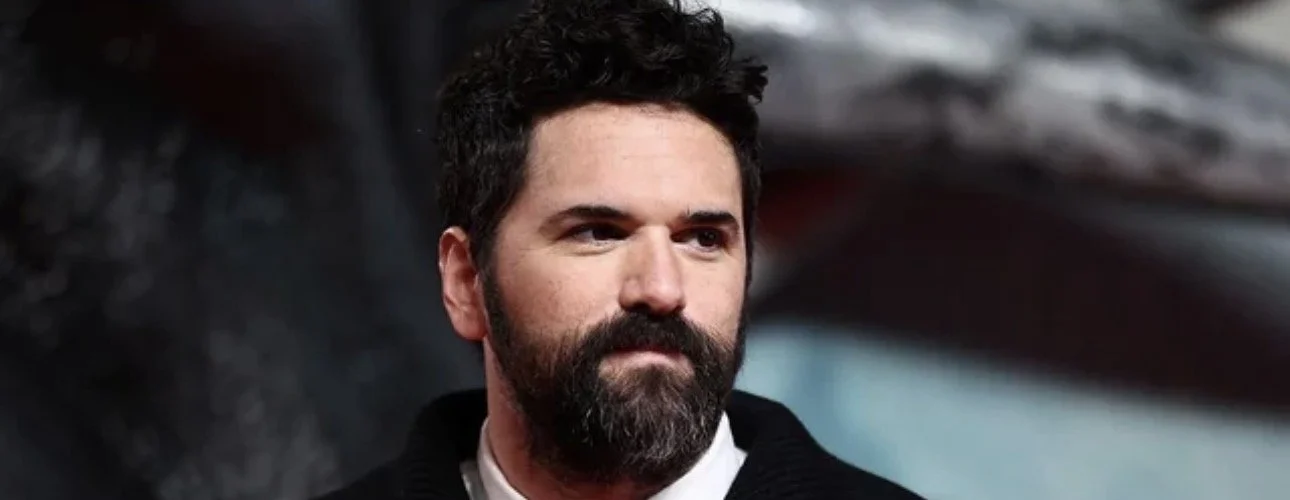
Directed by Mick Jackson, from a screenplay by David Hare, the film doesn’t try to reinvent the genre or break new ground, rather telling the story justly without any stylistic interference. The events that occurred were almost too outrageous, with Irving defending himself without a lawyer, that this simple visual style that lets the story speak for itself.
A number of unspeakable moments happen throughout the trial, including the debate of whether gas chambers even existed in Auschwitz. Revisionist history is nothing new, but having it debated and questioned in the court of law was almost unheard of. The film implies that the media might have contributed to the toxic reaction that came along with it as Neo-nazis went to the streets to celebrate Irving and conversation started to shift towards Irving actually having the possibility of winning the case.
denial-2
Spall, a Mike Leigh regular, brings dimension to his role of an evil man that truly believes what he says and seems to soak up all the attention he can get. Weisz, despite a distracting wig, is fantastic with her portrayal of a woman that won’t give up and risks a life’s work for a court case many in the U.K were taking a little too seriously. Both actors make Denial much easier to swallow, even when convention hits and familiar ground is met.
In the current political climate which has people constantly trying to sell lies as truth and truth as lies, Denial hits a poignant spot that feels regrettably timely. To see it to be reminded, as Bruce Springsteen once so eloquently put it, “Trust none of what you hear. And less of what you see.”

B

REVIEW: "Wakefield" #TIFF16


Bryan Cranston’s Howard Wakefield seems to have a great life. He is a successful New York City lawyer, is married to a loving wife, has two teenage girls, and owns the ideal house. However, problems do lurk beneath his psyche and, before we could even get to know him a little better, he decides to disappear from his own life. He hides in the attic, where his family never really cares to go, and observes how his loved ones deal with his disappearance.
Writer-director Robin Swicord isn’t interested in just the act itself, but more importantly in what led to it happening in the first place. Swicord adapts a short story by E.L. Doctorow into an original and thoughtful gem of a movie Wakefield.
While it’s not a reasonable and intelligent way to deal with life’s problems, walking away from it all is a feeling most have at least a few times in their life. It is a selfish act and Swicord goes to great lengths to tell us that Howard is a selfish person and that most of the problems he had in the first place had to do with this selfishness.
wakefield-2
Howard’s rocky relationship with his wife Diana (Jennifer Garner) acts a as catalyst for the decision. While hiding, he observes her every move, trying to study her emotional state and if he really matters to her. When the family leaves for work and school he sneakily goes into the house and steals whatever food he can get without leaving a trace of suspicion — if there is time, he will even add in a shower.
By walking out on life, Howard becomes a street prowler, picking garbages for any food or clothes. As time passes, he starts to grow a beard, have torn-up clothes, and looks for heat in cold winter evenings. He even purposely passes by his wife in the neighborhood, but he has become so unrecognizable that she doesn’t turn back for a second to get a closer glimpse.
Swicord also adds a couple of flashbacks to try and show us what might have prompted Howard to pull the plug on his existence. Those scenes are somewhat strained compared to the present-day sequences involving the state Howard finds himself in which feel fresh and fascinating.
wakefield-3
In fact, Wakefield would not be as fascinating if its central performance wasn’t as fully fleshed out as Cranston makes it. In the best performance of his career on the silver screen, it’s made even more impressive by the fact that he is mostly alone for the majority of the film, but what he does is never less than riveting. He infuses his character with humor, heartbreak, and scathing cynicism. His Howard Wakefield is not necessarily a man one is supposed to like and, in many ways, he represents a kind of anti-hero that not many actors could pull off.
Swicord, mostly known for her screenplays such as The Curious Case of Benjamin Button and Little Women, shows a surprising amount of restraint as compared to her previous works. Here she makes a film stripped of artifice designed to ponder deep, humane questions about existence. With an ending meant to spark debate and cause both anger and provocation in its audience, Wakefield fights formula and creates its own unique cinematic language.
Wakefield premiered at the Toronto International Film Festival.

B+


"My Entire High School Sinking Into the Sea" #TIFF16

Wildly bizarre and imaginatively alluring, if not occasionally slight, the animated movie, “My Entire High School Sinking Into the Sea,” is an engaging surrealist take on the disaster movie. It’s a film steeped in metaphorical analogies, especially in its depiction of surviving high school and escaping it unharmed.

Featuring the voices of Jason Schwartzman, Lena Dunham, Maya Rudolph and more, “My Entire High School Sinking Into the Sea” is acclaimed graphic novelist Dash Shaw‘s feature-length directing debut and he renders the entire weirdo affair as if the viewer is reading a graphic novel and turning page after page. And what this film accomplishes is reaffirming what a true original artist Shaw really is.
In the opening moments of the film we are introduced to Shaw (Schwartzman) and Assaf (Reggie Watts), best friends, journalism enthusiasts and sophomores at Tides High. They are in charge of the high school newspaper along with their editor Verti, a funny Rudolph. She’s a girl who develops a crush on Assaf, much to Shaw’s chagrin and the “friends” end up betraying one another — the spurned boy casting aspersions on the other in jealousy.
But the true story takes hold once Shaw finds papers that suggest the newly built high school gymnasium does not pass the city’s earthquake safety codes. In a state of panic Shaw tries to warn everyone, but most don’t listen or shrug him off. Bad mistake. Given the film’s outrageous title you know what happens next. All hell breaks loose in this mix of disaster movie and high school comedy that deals with love, friendship and overcoming differences.
myentirehighschoolsinkingintothesea_02Shaw, the director, not the character, doesn’t hold back in the destruction. Jellyfish attacks, electrocutions, sharks ripping people to death — this isn’t a kiddie movie. His effort seeps through in every carefully constructed frame and the director employs crayon and pencil drawings mixed with paintings, comic book sketches and silhouettes among many tools to deliver something strangely beautiful and almost like something you’ve never seen before.
As colors pop out on the screen there is a lovely interlude that won’t be spoiled here, but it is well worth seeing the movie for just this sequence alone. Yet, as vibrant as ‘My Entire High School’ is at times, the novelty of the animated style does wear off eventually and the film’s loose, free-spirited, deliberate B-movie plot starts to drag and show its flaws. The good thing is the film is just 72 minutes long and doesn’t entirely overstay its welcome.
A shout-out must be made to Rani Sharone‘s manic soundtrack which plays an integral plot to the film’s loony mix of humor and seriousness. Its carnival-like sounds compliment the many crazy different styles that the director plays around with as well with his art.
As a side note, “My Entire High School Sinking Into the Sea” begins with a title card that says “Warning: This film uses stroboscopic effects that can be dangerous for people with photosensitive epilepsy.” Some of the audience chuckled while others were left wondering if this was really a joke. You should believe Shaw was sincere in putting this title card before his picture started because the animation he uses does tend to have a dizzying-like effect on the viewer. So photosensitive epileptics you’ve been warned.
Although “My Entire High School Sinking Into the Sea” itself is a weird, gorgeous movie to look at and has a painterly effect on the eyes there are limits to its craft. The limitations of the drawings stem from the fact that they prevent us from being entirely involved within the meager, a little-bit-thin story. On a scene by scene basis the visuals are terrific, but the overall effect of all these disparate animation techniques has the feel of a ubiquitous fog. ‘My Entire High School’ is a technically impressive feat, but emotionally, it’s hard to sink too deep into its animated waters. [C-]