

LBJ Tweet #TIFF16

Review: The Promise #TIFF16
Terry George‘s The Promise begins with a title card that appears on-screen stating that 1.5 million Armenians were killed by the Turkish government during World War I. It’s a tragedy that has been depicted before in film, perhaps most notably in Atom Egoyan’s underwhelming Ararat, with ample room still made available to deliver the definitive version. Despite formidable talent on both sides of the camera, unfortunately we’ll have to wait longer for such a drama to arrive.
The film takes place on the brink of World War I in Turkey. Michael (Oscar Isaac), an intelligent, compassionate Armenian, decides to settle down and marry a girl (Angela Sarafyan) that he’s not completely smitten by, but claims that with time he will indeed love her. He lives in Armenia, but opts to journey to Turkey, without his wife, to study medicine at the Imperial Medical School and become a doctor within two to three years. He promises his wife he will be back. That promise will drive the core narrative of the film, but will also provide its one major flaw.

In Turkey he stays with his uncle Mesrob (Igal Naor) whose beautiful daughter Ana (Charlotte Le Bon) is in a relationship with Associated Press journalist Chris (Christian Bale). However, Ana catches Michael’s eyes and they embark in a secretive affair. Meanwhile a genocide is happening as Armenians are being rounded up and killed all across the country. Michael is captured and thrown into prison, but a tension-filled escape sets him free as he embarks to return home.
Terry George, whose Hotel Rwanda also dealt with a historical genocide, shoots the film with visual care. With the help of cinematographer Javier Aguirresarobe (Vicky Cristina Barcelona, The Road), he sets the scene capturing a vast, alluring Middle Eastern landscape, filled with deserts and mountains. The battle scenes are also immaculately shot by George, giving the film a grit that might be hiding under Aguirresarobe’s romantic photography. Somewhere in here lies a great war movie, but the screenplay, by George and Robin Swicord, hits more than a few rough patches when focusing on Michael and Ana’s affair. These inconsistencies as it pertains to an rudimentary love story bog the proceedings down.

Isaac is fabulous in the role of Michael, a man caught up in the midst of a violent war that cannot be escaped and will eventually turn into genocide. His eyes tell a world of forbidden emotions that his character keeps knitted deep inside him throughout. The Guatemalan-born actor, who initially built his career on these sorts of epics, from Agora to Robin Hood, sports a spot-on Armenian accent with finely tuned mannerisms to sketch out his character.
Bale is limited with his role which has his Chris passionately fighting for the lives of Armenians, but also for Ana’s love, which is slowly escaping him. Despite the lackluster romantic plot, the chemistry he shares with Isaac onscreen is potently conveyed and creates tension that rarely lets up. They both respect each other, but also have a mutual distaste due to sharing the same affection for a woman.
One can feel the importance of retelling these events when it focuses on the right circumstances, but when The Promise sags with cluttered, obvious tropes that have similarly downgraded countless war movies before it, it’s a disappointment. If George set his sights on capturing the effects of this tragic stain in history rather than love-making, we might have gotten a drama worthy of the talent involved.
The Promise is currently playing at the Toronto International Film Festival.
C+
Review: Lion #TIFF16

Garth Davis‘ directorial debut Lion is based on a true story. The film makes sure to tell us that at the very beginning of the movie — just to remind us that whatever we’re about to see in front of us were real events inspired by real people. We first see the main character of the film, Saroo, at all but five years old, wandering the streets of central India by helping out his mom, a rock carrier, and his brother, the man of the house. In a random, but realistic, turn of events Saroo ends up on runaway train and gets lost thousands of kilometers away in the streets Calcutta. The first half, all in Hindi and Bengali with English subtitles, is dynamite, encompassing an exotic world far away from us that nevertheless feels all too intimate and relatable. Saroo is a tiny fella and he ends up surviving many dilemmas by simply doing what he does best: running.
After a stint at a nasty, abusive Calcutta Orphanage, Saroo ends up adopted by an Australian couple in Tasmania. The film goes forward 25 years later, the memory of Saroo’s real family still looming in his head, he opts to find them by using something as simple as Google Earth, and this is where the drama starts to struggle. If the first half is an indelible treat and gives one high hopes that a film delicately placed in the awards season will in fact meet its steep expectations, the second half is troublesome and falls flat.
Sara’s adoptive parents are played by Nicole Kidman and David Denham in roles that feel formulaic and cliched. Dev Patel plays the grown-up Saroo, but his performance is overshadowed by Sunny Pawer, the actor playing his younger self. Pawer, a first-timer, is exceptionally natural and carries the film admirably well in the first hour.
Back to present day, Patel’s Saroo falls for Lucy a wide-eyed beauty as played by Rooney Mara in an underwritten role that doesn’t take advantage of her exceptional talent. Fitting all too comfortably in The Weinstein Company mold of awards-geared dramas, the film follows a conventional family drama trajectory in its second half. The psychological dilemma Saroo faces takes up much of the remaining running time, but it never feels urgent. Sure, it’s hard not to feel something by the film’s conclusion, but the manipulation involved seems rather pedantic, never fully investing us in the plight of Saroo.

After stunning work on Top of the Lake, Davis’ talent feels hammered down by Luke Davies‘ screenplay adaptation that ultimately meanders around until it comes to a lackluster halt. His direction is nevertheless stellar and somewhat elevates the formulaic material, aided by one of the today’s great cinematographers, Greig Frasier (Zero Dark Thirty, Foxcatcher, Killing Them Softly), who uses the stunning exterior locations to his advantage.
This is no doubt a fascinating story to tell in Lion, but the potential is never met. Despite its promise, the drama ends up feeling like one big Google Earth advertisement with no sense of culture whatsoever. If anything, pending stronger material, it does prove the director has a bright future ahead of him.
Lion is currently playing at the Toronto International Film Festival and opens on November 25.
Review: Deepwater Horizon #TIFF16
Full The Film Stage review HERE

The 2010 oil rig explosion in the Gulf of Mexico was a disaster beyond belief, not only causing the deaths of workers, but ecologically setting our planet back with the biggest oil spill in U.S. history. Many still haven’t fully grasped what it must have been like to be on the ship at the time of the tragedy. Enter a Lone Survivor reunion for Peter Berg and Mark Wahlberg with Deepwater Horizon, a well-made attempt at revisiting the tragedy, giving an action-oriented cinematic face to what actually happened on that fateful day.
Wahlberg plays Mike Williams and Kurt Russell is Jimmy Harrell, a pair of frontmen whose job is ensuring their workers are safe. But money talks: their boss is Jimmy Vidrine (an excellent John Malkovich), a man who always asks for the bottom line and puts safety second, until it comes back to bite him in the behind.

It is April of 2010 and we’re introduced to the Deepwater Horizon drilling unit, which is not too far from southeast Louisiana, off the Gulf Coast of Mexico. The British Petroleum execs, as headed by Vidrine, want to get the drilling going, but Williams and Harrell are uneasy about it and would like to run more tests to gain conclusive evidence that their workers will be safe.
The set-up is constructed rather tepidly; Williams bidding adieu to his wife (an underwritten, useless role for Kate Hudson) as he embarks on a three-week work duty on the Deepwater Horizon. Once on the ship, we get to meet the men that will eventually have to deal with the chain of events — all blue-collar, hard-working folks that seem to be walking clichés. It isn’t until tragedy strikes that the movie hits its stride to depict the incident and its flaws, apparent at the start, somewhat fade away.
The BP incident was the largest oil spill in U.S. history and one of the world’s most devastating man-made environmental catastrophes. However, none of the environmental consequences are really mentioned by Berg and company, excepting one scene where a disgruntled bird, clearly affected by the spill, manages to get inside the boat and manically flies in every which direction, eventually colliding itself to death on a glass window.

Berg is interested in the visceral experience more than the actual post-tragedy consequences. Which is not to take away from the fact that Deepwater Horizon does succeed in what it intended in the first place: putting us on the edge of our seats. The action is relentless, with a primal use of special effects to get us smack dab in the middle of a life-or-death situation with these men. ThinkTitanic, but with flames instead of water. Lots and lots of flames.
The Coast Guard gets called in to help out, but the fire seething through every corner of the ship makes it impossible for them to do anything other than set up lifeboats and hope the workers make it out alive. Mike Williams comes to save the day, portrayed as a heroic action figure by Wahlberg. Following the action in Lone Survivor, Berg reasserts his gift for bracing set-pieces. As the Deepwater Horizon bursts into flames and crumbles into oblivion, Berg’s camera moves furiously, but we are always alert to what’s at stake.
In a film that has so much going on, action-wise, it would have been nice if Berg slowed down the visceral aspect and tried to build some kind of personality to his characters. Many go on and off screen with little provided background, the likes of which is saved solely for Wahlberg’s Mike and Russell’s Jimmy. If anything, Deepwater Horizon reminds us just how talented an action director Berg is and how often substance becomes a second thought for the director.
Deepwater Horizon premiered at the Toronto International Film Festival and enters a wide release on Friday, September 30.
C+
Blair Witch #TIFF16 review
Full The Film Stage review HERE
It’s been more than 17 years since The Blair Witch Project arrived in theaters and changed the way Hollywood viewed horror, and filmmaking in general, for better or worse. Its low budget and hand-held camera style revolutionized the way studios would think — particularly after they saw their return on investment — in an effect felt all the way up to today. Equally ground-breaking in its successful and smartly marketed internet campaign, Eduardo Sanchez and Daniel Myrick’s feature was the sort of viral sensation simply not achievable in today’s saturated marketplace. After a quick sequel with none of the original’s imagination or creative freedom, 16 years later, enter directorAdam Wingard’s Blair Witch. It’s a film that not only goes back to the basics, but seems to deliberately steal much of what made the original such a horrific treat.

The film tracks James Donahue (James Allen McCune), a college student whose sister Heather went missing twenty-two years ago. He believes her disappearance had something to do with the woods she had visited, but more specifically the Blair Witch. His friends Lisa (Callie Hernandez), Ashley (Corbin Reid) and Peter (Brandon Scott) tag along as moral support not knowing what is about to happen to them. They also get local witch experts and YouTube bloggers Talia (Valorie Curry) and Lane (Wes Robinson) to venture along with them to the spooky Black Hills in Maryland.
The film doesn’t opt to reboot the franchise as much as go back to its minimalist founding roots with a small cast and the crutch of a handheld camera. There aren’t many surprises in store for the audience, but that doesn’t mean the scares are not present. As they say, “If it ain’t broke, don’t fix it,” and it is with that state of mind that one should delve into this movie.
As our gang travels further and further into the woods they collide with a series of strange occurrences that might just have to do with the very thing they seek, yet there’s a lingering sense of déjà vu with the whole experience. Rather then genuinely making something new, some scenes will feel all too familiar to anyone who has seen the myriad similar horror features we’ve gotten since the 1999 original.

Instead, what distinguishes this film’s rightful place in the franchise is the moment our main characters finally find what they’ve been looking for, and embark on one of the most surreal and nightmarish horror house sequences in recent memory. Of course, there are cuts, but Wingard goes for a one-take manner and the fluidity of the camera during these horrific moments had the packed house ducking under our seats.
Wingard, known for You’re Next and The Guest, has already proven himself to being an excellent craftsman in the genre. He was certainly the right choice to reinvigorate this franchise, but if his previous films followed unpredictable trajectories that made them unique and memorable, here he sticks to a tried-and-true winning formula. Considering the full-on scares produced, there’s nothing inherently wrong with that.
Blair Witch premiered at the Toronto International Film Festival and opens on September 16.
B-
#TIFF16 Tweets


"Leia and the Resistance" -- Deleted Scene -- Star Wars: Episode VII The Force Awakens
This was the most Carrie Fisher-esque that Leia has ever been.
Interview: Anna Hathaway and Jason Sudeikis for "Colossal"

It’s not hard to see why having Anne Hathaway and the Kaiju genre might not sound right in the same sentence. Hathaway, a pristine, highly talented, Oscar nominated actress has never really delved in the monster genre. And yet, in director Nacho Vigalondo‘s “Colossal” the mix turns out wondrous results (here’s our review from TIFF). The 33 year-old actress plays a woman who suspects that her mental breakdown might be the reason why apocalyptic events are happening in Seoul. It’s an original and memorable Kaiju movie that has Hathaway surprising us with geek-mode range we never thought existed in her. Oh, and did I mention this movie is certifiably nuts?
You can read the FULL Interview HERE
Exclusive: Anne Hathaway & Jason Sudeikis Talk The Kaiju Monsters Of ‘Colossal’
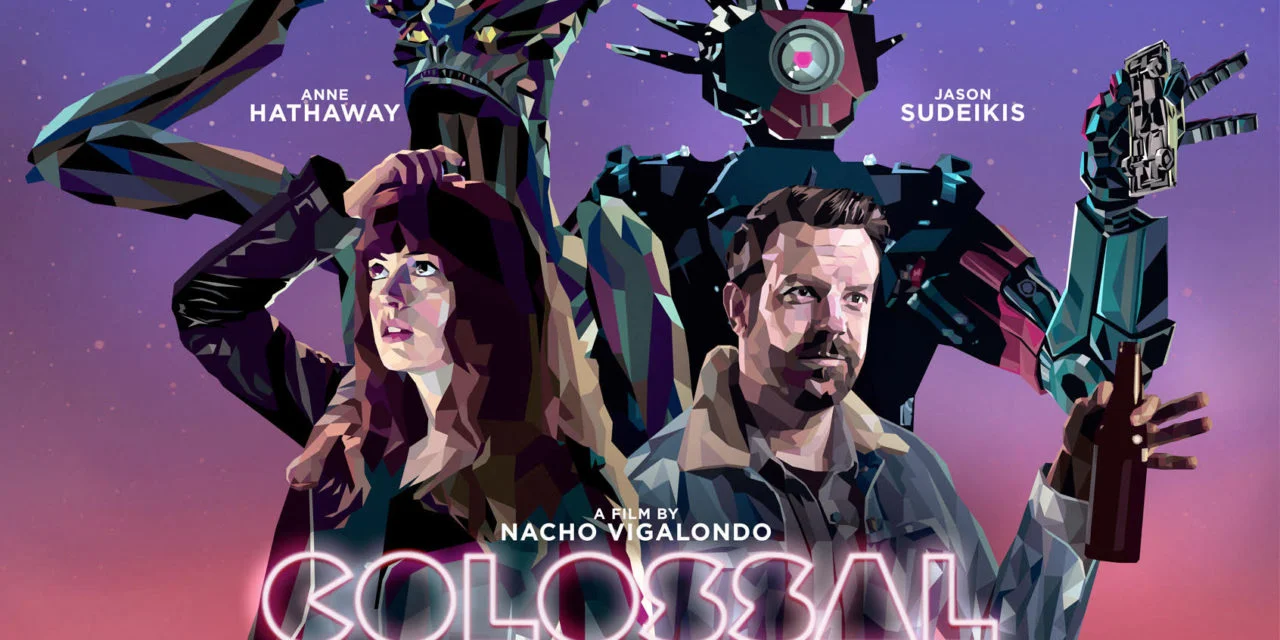
I spoke to Anne Hathaway and Jason Sudeikis at TIFF about their upcoming movie, Colossal.
Full interview HERE.
My coverage of "The Birth of a Nation" #TIFF16 press conference
More of my coverage can be read HERE
[TORONTO] “This is not the Nate Parker story, this is the Nat Turner story,” so said “The Birth Of A Nation” actress Penelope Ann Miller at the Toronto International Film Festival to a packed house at the Fairmount Hotel. That was the theme of the “Birth Of A Nation” press conference throughout its hour-long discussion on the film, but also the political climate in America.
Winner of the top prize at this year’s Sundance Film Festival, the film was seemingly destined for many Oscar nominations due to its urgent and relevant topic and the rising star of its writer director Nate Parker. But controversy arose over a month ago, when a past 1999 rape allegation concerning Parkers and Jean Celestin, who gets a story credit in the film, during his Penn State days re-emerged in the spotlight, followed by the news that his accuser had later committed suicide.
Winner of the top prize at this year’s Sundance Film Festival, the film was seemingly destined for many Oscar nominations due to its urgent and relevant topic and the rising star of its writer director Nate Parker. But controversy arose over a month ago, when a past 1999 rape allegation concerning Parkers and Jean Celestin, who gets a story credit in the film, during his Penn State days re-emerged in the spotlight, followed by the news that his accuser had later committed suicide.
The mood was awkward at today’s press conference, as Parker kept dodging questions concerning his past. “This is a forum for the film, the people sitting on the stage, I don’t want to hijack it with my personal life,” he said when asked why he hadn’t yet apologized to the family of the woman at the centre of the case. “Respectfully I want to continue to celebrate the people that are in front of us today.” His outspoken co-star Gabrielle Union concurred, “There is the art and there is the artist, these are two different things … To those that want to stay home I tell them whatever issue you have bring it to the theatre and judge for yourself.”
Parker seemed content with having his cast answering some of the more pertinent questions, but stepped in to confirm that the release and awards push are continuing on as planned. “I can’t speak for the [distributor] Fox [Searchlight]. We are still moving forward as planned with everything.” He went on to elaborate “I don’t pretend to be an expert on people’s reactions. I’m a filmmaker. I am going to stand in that lane and stay there.”
That was the overall vibe of today’s press conference: the dodging of controversial questions about the case. But the case and crew were more forthcoming when it comes to the film’s political themes, around racial issues in America. “America is dealing with an identity crisis. Who are we as a country. What is out past?” Union added. “The stain of white privilege has been ingrained in American culture. We devalue and dehumanize ourselves when we refuse to accept that … we have not created a movie, we have created a movement, this isn’t just about one person. This is about everyone.”
Personal issues took a backseat for the actual movie itself which depicts the life of Nat Turner, a literate slave that was also a preacher and who orchestrated the single biggest southern slave uprising known in American history. “Detail was critical for us,” Parker added, “this was not the only revolt. There were hundreds and hundreds of revolts.” The bigger picture for the director is the hope that people will deal with his art separately from his past personal issues “For anyone that’s listening who’s thinking this movie could deal with trauma of African Americans, it cannot. The reality is we’ve all been traumatized as people. We have all been held back and scarred, oozing puss and injuries. This movie is a rebellion against extrication.”
Aunjanue Ellis, who plays Turner’s wife Nancy in the movie, went on to state that the film was more than just Parker’s, it was the collective whole. “We own the film this is our film we brought blood sweat and tears. This movie is the communication that we have when we get beaten down by a baton.” Aja Naomi King, who plays Cherry in the movie, went on to say “slavery is not a stain in American history, it IS American history … there is nothing more patriotic than resistance in America.” She added, “this film is meant to galvanize us shock us into action. All of us must stand and do something. The movement Nat Turner started continues today.”
Bothered again by another question on his past, this time by The New York Times asking if his upcoming promo visits to American campuses this fall for the film might have him also dealing with the topic of sexual abuse in college campuses throughout the country, Parker replied “I want to give young people some kind of way in with the material at hand, but I have talked specifically with Gabrielle [who recently spoke out with a powerful piece about her own sexual assault years ago] about dealing with the issues facing me in the proper way.”
#TIFF16 Review: "The Secret Scripture" [D]
taken from my original review from The film Stage, which can be found HERE

Writer-director Jim Sheridan has built a career off the plight of the Irish working class, with his best films (My Left Foot, In the Name of the Father, and The Boxer) all starring Daniel Day-Lewis. Lately, without Day-Lewis, Sheridan has been stuck in a rut of average American films (Get Rich or Die Tryin’, Brothers, Dream House) and yet I still had somewhat decent expectations for his newest work, The Secret Scripture. It does, after all, star one of the very best actresses working these days, Rooney Mara. As evidenced in Carol, Ain’t Them Bodies Saints, Her, The Social Network, and more, she can detail a world of emotions with just a glance at her piercing green eyes.
The Secret Scripture has Mara playing young Roseanne McNulty, a free-spirited Irish woman whose beauty lures every man in her small town, even Father Gaunt (as played by Theo James), who seems to want to relinquish his priesthood for a shot at love with Roseanne. She doesn’t want anything to do with it and instead falls for wounded soldier Jack McNulty (Aidan Turner). She shelters the wanted man as authorities search for him. Gaunt, knowing of McNulty’s presence, advises authorities, who then come to arrest Gaunt and kill him. That’s not all though: Gaunt also writes a letter to the looney bin, with the recommendation that Roseanne go to a mental ward due to “nymphomaniac” tendencies. Roseanne’s 40 year stay at the mental facility will be filled with abuse from nurses, a failed escape, and the supposed death of her newborn baby (which is Jack’s).

As the film jumps back and forth in time, accompanying the aforementioned Mara storyline — which is set at the turn of the 20th century — Vanessa Redgrave plays present-day Roseanne. A woman in her 80s, she ends up being visited by the chief psychiatrist of the hospital, Eric Bana, a man that tries to put the pieces of her puzzled story together. The plot structure is convoluted and all-too familiar, leaving almost no trace of originality or curiosity at the table.
With all that to consider, you’d also think Sheridan and Mara teaming up for The Secret Scripture, an adaptation of Sebastian Barry‘s beloved novel of the same name, could be a recipe for success. However, the result falls flat and all too conventional for the talent involved. The problem lies more in Sheridan’s direction than in Mara’s acting, which is to say that she does deliver another good performance here, but everything else does her talent a major disservice. Redgrave is also a stand-out, but the film feels like an Irish soap opera filled with moments that forcefully demand the audience to cry, get mad, and get riled up, and as a result, it perpetrates one of the biggest sins you can make when creating a feature film: a lack of subtlety. The end result is an experience that feels all too tidy and gift-wrapped.
To make matters worse, a last-minute twist does nothing to help the film’s impending fate. It worsens it, in fact, by being one of the more implausibly ludicrous turns to come around in eons. As if this misbegotten movie needed more flaws, it ends with a Kelly Clarkson song that puts a toxic exclamation mark for what we had endured for the past 100 minutes. It’s a mess that might seem genuine and well-intentioned, but gives out the feeling that its creators have lost touch with what made Barry’s book praised in the first place. One should not give up on Sheridan, but in making The Secret Scripture, he puts another nail in the coffin of his once illustrious career and does a grand disservice to honorably old-fashioned, tastefully artful novel.
D
#TIFF16 "Arrival" is Denis Villeneuve's most Nolan-esque film.

Is that necessarily a bad thing? In this case no. The film is imaginative and contemplative. Nolan haters will, yes, hate it, but the rest of us will dissect it for the years to come. This movie will inch him closer to Nolan's throne. What Villeneuve is doing is building up a strong fanbase that will follow him in any project he embarks on. Did I mention he's going to be doing "Blade Runner 2" as his next film? Expect "Arrival" to surprise the industry with the box office it is about to get. Villeneuve is for real.
#TIFF16 Review: Tom Ford's "Nocturnal Animals"

To go into Tom Ford`s "Nocturnal Animals" with expectations would be doing the film a major disservice. It is not high art, but it does maintain your interest throughout. It is schlock with class. At least for the better part of its 116 minutes it is an exercise in style, just like Ford's first film "A Single Man," except here there is more to chew on, more thrills, more overall everything. "Nocturnal Animals" has Amy Adams' art gallery owner Susan (when is she ever bad?) suffering through a nasty marriage with a husband (Armie Hammer) that is cheating on her. She also has a ex-husband Tony (Jake Gylenhaal), a failed writer. She fucked up with Tony, her mother's bourgeois influence getting the best of her, and also the fact that she found him too sensitive, too weak to truly satisfy her and her youthful energy. Now an adult and realizing what life and love really is about, she is filled with regret. Lo and behold a package comes in the mail. It's a new novel by Tony and it hits her hard. It's violent and filled with unspeakable acts. To reveal more would be sinful because part of the pleasure of watching Ford's film is to be surprised by its ludicrousness. It's a movie movie filled shocks and awes and highly stylized costume and set designs. The film's balance of B-movie thrills with more subtle nuances can be shaky at times, but to not give in to Ford's delicious mind-teaser would be a cinematic sin [B+]
#TIFF16 Review: "The Magnificent Seven"

The question that must first be asked when discussing Antoine Fuqua's misbegotten "The Magnificent Seven is simple: why? Why remake the much celebrated original with its pristine Elmer Bernstein score and John Sturges' crisp direction. Sure Denzel Washington and Chris Pratt have charisma to burn and a loyal fanbase that will churn out hard earned dollars for anything new they release, but why even attempt to recreate the majesty of the 1960 original, no masterpiece by the way, and why hire Fuqua, a hack as far as I'm concerned, to direct? Has he done anything of value since "Training Day"? The answer is no, but with that 2001 movie he scored two acting nominations for Ethan Hawke and Denzel Washington, who would end up winning and making history in front of Sidney Poitier as the first leading black man to win a coveted Oscar statuette.
Those days are gone. Now Washington has some kind of genuine affection for Fuqua. "The Magnificent Seven" is their third partnership together, but it's also their worst one. The cast is starry: Denzel, Pratt, Ethan Hawke, Vincent D'Onofrio, Peter Sarsgaard and the action is relentlessly assaultive, but in some fashion satisfying and yet, the rest is abysmal and showcases Fuqua's lack of coherence in his pacing, shot selection and overall artfulness.

Denzel, Ethan Hawke and Chris Pratt at TIFF premiere of "The Magnificent Seven"
And what about Washington all scruff-ed up and badass. We first see his Chisolm entering an old west town full of white folks with a horse, it almost makes you think about "Django Unchained" and that famous line I will not utter. There is not one mention in the movie about his skin color, which in fact should be an issue. Racial injustice in America at that time was brutal, yet when Chisolm struts into town he only gets stares, nothing else. Saving his wholesome public image? The film has no balls to tackle race.
The classic story goes that seven gunmen come together to save a town from thieves that have invaded and taken ownership of it. You know where this is going. The opening hour has Washington's Chisolm rounding about the troops one by one. The setup is recognizable because it has been done many times at the movies. This is not new territory by any stretch of the imagination. It could work, but it doesn`t because Fuqua lacks the talent and the cinematic chops to pull it off. What he does lack in narrative he can almost make up in action sequences. There are two grandiose action set-pieces that work wonders. Just like he did in "Shooter," "Training Day" and "Southpaw" Fuqua gives us a visceral reminder of his knack for great shoot 'em up style cinema, but the substance is non-existent. [C+]
TIFF PREVIEW: With Venice and Telluride all but wrapped up, what's left for Toronto?
I am about to embark on another Toronto International Film Festival adventure. Interviews, reviews, blogging to come here. It has been quite a milestone year for us. We hope you have enjoyed the ride, but it is about to get turned up a notch, to 11, for the next two weeks. With Telluride and Venice answering a few question marks we had ("La La Land," "Moonlight," "Arrival," "Sully," "A Voyage of Time," "Nocturnal Animals," "Hacksaw Ridge") we still have these 18 buzzed & unseen titles to premiere north of the border:
American Pastoral, Ewan McGregor
Deepwater Horizon, Peter Berg
Free Fire, Ben Wheatley
Jackie, Pablo Larrain
JT + The Tenessee Kids, Jonathan Demme
LBJ, Rob Reiner
Lion, Garth Davis
The Magnificent Seven, Antoine Fuqua
Mascots, Christopher Guest
A Monster Calls, JA Bayona
My Entire High School Sinking Into The Sea, Dash Shaw
The Secret Scripture, Jim Sheridan
Sing, Garth Jennings
Snowden, Oliver Stone
The Promise, Terry George
I am ready. I tell you, TIFF is like a workout. Looking at the schedule for the first five days it looks like this edition could be a 4-5 movies a day kind of fest. One the sixth day, the 14th, things calm down a little which gives me the itch to fly back home to Boston to catch the last Bruce Springsteen and the E Street Band show of The River Tour.
How does the Best Picture race look at the moment? A little better than in August that's for sure, but it still looks like an incredibly weak year for cinema, but as it goes these are the 10 hottest contenders as of 9.7.16
(1) La La Land
American Pastoral, Ewan McGregor
Deepwater Horizon, Peter Berg
Free Fire, Ben Wheatley
Jackie, Pablo Larrain
JT + The Tenessee Kids, Jonathan Demme
LBJ, Rob Reiner
Lion, Garth Davis
The Magnificent Seven, Antoine Fuqua
Mascots, Christopher Guest
A Monster Calls, JA Bayona
My Entire High School Sinking Into The Sea, Dash Shaw
The Secret Scripture, Jim Sheridan
Sing, Garth Jennings
Snowden, Oliver Stone
The Promise, Terry George
Queen of Katwe, Mira Nair
A Quiet Passion, Terrence Davies
A Quiet Passion, Terrence Davies
I am ready. I tell you, TIFF is like a workout. Looking at the schedule for the first five days it looks like this edition could be a 4-5 movies a day kind of fest. One the sixth day, the 14th, things calm down a little which gives me the itch to fly back home to Boston to catch the last Bruce Springsteen and the E Street Band show of The River Tour.
How does the Best Picture race look at the moment? A little better than in August that's for sure, but it still looks like an incredibly weak year for cinema, but as it goes these are the 10 hottest contenders as of 9.7.16
(1) La La Land
(2) Billy Lynn's Long Half-Time Walk
(3) Manchester by The Sea
(4) Silence
(5) Loving
(6) Moonlight
(7) Sully
(8) Arrival
(9) Patriot's Day
(10) The Birth of a Nation
I am waiting for my 9:20 flight to Toronto which will lead me to Pearson airport. My plan is to stop by the press office to get my press pass, do some more writing, sneak in a workout at Goodlife Fitness, and then settle down in my apartment. I also have Pete Howell's annual "Critical Drinking" critics party tonight at Le Milagro, I always look forward to going there to touch base with old friends and grab a few drinks - The calm before the storm.
A little Pre-TIFF comment to ponder upon which I posted on @awardsdaily

5 Great "Modern Day" Superhero Movies
Oh, superhero movies. I've bitched about them countless times on this blog, but sometimes one must just face the facts that they are here to stay. There was no "great" Hollywood movie this summer, but the one that came closest was a superhero movie: "Captain America: Civil War." As much as that film had cinematic flare it did resort to some of the problematic tropes that make me yearn for better days at the movies.
You won't find such classic superhero movies as Richard Donner's "Superman II," and Tim Burton's "Batman." Those were released before the money making and commercialized films we got starting in 2000 with "X-Men." That's when it started. The beginning of what would be an important chapter in film history: The mass invasion of a genre that has sucked all the artistry out of moviemaking.
This is a list that was concocted with both partiality and impartiality. I remember back in my "film studies" days at Concordia University I wrote an essay about the "modern-day superhero genre." A lot of research went into it. I not only consulted token reviews by the likes of Ebert and Turan, but essays that were written by "scholarly" journals such as Film Comment and Sight/Sound. Why is this the most resonant essay of my film school days? Because it's the most relevant genre around. Superhero movies are everything to Hollywood today.
I have shared my discontent concerning the lack of creative ideas or original thought in today's movie studio system, and of course a lot of the blame has to go to the Marvel and DC movies that have ravaged our screens since the early aughts and have become bigger and bigger with every passing year turning it into some kind of corrupt entity.
However, at its core, a superhero movie still has the potential for greatness. In a way it's the apex of what the Lumieres and George Melies eventually wanted to achieve with advanced technology at their disposal. Am I far reaching? Of course not. The superhero movie has all of the elements that have epitomized moviemaking since its inception more than a century ago: Science Fiction, Horror, Drama, Film Noir, and, especially in the Marvel movies, a little added dose of Comedy.

(1) "The Dark Knight"
"If you haven't heard of Christopher Nolan's superhero classic then you don't live on this planet. Nolan along with an extraordinarily effective cast headed by Christian Bale as Batman and the late Heath Ledger as a Joker to haunt your dreams. This is the way a blockbuster should triumph: character before action. Many have evoked the film as a post 9/11 depiction of a world gone astray with the leader of the free world making concessions to battle terrorism: how much bad must you do to defeat evil itself? Ledger's joker is so real and intense, but it's Nolan's eye for detail that puts this film over the rise. This is his dark, twisted take and the defining take of a modern day genre."

(2) "Spider-Man 2"
"Now this is what I'm talking about. After the average "Spider-Man movie in 2002, director Sam Raimi completely redeemed himself by creating one of the best superhero movies ever made. A mind blowing mix of action, heart and character that had viewers on the edge of their seats. The special effects are outstanding and the action sequences -including a thrilling train crash finale- make this a knockout through and through. Raimi knows that to make a great superhero movie you need to care about the characters that are onscreen and, with Tobey Maguire and Kirsten Dunst along for the ride, he makes sure every shot counts"

(3) "Captain America: The Winter Soldier"
Forget about "The Avengers" which is cotton candy entertainment when compared to "The Winter Soldier." This film ranks as the most accomplished Marvel universe film to date. Nothing comes close. Not even its high-grade sequel "Civil War." The action scenes are great, there are suspenseful moments aplenty, and the emotional toll the film packs at its conclusion is deeply ingrained in humanism. this film strengthens Just like Nolan's "The Dark Knight" trilogy, Anthony and Joe Russo's film is a cinematic experience through and through, recalling some of the great political thrillers ("Three Days of Condor," "The Parallax View.") while also adding new dimensions to what was starting to become a very predictable and frustrating cinematic genre."

(4) "Iron Man"
Director Jon Favreau brought a solid mix of action and humor to this 2008 film which basically kickstarted the Marvel Universe, for better or for worse. Favreau's film felt fresh, innovative and just downright satirical about the superhero movies that came before it. It hit a high standard of excellence for the mainstream by combining humor with breathtaking action sequences, it was and still is a cinematic time capsule shapeshifter. In a year that saw the war in Iraq seem never-ending and the market crashing in unxpectedly historical ways, Americans had enough ad chose to elect Barack Obama and Tony Stark to lead the way to the future.

(5) "Unbreakable"
"This is the ultimate in making a superhero movie "cinematic". "Unbreakable" is the act of not even knowing you're watching a superhero movie until the very last frame. That's the biggest magic trick Shayamalan's movie pulls out of its bag and what's more cinematic than magic? Or as Vulture says it "liberate(d) the superhero from the shackles of licensing constraints and fan-pandering." In a way invented superhero-dom is something that hasn't been tackled that much. "Unbreakable" goes to the roots of what it means to read or watch a superhero story and to get swept up in it without any advanced buzz, or preconceived notions about what to expect. It's the antidote to what we're looking for right now. Thank god they never made that rumored sequel.
You won't find such classic superhero movies as Richard Donner's "Superman II," and Tim Burton's "Batman." Those were released before the money making and commercialized films we got starting in 2000 with "X-Men." That's when it started. The beginning of what would be an important chapter in film history: The mass invasion of a genre that has sucked all the artistry out of moviemaking.
This is a list that was concocted with both partiality and impartiality. I remember back in my "film studies" days at Concordia University I wrote an essay about the "modern-day superhero genre." A lot of research went into it. I not only consulted token reviews by the likes of Ebert and Turan, but essays that were written by "scholarly" journals such as Film Comment and Sight/Sound. Why is this the most resonant essay of my film school days? Because it's the most relevant genre around. Superhero movies are everything to Hollywood today.
I have shared my discontent concerning the lack of creative ideas or original thought in today's movie studio system, and of course a lot of the blame has to go to the Marvel and DC movies that have ravaged our screens since the early aughts and have become bigger and bigger with every passing year turning it into some kind of corrupt entity.
However, at its core, a superhero movie still has the potential for greatness. In a way it's the apex of what the Lumieres and George Melies eventually wanted to achieve with advanced technology at their disposal. Am I far reaching? Of course not. The superhero movie has all of the elements that have epitomized moviemaking since its inception more than a century ago: Science Fiction, Horror, Drama, Film Noir, and, especially in the Marvel movies, a little added dose of Comedy.
(1) "The Dark Knight"
"If you haven't heard of Christopher Nolan's superhero classic then you don't live on this planet. Nolan along with an extraordinarily effective cast headed by Christian Bale as Batman and the late Heath Ledger as a Joker to haunt your dreams. This is the way a blockbuster should triumph: character before action. Many have evoked the film as a post 9/11 depiction of a world gone astray with the leader of the free world making concessions to battle terrorism: how much bad must you do to defeat evil itself? Ledger's joker is so real and intense, but it's Nolan's eye for detail that puts this film over the rise. This is his dark, twisted take and the defining take of a modern day genre."
(2) "Spider-Man 2"
"Now this is what I'm talking about. After the average "Spider-Man movie in 2002, director Sam Raimi completely redeemed himself by creating one of the best superhero movies ever made. A mind blowing mix of action, heart and character that had viewers on the edge of their seats. The special effects are outstanding and the action sequences -including a thrilling train crash finale- make this a knockout through and through. Raimi knows that to make a great superhero movie you need to care about the characters that are onscreen and, with Tobey Maguire and Kirsten Dunst along for the ride, he makes sure every shot counts"
(3) "Captain America: The Winter Soldier"
Forget about "The Avengers" which is cotton candy entertainment when compared to "The Winter Soldier." This film ranks as the most accomplished Marvel universe film to date. Nothing comes close. Not even its high-grade sequel "Civil War." The action scenes are great, there are suspenseful moments aplenty, and the emotional toll the film packs at its conclusion is deeply ingrained in humanism. this film strengthens Just like Nolan's "The Dark Knight" trilogy, Anthony and Joe Russo's film is a cinematic experience through and through, recalling some of the great political thrillers ("Three Days of Condor," "The Parallax View.") while also adding new dimensions to what was starting to become a very predictable and frustrating cinematic genre."
(4) "Iron Man"
Director Jon Favreau brought a solid mix of action and humor to this 2008 film which basically kickstarted the Marvel Universe, for better or for worse. Favreau's film felt fresh, innovative and just downright satirical about the superhero movies that came before it. It hit a high standard of excellence for the mainstream by combining humor with breathtaking action sequences, it was and still is a cinematic time capsule shapeshifter. In a year that saw the war in Iraq seem never-ending and the market crashing in unxpectedly historical ways, Americans had enough ad chose to elect Barack Obama and Tony Stark to lead the way to the future.
(5) "Unbreakable"
"This is the ultimate in making a superhero movie "cinematic". "Unbreakable" is the act of not even knowing you're watching a superhero movie until the very last frame. That's the biggest magic trick Shayamalan's movie pulls out of its bag and what's more cinematic than magic? Or as Vulture says it "liberate(d) the superhero from the shackles of licensing constraints and fan-pandering." In a way invented superhero-dom is something that hasn't been tackled that much. "Unbreakable" goes to the roots of what it means to read or watch a superhero story and to get swept up in it without any advanced buzz, or preconceived notions about what to expect. It's the antidote to what we're looking for right now. Thank god they never made that rumored sequel.
Capsule Review: Kelly Reichardt's "Certain Women" might be her best movie yet
Kelly Reichardt, bless her indie sensibilities, is one of the very best American filmmakers working today. "Certain Women" makes it five for five in terms of he track record thus far. One look at her resume which consists of "Old Joy," "Wendy and Lucy," "Meek’s Cutoff," "Night Moves" and — the aforementioned — "Certain Women," and we see an auteur allergic to formula and never sacrificing her uncompromising vision for mainstream popularity. Her latest film has three short stories adapted from Maile Meloy’s writings about lonely, isolated women in the 21st century. Starring Laura Dern, Michelle Williams, Kristen Stewart and Lily Gladstone in a career making performance, this might be Reichardt’s best movie yet. Not only profound statement on female yearning in the 21st century, but delicately nuanced portrayal of an American society rotting at its core. Based on Montana writer Maile Meloy's short stories, Reichardt weaves together four stories about four different women: Laura Dern as a down on her luck lawyer, Michelle Williams as an aggressive opportunist, Kristen Stewart as a motivated, but confused night school teacher and newcomer Lily Gladstone, the film's best performance, as a hard-working rancher. It's a romantic, but pessimistic vision of western Americana.
Review: Clint Eastwood's "Sully"

Clint Eastwood's "Sully," stands a good shot at giving Tom Hanks his sixth Oscar nomination of his career, he's that good. Eastwood, now 86, had an Oscar nominated film with "American Sniper" last we heard from him, oh and it was also the most financially success film of his career at the box office. Forget all about the Left vs Right debate that surrounded the movie, that was just a damn fine movie about war and the PTSD effects on the soldiers.
The story of American pilot "Sully" Sullenberger, who landed the troubled US Airways Flight 1549 full of passengers on the Hudson River on January 15, 2009, is well known and was one of those feel-good stories that really just made you happy that something good actually happened in the news for once. Sully was depicted as a hero because, well, he was. He saved many lives on that day, 155 to be more precise, but is it enough to make a feature-length movie out his story? The answer, after watching "Sully" is a complicated one to pin down.
As previously mentioned, Hanks is phenomenal. He brings a real simplicity to his character that is hard for any other actor to match onscreen. Sullenberger is a hero that does not have the most exciting personality. A family man, he struggles to make ends meet, he is in debt, but doesn't let it interfere with his line of work. Laura Linney plays his wife in scenes that don't necessarily reveal a lot of depth outside the usual working class struggles. That is until the Hudson landing happens.
The landing of flight 1549 on the Hudson river only appears an hour into the movie, it is subtly detailed and precisely choreographed as to try and give you more than a few perspectives from that fateful day. In a sly nod to Kurosawa's "Rashomon," Eastwood shows us the miraculous event numerous times in the film and from different perspectives. This lends a multi-layered aspect to the film that Robert Zemeckis' "Flight" lacked. Although, technically speaking, Zemeckis' film is far superior, it does not have the classicism that Eastwood brings to the film from all his years experience with the old-school Hollywood filmmaking.
So why does the film ultimately not engage as much as it wants to? After much pondering, it just has to do with the limitations of the narrative, the thinness of the story. No matter how heroic Sullenberger`s story might be it just doesn`t have enough meat to be translated into a motion picture. Even at 96 minutes, the shortest Eastwood in quite sometime, the film feels stretched out. They could have gotten away with 75-80 minutes, but 96 is too much. Alas that is also what makes "Sully" such an unusual film: Its simplicity. Its refusal to adhere to what such a movie must look like.
Eastwood had a phenomenal phase between 2003-2008 where he just killed it with classic after classic ("Mystic River", "Million Dollar Baby", "Letters From Iwo Jima", "Changeling", "Gran Torino") then he went on a bit of a rut after that, I mean what else do you call "Invictus", "Hereafter", "J. Edgar" and "Jersey Boys". It sucks, because we all love him, but he had lost his touch. "American Sniper" was a good step back into the right direction and, I do believe, "Sully" is one too. The best possible movie about this man's life was made, except there wasn't much there in the first place beyond the miraculous event that it was inspired by. Maybe such a simple movie for a simple man sufficed. [B-]

This is all Rothman’s idea, by the way. He’s going to pour millions into this campaign because he believes “Brand New Day” is a great movie.