

Elizabeth Taylor's legacy & the personal connection I have with the Legend herself


It's funny how only when someone dies do you truly appreciate the work they had done over their long, illustrious career. Elizabeth Taylor died yesterday morning at the age of 79. I knew all about her and the legend she had created through my grandmother who had been a Taylor fan since watching Cleopatra more than 47 years ago in a movie theatre. Not only was she a fan but she would always mention how people thought she looked like Taylor. I saw it too in old pictures and even as we speak she looks like older taylor. My grandmother not only looked like her in the pictures I had seen that dated way back to the 40's and 50's but she acted like her too. Taylor was a tough cookie that took nothing from nobody. She stood her ground and helped raise awareness for causes that caught her heart, most importantly the millions she donated to AIDS charities. She had gay friends that impacted her greatly, most notably Rock Hudson who died of AIDS himself in the 80's.

My grandmother -behind all the madness I see in her and the ferocious, sometimes abnormally tough character she might have- has a heart of gold that translates into giving to others and caring too much to bear. She's always talked to me about Taylor's eyes, the purple that laid in them and the rarity that came with having such awestruck beautiful eyes. She'd talk about watching Cleopatra and other films of hers. I have never been a big fan of the film myself and you won't find many film connoisseurs warming up to it either, it was a colossal flop in its day but something about it grabbed many mainstream film goers into its lovingly grandiose design -Grandma included. Everything that made Taylor a superstar was in the film, her looks were to die for and the overall grandiosity of her character on screen made for a larger than life portrayal of a biblical figure.

She was seen more as a superstar than as an actual actress by my Grandmother and that's in fact what many loved most about Taylor. The royalty that came with her and the men that went down to their knees begging to marry her (8 marriages in fact). Behind all that was an actress and not more an example than in Who Killed Virginia Woolfe? which rightfully won her an Oscar in 1967. A brave performance in which Taylor de-glammed herself and became the opposite of what Grandma envisioned of her. In the thick of things Taylor had beauty but she also had heart on screen, almost everybody will admit she had her duds but you couldn't deny the presence on screen or the formidable impact she had on Hollywood. When I got the news she died yesterday morning my heart floundered, I thought of my Grandmother and how she would take the news. A woman she had looked up to for decades was gone but in typical fashion it was as if nothing happened. Her reaction was like any other, she was sad but was more concerned with the daily trials that were happening in her own life. Elizabeth Taylor would have acted the same way.

PAUL


Paul (R) ★★

Greg Motolla is one of the good young talented directors out there that not many people are talking about. His first film was Superbad, which has already become a kind of slacker classic for my generation and his second was Adventureland, a more mature effort that wasn't as half entertaining as the first one but showed great promise for what would end up being his third film, Paul. This is in fact a dissapointment in that not only is Motolla involved with the project but so are Simon Pegg and Nick Frost, the two dweebs that entertained masses with Shaun Of The Dead and Hot Fuzz. Don't expect Paul to duplicate the comic timing that infused those two films. For one the script is too well mannered to warrant many laughs and the naughtiness level has been toned down a notch. This all amounts to a film that really goes nowhere, hell the same could be said of Shaun Of The Dead and Hot Fuzz but those movies had a driving atmosphere that was almost catalcysmic and infectious to audiences. This is not. Which is not to say that there aren't any enjoyable moments in Paul- there are- it's just that there aren't enough and the slacker attitude Pegg and Frost are known for is not as apparent here. Seth Rogen voicing the Alien titular creature is a hoot and brings much needed comic relief here but it's not enough to prevent me from saying that I fear Pegg and Frost have been taken over by the hollywood machine. Say it ain't so Joe, say it ain't so.

LIMITLESS


Limitless (PG-13) ★★★

This movie kind of took me aback with its tripiness in prime display. In other words, I had an awesome double espresso shot before walking into the screening .. which made me relate to the main character's situation a little bit more (here played by Bradley Cooper). In essence we as human beings can safely only use 20 or 30 percent of our brain capacity, Cooper's bummed out loner writer takes an illegal drug that makes you use your brain in its entire capacity. Which I don't know about you, but truth be told in reality one would probably die of an aneurysm if such a drug existed and was taken(but who am I to look at plot holes etc.) Suffice to say the film is quite entertaining up to its last ten minutes or so when it tries to give a kind of extra satisfaction that I always hate in many mainstream movies these days. The rest of the film goes by in zip zap speed and is really just an interesting premise in a spring movie season filled with nothing but shit. The only stuff that hasn't been shit and well worth churning out your hard earned 12 or 13 bucks has been mostly foreign films that have not gotten any wide distribution around the country (Uncle Boonmee). Which leaves us with Neil Berger's Limitless which is as good a movie as you'll find in a mainstream movie house these days, which really isn't saying much but is nevertheless a reccomendation to go see this fast paced, intelligent psycho thriller.

The Ten Best Picture Nominees criticized, summoned, dissected and rated


The Social Network (PG-13)

A kind of critics darling for the new decade, David Fincher's film has the best script of the ten nominees. A critical depiction of our generation and the lack of communication that has happened in the process. A story about friendship, betrayal and connection. Was it the best picture of the year? I wouldn't say that but it sure is one hell of a triumph for all the artists that were on board this incredible picture. Jesse Eisenberg with his face that represents a whole generation and Andrew Garfield as Eduardo Saverin, the true hero of the story. Aaron Sorkin's script is layered, so much so that with every viewing you find a new sentence or a new word that you didn't notice the first time around and that brings even more resonance to the story's structure and plotting. A-

Inception (PG-13)

You can certainly find flaws in the script or in the film's action but there's no denying that Christopher Nolan's hire wire act of a movie had guts and a vision that lacked in all other Hollywood pictures. All the better for us since the film represents something we haven't really seen before. A film that certainly demands attention and multiple viewings to fully grasp its puzzling intricacies. In going deep into the realm of dreams, Nolan single handedly invented a world from scratch and a flawed hero -Leonardo Dicaprio's Cobb- that remained haunted by the death of his wife. It all came down to that last frame, the spinning of a totem and the never ending conversations that followed afterwards. What more can you ask for in a movie? A-


Black Swan (R)

My favourite of the ten nominees. Darren Aronofsky's ballet nightmare is an intense film that had a hypnotic intensity which truly took my breath away. As Nina, Nathalie Portman gives the performance of the year in a role that demanded heart and soul. Paving the way is Matthew Libatique's breathtaking cinematography, the best of the year & a script that honors everything from Cronenberg to the classic Red Shoes. What Black Swan did for cinema in 2010 is revitalize our perceptions of it and make us believe again in the power of movies. Following his masterful The Wrestler, Aronofsky's film is yet another study of an artist pushing his or herself to their limits and potential. The final shots of both films are raw, haunting and similarly planned. So much so that they can easily be seen as companion pieces to one another. This is art. A-

The Fighter (PG-13)

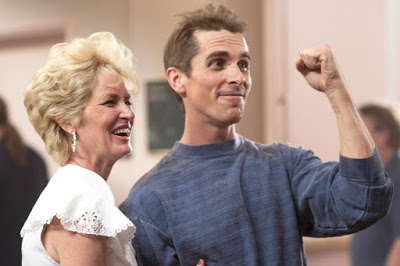
Here is a film that is more about family than boxing. I could have done without the last 15 minutes or so but the first 2/3 of the film are dynamite and essential viewing for any movie fan. David O' Russell's film might look to be about Mark Whalberg's Mickey Ward but I saw it differently. It is Christian Bale's movie. It is Melissa Leo's movie. It is Amy Adams' movie. They all steal the show and give us good reason as to why they got nominated in the acting categories and Whalberg was left in the dust. Bale's Dickie is a rundown junkie that still thinks about that famous night where he knocked out Sugar Ray Leonard. He is a man that has run out his luck by hanging out in crack houses and bringing down his brother with him. It is Bale's movie and I'll be darned if he doesn't come out of it with an Oscar tonight. B+

Winter's Bone (R)

This is such a small movie with such a microscopically small budget that it was already surprising to see it get nominated in this category. All the better for it. We need more movies like this one. Director Debra Granik creates an atmosphere that is grim and darkly lit in nature. Her film is one in which its heroine -indelibly played by Jennifer Lawrence- goes through the wooden passages of the Ozarks to find her junkie father. Surprising consequences happen and the girl is transported into an underground world that left me both shaken and disturbed. Winter's Bone is all about the small moments the heroine endures. The biblical boat trip that climaxes the film, her capture to the hands of corrupt bloodless people and even the smallest of moments, such as the gutting of a squirrel and the way she handles herself so proudly and so courageously in spite of things. Great movie. B+

The Kids Are All Right (R)

I had problems with Lisa Cholodenko's film. Mostly in the way it climaxes itself. But through and through this is a solid effort from her and has some of the most spectacular performances of 2010. As a married couple, Annette Benning and Julianne Moore are incredible and show us the creation of a couple that experience the ups and downs of a marriage. Mark Ruffalo as their kids' sperm donor gives the performance of his life. With charisma to spare, he has become one of the great character actors of the last 10 years and for good reason, his natural way of acting is both a permanent fixture of his style and a freshly credible counter to Holywood. But for me the highlight of the film is Julianne Moore, who's smart and sexy performance is right up there with her very best. B+

127 Hours (R)

Featuring one of the most memorable scenes of any movie from last year -the amputation of an arm and the freedom of a life- Danny Boyle's visionary true life tale brims with energy and the twitching speed of 10 red bulls. Sometimes he goes way overboard and infuses an overtly glamorized amount of style to his context but his movie is too damn good to be faulted for that. James Franco as Aaron Ralston is smashingly good, especially considering he's practically alone on screen for close to 90% of the time. It's a bold, daring performance that has garnered him a well deserved acting nomination and pushes what could have been a one trick film into a triumphant journey of hell and back. Don't listen to the naysayers, Don't look away in 127 Hours cause you might just miss the beginning of a new life B+


Toy Story 3 (G)

We have come to expect nothing but greatness from the wizards over at Pixar. What with the great streak they got going the last 10 years (Up, WALL-E, Ratatouille, The Incredibles, Finding Nemo) This threequel to a popular film series is no exception. With its brightly popped out colors and resonant theme of growing up Lee Unkrich's film is designed to thrill you and that it does. I was on the edge of my seat as I saw a shade of darkness I never thought I'd see in the series, especially when the time comes for the toys to escape and for the brimmed out furnaces of fire to stop them. If that doesn't convince you that this isn't ordinary kiddie fare, I don't know exactly what will. B+

True Grit (PG-13)

I was underwhelmed by the Coen Brothers' remake of the John Wayne film. Nothing much was happening throughout and there was a certain deja vu feeling that kept popping out of my head. Not to say the performances weren't great, they most certainly were. What was lacking was a sense of boldness that appeared in the brothers' previous efforts, especially their Jewish nightmare 2009's A Serious Man. This film certainly has its fans but one can't help but think it might have more to do with the artists involved than by the actual movie itself. A true disappointment from major artists. C+

The King's Speech (PG-13)

Here's the film people say will win. A movie packaged and designed for the Oscars. Which doesn't mean it's a good thing. Listen, I know there have been many who believe this was in fact the best film of the year but -as The Social Network-ing people would write- IMHO there is no vision to Tom Hooper's The King's Speech, especially when comparing it to the incredible worlds the Nolans, Finchers and Aronofskys created this past year. If it in fact wins the big prize it will be the worse Best Picture winner since Crash's surprising victory in 2006. A huge backlash happened that year that caused Academy voters to rethink their priorities and start voting more smartly and artistically. The Kings Speech's win would bring it all back to square one. C+

Jordan's PRE-Oscar Rant & preview


Oh Oscar, where have you gone wrong this year? well let's see .. you forgot to nominate Christopher Nolan's Direction for Inception, which was a visionary balancing act from a man who still hasn't gotten the Academy's recognition. Inception was nominated for Best Picture yet omitting the man who created it all from scratch is completely silly and a big no no for an awards show that has in fact honored the right winners and films since 2005's embarrassing Best Picture win for Crash. In fact since that terrible night Best Picture has gone to masterworks such as No Country For Old Me, The Departed and The Hurt Locker. Nolan's lack of recognition will not got unnoticed as others have chimed in and complained about how ridiculous it is not to nominate THE director of the year. Love it or hate it, Inception is filled with ideas that dare and ambition that almost cannot contain itself (which is why it won't win anything come Sunday night).

Another note worthy absence is that of Lesley Manville, who's performance in Mike Leigh's Another Year was as good as any in 2010. Manville should feel robbed considering her award worthy work in the film is a career high for her as well as a memorable reminder of how important art can be if done right. The omissions in the acting category are glaring. I'm thinking of the incredible Julianne Moore not getting nominated for her sexually free work in The Kid Are All right, yet her co-star Annette Bening getting the nod. I'm not saying Bening doesn't deserve to get nominated, hell I even think she was spectacular but Moore was just as good if not edgier and riskier in Lisa Cholodenko's finely tuned film. Yet as time goes by and the days thin out before Sunday's ceremony you start to realize that there really are just 5 slots to get nominated by and that even a truly great performance can get left out of the mix.

Tom Hooper's The King's Speech is the favourite to go home with both Best Picture and Best Actor (Colin Firth) yet the film doesn't ring true to me. It felt all too facile and predictable in its delivery of a monarch's rise out of Speech impediment hell. Let's put it this way. Ten years from now will we remember Hooper's film or the likely landmarks of Darren Aronofsky's Black Swan, David Fincher's The Social Network or even Nolan's Inception? Not hard to see why then people are fuming over The King's Speech impending win. In all its pre-packaged Oscar ready triteness, the film does contain great performances and an impeccable sense of a time period long gone yet when all is said and done this bon bon of a movie will likely evaporate faster than the very stammer that is at the center of the movie's dilemma.

If everything goes as planned Nathalie Portman and Annette Bening will be fighting it out till the last minute to get that Best Actress Oscar. Go with Portman, even though -shockingly enough- Bening has never won before and deserves it too. Colin Firth is fighting a one man battle as he will likely win Best Actor for The King's Speech, even though Mark Zuckerberg himself played by Jesse Eisenberg in The Social Network deserves it just as much. Melissa Leo's portrayal of a loyal and destructive mom in The Fighter will duke it out with both Helena Bonham Carter in The King's Speech and Hallee Steinfeld's breakthrough role in True Grit. Go with Leo. Supporting Actor will be between Christian Bale's role as a junkie in The Fighter and Geoffrey Rush's predictably lovable speech therapist in The King's Speech. Bale deserves it and will win it, it's about time that one of the best actors of our generation finally gets his due and if Rush wins I Will surely be pulling my hair out of agony.

The one category I will be looking out for the most come Oscar night is that of Best Foreign film, where hometown favourite Montreal/Canada's Incendies will be vying for the top prize. I have seen most of the nominated films safe one and conclude that if voters have in fact taken the time to see all the nominated films they will likely find out that Incendies stands out above all the rest. It is a testament to our globalized times that Denis Villeneuve's masterwork of middle eastern dramatics was in fact the best movie of 2010. It is awaiting release in the states this April and will surely make as big a splash as it did in Canada this past year (or at least one hopes). The one true, epic crime Oscar would commit on Sunday night would be of not giving the foreign prize to Incendies.

Grading the 10 nominated films

Black Swan A-
Inception A-
The Social Network A-
Winter's Bone B+
The Fighter B+Toy Story 3 B+
127 Hours B+
The Kids Are All Right B+True Grit CThe King's Speech C

The Elephant Man and Lynch's obsessions


David Lynch’s The Elephant Man is as close to a crowd pleaser as a Lynch film can get, which doesn’t necessarily mean it’s a crowd pleaser. It has darkness that many filmmakers wouldn’t dare approach in their bodies of work and a story that demands attention with its impeccable layers of detail. The film is straightforward and impeccably acted but retains much of the dreamlike imagery that has infused most of Lynch’s films over his more than 35 year film career. No matter what people have said about The Elephant Man, it is a David Lynch film through and through, despite the unusual absence of a leading female figure troubled and in turmoil (a must for almost any Lynch film) or the California setting that Lynch so dearly loves to set his tales in; It is a singular masterpiece that puts the viewer in a dream-like state. It might not have the ambiguous, abstract nature of a Mulholland Drive or the mind bending non linearity of a Twin Peaks but The Elephant Man retains Lynch’s recurring themes of dreams, machinery and dark underbellies. All three of these themes are apparent throughout the film and are obsessions that have long fascinated Lynch throughout his career.

One of the key elemnts in David Lynch’s films is the usage of dreams and a dreamlike imagery that becomes surreal, infusing his work with the kind of hypnotic allure he has become famous for. This can be seen in John Merrick’s dreams in The Elephant Man and the opening montage which poses a series of fragmented images detailing his mother's incident with elephants, an episode that is horrific, enthralling and most importantly,one of the more stylized in regards to the film as a whole. Without ever showing the mother, albeit through Merrick's allusions and his sacred framed portrait of her, Lynch has given the viewer the luxury of understanding his deformation. One of the finest moments in the film is a dream sequence which is introduced directly by a swooping camera movement over Merrick's sleeping body, which then gives way to a mosaic of nightmarish images containing back-alley industrial workers and tons of smoke.

Everything, from the sound design to the more expressionistic camerawork, tells us we are viewing a dream. This is something we rarely receive in Lynch's work, that privilege to engage without constantly wondering where reality and allusion intersect. That runs throughout the film all the way up to its shattering climax which ends with Merrick living his dream of going to the theatre (1:44’56- 1:49’09) and getting accepted by society. That very night (1:49’10-1:55’42) he goes to sleep and dies in his dreams as stars appear on screen and the haunting face of his mother is shown one last time before the images fades out. It ends being the most surreal and dream-like sequence of the entire film and a reminder that Lynch has never played by the rules but has always followed his own musings by staying true to his own thoughts and feelings.


At the end, Merrick’s mother is smiling beautifully, staring at the camera, reminding Merrick,called “John” in the film, and reminding us that nothing will die. Death is not an ending. It is a change. We have moved from a nightmare to a dream. Any other Hollywood filmmaker might have ended the film with Merrick in bed or a funeral process following right after his death but Lynch decides to end it with an ambiguous touch of artfulness, he makes the viewer travel to space and puts images on the screen that suggest an other-worldliness to his eccentric, strangely beautiful fairy tale. It wouldn’t be a Lynch film if there wasn’t a resolution as visionary and provoking as the one that ends The Elephant Man.

While Scorsese obsessed over societal violence, Hitchcock over blondes and Von Sternberg over Dietrich, Lynch’s focus and obsession was always with dreams. Agent Cooper’s dreams of the red room in Twin Peaks , the "dreamlike logic" of the narrative found in Eraserhead’s abstracts. Mulholland Drive, Lost Highway and Inland Empire’s main characters dreaming throughout the entire film, to which the audience is asked to figure out what is real and what is not. Discussing his attitude to dreams, Lynch explains to Rodley that "Waking dreams are the ones that are important, the ones that come when I'm quietly sitting in a chair, letting my mind wander. When you sleep, you don't control your dream. I like to dive into a dream world that I've made or discovered; a world I choose… [You can't really get others to experience it, but] right there is the power of cinema.”

If his consistent use of dreams in his films is a step out of realism, Lynch has always been fascinated by the real world and the real emotions that come with it. His interest in Machinery and Industrialism is apparent in much of The Elephant Man. The factories we see in the film are those existing in a Victorian London era, where industrialism has just started and taken a heavy toll on society.

Every once in a while Lynch will include shots of wafting Smoke that these factories produce, he also sets his camera out to get the constant ramblings of these industrial machines. The sound is upped a notch so that the audience can hear the unpleasantness of the noise. Lynch's agenda is to make us aware of the era and the people living in it. Industrialism is portrayed in an ugly fashion, as if Lynch is telling us that it's the fall of our hands and the rise of the machines- something Chaplin did quite so eloquently in Modern Times. It is also no coincidence that at some point in the film , Anthony Hopkins' Doctor Treves operates on a victim of machinery, a victim that is surely one of many. John Merrick represents the anti-machinery, a man with heart and soul that wants be seen as human instead of monster. He lives in a society that has all but been taken over by industrialism and has neglected his voice as a human being in the process.

Lynch was not a fan of Industrialism and is showing his audience how it was slowly taking over the world and setting its ugly face with machinery. As Lynch stated in 1980 "I'm flipped out over industry and factories – sounds as well as images ... The Elephant Man takes place when industrialization was still starting. It was the beginning of Eraserhead’s times. I was hoping that the Victorians would have had more machinery around. There wasn't a lot, but what they did have made a lot noise and a lot of smoke." It is that very noise and smoke that Lynch concentrates on in the film. With beautiful Black and White cinematography by Freddie Francis,the smoke Lynch focuses on turns into a kind of artful dread on screen, a metaphor for what Lynch calls the "dimness of industrialization" (Rodley) and why wouldn't he be right, it obscures the sun, traps humans, and spawns claustrophobia, grime, and death. Surely large industry did wonders for the comfort and well-being of humanity, but, in Lynch’s mind, the trade-off is sizable. He shows large hissing engines, boiler rooms, and damp, rusty corners. Lynch seems to be indicating that the world is simultaneously opening and closing. As implied by the Tennyson quote in the film, "nothing is dying, things are merely changing..

Lynch's focus on Industrialism in The Elephant Man is a theme that has followed him throughout his cinematic periods. Twin Peaks' opening credits start off with images of oil drills, machinery and a parkyard sawmill that becomes one of the key locations of the show & film, in The Straight Story a man goes cross country in his lawnmower to reconnect with his ill brother and in Eraserhead, industrial waste is put into good use as a married couple gets surrounded by it throughout. Eraserhead’s concept is about a man's struggle with industrialization and the evil inherent in the human condition. Our main protagonist fears his head being used to make erasers because he's constantly surrounded by these emotionless machines and feels dehumanized by the outside world. That is in essence what Lynch’s characters look for in his films, a way out of that dehumanization and a way back into their humanization. John Merrick’s journey from freak of society to celebrated human being is part of the transformation Lynch constantly looks for his characters to get out of. Mulholland Drive’s Rita tries to get out of her nightmare which has dehumanized her personality and made her switch identity with Betty. According to Leblanc and Odell “industrial growth is viewed with abject horror yet at the same time with fascination” (31). They parallel in his other films, even the seemingly most un-Lynch Lynch film The Straight Story makes reference to industrialization. But Alvin Straight's world is one where “machinery (and dehumanization) is devoid of its menacing aspect” (107)


If dehumanization and machinery collide hand in hand they can result in people rebelling against the system and looking for another way out. The dark underbellies filled with criminals and violence that populate Lynch’s films are filled with these people that are looking to get re- humanized. Lynch has a seedy eye for the darkness that is present in middle America and most notably Hollywood, Blue velvet is a perfect example of that. It is about the dark side of picture perfect suburbia and hints at a dark underbelly of an idyllic setting. In it, Frank Booth is a product of the criminal underground. His presence is menacing yet it looks like no one in that society knows about this psychopath or his gang of thugs, in Wild At Heart Sailor is threatened by numerous eccentric figures including hired gangster Marcelles in a film that Lynch has called “Love In Hell”.

In The Elephant Man, Lynch’s focus is on a society of Victorian freak show performers that reveals the cruelty and malfunctions of the scenery. Merrick’s “boss” or “slave owner” is named Bytes (Freddie Jones) a man that has taken control over Merrick’s life and treated him as such like a slave. He is from London’s lowest of underbellies, a place where money is short and greed is high. Merrick is his golden ticket and pension in life as people all across middle and lower class London pay to see Merrick’s grotesque features on display. Bytes dehumanizes Merrick by exposing him to the general public as a freak and stealing Merrick’s own life away for the sake of his own well being.

The underbelly of London is portrayed as a kind of place where there are no rules and much cruelty. The people living in this underbelly are money hungry and ready to do anything to get cash, such as what Bytes does in his treatment of Merrick. Bytes has convinced him, by years of dehumanization, to believe that he is a monster. He is the artist who makes John think that he is an animal. Bytes does not only convince John that he is an animal,but the world too. At first, John’s show is closed because the underbelly crowd could not handle John’s ugliness. At this point Merrick is sub-human.

Although the world begins to realize that he is human while in the care of Treves, when Bytes steals Merrick back and returns him to the underbelly freak show, he again creates him into a monster. The world views him as a monster again and still persecutes him for his ugliness. Their prejudice has not changed. Merrick is aided by the freaks of the underbelly circus show in an undisclosed location and escapes back into town and away from Bytes. In the subway, John bumps into a little girl and she cries. A crowd builds and chases John down. As they begin to approach, John shouts, “I am not an animal!” Although Mr. Bytes has again brought the ugliness out in John, he has failed this time to dehumanize him. John has learned that he is not an animal. It is this constant struggle between the underbelly and the societal world that Merrick is stuck against throughout the movie. As Serge Daney further explains “The underbelly has taken him down and dehumanized him, whereas the societal world has made him human and given back the voice that had been taken away from him.”

Lynch’s cinema has always been about the forgotten underbelly members of society. Going back to Frank Booth, a man that personifies evil but has been all but forgotten from society and enrages hell in the underbelly of picture perfect suburban America. The same thing can be said of Bytes in The Elephant Man, Mr. Eddy in Lost Highway, Marcelles Santos in Wild At Heart and Jacques in Twin Peaks: Fire Walk With Me. In fact The Bang Bang Bar in Twin Peaks is populated by perverts, a sex room called The Pink Room and a French Canadian owner (Jacques) that deals drugs and turns Laura into a sexual object. David Lynch’s underbellies are populated by such characters and involve drugs, kinky sex and weird Violence in the mix. They are also the backbone of what makes Lynch’s worlds so fascinating.

The fascinating part about a David Lynch film is the way he brings all three of these themes together to make something both hypnotic and incredible to dissect. Each scene is carefully planned and if frozen, each frame looks like a dreamy painting. It is then no surprise that Lynch has a background as painter and through this talent can bring out darkly dream-like images that haunt your dreams. Some of the best paintings out there conjure up dreamy thoughts and feelings that can only be expressed through paint. Think of Monet, who’s every painting had a feeling of popping into a subjective dream. The same can be said of Lynch whose obsession with them has been a major part of his work. Underbellies and Industrial settings are used as a background to the dream he is conjuring up on screen. A perfect setting considering underbellies have a mystery to them that not many people know about and a darkness that can be so overwhelming you wished you were dreaming it all ditto the industrial setting with its overwhelming smoke, empty buildings and an isolative feeling that can sometimes only come when dreaming a dream. It is In dreams that Lynch ends up blending the rest of his obsessive themes and elements and in Them dreams he will likely continue to pursue the other-worldliness that has fascinated both he and his audience for close to 4 decades.

Best Of 2010 ...

So I was waiting long enough to make a Best Of 2010 yet I just had a really hard time finding some worthy candidates. Last year I had more than 20 great films in my list but alas this year I wouldn't even call 10 of these great. This was probably the worst movie year I've experienced since I started doing these annual lists back in 1999. There are a few more movies to watch or re-watch but the list won't change drastically in the months to come. I have added small comments cause I guess I was too lazy to do more than that and the movies speak for themselves really, I will -at some point- post my review for each of these films. So without further ado here's the good stuff of 2010.


(1) Black Swan

Taking a cue from Kanye West's latest record, this is Director Darren Aronofksy's Beautiful, Dark, twisted fantasy. Natalie Portman gives the performance of the year in a film that's more than just about ballet but about the boundaries an artist has in order to push his or herself to the limit. A campy, visionary, extraordinary mess that turns into the movie experience of the year.


(2) Shutter Island

A detective investigates a missing patient at a mental asylum for the criminally insane but ends up getting lost in the darkness that looms between the cracked corners. Leonardo Dicaprio's performance in Martin Scorsese's Shutter Island is astounding, ditto the film. Scorsese with the help of cinematographer Robert Richardson, conjures up dream-like images that stayed with you for weeks.


(3) Enter The Void

Gaspar Noe's follow-up to the controversial Irreversible did not disappoint. Its trippiness far exceeded any other film in 2010 in terms of originality, guts and madness. Here Noe is concerned with the co-existence between body, life and the after-life by giving us the story of a dead man who's presence roams around the crowded, mob ruled streets of Tokyo. You have never seen the crowed Oriental city shot like this before.


(4) The Ghost Writer

 Roman Polanski's best thriller in years had the taut, tense, irresistibly grim mood we have come to expect from the director of Chinatown and Rosemary's Baby. The atmosphere is that of dread and the dark, unknown mysteries that lie around every corner. Nothing that happens is expected, which makes this one hell of a political thriller (loosely based on Tony Blair's stay as British prime minister).


(5) Un Prophete

This French import is the best gangster movie since Scorsese's The Departed. An angry, muscled look at the French prison system and the imprisoned Mobster that controls every move and word uttered in the cells, up until an Arabic inmate shows up and changes things around. An overlong but madly fascinating movie.


(6) Inception

A madly ambitious story, director Christopher Nolan's follow-up to The Dark Knight was concerned with the metaphysics of dreams. For close to two and a half hours, we got ideas spun at us faster than a spinning totem and were forced to re-watch it to better understand Nolan's creative world. the final image will surely become one of the great ones in movie history.

 
(7) Toy Story 3 (Lee Unkrich) 

 Toy Story 3's brilliance lies in its dreamy images of a darkened toy world and our main protagonist having the choice of growing up or staying young. Its themes are adult and its images match those very themes. A special gift wrapped on the outside with vibrant colors that pop out and stun your eyes but layered in the deep inside with a darkness that cannot be shaken.


(8) Dogtooth (Giorgos Lanthimos) 

 Director Lanthimos is an absurdist and he has made an absurdly brilliant film. You have to see it to believe it here. This is way too hard to explain but suffice to say that this is as truthful a depiction of dictatorship as we'll ever get in modern cinema. Except the dictatorship here is happening at a family home. Lots of divisive, opinionated debate surrounding this one but as you can see I dug it quite a bit.


(9) Fish Tank (Andrea Arnold)

Arnold spotted Katie Jarvis at a train station after drawing a blank with casting agencies. "She was on one platform arguing with her boyfriend on another platform, giving him grief." However the performance is achieved, Jarvis is electrifying. If Arnold wanted a 'real' person for the role, this seventeen-year-old takes over the screen with raw adolescent power. Fish Tank will lift you out of your seat and on an unstoppable flight, ricocheting against confines of circumstance and imploding a dysfunctional family with its head of hormonal steam.


(10) Winter's Bone (Debra Granik) 

Debra Granik's second feature film Winter's Bone is the kind of movie that gets progressively better & better as you delve deeper and deeper on it. It is filled with humane, real characterizations of a society that is rooted in evil and people that have lost all hope in life and succumbed to shadiness & drug dealing. There are memorable scenes that linger.


11. You Don't Know Jack, Barry Levinson

12. 127 Hours, Danny Boyle

13. I'm Still Here, Casey Affleck

14. Le Illusioniste, Sylvain Chomet

15.  The Kids Are All Right, Lisa Cholodenko

16. Cyrus, Jay Duplass and Mark Duplass

17. How To Train Your Dragon, Dean Deblois, Chris Sanders

18. Kick-Ass, Matthew Vaughn

19. The Girl With The Dragon Tattoo, Niels Arden Oplev
19. The Girl Who Played With Fire, Daniel Alfredson

20. Salt, Phillip Noyce

Image Of The Day 01/28/11


Way before Leonardo Dicaprio's Cobb had his totem in Inception and was questioning what was dream and what wasn't, Ridley Scott's Blade Runner had also used a small object to puzzle audiences and make them ask questions about what had just happened. Was Harrison Ford's character a robot? 28 years later we are still asking ourselves that same question and I bet that will likely be the same thing for Christopher Nolan's flawed but fascinating movie. I am not part of the camp that thinks Blade Runner is a great movie but it is one with images that resonate deeply in our heads. Its cult status is just that. A film that has been somewhat overrated all these years but still provokes fascinating debate in its premise and plot twists. The special effects might be spectacular for a film from 1982 but don't necessarily give us a high that is needed for a Sci-Fi classic, in other words it hasn't aged well ditto the bad 80's hair and clothes which portrays Los Angeles in 2019 in not just a social turmoil but fashion turmoil also.

If anything, the film is best seen as a layered but not quite fascinating portrait of a hell bound futuristic society. A society in which machines are just as much human as -say- humans. The replicants are so close to a sheer clone from us that they need to get tested by an expert to verify their fake-ness. Harrisson Ford's Deckard is put into that situation on the audience. Is he one of us? or is he one of them? to question our hero throughout the film director asks us to put aside our preconceived notions of what a male movie hero should be like. There are instances and there are clues but they all contradict one another in our reasoning's as to whom this man actually is. I'm sure the storyboard of Blade Runner was much more interesting that the final product. It's a movie that encompasses layer after layer but yet feels cold and isolated from its viewer.

For my money Steven Spielberg's Minority Report comes closest to what Scott probably wanted to do both visually and narratively with his film. Spielberg managed to make the best out of a Philip K Dick story by implementing his gift of storytelling and taking advantage of the advancement in Hollywood technology at his display. It isn't just Spielberg's film that will age better than Scott's film. Alfonso Cuarron's Children Of Men has been called our generation's Blade Runner. A masterpiece of visual storytelling, Cuarron's now classic film is a reminder that great Science Fiction still exists out there. It is interesting to see how the film has been gaining more recognition since its quiet release in December of 2006.

MOVIE REPORT CARD


The Way Back (PG-13) ★★★

Peter Weir has taken a thin script and brought some much needed life to it with his direction in The Way Back. The visuals are staggering as Weir transports us into the true life journey of a bunch of prison camp escapees in Siberia. Their goal is to get to India, where communism does not reign and their right to live does. It's a movie that might have faltered in other hands but Weir invests heart and soul. I was really struck by the performances, which include an Impressive Collin Farrel as an escapee with violent tendencies and Ed Harris as the only Yankee of the bunch, a man who's old age does not defeat the courage he has to make it out alive. In essence The Way Back is as epic as any film out there. Its 130 minute running time can sometimes be real mountainous to sustain but it is in its overall feel and ambitiousness that it truly hits the mark. You come out of the film drained but knowing you had an experience.


Blue Valentine (R) ★★½

You won't find many better performances out there than those of Michelle Williams and Ryan Gosling in Derek Cianfrance's Blue Valentine. They play a married couple that have reached the final straw and are inching closer and closer to a divorce but like all marriages, it was once was a happy and beautiful thing. Through flashbacks we are taken back once upon a time, when these two lovers first met and felt an excitement that is missing in the present. Williams is astonishing and only furthers the case that there are many actresses that can equal her talent at the moment ditto Gosling who's just sublime. While the perforances area thing of beauty the movie is not perfect. Some of the stuff presented here hits hard whereas other scenes feel trite and obvious. As much as I wanted to love this movie, it doesn't say anything new about relationships. Think of last year's 500 Days Of Summer but much more serious and much less fun.

Black vs White in "Black Swan"


Black Swan (R) ★★★½

"I got a little homework assignment for you. Go home and touch yourself. Live a little." Thomas Leroy
 
That simple advice is uttered to Natalie Portman's Nina near the beginning of Black Swan. No truer words are spoken in the movie, which has many themes including that of sexual liberation. Nina is sheltered sexually. Her mother doesn't let her get out of the house at night and even when masturbating, Nina turns around only to see her mother sleeping right at the corner of her own room. It's a scene that shows just how imprisoned she's been in her life and how sexually timid the girl really is. At one point Nina is asked by her perv Ballet instructor if she's a virgin, she answers no but we know she's lying.
I don't know why it took me so long to write about Black Swan. I mean, it has been close to 4 weeks since I've seen it, yet its images still linger in my head and its finale absolutely took my breath away. I guess it could be cause it sometimes takes time to write about a great film. You need time for the words to come out to describe what you saw, in this case I was left speechless at the work of art I had just seen. I was in a dream like state upon leaving the theatre, it was as if I had finally seen the movie I had been waiting for all along in 2010. The movie that reminded me why I loved cinema so damn much. So much has been said of Portman's performance as Nina, which is incredible, and much has also been said of Darren Aronofsky's brilliant, visionary direction ditto Matthew Libatique masterful camera work which deserves all the possible praise in the world.

There is greatness in the Black Swan. I love the way Aronofsky splits his movie's first half into high camp only to transform it into horror in its second half. I love the intense expressions on Nathalie Portman's face as she struggles to master her art, I love the way the film knows it is influenced by high camp yet despite that fact becomes truly great as it goes along, I love the obvious influences to Cronenberg, Lynch and even Powell, I love the way Aronofsky means to fuck with his audience's head and does so brilliantly but most of all I love Black Swan for the sheer fact that it is a great movie in what has been very bad year for cinema. Oh, has it ever been a bad year (more on that when I publish my Ten Best Movies Of 2010 next week)

An interesting thing happens half way through the picture. Our Nina is at a bar and takes a spiked cocktail with acid that turns the film and the said ballerina into a complete schizoid nightmare. The change of pace the film takes -what's real? what isn't?- is triggered by Nina taking the drink and losing sight of her own reality. Schizophrenia is an illness that doesn't necessarily get triggered by anything but who's symptoms usually come out at their fullest extent when combined with a psychedelic drug. From that point on we are in Nina head, as it is shaken and woken up by the drug. The schizophrenia that has only been hinted at so far into the picture comes out and confuses the audience and Nina with a Lynchian dream-like state. Is what were watching real? or have we been put into Nina's walking nightmare?

Aronosfsky has made me believe again in the power of art and what it can achieve in its structures and ideas. As far as I'm concerned he has just made an awesome double feature alongside his 2008 masterpiece The Wrestler, both films are about artists that take the plunge into the deep darkness of their art. They are driven by perfection, yet are flawed in their execution. Whether it is ballet or wrestling, what Aronofsky is showing us are artists that bleed for their trade and physically pummel themselves until there is nothing left in them but the weight of triumphant death. We're lucky to have a movie such as this one out there to show us just how good movies can be, there can only be one word to describe it; Magic.

An Image 1/11/11 "Young, dumb and full of cum"


An image from Kathryn Bigelow's much talked about, testosterone charged, guy flick Point Break. A movie with enough campiness to last a lifetime yet with enough energy to put to shame most of today's -and yesterday's- action thrillers. I'm not thinking of the overtly climatic finale but a chase sequence that last more that 12 minutes near the film's mid section and a real talent for editing and shot selection in said actions sequence(s). Suffice to say it might not be a great movie but it's sort of a mini classic in the genre and surely an indicator of how talented Bigelow is, even with a script as overstuffed as this one. Don't forget she made The Hurt Locker 18 years later.

"True Grit" & my FIRST opinion


I adore the Coen Brothers. They are right up there with the very best of American filmmaking. Which is of course why I found True Grit (★★½ ) a true disappointment. Then again films by these incredibly talented brothers sometimes take more than one viewing to fully digest, which means you could take this review and read it with a grain of salt. In their retelling of the Charles Portis Novel of the same name -already filmed as a John Wayne vehicle in 1969- the brothers come up short by their standards. Don't get me wrong, this is a film that has many highs in its conventionality but I felt there was something missing. The raw dark satire that had infused many of their best films from No Country For Old Men to last year's top ten beaut A Serious Man is missing, replaced by a Wonderful World Of Disney vibe that sadly sticks during the film's entire duration. Jeff Bridges takes over the John Wayne role as Rooster Cogburn, a bad ass alcoholic deputy Marshall that is convinced by a 14 year old girl (Hallie Steinfeld) to find her father's killer. Bridges shines and Steinfeld is twice as good in a role that might just lead to a fruitful career for her. High praise should also go to Matt Damon, who follows the duo in their journey, looking for the same man but for different reasons. It's the Coen's the disappoint, maybe it's because we expect them to churn out great movies every year or maybe it's because we would never associate conventionality in their flmmography, sadly, True Grit falls in that category but I can't say I didn't like it.

"Somewhere" to nowhere


Somewhere (R) ★★

With Somewhere, Director Sofia Coppola goes back to the winning formula that made Lost In Translation such a triumph for her. The silent angst in this film is almost palpable as Steven Dorff's Johnny, a big Hollywood actor, wanders around the halls of well known celebrity hotel Chateau Marmont. Johnny's daughter is abandoned by her mother for an undetermined period of time, which means he has to take care of her until she leaves for camp in a few weeks. The daughter is played by Elle Fanning, in a way only the Fanning family can play a role; mature and totally realistic. I wasn't completely won over by the film's sombre, almost uneventful mood. There are stretches where not much happens, even though Coppola does it on purpose for her audience to get to know her main character a little better. Coppola wants us to look inside the tortured, loner soul of Johnny and see a man that has all the money in the world but is as lonely and messed up as anybody around him. The women Johnny gets in the film are plentiful but it's not like he has to work hard to get them, they jump at him at almost every second and he can't help but go for these beauties.

Although the film is an examination of a -somewhat- interesting man, it can at times feel empty and completely devoid of inspiration- which is a real shame considering the talent involved here and the potential for a solid movie. This is not a solid movie, it is instead an interesting one. Interesting because of the kind of unpredictability Coppola lays upon us from first frame to last, even though I wouldn't say it is satisfying, especially given the way the film ends in an almost hysterically ambiguous yet all too self important way, did you get that? Dorff does the best he can with his character and delivers a performance that does resonate with the audience and Coppola's use of color, lighting and cinematography definitely shows her talent but at the end of the day Somewhere is middle tier Coppola and falls into the lost and rapidly contagious trap of being as empty and lost as its main protagonist. It made me wonder why its Johnny was so depressed to begin with, celebrity angst is something I don't think many of us could identify with.

The Fighter


The Fighter (PG-13) ★★★

As I stroll around cinemas in the last weeks of 2010, I can't help but feel a sense of disappointment in what I'm seeing. Take for example David O' Russell's Mickey Ward/boxing biopic The Fighter , it has undeniably great performances from Christian Bale and Melissa Leo as mother and brother of boxing legend Ward -played straightforwardly by Mark Whalberg- their performances are the heart and soul of an, otherwise, conventional narrative. The Fighter is NOT groundbreaking to say the least, which is a real letdown considering Russell's previous, visionary films. There's the ups, the downs, the final bout and the mandatory love story with a rural girl (an amazing Amy Adams). It all amounts to a predictably enjoyable but nevertheless disappointing film from people we expected much more from. However, Bale's Dickie Ward is the real deal. Whatever you've heard about him is all true. He's practically guaranteed a nomination if not a win at the upcoming Academy Awards. Getting the twitches, speech and mannerisms of his character in a dead on fashion, he create a haunting portrait of a junkie brought down by his own demons. If you think you've seen the best from Bale, wait until you 've seen this.

I also enjoyed Melissa Leo's gritty performance as Mickey's mother Alice Ward, a woman that can be seen as a kind of villainous figure but one who actually has much more to her than meets the eye. Here's a woman that believes in family first before anything else, which comes back to haunt her when she keeps on turning a blind eye with Dickie's drug addiction and constant visits to a crack house in a shady part of town. Alice believes he's Dickie is the right guy to train Mickey. Forget about the final bout or the constant cliches that sometimes appear in The Fighter, at its center, the best of the film is focused on its two most self destructive characters, Alice and Dickie. They are both played by fearless actors that brings out an intensity that can sometimes be lacking or forgotten in Whalberg's portrayal.

It is no surprise that Leo and Bale both grew up and started off in the independent film circuit before making Hollywood films, they are artists through and through and will likely get rewarded for their artistry come Oscar time. Just know that it's not the boxing stuff that resonates here, it's the family stuff. Russell know that the ties that bind are much more forceful, stinging and important than a punch in the boxing dream. Even when the film seems to focus a big chunk of its time on Ward's training and pre-boxing preparation, it's the humanity that breaks through and makes this a worthy watch this Holiday season. This might not be as ambitious as Russell's other films but it's got the best acting he's ever had the chance to direct.

An Image. Holy Smokes.


As much as I thought Jane Campion's Holy Smoke was an ambitiously overwrought mess, it did feature an impeccable performance by Kate Winslet and proved once again that when she had curves- notice the past tense- she was smoking hot. An indelibly talented actress that doesn't mind going naked very once in a while. What more do you want?

Jim Carrey acting crazy


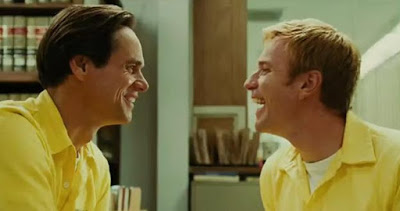
I Love You Phillip Morris (R) ★★½

Jim Carrey has been a real enigma for many movie fans over the years. I dig both his comedic and dramatic roles with equal measure but fear that he's been on a downfall the past few years. What with stuff like The Majestic, The Number 23, Yes Man and Fun With Dick & Jane coming out the past 6 or so years, I'm skeptical at that the audacious actor we've come to like has all but vanished. Which brings me to I Love You Philip Morris, which is audacious and genuine Carrey. the kind of genuine that we've come to like from him, with none of the conventionality we've come to expect the last few years. Carrey's Steven Jay Russell is gay, dangerous and completely absurd- it's a showy role that does justice to the actor's talents and gives a certain kind of hope for more of these type of roles to come in the future.

Don't forget he was in some truly great films over the years (The Truman Show & Eternal Sunshine Of The Spotless Mind) films that have proven his ability to engage not just commercially but artistically also. Lately he's been bogged down in the commercial by focusing on clunky scripts that do not effectively show his range. His physical comedy used to have an incredibly vibrant freshness to it that he made what was supposed to be below average fare into real comic gold (Dumb And Dumber, The Mask & Ace Ventura). Philip Morris represents a Carrey actually excited about the material, it helps that directors Glenn Ficarra and John Requa scripted the absurdy brilliant Bad Santa in 2003.

If he's a real highlight, the film itself is all over the place, going from one subplot to the next without the least bit of intention to slow down. Which is a problem. Ficarra and Requa have come up with some outrageous stuff here, which keeps things interesting, rolling along but messy. The film is a gay, prison love story on acid with a severe case of ADD. Jay falls for Phillip -a solid Ewan McGregor- in prison and they embark on a twisted relationship that has no trust and no boundaries in its ambitions. Jay is a greedy, manic depressive that is clearly messed up and confused about his own existence. I don't need to reveal more but to just say that this isn't a groundbreaker nor is it a great film, but it is an interesting companion piece to Carrey's own The Cable Guy, which also dealt with an obsessed individual on the brink of losing it and endangering the people around him.

The Social Network ...


David Fincher's The Social Network has been immensly praised the last few weeks by critics groups ranging from Boston, Los Angeles all the way to this week's -not very surprising- Best picture win over at the New York Film Critics Circle. Which begs to ask the question: Is it really the best picture of the year? Fincher aided by an amazingly layered Aaron Sorkin script has created a film that is as relevant as any other in 2010. It is not only about a social networking site -Facebook- that has completely changed the way the world thinks but it is also about university students that have taken control of businesses and settled themselves as 21st century entrepreneurs. The main protagonist in the film is Mark Zuckerberg -impeccably played by Jesse Eisenberg- the main creator of Facebook and a guy that is being sued by his former best friend Eduardo -an amazing Andrew Garfield- and the Winklevos', a set of muscled Harvard rowing twins that claim Mark has stolen their social netwoking idea.

This isn't a film that I would necessarily call entertainment for the masses but those willing to give it a chance and pay attention to the zip zap words of Sorkin's screenplay through and through will come out of this film feeling like their IQ was just raised up a notch. This is a film that demands its audiences attention in every word uttered and every gesture formed, it does not dumb down the viewer but instead trusts the viewers' intelligence in grasping its social, economical and political themes. This says a lot about the overall manner Fincher and Sorkin play along with the film's structure and -more importantly- editing. Add a marvelous soundtrack by The Nine Inch Nails' Trent Reznor, which brings real depth and -dare I say- hipness to the surroundings. Reznor's sounds are not conventional, they come out at us like whiplash and enhance the overall mood of the film. This might be the best soundtrack of 2010.


Although I've always been a big admirer of director Fincher's work over the years, this film is far more low key than his usual exercises in style (Fight Club, The Game, Zodiac) However, what we have here is Fincher letting the screenplay talk and putting small but effectively realized touches to the film. If you ask me I prefer the former films mentioned in that they were more originally conceived and provocative, then again I don't think that's what Fincher and Sorkin are out for here. They let the material do the talking, they know that what they have here, the subject is incredibly interesting stuff that relates to everybody with a Facebook account or interested in the way communication has evolved over the past decade. Zuckerberg was the world's youngest billionaire and he did it in a way that had many puzzled by his unusual working methods.

The performers bring their A game. Eisenberg's Zuckerberg is not necessarily being judged by Sorkin but is left within our hands to judge. Is he really the backstabbing friend that Eduardo claims he is? Did he really steal The Winkelvus twins' idea? The film asks questions about what our rights are as human beings, when a simple idea can be consumed, stolen and then made into its own unique product. Andrew Garfield's Eduardo comes out as a revelation, he may in fact be the only true heroic figure in a film filled with greedy assholes. Hell, even Justin Timberlake gives a solid performance playing Napster founder and Zuckerberg confidant Sean Parker.


A film such as this one relies on characters more than plotting. The characters populating the film stay etched in your head way after the film is done, which is in fact the highest quality of the film. There is an almost irresistible vibe created, Fincher uses low lit cinematography to ehance the dreary atmosphere happening throughout. The hallways of Harvard feel cavernous and nightmarish, whereas the look and portrayal of University life is nothing short of condemning but truthful. Sorkin can sometimes seem to fly high, too high, with his own words and sometimes does not know what a limit is to his smart ass dialogue. It's a theme that has always followed him throughout his career, the pompous, almost too literate high brow writing style he is known for. however, It works here cause, well, the characters are pompous and full of themselves just like Sorkin. It's like a marriage made in heaven.

The King's Speech. Thoughts ...


Here's a film that has been packaged and processed for the Oscars. Don't get me wrong, this isn't a bad film, it's just a very safe one. There's not much of a rebellious cry for originality and it is just a film that wants to entertain and touch as many viewers as possible. Nothing wrong with that I suppose but definitely not my cup of tea, if you know what I mean. Colin Firth is the titular king, he has a stutter that has been with him since his childhood and he decides to engage a speech therapist played by the very fine Geoffrey Rush. There's not many surprises that await the viewer in The King's Speech, just conventionality and British royal wisdom. The performances are above average, especially Firth, Rush and Helena Bonham Carter as the king's wife, in a non flashy but effectively realized performance. Suffice to say, I dug most of the scenes between Firth and Rush but felt like it was all too facile for these -let's face it- great actors. Come Oscar time you will hear their names but as good as the film is, it doesn't deserve any of the buzz it is getting in the press.

Gaspar Noe's new head trip


Enter The Void (NR) ★★★★

Gaspar Noe never seems to settle for a conventional narrative. His latest is called Enter The Void and runs at more than 160 minutes. It is long, flawed, repetitive but is also something I have never seen before in cinema and I do mean that as a good thing. If he shocked us all with a 10 minute rape scene in Irreversible, the shock is not as nasty here but he instead decides to resort to trippy psychedelia and images that represent an other worldly existence. His inspiration is clearly Kubrick, most notably the last 20 or so minutes of 2001 expanded into 2 hours. Although there is a story at hand here and a clear belief of an after life, Noe's interests vary from the connection of drugs to the after-life and the spirituality that comes in living above everything else.

Taking place in Japan, the film uses the colorful and surreal imagery of this country to tell the story of two Americans -brother and sister- that are literally lost in translation, but don't worry it isn't a sequel, there is no Bill Murray in Enter The Void, nor is there any Scarlett and her infamous butt. The brother, Oscar (Nathaniel Brown) has turned into a junkie that is hooked on the drug DMT (the chemical your brain unleashes when you're dying) and his sister Linda has resorted to stripping for money- she also has a semi creepy affair with her Japanese manager. The brother gets shot and basically wanders around the entire film in an undisclosed life form going through flashbacks, present time and another dimension.

Talking about creepy, there's hints of Incest throughout the film although it never really is fully revealed, what that's all about? don't pay too much attention and just let filmmaker Noe transport you into a world of cinema you have never sene before. Suffice to say, I dug this film quite a bit because of its visionary reaches and the way Noe tried to bring a new way of expression to a cinematic medium that has all but failed in inventiveness the last few years. There's no shortage of originality here, although I felt completely drained by the time the film had ended. It's an experience that you will likely not forget, to say the least and I'm looking forward to his next twisted venture into surreality and cinematic boundaries.