
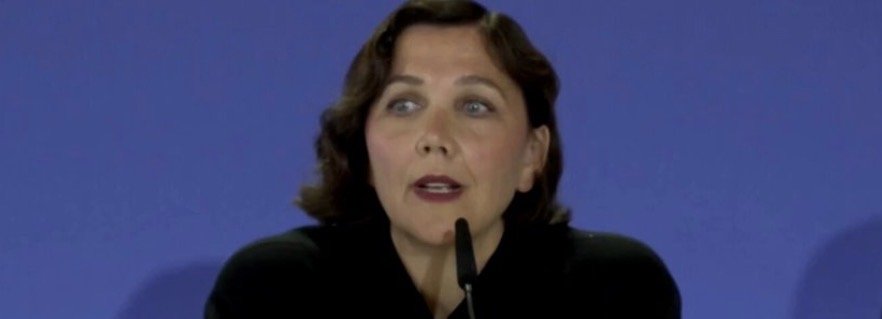
The Venice Film Festival has already found itself at the center of a familiar controversy this year, with the main competition featuring only a single female director. The imbalance became an unavoidable subject at the festival’s opening press conference, where jury president Maggie Gyllenhaal was asked repeatedly about the lack of women behind the camera.
Gyllenhaal initially joked that perhaps the lineup was simply proof that male directors were better than female directors, before turning more seriously to the question. She’s arguing that women still face greater difficulty getting films financed and finding the support necessary to reach the highest levels of the industry.
There’s a systemic problem […] Could it be possible that the things that women, having had a different experience of being alive in the world, want to make movies that are not always deemed high art. Who decides what’s good? Who decides what’s valuable?”
So, according to Gyllenhaal, women are being systematically excluded because the industry fails to recognize their particular ideas of artistic merit.
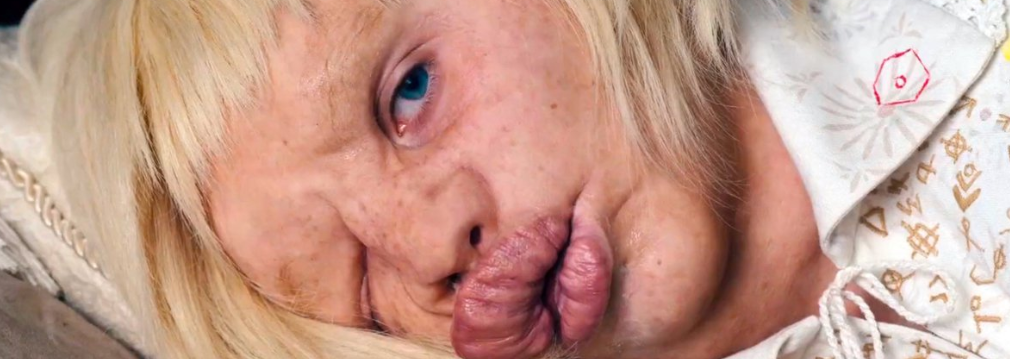
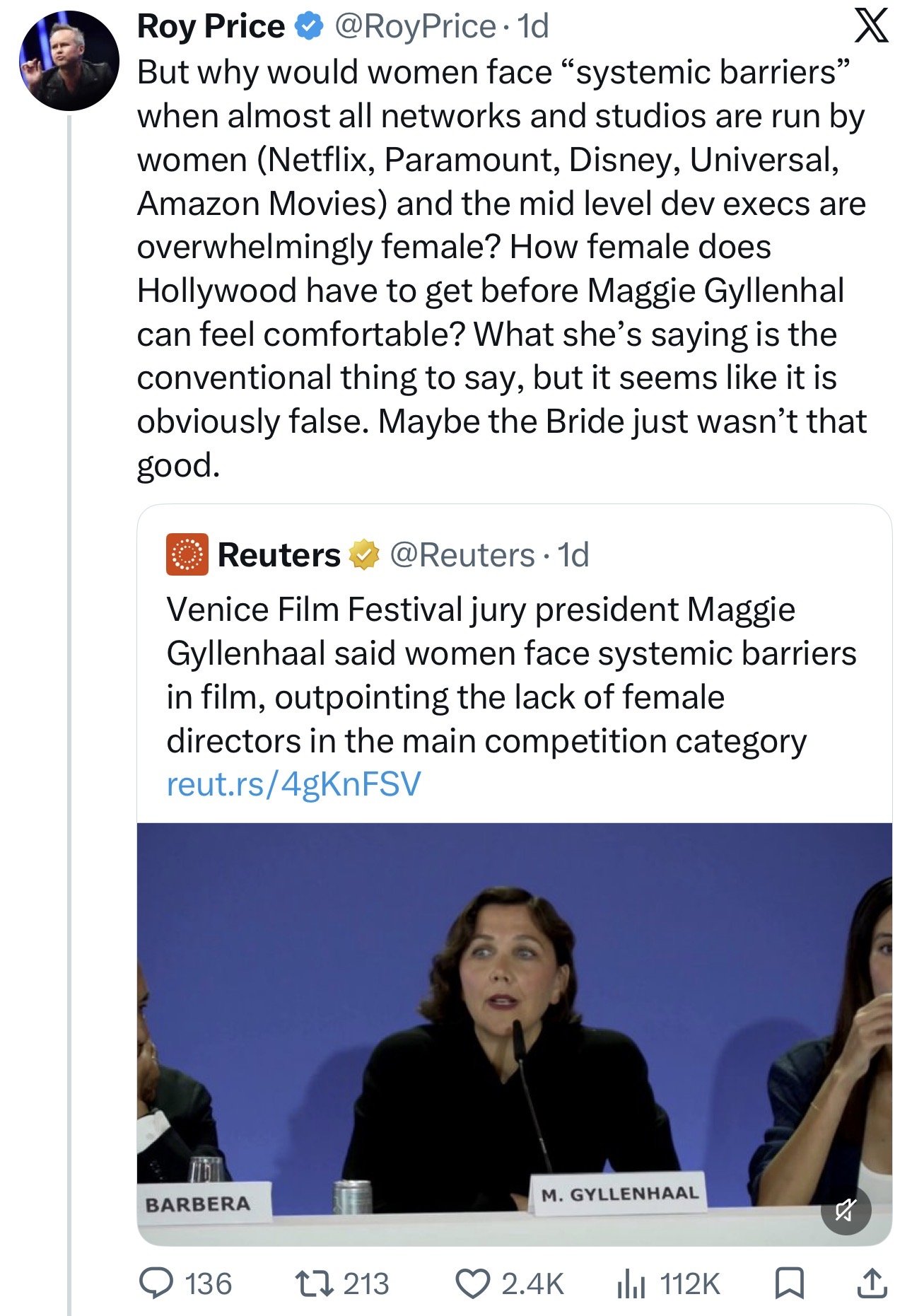
That is where Roy Price, the former Amazon executive, who launched Amazon Studios, enters the picture, he pushed back sharply against Gyllenhaal’s comments on X — and even managed to insert a dig at Gyllenhaal’s 2026 stinker, “The Bride”:
Why would women face “systemic barriers” when almost all networks and studios are run by women (Netflix, Paramount, Disney, Universal, Amazon Movies) and the mid level dev execs are overwhelmingly female? How female does Hollywood have to get before Maggie Gyllenhal can feel comfortable?”
Price went on to call Gyllenhaal’s argument “the conventional thing to say,” while suggesting that it was “obviously false,” ending with the deliberately provocative dig at the art she herself is making:
Maybe the Bride just wasn’t that good
Price’s argument is hardly a definitive rebuttal—female representation in corporate leadership does not automatically eliminate bias, but his basic challenge is worthy of debate: if the industry is increasingly populated by women with substantial decision-making power, it is reasonable to ask exactly where the alleged systemic barrier operates and what evidence demonstrates it.
Price has a point that the explanation should not become so automatic that every female director left out of a festival lineup is presumed to have been a victim of “the system.” Sometimes films simply do not make the cut; sometimes gatekeeping is unfair; and sometimes, as Price bluntly put it, “the Bride just wasn’t that good.”

Denzel playing a broken ex-cop with nothing to lose, under McQuarrie's direction? We all know Washington loves to attach himself to redemption stories. It's his bread and butter.