
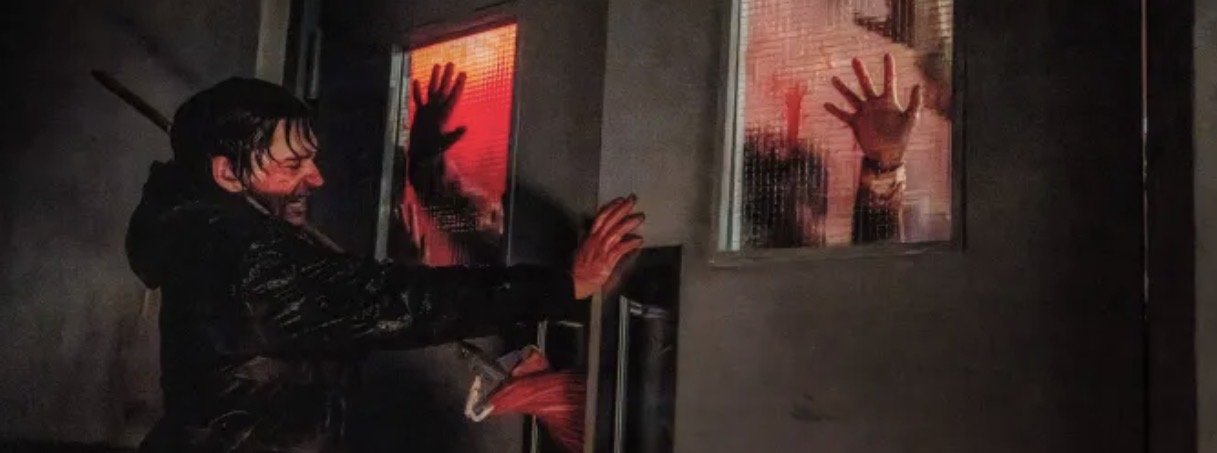
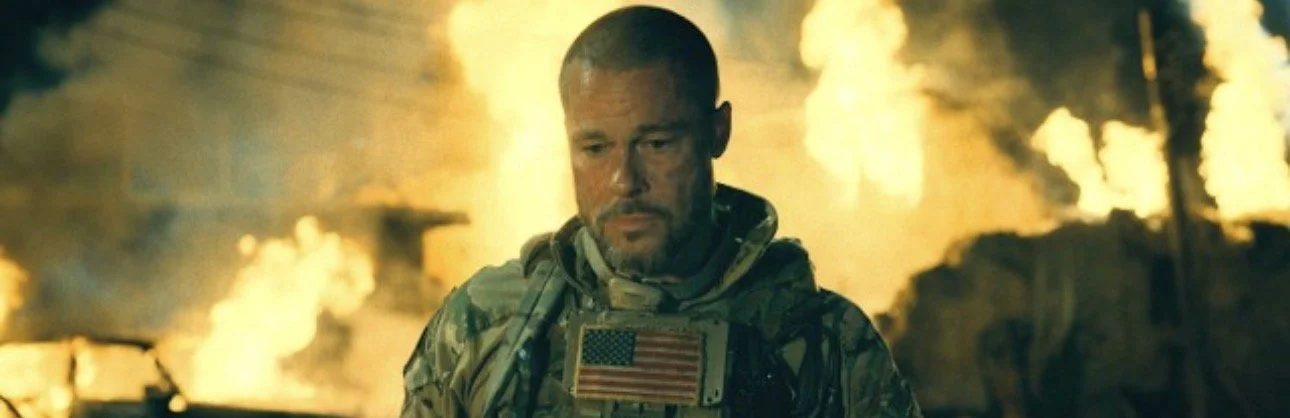

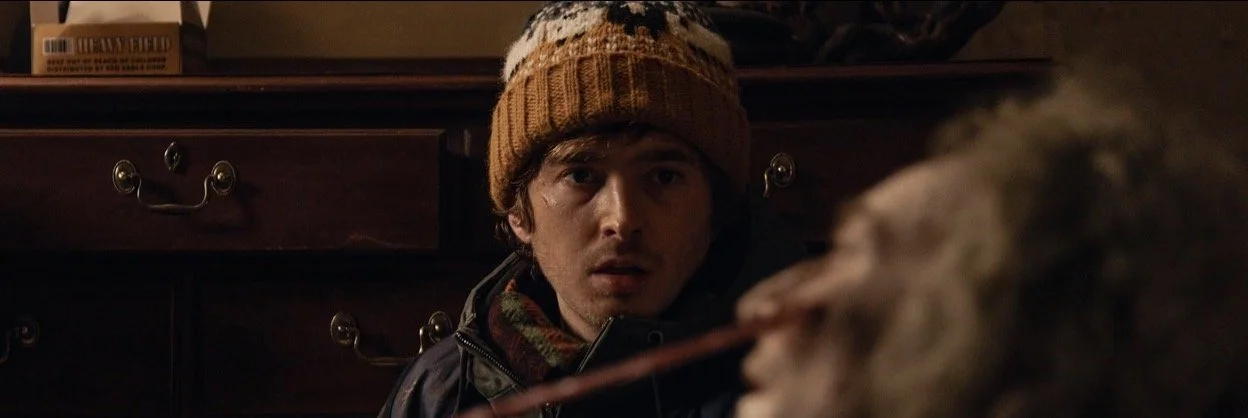

A good movie knows when to hold your attention and when to move on. Slot designers face the same problem once film-style spectacle starts competing with the game itself.
Movie-style slots have come a long way from sticking a famous face on the reels and calling it a day. Newer games borrow the bits that actually make film work, from dramatic lighting to character-led sequences, then squeeze them into short bursts that kick in when a feature starts.
The Bonus Round Is Starting to Look Like a Scene
A bonus feature gives a slot room to do something the ordinary reels cannot. The soundtrack can change, the background can open into a new setting and a character can take over part of the screen while the next stage plays out. The trick is keeping all of that tied to what the player is actually doing.
That is where the movie influence becomes useful rather than decorative. A scene has to arrive for a reason, then hand control back before it turns into something you want to skip. The reel game still sits underneath it.
The SpinBit NZ pokies catalogue includes a New Releases section alongside classic reels and video pokies, with browser access across desktop and mobile devices. Players can also filter titles by theme or volatility, which makes the visual side of the catalogue part of the way the games are browsed rather than something hidden behind a generic list.
That gives us a proper link between the product and the subject. Movie-style presentation can draw attention, but the player still needs to know what sort of game is sitting underneath all the lighting and animation.
A Movie Has to Become a Game Before It Works
The best film-based slots do something with the source material rather than leaving it on the surface. Putting a logo on the reels is easy. Turning something from the story into a feature takes a bit more thought.
Jumanji is a good example because the board-game idea becomes part of the bonus play. Ghostbusters 4D takes another route by using footage from the 1984 film when certain features trigger, while Rocky turns its fight scenes and soundtrack into short gameplay moments.
The point is simple: film gives the designer a set of recognisable ideas, but those ideas still have to work interactively. A chase can become a timed feature. A prop can become a mechanic. A music cue can tell you that the game has entered a different state.
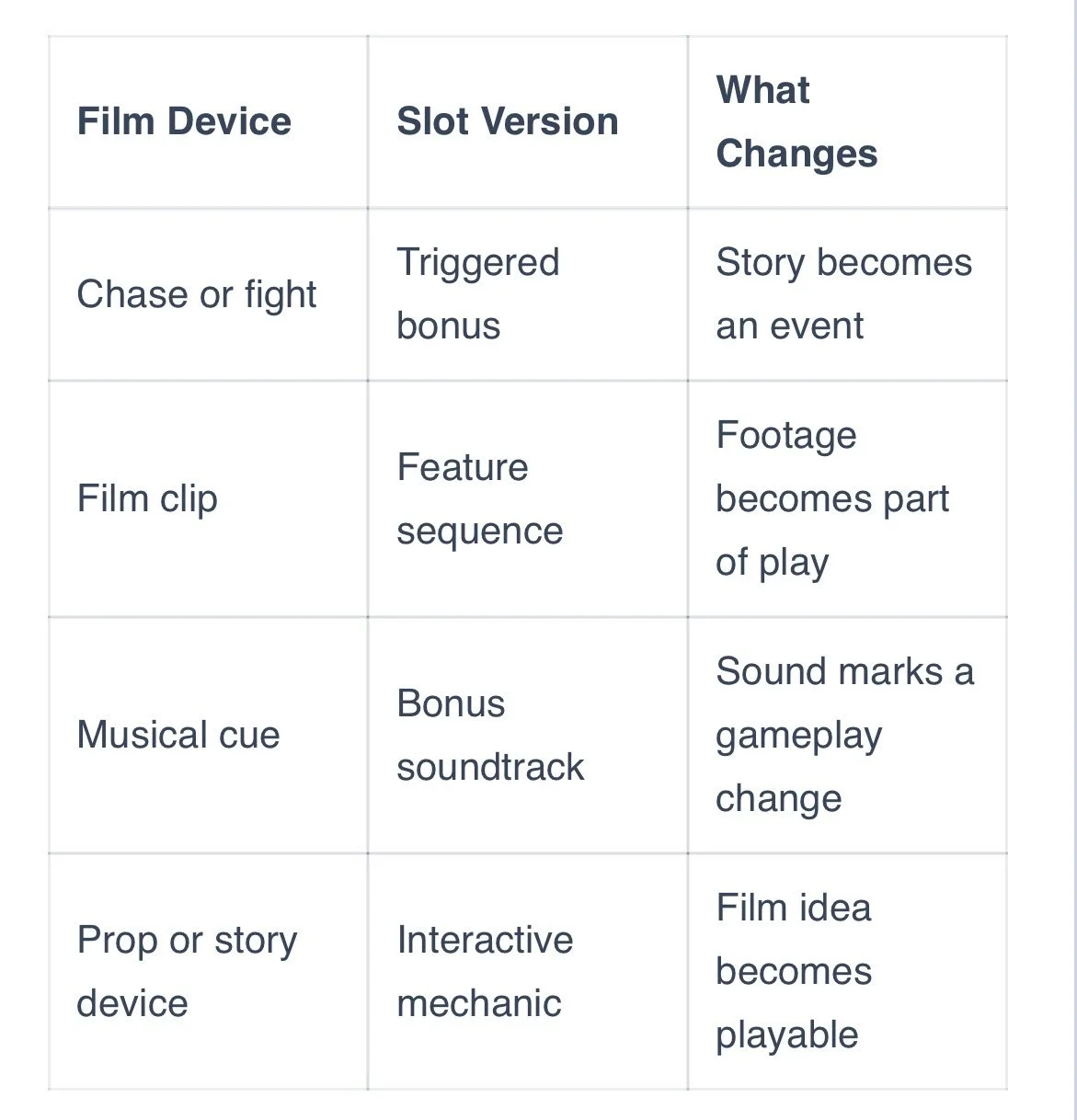
That is a much stronger use of a movie licence than simply covering the reels with recognisable faces.
More Noise Does Not Mean More Immersion
Cinema teaches one useful lesson that slots can easily forget: the loudest scene only works because the rest of the film is quieter by comparison. Interactive games have the same problem when every reel stop tries to behave like the climax.
A 2025 study led by Fiza Arshad and published in the Journal of Gambling Studies tested audiovisual stimulation in simulated slot play, and found the highest level of audiovisual stimulation did not produce the highest immersion. More animation and louder audio do not automatically create a betterr experience.
A good bonus round needs contrast. The lights change because something happened. The music rises because the game entered a different phase. Once every spin gets the same treatment, the dramatic effect starts eating itself.
Game Engines Have Walked Onto the Film Set
The exchange between games and movies now goes both ways. Film productions use tools that started in interactive entertainment, while games keep borrowing camera language and visual effects from cinema.
Gore Verbinski criticised that crossover in January 2026, arguing that the old line between movie software and game software had blurred and that Unreal Engine aesthetics were entering cinema.
Whether you agree with his complaint or not, the production overlap is real. Virtual cameras can now move through digital environments before a physical set exists, and lighting can be changed inside a rendered scene without waiting through an old-style effects pipeline.
The Matrix Turned the Viewer Into the Participant
The Matrix Awakens remains one of the clearest examples of the line between film and interactive graphics becoming harder to draw. It begins with the visual language of the Matrix films, then lets the participant move through the environment rather than simply watching someone else decide where the camera goes.
John Gaeta, the Oscar-winning visual-effects designer associated with The Matrix and creative producer on The Matrix Awakens, explained that “…with Unreal Engine, you can get much closer to the idea of The Matrix than you could do in film”.
That is the difference slots have to deal with on a much smaller scale. A film editor decides exactly when a sequence begins and ends. A slot feature starts because the game reaches a trigger, then has to respond immediately enough for the player to understand what happened.
The cinematic layer therefore has a job beyond looking expensive. It has to signal that play has changed, carry the sequence for a few seconds and then get out cleanly enough for the reels to take over again.
A Cinema Screen Can Cheat in Ways a Phone Cannot
A cinema has a giant screen and an audience sitting still. A mobile game has neither advantage. Fine visual detail can disappear on a phone, and animation that lasts too long quickly becomes something between the player and the next action.
Epic Games describes Unreal Engine as a production environment used for virtual sets and real-time lighting, with tools for camera blocking and character animation. Its film workflow also covers previsualisation and in-camera effects, so production teams can adjust digital scenes without waiting for a conventional render cycle.
The technology can produce impressive images, but slot design still has to work inside much tighter limits.
SpinBit runs its New Zealand pokies through the browser across mobile and desktop, with no dedicated download required. That puts practical pressure on the game presentation because the visual sequence still has to remain clear on a smaller screen while the controls remain usable.
What has to survive on the smaller screen:
Characters need to remain clear at reduced size.
Feature triggers have to stand apart from ordinary reel movement.
Animation cannot hide the result the player is waiting for.
Sound needs to mark a change without doing all the explanatory work.
The movie influence only works when the game remains easy to follow.
The Reels Still Have the Last Word
There is a point where cinematic ambition has to stop and the slot has to carry on being a slot. The player opened an interactive game, so the screen eventually has to give control back.
That is easier to see when the catalogue contains several underlying formats. SpinBit’s NZ pokies section includes classic reel games and video pokies, with progressive jackpots also sitting inside the broader product range. Movie-style animation can sit on top of those formats, but it does not replace the basic structure underneath them.
Cinema gives slots a useful bag of tricks. The good ones know which tricks to use, how long to use them and when to cut back to the reels.
Gambling is intended for adults and should be treated as entertainment rather than a way to make money. Only gamble with money you can afford to lose.

Is A24 actually going to release this film before the year is done? That would be wild considering they've only just started marketing it — barely — and without much info beyond the title change and brief teaser.