


Tim Blake Nelson has been making films for thirty years and hasn't directed a narrative feature in more than ten. "The Life and Deaths of Wilson Shedd," which premiered at Toronto on Sunday night, with no distributor attached, is the best thing he's done since "The Grey Zone," and it's almost as morose, depressing and unrelenting as that 2001 Holocaust movie.
The reviews so far: High On Films (3.5/5), The Playlist (B+), IndieWire (B), AwardsWatch (B), The Guardian (4/5), DEADLINE (mixed) The Wrap (positive), Variety (positive).
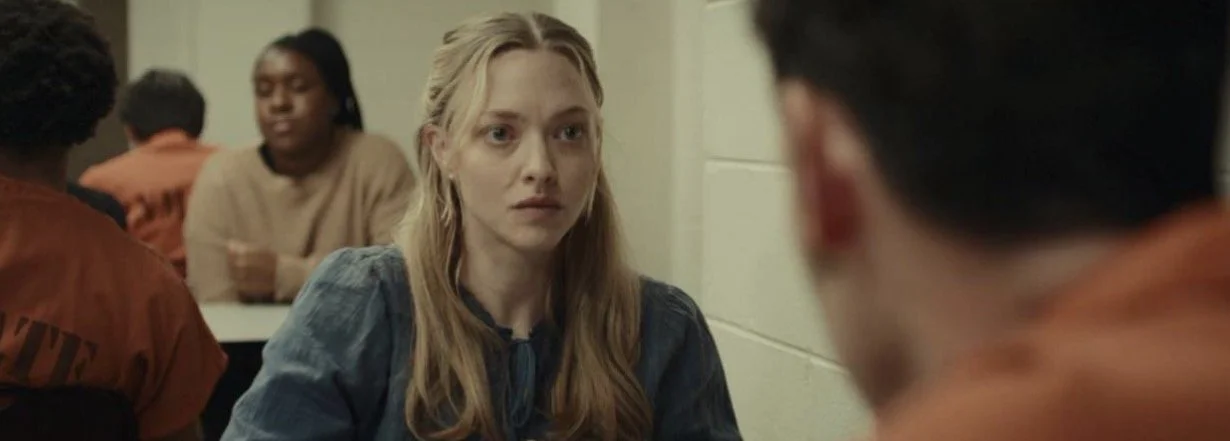
In ‘Wilson Shedd,’ Amanda Seyfried plays Karen, an Oklahoma teacher stuck with an abusive husband, who takes a job running a creative-writing class inside a maximum-security prison. Scoot McNairy is Wilson Shedd, the inmate whose writing catches her attention. What starts in a notebook ends with her smuggling him tools to escape. She loves him. What's less clear is whether he's using her or feels the same, though the answer is probably both.
Nelson uses three different timelines to tell this story, cutting between the classroom, the escape, and Wilson awaiting a death sentence. Nelson's old-school, less-is-more direction and the two performances are the reason the thing holds. Although it's revealed early on what fate awaits Wilson, you're still gripped by how it all came down to that moment.
McNairy, an immensely underrated actor — check him out in Hulu's "Furious," one of the best shows of 2026 — plays Wilson as good and evil in the same breath. The contradiction sets up Seyfried's Karen, who is gullible without being a fool. You know that helping Wilson is a terrible idea, and you know exactly why she can't help herself.
And then the last fifteen minutes happen. That's where Nelson takes his biggest risk, pivoting from the question the film has been asking — what do you owe someone who has done terrible things — to what the state does in return.
Without giving away too much, it's a hard turn, and as powerfully rendered as it might be, it's the only part of the film that loses momentum from the intricate structure Nelson built up until then. The sequence is grueling, and almost unbearably intimate. Whenever a filmmaker attempts a tonal break this drastic, especially in a film that has operated with such control, he flirts with alienating the viewer.
Still, Nelson has earned the right to make his case. He didn’t need to make it this way, but he did. Of course, ‘Wilson Shedd’ has no US distributor yet, and I wonder who would take on something this bleak. It deserves to be seen, though plenty will question whether an audience for it exists at all.

Zack Snyder woke up in Toronto the morning after his premiere and did the one thing no filmmaker should ever do the morning after: he opened X.