

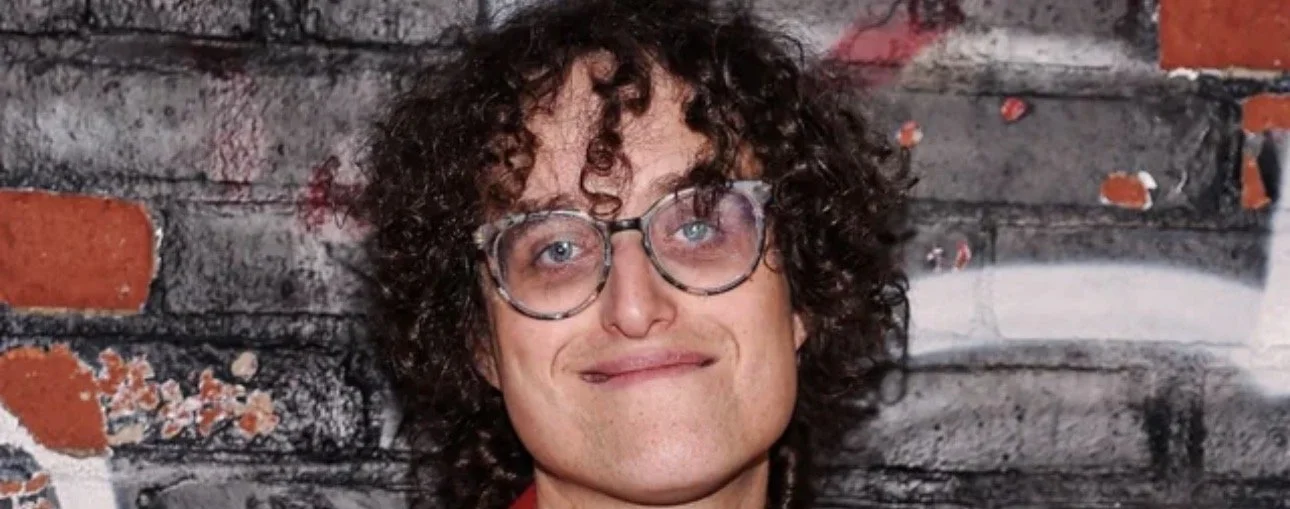
Jane Schoenbrun, coming off “We’re All Going to the World’s Fair” and “I Saw the TV Glow,” has “Teenage Sex and Death at Camp Miasma” releasing in theaters this Friday. I’m going to be giving it a rewatch this week after having had mixed feelings about the film at Cannes.
Still, the reviews are great for “Camp Miasma,” with the film earning a glowing 88 on Metacritic. In the film, Schoenbrun is leaning into something stranger, bloodier, and more sexual. It is, as always, a Lynch riff, and one that seems to demand a second viewing.
Yet, in an interview with Vulture, Schoenbrun continued to express frustration with the challenges of financing passion projects. “Public Access Afterworld,” originally conceived as a television series, came close to moving forward at HBO before the network got cold feet. The decade-spanning epic, exploring cults, online communities, content moderation, and human sacrifice, was ultimately transformed into a novel — the first instalment of a planned trilogy. Schoenbrun now hopes to bring “Public Access Afterworld” to the screen as a feature film, if the necessary financing can be secured.
Before ‘Camp Miasma,’ Schoenbrun was also attached to adapt Imogen Binnie’s acclaimed trans novel “Nevada” before ultimately walking away from the project, citing creative differences and concerns about protecting the vulnerability of the material. Notice a pattern? The kind of no-concessions, abstract cinema Schoenbrun makes is so uncommercial that, despite the acclaim, few studios are willing to take a chance on it.
The interview has Schoenbrun talking openly about the Hollywood structure that can limit what artists are allowed to make. According to the filmmaker, the real difficulty of securing financing might reside in being a trans filmmaker.
I’m working in these mediums that are clearly indebted to commercial power structures. And the more I do it, the more I’m like, That’s the core tension. I love television. I love American movies. And I also want to destroy them. I see them as prisons as much as they’re spaces of emancipation.
We learn that Schoenbrun had to fight to bring ‘Camp Miasma’ to the screen. A24 — who produced ‘TV Glow’ — passed on the project, which led Schoenbrun to rethink the film on a much smaller scale and potentially make it outside the traditional studio system. MUBI eventually came aboard as the financier, but with a relatively modest $10M budget.
Schoenbrun had previously expressed frustration with the “post-woke, post-Biden” Hollywood climate, where few trans artists are being given comparable budgets, calling it a serious gap in the industry. That said, what Schoenbrun fails to note is that, despite the acclaim, “I Saw the TV Glow” grossed only $5M worldwide at the box office. It was not the breakout commercial hit A24 expected it to be, but rather the kind of release where most of its value came from critical reception. That’s why only MUBI was willing to finance “Camp Miasma.”
Just look at the most obvious other example: David Lynch. The late master, the “Wizard of Odd,” as he was often called, struggled to make another film after 2006’s “Inland Empire.” His surreal brand of cinema scared off many studios, and a handful of projects fell apart because of his uncompromising approach to filmmaking. “Inland Empire” ultimately became Lynch’s final film.
Paul Schrader has called Schoenbrun “the most original voice in cinema this decade.” Martin Scorsese praised “I Saw the TV Glow.” Yet there continues to be a real struggle to make movies, the vision is too unfiltered, non-mainstream, which is why TV seems to be next for Schoenbrun who is teaming up with Netflix on a series adaptation of Charles Burns’ graphic novel “Black Hole” — it’s currently in early development stages.

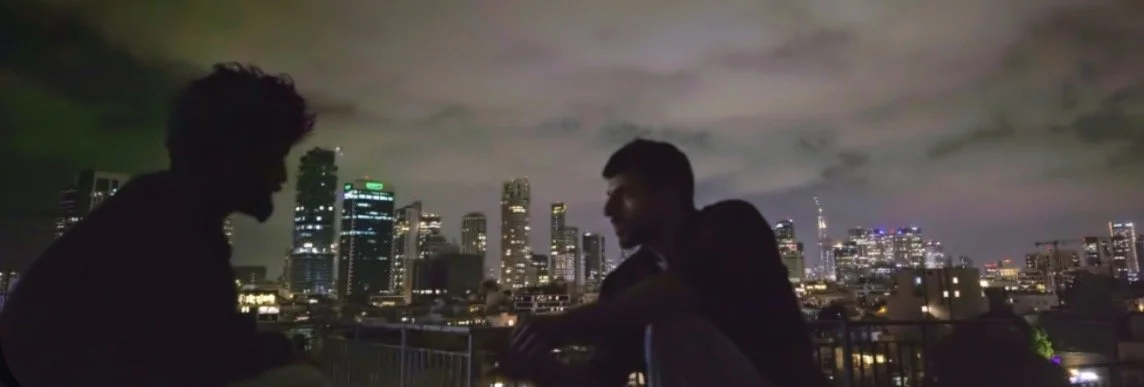
In case you’re too curious to wait, here’s the leaked teaser for Jeremy Saulnier’s “Slayground” that’s currently being shown in theaters, and it plays hard.