UPDATE: And just like that, the jury press conference is back on..
EARLIER: Film festival press conferences have turned into landmines of political questioning, to the point where — no doubt — some artists would probably prefer to turn down being a juror at Cannes, Venice, or Berlin than having to face a barrage of “gotcha” questions about political issues.
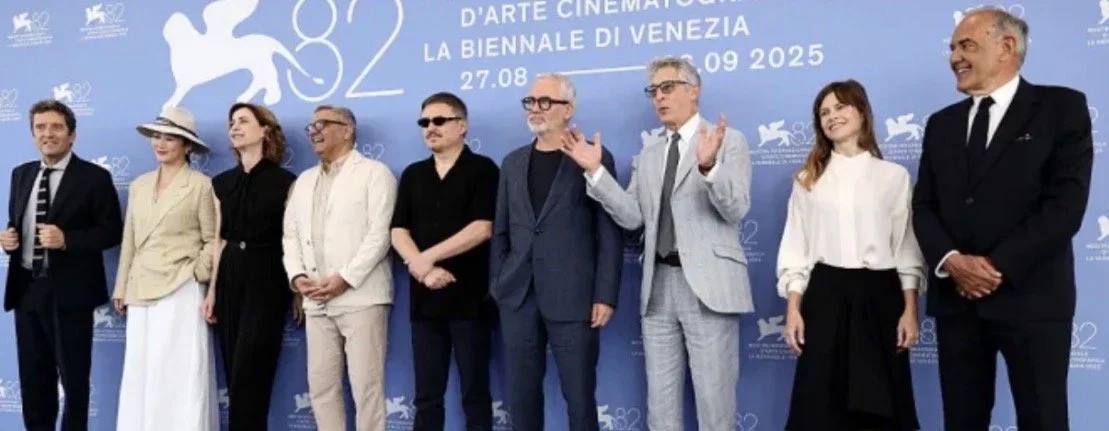
So, is it any surprise that the Venice Film Festival has now canceled its traditional jury press conference? It usually takes place the day before the festival begins, but this year, it will not go ahead as planned — for the first time in decades.
The festival denied that the move was made with those considerations in mind and said instead that it was the result of a “scheduling conflict.” Yeah, okay. This year’s jury is headed by Maggie Gyllenhaal, with members Kaouther Ben Hania, Daniel Blumberg, Francesco Casetti, Xavier Giannoli, Shahrbanoo Sadat, and Johnnie To.
Last year, jury president Alexander Payne caused a bit of controversy when he declined to share his personal political views on Gaza-Israel and directed questions about the festival’s stance to Venice chief Alberto Barbera.
This year, the Venice 2026 lineup has already sparked major debate over the lack of female directors in competition, with just one woman among 21 films, compared with six of 21 last year. Barbera defended the selection process, saying fewer films directed by women were submitted and that those submitted were, in his view, not of sufficient quality, while reiterating his opposition to gender quotas and insisting that artistic quality should remain the sole criterion.
Meanwhile, the 2026 Berlin Film Festival ignited a different controversy after jury president Wim Wenders defended the festival’s political neutrality on Israel-Gaza, arguing that filmmakers should “stay out of politics” and that cinema’s role is to foster empathy rather than directly engage in political action. His comments drew criticism from certain press circles and highlighted a longstanding debate over whether festivals can — or should — remain separate from the political and moral realities surrounding them.
The bigger question here is whether artists are expected to speak out on every political issue, or whether their main responsibility is simply to their work — to make films, tell stories, and get people thinking, without being pressured to comment publicly on issues they may not want to address.
The controversies around Berlin and Venice show the tension between artistic freedom and public expectations, and raise an uncomfortable question: at what point does asking an artist to speak out stop being meaningful engagement and start becoming pressure?

Quentin Tarantino has released ten films, but which one is his masterpiece? A critics’ poll I started back in 2024, and left sitting in my drafts ever since, is currently deadlocked between two films.