

Last year, the Academy reminded Oscar voters that documentaries are eligible for nominations not just in their own category but across others, including Best Picture — something the Academy has never achieved.
Can you believe that in the Academy’s 97-year history, no documentary has ever been nominated for the Best Picture Oscar? Odds are that streak will continue this year, unless “Once Upon A Time in Harlem” or “Elon” somehow pulls off a historic surprise — don’t bet on it.
You get plenty of list-making these days, but documentaries are almost never included; THR has decided to rank the 25 greatest of all time, featuring many essential titles — along with a few unexpected choices. “Stop Making Sense” at No. 2 is surprising, but then again, it’s probably the greatest concert documentary ever made and arguably the best-shot concert film you’ll ever see.
The 25 Best Documentaries of All Time, Ranked — Hollywood Reporter
Grey Gardens (Albert & David Maysles)
Stop Making Sense (Jonathan Demme)
Shoah (Claude Lanzmann)
The Gleaners and I (Agnès Varda)
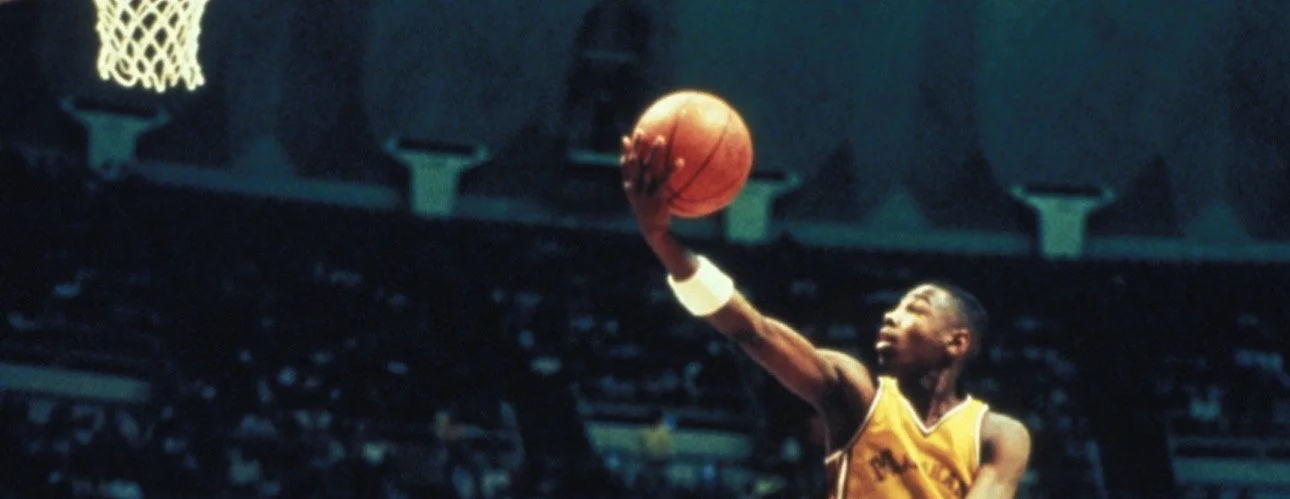
Hoop Dreams (Steve James)
When We Were Kings (Leon Gasp)
Night and Fog (Alain Resnais)
Sans Soleil (Chris Marker)
In Jackson Heights (Frederick Wiseman)
Paris Is Burning (Jennie Livingston)
Crumb (Terry Zwigoff)
Harlan County, USA (Barbara Topple)
Don’t Look Back (D.A. Pennebaker)
Man With a Movie Camera (Dziga Vertov)
O.J.: Made in America (Ezra Edelman)
The Sorrow and the Pity (Marcel Ophuls)
Minding the Gap (Bing Liu)
Stories We Tell (Sarah Polley)
Berlin: Symphony of a Great City (Walter Ruttmann)
Grizzly Man (Werner Herzog)
Gimme Shelter (Albert & David Maysles and Charlotte Zwerin)
Original Cast Album: Company (D.A. Pennebaker)
Belfast, Maine (Frederick Wiseman)
I Am Not Your Negro (Raoul Peck)
The Fog of War (Errol Morris)
Not a bad list. It’s very difficult to reach an actual consensus on what constitutes the greatest documentary ever made, mostly due to the lack of large-scale polling, but “Grey Gardens” is certainly in the conversation.
That said, with only 25 slots available, no “Up” series, “The Thin Blue Line,” “The Act of Killing,” “F for Fake,” “Bowling for Columbine,” “The Atomic Cafe,” “Titicut Follies,” “Waltz With Bashir,” “Capturing the Friedmans,””Paradise Lost,” “The Times of Harvey Milk,” “This Is Not A Film,” “Citizenfour,” “Exit Through the Gift Shop” and “Cameraperson.” I could go on and on.
What are your picks?
There was some backlash in the ’80s when Errol Morris’ “The Thin Blue Line” and Michael Moore’s “Roger & Me” — both hailed as among the best films of their respective years — were snubbed for Best Picture nominations. Archived think pieces from that era, particularly about Morris’ work, argued for documentaries’ inclusion in the Best Picture lineup.
In the ’90s, there were calls for Steve James’ “Hoop Dreams” and Terry Zwigoff’s “Crumb” to receive recognition, with the former being pushed especially hard by Roger Ebert, who praised it as one of the greatest American films of the decade and argued that its storytelling and cinematic impact merited a Best Picture nomination.
This century, Moore’s “Bowling for Columbine” had enough of an impact to warrant consideration. Harvey Weinstein mounted a major campaign for “Fahrenheit 9/11”: it won the Palme d’Or, grossed more than $100 million domestically, and arrived amid growing mainstream opposition to the Iraq War. It likely would have been nominated if the ten-nominee rule had existed at the time.
It remains a glaring omission that no documentary has ever been recognized in Best Picture, especially in the 21st century, when nonfiction filmmaking has become increasingly prominent, with Netflix further boosting visibility, albeit with mostly trashy nonfiction works.
Why does nonfiction continue to be overlooked? Is it because documentaries don’t dominate the cultural conversation as much? Or because many critics continue to ignore them? Review counts for documentaries, even the most heralded of any given year, remain low — you’d be hard-pressed to find a recent documentary with more than 100 reviews on Rotten Tomatoes. The fact remains that critics and Academy voters are still largely confining documentaries to their own category.

Paul Greengrass’ "The Uprising," starring Andrew Garfield, opened to $3.2M from 2,068 theaters this weekend. Yikes. The budget hasn’t been disclosed, but is said to be in the $20-$30M range.