


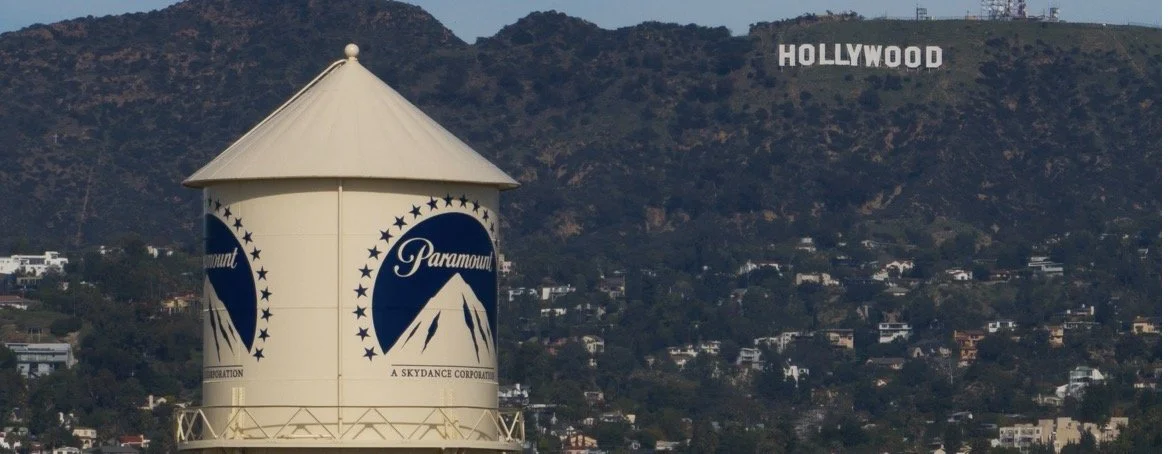
UPDATE: Up to his neck in court battles, David Ellison has decided to postpone the Paramount–Warner Bros. Discovery merger. The transaction will not move forward until June 1, 2027—or, at the earliest, until the courts have ruled on the multiple lawsuits challenging the deal.
The delay does not appear to eliminate Paramount’s financial obligations. The company will likely still have to pay ticking fees to Warner Bros. Discovery shareholders while the merger remains pending, and it could face a substantially larger breakup fee if it ultimately abandons the transaction.
If you remember, the Paramount–Skydance/Warner Bros. Discovery merger cannot be delayed beyond September 30 without triggering a “ticking fee” of roughly $6.8M per day payable to Warner Bros. Discovery shareholders. Is Ellison really prepared to absorb that cost? Don’t buy it ..
Here’s what’s really going on. Paramount is not planning to wait until June 2027 to complete the merger. Instead, it has adjusted its legal strategy to avoid an early court fight that could have resulted in the states suing temporarily blocking the deal. Now, the focus shifts to the main lawsuit, where the court will decide whether the merger can legally proceed. Meanwhile, the September 30 “ticking fee” puts Paramount under significant financial pressure, giving the company every reason to win the case as quickly as possible and close the merger before expensive daily penalties begin.
All of this comes just two weeks after a coalition of 12 states filed an antitrust lawsuit seeking to block the proposed $111 billion Paramount/Skydance–Warner Bros. Discovery merger. The deal had already received approval from the Department of Justice last month. The coalition includes the attorneys general of Arizona, California, Colorado, Connecticut, Massachusetts, Minnesota, Nevada, New Jersey, New Mexico, New York, Oregon, and Washington.
What we essentially have here is a blue-versus-red battle. The politics surrounding the deal now appear to be just as influential as the underlying business and antitrust issues.
This merger was always likely to face lengthy litigation, making a timely closing unrealistic regardless of the companies’ original timeline. Ellison almost certainly anticipated that. At this stage, the situation resembles a chess match: every move from here on out will be crucial.

Very sorry to hear about Tom Skerritt's passing today. He was 93. If you grew up watching movies from the '70s and '80s, Skerritt was simply there, the guy with the mustache and those calm eyes.