




UPDATE: There’s a persistent rumor that Na Hong-jin’s “Hope” might actually be “part one” of a two-part saga. Last year, a source told me Na was experimenting with a complete cut of the film that ran nearly 4.5 hours.
Regardless, we now have an official runtime for “Hope,” and it’s set to clock in at 2 hours and 40 minutes—par for the course. The score is by Michael Abels (“Get Out,” “Us,” “Nope”).
“Hope” was shot in early 2023 and has since gone through an arduous editing process, with tons of footage for Na to sift through, ultimately culminating in its selection to vie for the Palme d’Or at this year’s Cannes Film Festival.
Na’s last film, “The Wailing,” released 10 years ago, played out of competition at Cannes and remains one of the most quietly influential Korean films of the past decade—a supernatural procedural that gradually mutates into something far more unclassifiable.
Here are the runtimes for all 22 films at this year’s Cannes Film Festival. Fourteen of the 22 titles vying for the Palme d’Or are over 2 hours long.
“All of a Sudden” (Hanaguchi)— 196 minutes
“Dreamed Adventure” (Grisebach)— 167 minutes
“Hope” (Na) — 160 minutes
“The Black Ball” (Ambrossi/Calvo) — 155 minutes
“A Man of His Time” (Marre)— 153 minutes
“Fjord” (Mungiu)— 146 minutes
“Parallel Tales” (Farhadi) — 140 minutes
“The Unknown” (Harari) — 139 minutes
“Minotaur” (Zvyagintsev) — 135 minutes
“The Beloved” (Sorogoyen)— 135 minutes
“Moulin” (Nemes) — 130 minutes
“Sheep in the Box” (Kore-eda)— 126 minutes
“Coward” (Dhont) — 120 minutes
“Garance” (Herry)— 120 minutes
“Paper Tiger” (Gray) — 115 minutes
“Gentle Monster” (Kreutzer)— 114 minutes
“The Birthday Party” (Mysius) — 114 minutes
“Bitter Christmas” (Almodovar)— 112 minutes
“Nagi Notes” (Fukada) — 110 minutes
“A Woman’s Life” (Bourgeois-Tacquet)— 98 minutes
“The Man I love” (Sachs) — 95 minutes
“Fatherland” (Pawlikowski) — 82 minutes
As for the Cannes schedule, which will be officially confirmed tomorrow, this is what it’ll likely be looking like.
May 13 : Bourgeois-Tacquet, Fukada, Schoenbrun
May 14 : Farhadi, Pawlikowski
May 15 : Kreutzer, Hamaguchi
May 16 : Gray, Koreeda, Sorogoyen
May 17 : Na, Nemes, Herry
May 18 : Mungiu, Harari, Refn
May 19: Almodovar, Zvyagintsev
May 20 : Marre, Sachs
May 21 : Ambrossi/Calvo, Dhont|
May 22: Grisebsch, Mysius
EARLIER: Last year, Alberto Barbera, the director of the Venice Film Festival, commented, a few times, on long movies, and his general view that long runtimes are becoming more normal in modern cinema.
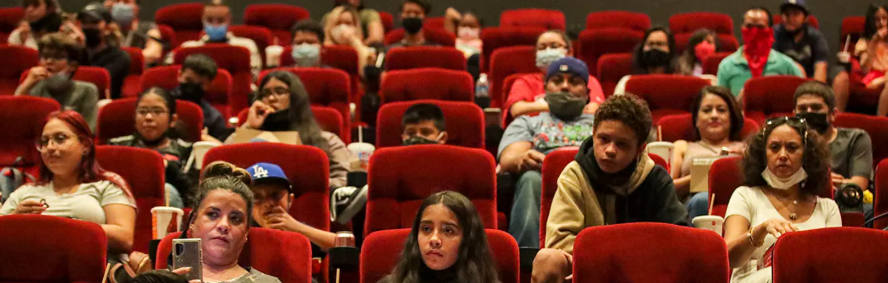
He explained that cinema is going through a major shift and that the traditional “90–120 minute movie” is no longer the standard, with filmmakers increasingly working in much longer formats—adding that films between 2 hours and 15 minutes and 2 hours and 30 minutes are becoming the “new international standard,” creating major scheduling headaches for programmers. He attributed this shift to the influence of streaming and television storytelling styles.
This brings me to the runtimes of the films competing for the Palme d’Or at this year’s Cannes Film Festival—well over half of which run two hours or longer. In fact, at least four films currently clock in at over 2½ hours. The longest is Ryusuke Hamaguchi’s “All of a Sudden,” at 3 hours and 16 minutes.
Out of competition, Tiago Guedes’ “Aqui,” screening in the Cannes Premiere sidebar, runs 3 hours and 20 minutes. Kiyoshi Kurosawa’s “The Samurai and the Prisoner” is 2 hours and 27 minutes, while “De Gaulle” runs 2 hours and 40 minutes (and that’s only “Part One”).
Of course, it’s not just arthouse cinema. 130–180 minute blockbusters are increasingly becoming the norm. Once upon a time, the sweet spot was considered 90 to 120 minutes—shorter felt like a rip-off, longer risked testing patience. But in the past few years, that unspoken rule has loosened.
Even Martin Scorsese’s “Killers of the Flower Moon” dared audiences to sit through its 3 hours and 26 minutes. Ditto Christopher Nolan’s “Oppenheimer” and its three-hour runtime, which still went on to gross nearly $1 billion worldwide. “One Battle After Another,” 162 minutes, was marketed as an action blockbuster, and dared audiences with its runtime.
Some of the most financially successful films of recent years have also been lengthy experiences: “Guardians of the Galaxy Vol. 3” ran 2 hours and 29 minutes, “Oppenheimer” came in at 3 hours, and “Avatar: The Way of Water” at 192 minutes. “Wicked” ran 160 minutes, “John Wick: Chapter 4” 169 minutes, “Dune: Part Two” 166 minutes, “F1” 156 minutes, and the most recent “Mission: Impossible” film 163 minutes.
When considering a single movie that breaks the sacred 120-minute barrier, there’s hope that it will use its runtime to take its time and build a world that absorbs you, takes you out of your current reality. If the film accomplishes what it sets out to do, there’s no reason to complain. It’s the bad movies that result in excruciating viewing experiences.

This weekend, California AG Rob Bonta is meeting with Paramount to discuss a potential deal in the Warner Bros. Discovery merger.