
I don’t care if the Cannes Film Festival ended almost two months ago; I still wanted to write a recap about the films I saw, and yet it never happened. It was stuck on draft. I then noticed IONCINEMA posted their top 10 of the fest last week. So, better late than never …
The general consensus was that Cannes 2026 was short on great films. That’s been the main takeaway for many: a weak year — but was it? I say, nonsense. There were at least a dozen films, from all sections, that thoroughly impressed me, and I’ll go as far as to call the 2026 edition superior to last year’s.
This year, the complaints about a supposed “lack of U.S. films” or missing “Oscar buzz” at Cannes mostly missed what the festival is actually for. Cannes has never really been a straight-up awards-season launchpad for Hollywood, even if that’s how it sometimes gets treated now. At its core, it’s a global auteur festival—built around international cinema, formal risk-taking, and discovery. Oscar positioning is, at best, secondary noise.
Expecting Cannes to consistently deliver Oscar contenders flattens what makes it interesting in the first place. Yes, American films show up, and sometimes they dominate the conversation, but the festival isn’t structured around Hollywood’s awards calendar. It’s centered on world cinema, not Oscar forecasting.
These are the 12 best films I saw at the festival, out of roughly 40 in total—most watched in person, with a few screened via links. All are strong, some very strong.
All of a Sudden (Ryusuke Hamaguchi)
A transcendent work from Ryusuke Hamaguchi, unfolding as a quietly overwhelming meditation on care, mortality, and human connection. Built almost entirely from conversation, it achieves its peaks through attention and patience, turning everyday dialogue into something luminous and revelatory. Virginie Efira and Tao Okamoto deliver performances of immensw openness, grounding the film in lived feeling. Something profoundly moving and spiritually expansive, among Hamaguchi’s most affecting achievements.
Fjord (Cristian Mungiu)
Cristian Mungiu doing what he does best—building a tightly controlled moral drama —but pushing it into a more openly contemporary “culture war” space that makes everything feel even more charged up and uncomfortable. The premise alone, involving a Romanian evangelical family in Norway whose children are taken by authorities over abuse allegations, is compelling because it forces you to constantly reassess who is right, who is overreaching, and whether anyone truly has clean hands. Sebastian Stan and Renate Reinsve’s performances are heavily guided by Mungiu’s calm, sometimes static camera. A dense, uneasy, and deliberately divisive film that won the Palme d’Or.
Hope (Na Hong-jin)
This is an intentionally excessive swing from Na Hong-jin. When it works, and it does so for most of its 160-minute runtime, it’s genuinely thrilling—starting from a mystery and then detonating into full creature-feature chaos, refusing to calm down — it’s the Korean ‘Fury Road’! Its first and last third, both an hour each, are a single extended action sequence. A film this overloaded with action, tonal shifts, and visual noise risks collapsing under its own ambition, but that it doesn’t is a damn-near miracle. What a volatile experiment this was — messy, polarizing, and unforgettable.
Minotaur (Andrey Zvyagintsev)
Russian filmmaker Zvyagintsev at full strength, returning to his familiar obsession with moral decay, but this time it’s a contemporary thriller, set at the outset of the Ukraine-Russia war, that makes everything feel even more suffocating. What could be a familiar noir setup, involving an unfaithful marriage, is turned into something much more existential and uneasy in its final stretch. This is a bleak, precise, and morally heavy film.
The Unknown (Arthur Harari)
One of the more intriguing and frustrating Cannes entries, built around a high-concept body-swap idea that quickly expands into something more disorienting and psychologically unstable than the traditional genre. Identity confusion is pushed into a kind of drifting, nightmare. An ambitious, grimy and hypnotic —if you go with it — nightmare that is left entirely unsatisfying if you’re expecting something accessible. Lea Seydoux is great.
The Dreamed Adventure (Valeska Grisebach)
Set in a Bulgarian border town, Veska, an archaeologist reconnects with an old acquaintance, Said, after his car is stolen, only to be drawn into the criminal world that lurks beneath her seemingly quiet hometown. What begins as a chance reunion slowly expands into a drifting, shape-shifting crime narrative. Grisebach’s film is noir, western and dance, yet it defies description. It’s a deliberately demanding work yet wholly immersive — a sprawling, unsettling epic beneath its quiet surface.
The Man I Love (Ira Sachs)
Ira Sachs at his most confident and emotionally precise, returning to the intimate, observational style he’s best known for while setting it against something more fragile and time-bound in Rami Malek’s Jimmy George, a gay actor in 1980s New York quietly living with AIDS but refusing to be defined by it. This film has a loose, fragmentary structure and emphasizes small moments, music, and character over more traditional narrative. A deeply textured character study that builds its impact gradually.
La Gradiva (Marine Atlan)
This bewilderingly screened in the Critics Week sidebar. It should have been in competition. What a remarkably confident debut from Marine Atlan, taking a fairly familiar idea—a group of French teenagers on a school trip to Pompeii—and elevating it through atmosphere, patience, and realist dialogue. This is a story that treats adolescence less as a story and more as an emotional state. There are some dreamy visuals as well, and the observational pacing, with its slow, immersive 2.5-hour structure, does not go for dramatic peaks. The result is a deeply felt portrait of teenagehood.
Everytime (Sandra Hollner)
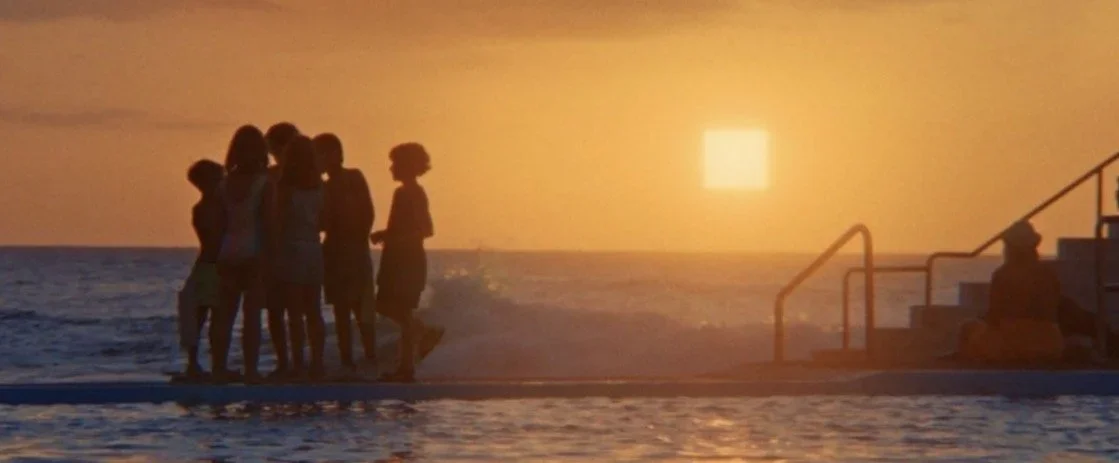
For once — and this rarely happens — this year’s UCR jury actually awarded its top prize to the most deserving film. Sandra Wollner’s “Everytime,” a surreal tale of grief told through a tragedy uniting a mother, daughter, and teenage boy, was the big winner. The first 10 minutes are stunning, and the final stretch is the best of any film I saw at Cannes this year — Wollner blurs past and present to the point where you no longer know what’s real and what isn’t. The sun somehow turns square — a visual that’ll stay etched in my memory for a good long time.
Club Kid (Jordan Firstman)
This is “Big Daddy meets A24,” so no surprise, A24 picked it up for $17M at the fest. A surprisingly earnest indie debut from Jordan Firstman that takes a very familiar “irresponsible party guy suddenly becomes a father” setup and filters it through the excess and emptiness of New York nightlife rather than clean comedy or melodrama. Firstman really commits to showing how hollow and isolating a world can be without connection, and that’s why the film hits you hard in its final minutes.
Coward (Lukas Dhont)
A quietly effective WWI drama that doesn’t try to reinvent, so much as refine its story through tone, performance, and visual brilliance. I found the central romance between Pierre, an eager young soldier, and Francis, who stages theatre productions behind the front lines, especially compelling because it places itself against the constant pressure of war. The film’s impact likely depends heavily on execution rather than novelty, and Dhont — a talented visualist — finally makes a film that eases on emotional manipulation. The result is tender, restrained, and emotional, elevated in particular by its committed performances and lush cinematography that gives the wartime setting texture and beauty.
Paper Tiger (James Gray)
Gray is working in his familiar territory of New York family tragedy, but this time with a heightened suspense that pushes the film toward paranoia-thriller territory. The gradual tightening of Miles Teller’s doomed partnership with his brother (Adam Driver) and the Russian mob is especially effective, turning ambition into a slow-motion trap where every escape route closes. The melodramatic middle section may drag, with some emotional beats feeling overly emphasized, but overall it’s a gripping, if uneven, return for Gray, elevated by strong performances and the filmmaker’s knack for staging suffocating, escalating tension.

Back in August, director Jon Turteltaub claimed "National Treasure 3" was finally happening, with Cage. The cheers were loud. The headlines were everywhere. Turns out, nobody told Nic.