
Hollywood is in a state of transition. Television fractures audiences, studios panic, lean harder into spectacle, and treat widescreen processes as the second coming. Is this 2026? No, it’s 1956, and it seems as though history repeats itself.
Of course, big productions dominated headlines, yet beneath the surface, filmmakers around the world were quietly reshaping cinematic language — is that actually happening now? Will we be saying the same thing about TikTok and YouTube content creators seventy years from now?
The Palme d’Or went to Jacques-Yves Cousteau and Louis Malle’s “The Silent World,” the Oscars crowned “Around the World in 80 Days” with Best Picture (I still don’t like it), and the box office was topped by Cecil B. DeMille’s biblical epic “The Ten Commandments,” which has now become tradition to air during Easter.
However, the real story, at least for me, lies elsewhere. 1956 is forever etched in my movie world because of five films that seemed to arrive from different planets, each uniquely orchestrated to reshape the medium.
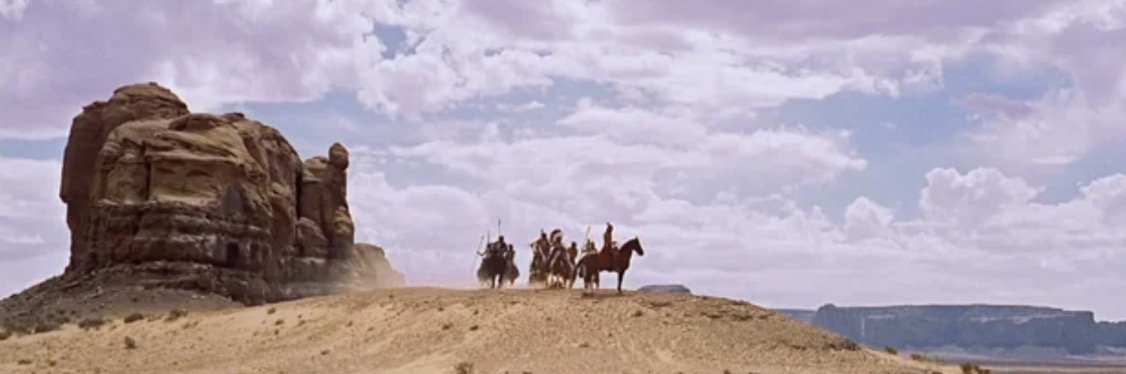
First, there’s “The Searchers.” I don’t use the phrase lightly — it is one of the greatest films I have ever seen. John Ford’s western feels both monumental and deeply unsettling, a myth of America that slowly reveals its flaws. John Wayne’s Ethan Edwards stands as one of the most complex protagonists ever put on screen. That final doorway shot — copied to death these last 70 years — still resonates like a closing chapter of Western mythology.
Then there’s “The Killing.” Even early in his career, Stanley Kubrick managed to make a masterpiece — one of many to come — and quite possibly the most underrated movie of his storied career. You could already see the master strokes emerging as a racetrack robbery goes disastrously wrong. The fractured narrative, the clinical precision, the fascination with detail — it’s all there. Kubrick hadn’t yet reached the scale of his later films, but the control he displayed here is astonishing. It’s lean, icy, and ruthless, a heist film flawlessly constructed.
Robert Bresson’s “A Man Escaped” operates in an entirely different register — a French Resistance fighter, imprisoned by the Nazis, meticulously plans his escape. Here, Bresson was starting to hit his stride, refining the minimalist aesthetic that would define his cinema. The film strips everything down to gesture and sound, transforming a prison escape into something almost spiritual. Every movement matters. Every sound counts. A transcendent film that also happens to be his most accessible, by his standards. The 1950s remain my favorite era of Bresson’s work.
“Invasion of the Body Snatchers” offers yet another tonal shift. A small-town doctor discovers that people are being replaced by alien-engineered duplicates. I’ve always preferred it to the much-acclaimed 1978 remake. The original’s starkness makes its paranoia feel more immediate and insidious. Its importance and relevance remain undeniable — tackling conformity, identity, and societal pressure. The sense that something is quietly wrong — it all builds toward an atmosphere that still feels disturbingly modern. A remake was never needed.
Finally, “Written on the Wind.” Douglas Sirk’s melodrama is cinema at its most expressive as a wealthy Texas oil family unravels under jealousy, alcoholism, and repressed desire. The bold visual symbolism, the saturated colors, the emotions — oh, the emotions! For me, it is Sirk’s best film. He turns melodrama into critique, using this heightened style to expose the emptiness of privileged life. Every composition feels intentional, every color charged. It’s excessive, yet artful, only in the way Sirk could pull off.
Of course, this particular year wasn’t just about these five films…
The Searchers (John Ford)
A Man Escaped (Robert Bresson)
The Killing (Stanley Kubrick)
Invasion of the Body Snatchers (Don Siegel)
Written in the Wind (Douglas Sirk)
Rififi (Jules Dassin)
Night and Fog (Alain Resnais)
Bob le Flambeur (Jean-Pierre Melville)
The Red Balloon (Albert Lamorisse)
Bigger Than Life (Nicholas Ray)

The man doesn't stop. James Gunn has confirmed he's already hard at work writing his next film, even as ‘Man of Tomorrow’ makes its way toward theaters next summer.